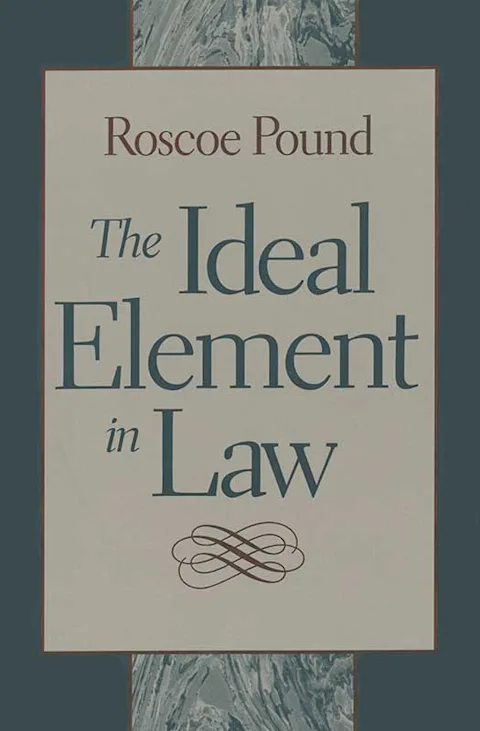
The Ideal Element in Law
- Roscoe Pound(author)
- Stephen B. Presser(foreword)
Roscoe Pound, former dean of Harvard Law School, delivered a series of lectures at the University of Calcutta in 1948. In these lectures, he criticized virtually every modern mode of interpreting the law because he believed the administration of justice had lost its grounding and recourse to enduring ideals. Now published in the U.S. for the first time, Pound’s lectures are collected in Liberty Fund’s The Ideal Element in Law,
About This Edition
Citation
Pound, Roscoe. The Ideal Element in Law, ed. Stephen Presser (Indianapolis: Liberty Fund 2002).
Pound, Roscoe. The Ideal Element in Law. Liberty Fund, 2002. Online Library of Liberty, https://oll.libertyfund.org/titles/presser-the-ideal-element-in-law.
Pound, R. (2002). The Ideal Element in Law. Liberty Fund. https://oll.libertyfund.org/titles/presser-the-ideal-element-in-law
@book{pound2002law,
  author = {Roscoe Pound},
  title = {The Ideal Element in Law},
  publisher = {Liberty Fund},
  address = {Indianapolis},
  year = {2002},
  url = {https://oll.libertyfund.org/titles/presser-the-ideal-element-in-law},
  note = {Online Library of Liberty}
}TY - BOOK AU - Pound, Roscoe TI - The Ideal Element in Law PY - 2002 CY - Indianapolis PB - Liberty Fund UR - https://oll.libertyfund.org/titles/presser-the-ideal-element-in-law DB - Online Library of Liberty ER -
Copyright
The copyright to this edition, in both print and electronic forms, is held by Liberty Fund, Inc.

About the author
Roscoe Pound 1870–1964
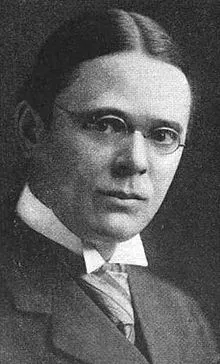
Roscoe Pound (1870-1964) is universally recognized as one of the most important legal minds of the early twentieth century. Considered by many to be the dean of American jurisprudence, Pound was a former Justice of the Supreme Court of Nebraska and served as dean of Harvard Law School from 1916 to 1936.
Related People
Louis Brandeis
Author
Brandeis, an Associate Justice of the Supreme Court, significantly influenced Pound’s writings on individual privacy and civil liberties.
Herbert Hoover
Author
When Hoover was President, he appointed Pound to the Wickersham Commission to survey American law enforcement on police overreach and prohibition.
Chiang Kai-shek
Author
The leader of the Chinese Nationalists appointed Pound as an Advisor to the Ministry of Justice and tasked Pound with reorganizing the Chinese justice system.
Rudolf von Jhering
Author
Pound drew significant inspiration from Jhering, with much of the modern framework of Pound’s sociological jurisprudence drown from Jhering’s theories.
Holmes also served as Professors at Harvard Law School with Roscoe, and was another notable proponent of sociological jurisprudence.


Critical Responses
Works that answer or challenge this text.
 Essay
Reforming the Administrative State with Roscoe Pound
Joseph PostellVisit site ↗In this essay Postell discusses Roscoe Pound’s stance against the expansion of administrative power within the government and explores the problems with administrative absolutism.
Connected Readings
What to read next.
 Book
The Common Law
Oliver Wendell Holmes JrVisit site ↗Holmes explores the development and evolution of the common law system as emerging not from formal logic but by active human self-government. This complements Pound's ideas by discussing the practical application of legal principles in a common law framework.
- Book
Natural Law and Natural Rights
John FinnisVisit site ↗This book presents a comprehensive defense of natural law theory, which explores the connection between morality and law. These themes are also relevant to The Ideal Element in Law as Pound explores the role of the law in creating a more harmonious society.
 Book
Law as a Means to an End
Rudolf von JheringVisit site ↗Jhering’s theories had a significant influence on Pound’s development of sociological jurisprudence. In this book Jhering explores the purpose of the law as protecting individual and societal interest by minimizing conflict.
- Book
Law's Empire
Ronald DworkinVisit site ↗Dworkin's book discusses the nature of legal interpretation and the concept of law's influence over social and political life. Like Pound, Dworkin’s book delves into the intricate relationship between morality, politics and the law.
More in Law
See all >Introduction to the Study of the Law of the Constitution (LF ed.)
Albert Venn DiceyFreedom and the Law (1961 ed.)
Bruno LeoniFreedom and the Law (LF ed.)
Bruno LeoniInstitutes of Divine Jurisprudence. With Selections from Foundations of the Law of Nature and Nations
Christian ThomasiusThe Concise Magna Carta: The 63 Clauses in Latin, English, and with Commentary
David M. HartTwo Books of the Elements of Universal Jurisprudence
Samuel von PufendorfThe Writings of Gershom Carmichael
Gershom CarmichaelJustice and Its Surroundings
Anthony de JasayThe Whole Duty of Man According to the Law of Nature (1673, 2003)
Samuel von Pufendorf