Much Ado About Nothing
Part of The Complete Works of William Shakespeare (The Oxford Shakespeare)
- William Shakespeare(author)
- William James Craig(editor)
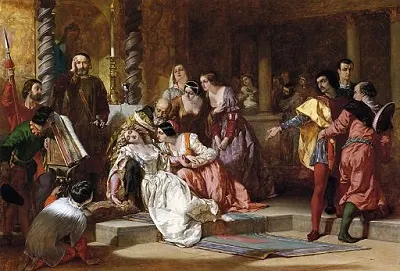
Charles I famously crossed the title Much Ado About Nothing off his copy of the play and replaced it with “Beatrice and Benedick.” But entertaining and moving as these two bantering lovers are, it is the dangerous, near-tragic accusations that Claudio makes against Hero’s chastity that drive the action of the plot. This edition comes from the 1916 Oxford University Press edition of all of Shakespeare’s plays and poems.
About This Edition
Citation
The Complete Works of William Shakespeare (The Oxford Shakespeare), ed. with a glossary by W.J. Craig M.A. (Oxford University Press, 1916).
Shakespeare, William. Much Ado About Nothing. Edited by William James Craig, Oxford University Press, 1916. Online Library of Liberty, https://oll.libertyfund.org/titles/craig-much-ado-about-nothing.
Shakespeare, W. (1916). Much Ado About Nothing. Oxford University Press. https://oll.libertyfund.org/titles/craig-much-ado-about-nothing
@book{shakespeare1916nothing,
  author = {William Shakespeare},
  editor = {William James Craig},
  title = {Much Ado About Nothing},
  publisher = {Oxford University Press},
  address = {Oxford},
  year = {1916},
  url = {https://oll.libertyfund.org/titles/craig-much-ado-about-nothing},
  note = {Online Library of Liberty}
}TY - BOOK AU - Shakespeare, William A2 - Craig, William James TI - Much Ado About Nothing PY - 1916 CY - Oxford PB - Oxford University Press UR - https://oll.libertyfund.org/titles/craig-much-ado-about-nothing DB - Online Library of Liberty ER -
Copyright
The text is in the public domain.

About the author
William Shakespeare 1564–1616
William Shakespeare (1564-1616) is probably the best known poet and playwright of the English language. He is considered by many to be the greatest poet and dramatist of all time. The plays he wrote nearly four hundred years ago for a small theater in London are now performed in more countries and more often than those of any other playwright.
Related People
Geoffrey Chaucer
Author
The greatest English writer before Shakespeare, Chaucer pioneered the use of English, rather than French or Latin, for serious literary works. He also brought all classes of society onto the page together, particularly in his masterwork, The Canterbury Tales.

Critical Responses
Works that answer or challenge this text.
- What to read next...
Much Ado Retellings
Visit site ↗Much Ado About Nothing’s battling lovers have inspired endless tributes in romantic comedies in every decade. Some see them as the seeds of Austen’s inspiration for Elizabeth and Darcy in Pride and Prejudice.
- Video
Beatrice and Benedick
RSC Shakespeare Learning ZoneVisit site ↗The Royal Shakespeare Company provides an interesting discussion of the scene-stealing Beatrice and Benedick whose witty banter is a highlight of Much Ado About Nothing..
Connected Readings
What to read next.
- Poem
Orlando Furioso
Ludovico AriostoVisit site ↗The Hero and Claudio plot is an old and often retold story. Before Shakespeare, however, it was probably best known as a part of the long narrative poem Orlando Furioso.
- Video
Kill Claudio
Visit site ↗Claudio’s accusation that Hero has been unchaste drives the action of the play. You can watch the scene where Beatrice and Benedick react to his accusations here.
Othello the Moor of Venice
William ShakespeareView title >Shakespeare’s Othello revisits the plot of false accusations against a woman’s chastity. But rather than closing with a happy, comic resolution, Othello ends in tragedy for all concerned.
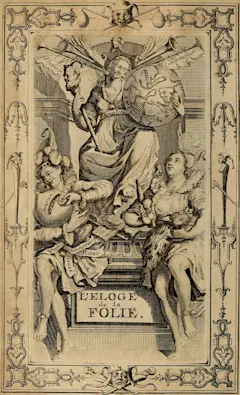
In Praise of Folly
Desiderius ErasmusView title >Shakespeare’s comedies are known for their use of the “fool.” His fools are sometimes truly foolish, and sometimes foolish in a way that reveals a deep and important wisdom. Inspiration for the wise fool can be traced to Erasmus’s Praise of Folly.
More in English literature
See all >The First Part of King Henry the Sixth
William ShakespeareThe Tragedy of King Richard the Second
William ShakespeareHamlet Prince of Denmark
William ShakespeareThe First Part of King Henry the Fourth
William ShakespeareThe Merchant of Venice
William ShakespeareThe Third Part of King Henry the Sixth
William ShakespeareTwelfth-Night: or, What You Will
William ShakespeareThe Second Part of King Henry the Fourth
William ShakespeareThe Winter’s Tale
William Shakespeare