As You Like It
Part of The Complete Works of William Shakespeare (The Oxford Shakespeare)
- William Shakespeare(author)
- William James Craig(editor)
The physical action of As You LIke It, where Rosalind and Celia are exiled from their home into the forest mirrors the psychological action, as characters find their way through confusion and pain to love and happiness. This edition comes from the 1916 Oxford University Press edition of all of Shakespeare’s plays and poems.
About This Edition
Citation
The Complete Works of William Shakespeare (The Oxford Shakespeare), ed. with a glossary by W.J. Craig M.A. (Oxford University Press, 1916).
Shakespeare, William. As You Like It. Edited by William James Craig, Oxford University Press, 1916. Online Library of Liberty, https://oll.libertyfund.org/titles/craig-as-you-like-it.
Shakespeare, W. (1916). As You Like It. Oxford University Press. https://oll.libertyfund.org/titles/craig-as-you-like-it
@book{shakespeare1916it,
  author = {William Shakespeare},
  editor = {William James Craig},
  title = {As You Like It},
  publisher = {Oxford University Press},
  address = {Oxford},
  year = {1916},
  url = {https://oll.libertyfund.org/titles/craig-as-you-like-it},
  note = {Online Library of Liberty}
}TY - BOOK AU - Shakespeare, William A2 - Craig, William James TI - As You Like It PY - 1916 CY - Oxford PB - Oxford University Press UR - https://oll.libertyfund.org/titles/craig-as-you-like-it DB - Online Library of Liberty ER -
Copyright
The text is in the public domain.

About the author
William Shakespeare 1564–1616
William Shakespeare (1564-1616) is probably the best known poet and playwright of the English language. He is considered by many to be the greatest poet and dramatist of all time. The plays he wrote nearly four hundred years ago for a small theater in London are now performed in more countries and more often than those of any other playwright.
Related People
John Dryden
Author
One of the great English poets and playwrights who followed Shakespeare, Dryden is similarly interested in portraying the importance of English history for English audiences. Dryden was also deeply interested in establishing the theater as a legitimate art form rather than just a popular entertainment.

Critical Responses
Works that answer or challenge this text.
- Video
All the World's a Stage
Benedict CumberbatchVisit site ↗Jacques’s speech the seven ages of man has become so well known that, like Hamlet’s “to be or not to be” it exists almost independently from the play. Listen to Benedict Cumberbatch deliver it.
- Music
Royal Shakespeare Company Music
Visit site ↗Music is a vital part of As You Like It. You can listen to a modern setting of the songs in from the play in this album done for a Royal Shakespeare Company Production
Connected Readings
What to read next.
- Book
Rosalynd Or, Euphues' Golden Legacy
Thomas LodgeVisit site ↗Thomas Lodge’s Rosalynde retold Euphues Golden Legacy and provided Shakespeare with his source material for As You Like It.
- Graphic
Guide to Shakespearean Cross-Dressers
Visit site ↗Like Twelfth Night, As You Like It’s comic romances are complicated by a series of men falling in love with women who are masquerading as men, some of whom then pretend to be women…and all of whom are played by the boy actors of Shakespeare’s time. Untangle some of those complications with this helpful and slightly silly graphic.
 Book
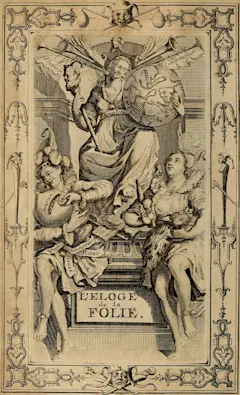
In Praise of Folly
Desiderius ErasmusView title >Shakespeare’s comedies are known for their use of the “fool.” His fools are sometimes truly foolish, and sometimes foolish in a way that reveals a deep and important wisdom. Inspiration for the wise fool can be traced to Erasmus’s Praise of Folly.
More in English literature
See all >The First Part of King Henry the Sixth
William ShakespeareThe Tragedy of King Richard the Second
William ShakespeareHamlet Prince of Denmark
William ShakespeareThe First Part of King Henry the Fourth
William ShakespeareThe Merchant of Venice
William ShakespeareThe Third Part of King Henry the Sixth
William ShakespeareTwelfth-Night: or, What You Will
William ShakespeareThe Second Part of King Henry the Fourth
William ShakespeareThe Winter’s Tale
William Shakespeare