

Michael Bentley
Lead essay · May 03, 2021
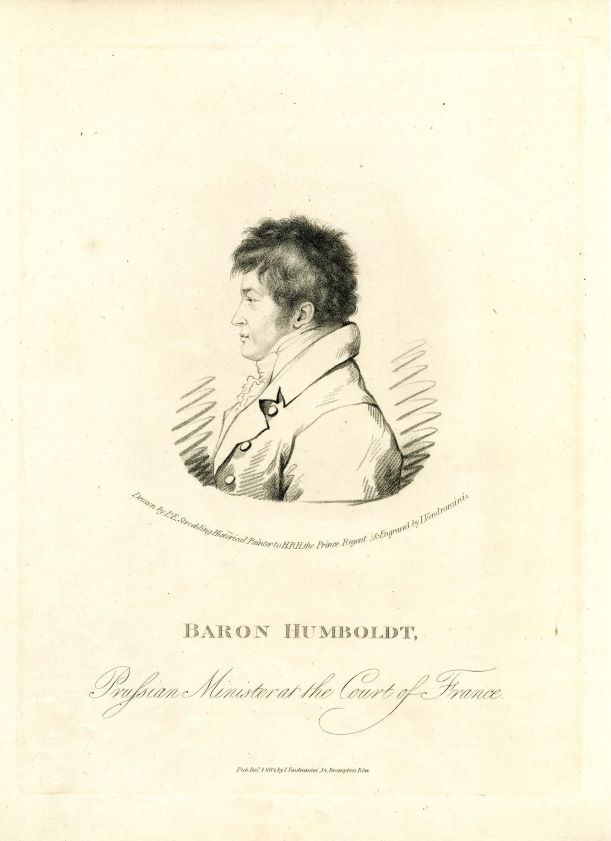
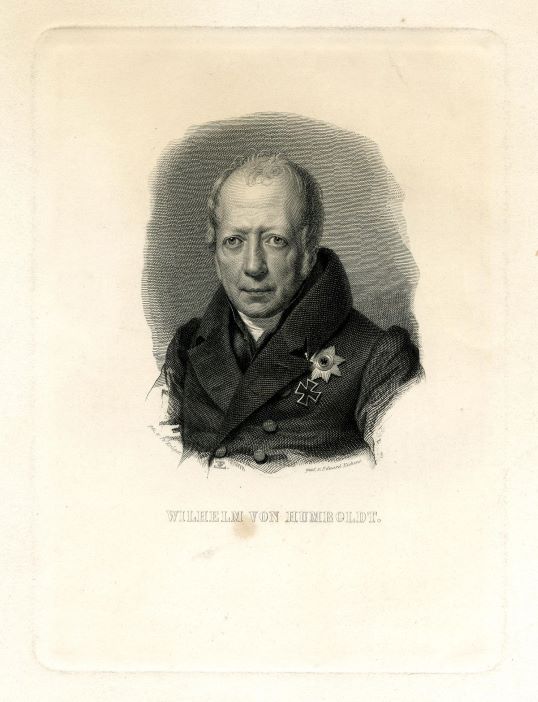
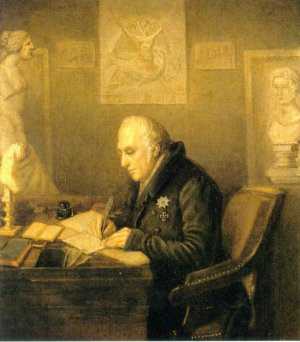
Among Liberty Fund’s excellent series of foundational texts in libertarian thought, a small volume written over a few months in 1791-2 may escape the eye when surrounded by more familiar names and books. The name of Humboldt has its own familiarity, to be sure, but it often attaches, especially in Latin America, to Wilhelm’s younger brother Alexander – explorer, naturalist, and acclaimed travel writer – rather than to the author of The Limits of State Action. Wilhelm von Humboldt (1767-1835) tends to win acknowledgment in today’s world in two locations: the University of Berlin which he did much to found in 1810 and which, from 1949, decided to call itself the Humboldt University; and among theorists of language and education who still feel some enthusiasm for Humboldt’s contributions to their field of study. As a political thinker, Humboldt mostly reaches modern ears through John Stuart Mill who acted as impresario by making reference to him in On Liberty and elsewhere. Yet, for all the frailty of this truncated text, the author of The Limits of State Action deserves to be known better because his ideas comment not only on his own ‘state’ but also on ours.
Like much of Humboldt’s writing, the Limits did not appear in Humboldt’s lifetime but only in 1852. He had wanted to modify and perhaps expand it, but he never did. That posthumous edition circulated, therefore, at exactly the moment when Mill sought to sharpen his liberalism for On Liberty (1859). The thought obscures, however, a more important one and explains why the dwelling on a text displaced in time takes us beyond mere historicism. It is this: the published version of Humboldt’s book easily becomes read as an analysis of the ‘state’ in 1791 when in fact it should be received as a picture of what the 1850s thought the 1790s looked like. By the mid-nineteenth century, both state and society had entered on their mutual transformation into complexity. Not only had western society begun a process of what the sociologists call ‘massification’ into an increasingly urbanized and anonymous conglomerate, but the ‘state’ – the thing that the 1850s took Humboldt to have had in mind – had also begun a journey towards the concept that we might recognise in the twenty-first century. Dwelling on this disturbing aperçu then prompts another observation that we need in order to open a window onto Humboldt’s text. He could not effectively delimit ‘his’ state because he did not have a state to delimit.
Humboldt did not know that. So obvious to him was the idea of the state that he did not bother to define it; he made of it a transparency, rather than hinting at the creeping, multi-layered, police-enforced, tentacular monster that some of us might call to mind in our own day. Inspection suggests that his state equated to a regime or a government or any institution concerned with compulsion and arrogating to itself some sense of sovereignty, or, if the idea abbreviated a national entity that conducted policy- especially foreign policy and war – in the name of a society. France and Britain could be called ‘states’ but so could his own Prussia, when in reality it figured merely as one constituent of the fissiparous German lands. Humboldt’s career in diplomacy in Rome and Vienna doubtless encouraged him to see those fractured entities on the Italian peninsula and within the Holy Roman Empire also as ‘states.’ Above all, he saw ‘his’ state, not as an originating force or historical sediment, but as an outcome, the product of individual wills and aspirations without whose presence no state could claim legitimacy.
Because Humboldt begins with individuals, we need to follow him to find the core of his thinking. For when he talks about discrete human beings, rather than their agglomerations, he does not rely on transparency; he defines what it is to be human with precision and passion. Humboldt had read Kant, and following him he argues that we need three things – liberty, challenge, and (his unique contribution) experiential variety – in order to ‘become’ what we have the potential to be. He sees liberty of action as fundamental to personal growth. Its exercise, so long as we do not harm others, functions as a mainstay for an individual-within-society. (Here began the distinction between self- and other-regarding behaviour popularised by Mill.) A challenge comes with that liberty because we shall in our freedom encounter the need to take responsibility for our actions and learn to cope with the adversities that confront every person. Not knowing what lies around the next corner, good or bad, encourages self-reliance and maturing. Turning to social institutions for rescue from every difficulty diminishes self-respect. It also reduces the need for ‘energy’ which stands among Humboldt’s prize values in humankind. Take it away and the other half of the binary cuts in; society begins to ‘degenerate.’ (Humboldt formulates this a century before Max Nordau gave the idea wings in the 1890s.) Our freedom, moreover, encourages individuals to behave in different ways; our challenges vary from person to person. And difference, in Humboldt's reading, maketh man. So we should not lament our difference in life-experience but nurture it, celebrate it, and go the extra mile to protect it. Like wildflowers in a meadow, we create together a carpet of colour that satisfies precisely because each plant responds to its own earth and location, bending and nodding in the breeze with others yet never abandoning its particularity.
Having conceived human personality and flourishing in this way, Humboldt can now proceed to model his ‘state’ and to ask questions about what it may legitimately do. The question shows a Janus face: it asks what should be done but also what could be done. In his otherwise very acute Introduction to the Liberty Fund edition, John Burrow misses this ambiguity in glossing the title of Humboldt’s text: Ideen zu einem Versuch die Grenzen der Wirksamkeit des Staats zu bestimmen, literally ‘Ideas for an attempt to determine the limits of the effectiveness of the state.’ This matters to his conception because Humbold’s state did not have the apparatus, the sheer administrative capacity, to penetrate society in the way that ours does, so his thought draws some of its texture from his envisioning of eighteenth-century étatisme. He wants to seek answers about what his ideal individual could reasonably expect from this imagined structure. More pregnantly, he wants to know what might reasonably be resisted.
Now his chapters turn, in Joseph Coulthard’s English translation, on the antiquated term ‘solicitude.’ Most of them have as their header ‘The solicitude of the state for …’ followed by one of a range of issues (positive welfare, negative welfare, religion and churches, civil law, criminal law, defence and so on). Humboldt’s term strikes a dissonant chord for later generations because of its connotations of anxiety or worry. But the original German does not use Heidegger’s term Sorge, which might provoke that connotation, but rather Sorgfalt, which we might better think of as ‘care’. If we silently effect that translation, then all the issues raised by Humboldt may come under the aegis of a single question framed in our own modern idiom: Does the state have a duty of care to its citizens?
Remember that Humboldt’s answer cannot float free in abstract calculation. It must operate as a derivation from his previously-constructed understanding of human flourishing, energy, and self-reliance. His answer comes early and promises no dilution. No interference with the citizen by the state carries legitimacy unless specifically stimulated by a need to protect his security against depredation by other individuals or from other states. He reaches this point by a thought experiment beginning from his initial conception of a human being:
I shall therefore adhere to the system I have hitherto adopted. I have so far begun by considering the greatest possible extension of State interference, and then tried step by step to discover where it can be diminished, until at length the concern for security is all that remains. (47)
He knows that extending interference has acquired popularity in an age of Enlightened Despotism; he concedes that some attempts at achieving it might even be effective.
But even if such laws and institutions were effectual, the harm they did would be proportionate to their effectiveness. A State, in which the citizens were compelled or moved by such means to obey even the best of laws, might be a tranquil, peaceable, prosperous State; but it would always seem to me a multitude of well-cared-for slaves, rather than a nation of free and independent men, with no restraint save such as was required to prevent an infringement of rights. (79)
Following Aristotle, Humboldt sees freedom as a negative virtue – being left alone by external agents – and not as a benefit that state may confer, however desirable the conferral may at first glance appear. It will always damage more than it can enhance.
His most paradoxical position, granted his later founding of a state university, concerns his opposition to national education, one that Mill then absurdly espoused, though it followed directly from Humboldt’s views about conserving individual difference and avoiding uniformity. Humboldt did not see, or preferred not to see, that children whose parents could not afford private education could never, through enforced ignorance, attain his other desiderata in personal flourishing and future development into citizenship. But then, his sense of a society feels no wider than his sense of a state. He seems to hold in his mind’s eye an intimate, perhaps rural, settlement: an agricultural village in Pomerania; the gardens of Tivoli or a piazza in Siena; a white-picket fence around a church spire in New England. Class makes no appearance. The French Revolution screams its absence for all the noise still in his ears. The economy is inconsequential. Women do not exist. His thought experiment continues its placid course, ruling out all meddling with an individual, a ‘citizen,’ created in his own imagination.
It is facile, of course, to criticize any eighteenth-century writer by presenting objections based on the concerns of a different era. But in turning Humboldt’s system on ourselves and asking what, if anything, its lessons hold for us, it becomes important to try to identify what the intervening years have done and locate the mechanisms in which ‘his’ state has become ‘ours.’ Some of that transformation Humboldt could have predicted from his own observations: the state’s growth in ambition; the development of more intrusive procedures to accomplish those ambitions; the increasing reluctance to hold out against all interference on the grounds of doctrinal purity. He might have anticipated the growth of cities to match Paris and London even if he might not have envisaged urban rookeries teeming with the poor or immigrant densities like those of New York’s Lower East Side. One accelerating vehicle, however, he may not have seen coming. The later nineteenth century, within earshot of the publication of the Limits, saw the erosion of Humboldt’s principal binary. He thought it both axiomatic and uncontroversial that individuals were ‘Us’ and that the State was ‘Them’. He could not have predicted that the distinction would fade in a post-Hegelian thought-world to the point that the State would become not merely a facet of Us but a manifestation of Our Better Self: the expression of a higher morality that we, as individuals, could never hope to achieve. Humboldt had taught that the State could legitimately enforce security because that need formed the sole requirement that the individual lacked the means to acquire alone; it could never and should never promote morality. ‘Our’ State believes itself to have learned that it must promote morality because the individual cannot be trusted to acquire it alone. And because we are doing this to ourselves in the new State order, rather than succumbing to an external oppressor, resistance becomes widely deemed futile and contemptible.
Placing this situation within the language developed by Humboldt, the modern State, ‘our’ State, has arrogated to itself precisely that ‘duty of care’ whose rejection stood at the centre of Humboldt’ political thought. The New Deal saw its origin. After World War Two, the welfarist regimes of Scandinavia, in particular, but also the foundation under a socialist government of Britain’s ‘welfare state’ promised social security from the cradle to the grave. Most of Europe developed similar systems with greater or lesser state involvement. What began as a state-led démarche then began its journey from a political fact to an assumed ‘human right.’ I am a citizen. I pay my taxes. The State owes it to me to care for my well-being even if the ‘challenges’ facing me, the ones that Humboldt thought critical for generating energy and resourcefulness, have arisen to confront me because of my own laziness, improvidence, or stupidity. Obamacare wrote the lesson in the sky and left many citizens, then and since, more disoriented than comforted.
At no time has this crux made itself felt so painfully as in the time of Covid. In Britain the National Health Service received promotion from what had been an organization supposed to treat sick people into a religious icon symbolizing not only the State’s duty of care but the individual’s duty not to get sick in order to conserve the health service. ‘Save the NHS. Save lives.’ In the US, some months behind the European pace of infection but then suffering an explosion in numbers, controversy arose over face-masks and a developing sense that the State had a ‘right’ to compel their use. What are the ‘limits’ of this evangelical ‘duty of care’? The worry does not emanate from a sense that the State now knows no limits but rather from a suspicion that asking the question at all should be limited to consenting adults in private.
Would Humboldt have worn a face-mask? Would he have obeyed the rules of social distancing? ‘His’ State perished long ago. His prescriptions for its pruning may strike modern readers as a literary curiosity in a world that is no longer his world. We are where we are. The global West has learned that it can manufacture compelling forms of étatisme that fertilize State structures and individual lives into an organic compost out of which grow, apparently, the green shoots of personal liberty-within-security. Humboldt’s denigration of that compound as a state of ‘slavery’ sounds at once fanciful and brutal in his wanting the State to say to its citizens that they are on their own. Nor can the hands of the clock be unwound. Two centuries of social and political development do not yield to reversal. From a period when commentators compared constitutions to clocks, Humboldt’s pendulum no longer makes its slow swing.
There remains, all the same, something trans-temporal and transnational about The Limits of State Action. Its legacy does not reside in its prescriptions, now impossible to enforce. Rather, the persistence wells up from its assumptions. Humboldt made his State after first making Man: the former he deduced from the latter. The knife that he took to his State still exists – rusty and blunted by time, certainly, but the blade continues to have its uses. Wielding it does not involve the disaggregation of every State apparatus, a piece of butchery that modern society would deem as undesirable as it is unworkable. But it does enjoin a return to Humboldt when he teaches that, before individual personality surrenders to collective organization, it must reflect on and prioritize what it is to be a human being and what are the conditions within which personality, in its myriad difference and integrity, may thrive.
He did that in this early, suggestive essay and we should listen to him.
Edoardo Tortarolo
Response · May 06, 2021 · Own page
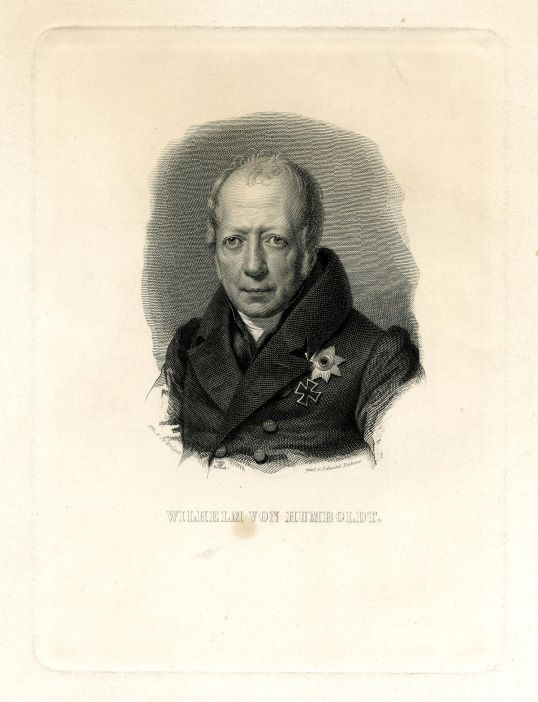
Michael Bentley has raised two different and equally essential questions in his reading of Humboldt's iconic essay on the limits of State authority. The first addresses the question of what Humboldt meant when he wrote down his ideas. The second is: does Humboldt help us understand our current predicaments? These are straightforward questions, and Michael Bentley gives straightforward answers.
When Wlhelm von Humboldt worked out his thoughts, he was a young man of 24 in Berlin, where he held a minor post in the local court (Kammergericht) for some time. In the summer of 1789 he traveled to Paris with his former preceptor, Campe, and watched the fateful events that led up to the abolition of feudal rights. Back in Berlin, he read a lot and wrote for himself and the public. While his thoughts on the limits of State authority were printed in their entirety as late as 1851, his comments on the French revolution and the 1791 Constitution appeared in the Berlinische Monatsschrift (Berlin Monthly Review), the flagship journal of the Berlin Enlightenment.
The Berlinische Monatsschrift was among the numerous publications that the relatively liberal government of Frederick II had favored. In the 1780s they became the expression of a critical approach to how the State acted, respectfully criticizing crucial measures taken by Berlin institutions, particularly in the field of religion and in fiscal policy. Together with the army based on the "canton system" of conscription, they were the most visible expressions of what the State meant for the average subject. Michael Bentley is certainly right in highlighting the essential difference between 'our' State and Humboldt's State, but the continuities deserve to be mentioned.
The Prussian (and for that matter the French) State in the late 18th century was much less pervasive and less moralizing than the 21st-century State. Still, men in 1791-1792 could not foresee future technological and ideological developments. To Humboldt, the State, no matter how we would describe it, was a very tangible presence, definitely more than was desirable. And it was to be stopped from encroaching on the human prerogatives that more than anything else pertained to man's moral character. After Frederick died in 1786, two areas of moral importance were impacted by measures restricting freedom of religion, through an edict checking the freedom of the pastors to preach, and freedom of the press, enforcing forms of preventative control that were disregarded for many years. (Humboldt himself submitted his manuscript to the Berlin censor provoking mixed feedback: one censor denied approval, the other approved with reservations).
These changes, in relative terms, were clearly for the worse. Even in Berlin, voices were raised to argue for autonomous developments of individuals. In 1790 Gottlob Nathanael Fischer, an otherwise unremarkable pastor and writer, alluded to these restrictions in his essay for the Berlinisches Journal für Aufklärung (Berlin Journal for the Enlightenment): "[T]he supreme law for authorities and subjects alike is to act following the laws of absolute spontaneity in the natural sphere, complying with the universal natural laws as much as possible". A discourse on human energy, personal impulse towards the good and beautiful, and respect for the variety of individual developments circulated in Berlin and Germany around 1790. It was articulated in positive terms.
Humboldt's stress on the limitations to be placed on the State Sorgfalt, as Michael Bentley has pointed out, was balanced by his concern for the active forces inherent to man. In The Limits of State Authority the word Sorgfalt, the condescending attitude of the State that takes care of its subjects to foster their happiness, is mentioned 39 times. Its frequency reflects Humboldt's mistrust in the modern State. However, the set of words that express energy (18), activity (36), force (70), and self-cultivation (Bildung, 34) appears an impressive 158 times. On top of that, freedom occurs 80 times. Dynamic notions set the tone and define the intonation of the essay. Therefore, my argument would be that Humboldt’s perspective was defined by his passion for human potential, his contemplation of the breath-taking force emanating from humans, his trust in diversity and self-invention as the foundation of happiness. To uphold this principle, careful scrutiny was necessary for the State to be kept in its proper place: not annihilated, but restrained as much as possible, especially when a new government was established, as was the case in France in 1791.
His strategy was to define the theory of human development clearly and – subsequently – adjust historical reality to the principle of autonomous self-development. The crucial dimension was temporality: happiness was possible across time, since, as Humboldt stated at the very beginning:
[I]t is in the prosecution (Streben) of some single object (Ziel), and in striving to reach its accomplishment by the combined application (Aufwand) of his moral and physical energies (Kraft), that the true happiness of man, in his full vigour and development (das Glück des rüstigen, kraftvollen Menschen), consists. Possession, it is true, crowns exertion with repose; but it is only in the illusions of fancy that it has power to charm our eyes.
In focusing on the effort rather than on results, on the potential implied in any endeavor rather than on the real, tangible outcome that "crowns exertion", Humboldt was carrying on and developing the insights of the German philosophers with whom he was familiar and who shared his languages codes and modes of communication: Lessing, Herder, Kant, Goethe, and Schiller among the others. From the point of view of what Humboldt really meant, it makes more sense to read his thoughts along with Friedrich Schiller's Über die ästhetische Erziehung des Menschen (On the Aesthetic Education of Man) more than any other text. Humboldt's thoughts went through a process of regeneration and globalization thanks to John Stuart Mill's interpretation of the English translation in 1854, but their first life was lived in letters, conversations, and manuscripts going back and forth from Berlin to Jena in the 1790s and centered on the ideals of self-development and self-cultivation.
Humboldt's posthumous life is still very much with us. This is the second important point that Michael Bentley is making. Yes, indeed: the 20th and 21st centuries have created a massive public network of institutions and agencies that have taken much if not all the place that Humboldt assigned to the moral human being, acting on his or her own to push his or her potential to the limit. And States, far more than in Humboldt's day, have proved to be the persecutors and executioners of their citizens, in some cases at least after winning legal or semi-legal democratic elections. Far from focusing on providing happiness to their population within a utilitarian framework, States have declared significant groups unworthy of the minimal safety that Humboldt advocated, no matter how grudgingly. The distinction between professional soldiers and civilians, that Humboldt disparaged as a hurdle on the way to moral self-accomplishment, has been essentially obliterated in the 20th century, as wars between regular armies have turned into scorched-earth wars against the civil populations, on both sides of the national frontiers. Everybody has been recruited to fight in the 20th century, and global terrorism as much as the war on it has blurred many distinctions in the roles and responsibilities.
The transformation of the notion of the State has been picking up pace, and it is imperative to steer its course carefully. Bentley is definitely right in claiming that there is a transtemporal and transnational element in Humboldt's thoughts. They define a vision of being human in society that, despite its transformation, still resonates with us (do we remember "the death of the subject"?). In 2021, they point in the first place to the energy, the openness to the present and the future, and the moral character that are the proper focus of Bildung. It is possible to perceive confidence in the ability of human beings to meet the challenges of their time and rise to the occasion, a positive attitude to see what has gone wrong and redress it and to prosper in the gratifying awareness of being the best of what they can get out of themselves.
Nobody knows for sure if Humboldt would have worn a protective mask in times of an unprecedented pandemic and if he would have kept social distancing from strangers. My guess is that the answer is probably yes: he would have worn a mask even before malaria killed his nine-year-old son in 1803 during his time as a Prussian envoy in Rome (as a consequence, he recommended his wife Caroline to go to Paris and safeguard the health of their surviving children). It is also an easy guess that his intensely aristocratic and elitist mindset would have resented the mobilization of collective fears on all possible media and the manipulative take of primordial emotions that the epidemic has occasioned in the age of real-time communication. However, I very much doubt that his notion of enlightened vitalism, preservation, and unfettered promotion of the natural force and élan of men, could ever contradict the necessity of increasing the chances to live a meaningful life.
Hartmut Kliemt
Response · May 10, 2021 · Own page
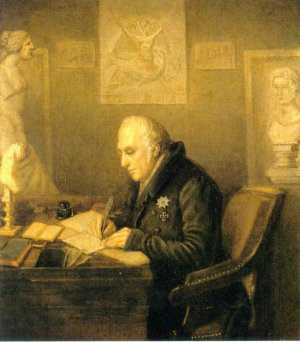
Michael Bentley suggests that “all the issues raised by Humboldt may come under the aegis of a single question framed in our own modern idiom and it would take this form: does the state have a duty of care to its citizens?” Approaching “The Spheres and Duties of Government," SDG,[1] under the aegis of this question shows Humboldt as outlining basic principles of a political philosophy of WEIRD (Western, Educated, Industrialized, Rich, and Democratic)[2] societies at the critical historical juncture when they took off to dominate the world.
1. Care for security against rights’ violations and beyond
After making a preliminary distinction between caring for the ‘good’ of citizens and preventing ‘evil’, Humboldt further distinguishes “evil which arises from natural causes” (SDG, 20) from evil “which springs from man’s disregard for his neighbour’s rights” (SDG, 20). Security against the evil arising from a disregard for others’ rights is “the only thing which the individual cannot obtain for himself and by his own unaided efforts” (SDG, 53-54).
At least among the many, a state is necessary to guarantee its citizens security against the “moral” evil of rights’ violations by fellow citizens. Since “without security, there can be no freedom” (SDG, 53) and without freedom “(t)he true end of Man, …, the highest and most harmonious development of his powers to a complete and consistent whole” (initial line of chap. II, SDG) cannot be successfully pursued, a state is necessary and desirable to further human flourishing.
For Humboldt it is, however, neither necessary nor desirable to let the state provide for security against natural evil. It is unnecessary since individuals can self-organize remedies for natural evil in their private capacities (e.g. through mutual aid organizations or by private contracting and exchange on insurance and other markets). It is undesirable since having to cope with natural evil ‘nudges’ man on towards the “highest and most harmonious development of his powers to a complete and consistent whole.”
Though Humboldt’s basic line of argument captures the secret of the political success of WEIRD societies with succinct analytical clarity most of their citizens will not agree. They will “weirdly” invoke natural rights to universal protection of all men against moral evil and also demand that individuals be protected against the natural evil of preventable imminent threats to life and limb.[3]
2. Rights a priori and a posteriori
“(R)easons for wishing there were such things as rights, are not rights; -- a reason for wishing that a certain right were established, is not that right -- want is not supply -- hunger is not bread.”[4] Unlike Jeremy Bentham who shortly after the preceding quote classifies rationalist a priori theories of natural rights as “nonsense upon stilts,” Humboldt occasionally uses the term “natural right” approvingly, but he does so only to refer to traits of social institutions one would expect to prevail for a posteriori reasons that come to mind “naturally."
For instance, Humboldt observes that “our states are in a far more favourable position than we can conceive that of man in a state of nature to be (closely knit together, as they are, by innumerable treaties and bonds of alliance, and by mutual fear …)” (SDG, 53). That is, among a few states or in a small society of a few individuals concrete social institutions may – as we would express it today – “spontaneously” emerge and as a matter of conventional fact bring about what Hume called “the three fundamental laws of nature, that of the stability of possession, of its transference by consent, and of the performance of promises.[5]
Among the few, rights and law can exist independently of the hidden hand of the state and in that sense “naturally." But for Humboldt only a state can “artificially” create the security that enables large numbers of individuals to interact and contract in the “Company of Strangers”[6] as legal equals'' under some form of rule of law in a Great Society. Humboldt’s detailed discussions of tort law, risk, and the limits to contractual commitment power treat rights as social conventions that co-evolve with the state and state action.[7] Accordingly, the answer to questions concerning the extent of the state’s “duty of care to its citizens” is not simply that the state must enforce natural rights that are known a priori and given independently of specification by the state. It is “WEIRDly” teleological.
3. Instrumental duty of care
Under the conventional assumption that one who wants an end is “instrumentally obliged” to endorse the necessary means, ends can give rise to contingent duties. In this vein, those who as a matter of fact share Humboldt’s ideals and regard his implicit empirical hypotheses concerning what furthers human flourishing as sufficiently corroborated, can interpret his essay as an explorative study in basic principles of “state mechanism design." Other than conventional economic mechanism design, Humboldt’s allows for non-material ends and pursuits, but quite in line with the skeptical meta-ethics of modern economics, a posteriori rights, obligations and duties can all be justified relative to factually accepted ends. [8]
Nobody needs to “own” Humboldt’s “true end of man,” but it is not merely a far-fetched elitist vision of a Western, Educated, Rich young man writing in the wake of the French Democratic and the English Industrial revolution. Quite to the contrary, what may be called Humboldt’s “quasi-religious cult of individual freedom and responsibility” seems as a matter of fact deeply rooted in the cultural heritage of our WEIRD states.
The presumption of the liberal “righteous mind”[9] that the principles of WEIRD societies are universal may be illusory. Yet, we can start from where we as a matter of fact are in the co-evolutionary process of “genes, mind and culture”[10] in our WEIRD societies and follow Humboldt’s method in projecting a desirable improvement path of WEIRD states into the future.
4. Onwards and Upwards
As Michael Bentley perceptively emphasizes, Humboldt saw himself as starting from the most comprehensive conception of the state’s “duty of care to its citizens” and then removed all uses of the monopoly power of the state that could conceivably be fulfilled by citizens in their private capacities. He deemed this reduction desirable in view of what he identified as the true end of man and what is conducive to pursuing it; yet, what if man does not make that “true” end his own end?
Recalling the British Moralists’ fundamental insight that it is “on opinion only that government is founded”[11] it is not at all clear that the Humboldtian “deconstruction” can meaningfully go on until the state takes care only of the “security against the evil arising from a disregard for others’ rights."[12] To go all the way down to the minimal state may be socially infeasible if it erodes the opinion supporting the Hartian “rule of recognition”[13] on which the political sub-order of Humean natural law is ultimately founded.
One should also note that Humboldt’s minimal state is a welfare state of sorts: funded by coercive taxes it provides its protective services in form of fixed “equal rations of care” independently of the citizens’ willingness or ability to pay for them. Therefore, in a Humboldtian framework, getting rid of the welfare state cannot be the aim, only its devolution. But moving towards the minimal state along the continuum of welfare is conceivable. Now, in a minimal state equal legal care for security against the “evil arising from a disregard for others’ rights” is provided inclusively on condition of citizenship only, without discrimination according to willingness and ability to pay for protective services. This is hard to distinguish from inclusive demogrant schemes that treat all citizens of a state in a schematic non-discriminatory way equally as beneficiaries of non-means-tested claims.
Against this background, Milton Friedman’s and James Buchanan’s tentative endorsements of negative income tax demogrant schemes are not occasional ad hoc remarks with which otherwise “sound” members of the Mont Pelerin tried to make a gesture of compassion.[14] They should rather be seen as early explorative steps in a Humboldtian program of minimizing the state’s regulatory role within the constraints of “opinions” concerning legitimacy and repugnance that prevail among citizens of WEIRD societies.[15]
Of course, what is feasible does not only depend on opinions of legitimacy but is also subject to financial and other constraints. Yet, classical liberal political economists who endorse the ideal of a society of free and responsible individuals may be well advised to adopt a comprehensive Humboldtian perspective when it comes to questions of sustaining the Humboldtian ideal of a private law society.[16]
Endnotes
[1] All Humboldt citations in this text refer to Humboldt, Wilhelm v. The Sphere and Duties of Government. (London: Chapman, 1854) in the form “SDG, page no”; https://oll.libertyfund.org/page/humboldt-government. Michael Bentley used the alternative translation “The Limits of State Action” which also appeared in print at Liberty Fund; https://www.libertyfund.org/books/the-limits-of-state-action/.
[2] On WEIRD societies see Joseph Henrich. The Weirdest People in the World: How the West Became Psychologically Peculiar and Particularly Prosperous. (London: MacMillan, 2020). With “Better in the West!” James Buchanan summed up his views on “identity politics." See Arnold Kling's review at Econlib.
[3] State-sponsored variants of the so-called “rule of rescue” are implemented in all WEIRD societies; see e.g. John McKie and Jeff Richardson. “The Rule of Rescue.” Social Science and Medicine 56 (July 1, 2003): 2407–19. https://doi.org/10.1016/S0277-9536(02)00244-7.
[4] Jeremy Bentham. Anarchical Fallacies, vol. 2 of Bowring (ed.), Works, 1843, Article II; Liberty Fund, https://oll.libertyfund.org/title/bowring-the-works-of-jeremy-bentham-vol-2#lf0872-02_head_411
[5] See David Hume. A Treatise of Human Nature. (Oxford: Clarendon, 1896 (Selby Bigge ed.)), bk iii, part ii, sec. vi, first sentence, p. 526, https://oll.libertyfund.org/title/bigge-a-treatise-of-human-nature. Whether or not such “Humean natural law” can conceivably be realized beyond the limits of small anarchical societies by suitable conventions without extending the division of labor to the enforcement of norms through a specialized legal staff backed by the fundamental coercive power of a state is contested. The “Folk theorem” logic of this problem was seminally spelled out in Michael Taylor. Anarchy and Cooperation. (London et al: John Wiley, 1976).
[6] See Paul Seabright. Company of Strangers. (2nd Revised ed. Princeton, N.J: University Press Group Ltd, 2010).
[7] For instance, in chapters IX-XIII of SDG voluntary slavery, marriage without exit options, etc. are discussed often in a strikingly modern law and economics way. Later scholars who, like Nozick, discuss these problems philosophically seem conspicuously unaware of their precursor; see Robert Nozick. Anarchy, State, and Utopia. (New York: Basic Books, 1974).
[8] Relative to the given (ideal) ends SDG is a stylized technological description of a suitable state mechanism. For “technology” as a descriptive theory see Hans Albert. Treatise on Critical Reason. (Princeton: Princeton University Press, 1985).
[9] See Jonathan Haidt. The Righteous Mind: Why Good People Are Divided by Politics and Religion. (London: Penguin, 2013).
[10] Alluding to Charles J. Lumsden and Edward O. Wilson. Genes, Mind, and Culture. The Coevolutionary Process. (Cambridge: Harvard University Press, 1981).
[11] See David Hume. “Of the First Principles of Government,” in Essays, Moral, Political, and Literary. Part I, Essay IV, p. 32 https://oll.libertyfund.org/title/hume-essays-moral-political-literary-lf-ed#lf0059_label_131.
It is insufficiently acknowledged that late in his life Hobbes obviously under the impression of criticisms of his basic homo oeconomicus model already came around to acknowledge that ." the power of the mighty hath no foundation but in the opinion and belief of the people." (Thomas Hobbes. Behemoth, Chicago: University of Chicago Press, 1682/1990, p. 16.).
[12] For instance, without implementing a “rule of rescue” that guarantees state sponsored help in cases of the natural evil of imminent threats to concrete life and limb, WEIRD, rule of law societies will not be deemed legitimate by their citizens.
[13]See Herbert L. A. Hart, The Concept of Law (Oxford: Clarendon Press, 1961).
[14] See on this in more detail Hartmut Kliemt. “On Justifying A Minimum Welfare State.” Constitutional Political Economy 4, no. 2 (1993): 159–72.
[15] Alvin E. Roth. “Repugnance as a Constraint on Markets.” Journal of Economic Perspectives 21, no. 3 (September 2007): 37–58. https://doi.org/10.1257/jep.21.3.37.
[16] See on this Humboldtian „ordo liberal“ ideal which became politically influential in postwar Germany through the Freiburg School of Political Economy, Franz Böhm. “Privatrechtsgesellschaft und Marktwirtschaft.” ORDO 17 (1966): 75–151.
Hardy Bouillon
Response · May 13, 2021 · Own page
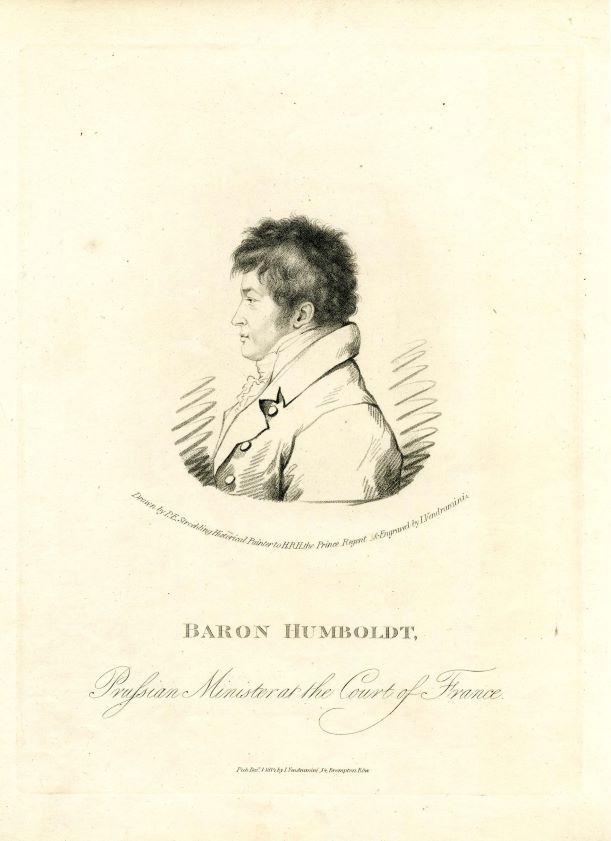
If the purpose of a lead essay is to prepare a delicious feast for the reader while leaving enough room for the correspondents to make them look as if they were a useful part of the culinary team, then Michael Bentley is a chef as one would wish.
In any case, I have only a few toppings to add. They relate to Humboldt’s State, his individualist approach in relation to the dictates of reason, negative and positive welfare, and the three things to ‘become.’
To start with Humboldt’s State, I wonder whether the frying time should be as long as suggested. By that I don’t mean the publication date, which – to my knowledge – was 1851 rather than 1852. What I have in mind is Humboldt’s State when he wrote what was later published as his Limits of State Action. Wasn’t his state already at the close of the 18th century “a state to delimit”? Take for instance Wöllner and the shape the Prussian Religious Edict of 1788 took under his aegis. Contrast the religious freedom the Edict granted to all Christian faiths with the prohibitions and rulings it included. Catholics and Jews had not to talk about their faith in public and were inhibited from proselytizing, while a very long list of religious rulings erased the variety of Protestant practises and favoured the wishes of the Concordantia Fratrum Roseae et aureae Crucis. Should that not make us think that Humboldt clearly wanted to delimit such state interventions? After all he suggested,
that all which concerns religion lies beyond the sphere of the State’s activity; and that the choice of ministers, as well as all that relates to religious worship in general, should be left to the free judgment of the communities, without any special supervision on the part of the State. (56)
Of course, Humboldt did not live to see the fraternalistic welfare state of the mid-19th century, but did he not experience its forerunner, the paternalistic welfare state? Was Enlightened Despotism not already stretching out with each of its tentacles to reach almost all the spheres of the contemporaries Humboldt had in mind?
Taking Humboldt at his word, don’t we have good reasons to assume that religion was not the only but only one out of many spheres where Humboldt’s State was active?
I am speaking here, then, of the entire efforts of the State to elevate the positive welfare of the nation; of its solicitude for the population of the country, and the subsistence of its inhabitants, whether manifested directly in such institutions as poor laws, or indirectly, in the encouragement of agriculture, industry, and commerce; of all regulations relative to finance and currency, imports and exports, etc. (in so far as these have this positive welfare in view); finally, of all measures employed to remedy or prevent natural devastations, and, in short, of every political institution designed to preserve or augment the physical welfare of the nation. (17)
True, Humboldt did not describe all those state interventions in detail. His book is not a description of the welfare state, its systemic growth, and the inconsistent reactions in society and media to it.
Take up a daily paper and you will probably find a leader exposing the corruption, negligence, or mismanagement of some State department. Cast your eye down the next column, and it is not unlikely that you will read proposals for an extension of State-supervision. Yesterday came a charge of gross carelessness against the Colonial Office. To-day Admiralty bunglings are burlesqued. To-morrow brings the question, "Should there not be more coal-mine inspectors?"’ (Over-Regulation, 1853, cited after Herbert Spencer, The Man Versus the State, with an Introduction by Albert Jay Nock, Caldwell 1960, 123)
Quotes like the one above we find nowhere in Humboldt’s Limits of State Action, but all over in Herbert Spencer, namely in his essay on Over-Regulation, published shortly after Humboldt’s Ideen. But although Humboldt had a different approach, it appears to me that he (rightly) thought he was facing a monster when writing about the state. Sure, the monster of the Enlightened Despotism had not the “desired doneness,” compared to the one “that some of us might call to mind in our own day.” It surely was different in size and complexion. However, I am afraid we hardly can say that Humboldt was not “hinting at the creeping, multi-layered, police-enforced, tentacular monster.”
Another topping I want to suggest pertains to the individualistic concept of Humboldt’s State. Agreed, “Humboldt begins with individuals,” but this is only part of the beginning, for it is not for them to decide on the shape and scope of the state. Shape and scope of the state are to be determined by the “true end of man,” namely “the highest and most harmonious development of his powers to a complete and consistent whole.” To Humboldt, this end is “not suggested by vague and transient desires,” but “prescribed by the eternal and immutable dictates of reason.” (13)
As all conjurors of the dictates of reason do, Humboldt apparently believed he knew those dictates and wanted us to believe that he was right in his conception. Be that as it may, to Humboldt there are only few restrictions to individual liberty possible. He states two conditions to be necessary for man’s pursuit of his true end, namely “freedom and variety of situation.” Only if the exertion of the first endangers the second, then freedom should be restricted. This seems to be the core argument Humboldt uses when arguing for state abstinence or state action in protecting the liberty of individuals. Therefore, to him, a “contract which ends in the slavery of the person contracting” was not enforceable by law, no less were “fidei commissa.” (86) To Humboldt, the state should abstain from enforcing freedom of contract in such cases and should intervene when freedom of contract could be misused. “Taking away a man’s life with his own consent should be exempt from punishment, unless the dangerous abuse of this exemption should seem to necessitate a criminal law.” (86) There are a few other cases of that sort, where Humboldt allowed the state to deviate from the road of “negative welfare” and take the road of “positive welfare.”
What is freedom good for, if its exertion may lead to its abandonment? The hidden argument behind that question is not implausible in the first place, but it is much less convincing at second glance. The threat of voluntary abandonment of freedom is a logical implication of freedom. Granting others (the state) the power to protect us against such “misuses” willy-nilly implies the abandonment of freedom. In other words, Humboldt’s state had a predetermined breaking point.
My final topping is more a suggestion to take away or replace one topping, namely “challenge” (the second of Bentley’s ‘things in order to become’), which I could not find in Humboldt, at least not among the two conditions he requires for the pursuit of man’s true end. Does not the challenge come along with the second condition “variety of situations”? Is not the logic of individual freedom in Humboldt that it allows individuals to increase said variety by interacting, while reducing such interactions by state interference into freedom lessens the natural scope of the situations spontaneously created? Is not the former the kind of negative welfare the state should promote, while the latter is the sort of positive welfare coming about by artificial increases of the “variety of situations” that Humboldt abhors?
The modern welfare state owes much of its charm to the idea that it artificially increases the variety of situations of the one who for lack of luck (endowments, talents, health, faculties) finds few opportunities on the market for the “development of his powers to a complete and consistent whole.” By the same token, this idea takes away much of the monstrous impression the modern state otherwise may leave. However, the bigger the share of such artificial situations, the greater the uniformity among the situations and the lesser the challenge the individual needs to face in order to develop his powers. It is perhaps there where the second of the “things in order to become” comes in.
It is not mainly for systemic reasons that Humboldt liked challenges which implied vital risks. Humboldt was a great admirer of those who looked for the greatest challenge and by doing so showed “spirit of daring, devotedness and self-sacrifice.” He “observed that all those situations in which contrasting extremes are most closely and variously intermingled, are the deepest and richest in interest, and conduce most remarkably to human development.” He thought that men “having the highest in view, can dare to set the highest at stake.” (36) He thought of both, of antique warriors and of contemporaneous adventurers, like Pilatre du Rozier, who lost his life in Montgolfiers’ balloon while trying to cross the canal.
Michael Bentley
Humboldt and What It Is to be Human · May 19, 2021
My interlocutors bring important contributions to our discussion: Edoardo Tortarolo through his knowledge – greater than mine - of Enlightenment political thought, especially in the German lands; Hartmut Kliemt through his expertise in political economy and his proposed revisions of what Humboldt’s state (and ours) amount to; and Hardy Bouillon who charmingly carries a culinary spoon to conceal the philosophical stiletto in his other hand, drawing blood in the gentlest possible way from my less plausible contentions.Two propositions that I wish to defend, all the same, are the following. First, that Humboldt did not have before him a state to delimit; and, second, that Humboldt conceived his state as a deliberative outcome whereas ours is an always-already precipitate with intrinsic intractabilities.I am told that Humboldt shared a created environment with at least two ‘states:’ that of Frederick the Great in Berlin and of Maria Theresa in Vienna. These regimes made their subjects do things; their subjects recognized that the compulsion possessed legitimacy as well as inevitability. But all regimes do that and they do not ipso facto become states in the act of doing it. They remain regimes. Weber misconstrued the point in announcing that states must be understood as agencies that possess a monopoly of force. They need in fact to possess a good deal more; and the ‘more,’ I argued, came into being in the three generations after Humboldt’s death. That transformation seems to me pivotal in making sense of the modern state.I neither believe that Humboldt simply failed (reasonably) to foresee later developments nor do I see – as I suspect Hartmut does – an historical ‘process’ that would lead inevitably to WEIRDness in modern society and into which Humboldt’s state needs to be enfolded. These moods to my mind detract from Humboldt’s singularity and the zeitbedingt character of his thought. And Hardy’s stiletto misses, for once, in saying that Humboldt’s state was a ‘forerunner’ of the modern one. I claim that it is better conceived as a different entity and that no historical configuration is a ‘forerunner’ of anything else. The contestation rests, of course, on a healthy divergence of fields. Economists and philosophers have no difficulty with teleology. Historians vomit over it.In drawing a severe contrast between Humboldt’s state and that with which we are all too familiar, I wanted to draw attention to a certain, time-deep disposition in the behaviour of a ‘state’ in an advanced, Hartmut might want to say WEIRD, society. This has implications for libertarian theory. It implies that the Thatcherite persuasion in Britain, with its language of ‘rolling back the frontiers of the state’ did not understand what it was up against because the modern state has no frontiers, only tentacles and rhetorical chloroform. It observes that the more extreme anti-statism in the US may equally have bitten off more than it can chew. It may be that a ‘minimalist welfare state’ in Hartmut’s formulation, can square what looks like a circle and become practical politics. Yet in most societies of the West, the pursuit of an organic ideal, the we-are-all-in-this-together style of discourse, has produced a congealed culture of governance-within-society that bears no relation to Humboldt’s optimism and no longer permits his open future.His legacy does not disappear with that closing future. It becomes a poetic appeal to remember what it is to be human.Hardy Bouillon
Moral Stance verses Moral Sense · May 21, 2021
It does not come as a big surprise that modern constitutions have a hard time if they attempt to suit both the freedom individuals ask for and the moral sense democratic constitutions nourish. In light of the lead essay and the addenda as regards security and the undermining of human morality in our WEIRD states, it might be worth turning to morality as a safeguard of liberty in a constitutional state, classic or modern. Of course, Humboldt dealt only with the classic version, for he did not live to see its modern democratic heir. Humboldt saw in the “State constitution … a necessary evil” (105), not at all a safe haven, neither for liberty nor for morality. In order to provide its citizens with the security they need to attain their true end, the state has to assure them “legal freedom,” threatened not “by all such actions as impede a man in the free exercise of his powers, and in the full enjoyment of all that belongs to him, but only by those which do this unrightfully.” (67) Humboldt was aware that he “who utters or performs anything calculated to wound the conscience and moral sense of others, may indeed act immorally; but, so long as he is not chargeable with obtrusiveness in these respects, he violates no right.” (69f.) Humboldt justifies the toleration of immoral behaviour – even if it is calculated – with the observation that “it was free to those who were exposed to the influence of such words and actions to counteract the evil impression on themselves with the strength of will and the principles of reason.” (70) The strength of his argument is that it serves two masters. It safeguards freedom against accusations claiming its exercise to wound the moral sense of others. It also makes clear that the immoral performances of our fellow citizens contribute to the “variety of situations” which allow us to develop moral stance, and thus help man in the “harmonious development of his powers” (13), simply by “the strength of will and the principles of reason.” It is the moral stance of the individual, not the moral sense of others, that Humboldt guards.If Tortarolo is right – and I am afraid he is – when saying that in our days “a massive public network of institutions and agencies […] have taken much if not all the place that Humboldt assigned to the moral human being,” then it will be a difficult to pave the way for the moral human being to find a way back to the place Humboldt had reserved for him.Edoardo Tortarolo
Liberalism's Breaking Point? · May 25, 2021
In his reading of Humboldt’s The Limits of State Action, Michael Bentley is undoubtedly right in at least one respect. There is a vital necessity to turn back to the classics of liberal and libertarian principles after the pandemic and read again, with fresh eyes, Humboldt’s short treatise, either in the fascinating, terse German original or in the enormously influential English translation of the mid 19th century. Everyone may come up with a different interpretation of his thoughts. Since they are posthumous and ‘unauthorized’, they can hardly be considered as expressions of the final personality of Humboldt as he intended to go down in history. More than other writings they are open to multiple explanations. Nonetheless, or maybe because of that, their impact on us is still remarkable. Could we make the case here that in the untimely there resides a deeper, authentic contemporaneity, like Nietzsche claimed? Or that what is unfinished is particularly attractive? I will leave these questions unanswered, and instead point out that Humboldt’s thoughts touch a very sensitive spot in our history and in our self-understanding. As Hardy Bouillon has suggested, “The threat of voluntary abandonment of freedom is a logical implication of freedom […] Humboldt’s state had a predetermined breaking point.” I would go one step further. Don’t all liberal visions of society easily reach a breaking point? Or isn’t the process of reaching a breaking point the essence of liberalism, based as it is on respect for all forms of liberty? A few years before Humboldt, Voltaire faced a similar dilemma: “I may not agree with what you have to say, but I will defend to the death your right to say it.” What if you have to defend the right to speak in favor of suppressing freedom of opinion, and religious conscience, and self-expression? Or grant representation in parliament to those who are ready and eager to destroy parliamentary institutions? Young Humboldt saw the dawn of the intricate questions that we are still struggling with.Hartmut Kliemt
Humboldt and What it is to be a Rule of Law Society · May 28, 2021
Michael Bentley states, “I neither believe that Humboldt simply failed (reasonably) to foresee later developments nor do I see – as I suspect Hartmut does – an historical ‘process’ that would lead inevitably to WEIRDness in modern society and into which Humboldt’s state needs to be enfolded.”When it comes to history Michael quite understandably sees whigs behind every bush. Yet, I am not wearing a whiggish hat but a critical rationalist wig. I am endorsing evidence-oriented explanatory efforts that are incompatible with uncritical trust in all three: historical determinism, teleology and expert judgment.[1] History is not heading like a horse to a pre-ordained stable. Neither does history unfold as an unbiased random march on an open field. As far as we can know, it unfolds along a trajectory which human actions can -- if mostly unintendedly -- as a matter of fact causally influence. Despite residual unpredictability lock-in effects will make certain historical trajectories more likely than other ones, and it seems that we might be able to learn something about these likelihoods.[2]More concretely and closer to the main concerns of the platform on which this discussion takes place: after implementing federal institutions like those envisioned ingeniously by the American founding fathers it was more likely that rule of law would persist than after implementing institutions of a hierarchical unitary state organization.[3] The founding fathers speculated that this would be the case without tested empirical evidence that could support the implicit predictive “constitutional technology” presuppositions of their beliefs.[4] Yet, knowing more about causal co-factors we now seem to have some evidence-based reasons that have some explanatory force (and some is better than none). For instance, the early settlement by immigrants predominantly from Western Europe made the US trajectory certainly more likely than it would have been with immigrants from, say, Russia (or for that matter Spain or Portugal). “Bombastically” speaking, there are statistical identification strategies that provide some clues concerning possible causal influences in a stochastic causal model which render certain historical trajectories more likely than other ones. And, subscribers to ideals of the rule of law and liberty seem well advised to focus on the evidence.Certain states of affairs including states of “state organization” become in a “probability enhancing sense” forerunners of later states of state organization. In that regard I take issue with Michael Bentley’s criticism of Hardy Bouillon, that “Hardy’s stiletto misses, for once, in saying that Humboldt’s state was a ‘forerunner’ of the modern one. I claim that it is better conceived as a different entity and that no historical configuration is a ‘forerunner’ of anything else.” There may not be logic in history, but certain empirical law-like regularities that justify using the term “forerunner” may apply.That said, I believe that Michael raises a very important conceptual issue concerning qualitatively different forms of “state organization” when he writes that Weber “in announcing that states must be understood as agencies that possess a monopoly of force” distracted from the fact that states as we understand the concept of a state “need in fact to possess a good deal more; and the ‘more,’ I argued, came into being in the three generations after Humboldt’s death.” Michael’s criticism notwithstanding I believe that Weber rightly focused on the monopoly of violence (the translation of “Gewaltsamkeit” as “power” instead of the appropriate “violence” is misleading) and a credible threat to enforce the monopoly claim to the use of violence by an escalation of violence.[5] But Michael is right, there may indeed be something qualitatively new about our state as compared to Humboldt’s. It seems that “civilizing” violence within those states that by “historical accident” emerged in the 19th century as “inclusive rule of law organizations” in our Western sense took off fully only after Humboldt. It is our task to try to better understand the contributing factors if we are interested in preserving the prevalence of civilized threats of violence.Here I tend to see Humboldt as endowed with a particular sensitivity for anticipating the unique historical “constitutional opportunity” that was vaguely on the horizon when he originally wrote his book.[6] The state that emerged in some societies may indeed be qualitatively different from all other forms of large numbers’ collective organization that emerged in human history before. As far as we know, it seems the only one that at least approximately solved the problem of “civilizing (state) violence” by politically creating a de-politicized private law society in which interpersonal externalities are overwhelmingly of the non-violent form.[7] That “The West” may seem on its way to put this greatest of its -- and as I personally believe -- all human achievements at risk because even its elites do not anymore understand the nature of the particular beast of “Western” rule of law is discomforting. At least before the apparently hopeless situation becomes serious, discussions like the present one need to be conducted.Endnotes[1] On expert judgment see Philip E. Tetlock. Expert Political Judgment: How Good Is It? How Can We Know? Princeton University Press, 2009, and since 1954 Paul E. Meehl. Clinical Versus Statistical Prediction: A Theoretical Analysis and a Review of the Evidence. Northvale, N.J.: Echo Point Books & Media, 2013.[2] To illustrate, think of an “experiment 1” of drawings from an urn with a certain fixed number of red and green balls which are thrown back after each draw of a ball and then mixed before the next draw and an “experiment 2” of drawings from an urn into which after each draw of a green ball 7 green balls are thrown back and after each draw of a red ball, say, 17 red are thrown back and then mixed before the next draw. In the second urn model, the probabilities change along the path. Even though you cannot foresee which path will prevail you can say something about the likelihood of each potentially infinite path and the transition probabilities and probabilistic lock-in effects along it. Even if our knowledge of the real world would be best described as if we were facing the first urn model, we would be well advised to think of history rather in terms of the second (Polya) urn model while trying to learn more about likely and less likely trajectories whose specifics we cannot foresee.[3] Acemoglu and Robinson are certainly right in pointing out that conditions in North America were not favorable for the establishment of extractive institutions but the cultural heritage that immigrants brought to the institutional founding table did in all likelihood matter, too; Daron Acemoglu and James A. Robinson. Why Nations Fail: The Origins of Power, Prosperity and Poverty. London: Profile Books, 2013.[4] On “technology” in this context Hans Albert. Treatise on Critical Reason. Princeton: Princeton University Press, 1985.[5] This is in a way the starting point of Douglass C. North, John Joseph Wallis, and Barry R. Weingast. Violence and Social Orders: A Conceptual Framework for Interpreting Recorded Human History. Reprint. Cambridge: Cambridge University Press, 2013.[6] Analogously, James Buchanan, “An American Perspective on Europe's Constitutional Opportunity“, Cato Journal, 1991, vol. 10, issue 3, 619-629.[7] That this ideal of state organization was imperfectly realized and co-existed even in Europe with other forms seems popularly laid out for historical laypersons like me in Richard J. Evans The Pursuit of Power: Europe, 1815-1914. 1. Edition. London: Penguin, 2017.Hardy Bouillon
Of nut runners, forerunners, and the hopping procession of Echternach · Jun 15, 2021
Gerard Radnitzky used to compare the modern democratic state and its restrictive impact on individual freedom with the ratchet effect of a nut runner. Nut runners allow humans to tighten bolts firmly with ease, and politicians to tauten the corset of the citizens full of finesse. Ratchets might not be a perfect metaphor, for the laces are sometimes loosened and restrictions truncated. However, as Michael rightly observed, rolling back the state is not possible in our states – not only because tentacles are not frontiers, but also for systemic reasons. “Addictive redistribution” – as Tony de Jasay used to call it – is probably the most prominent one.Creeping states with tentacles occasionally pruned back resemble the hopping procession of Echternach in which pilgrims move iteratively two steps forward and one step back. All ratchets – traditional as well as hopping ones – finally reach the point where either the nut or the nut runner will burst with the next circumvolution. Whether that circumvolution will be followed by a revolution or any other process of transformation is an open matter. Secession, non-centralism, disintegration, and other forms of transformation processes following or starting even shortly before the point is reached, because some groups intend to pre-empt its consequences, would be obvious options. Whatever the next step will be, it will be a successive one to which the previous one was constitutive – a forerunner in the chronological sense, though not in a teleological one. Sharing the Popperian wig with Hartmut, I second his forerun response to Michael. I suppose that all of us, Edoardo included, do not see historical entities interwoven in any sort of Hegelian law of history.