

Abigail Adams
1744–1818
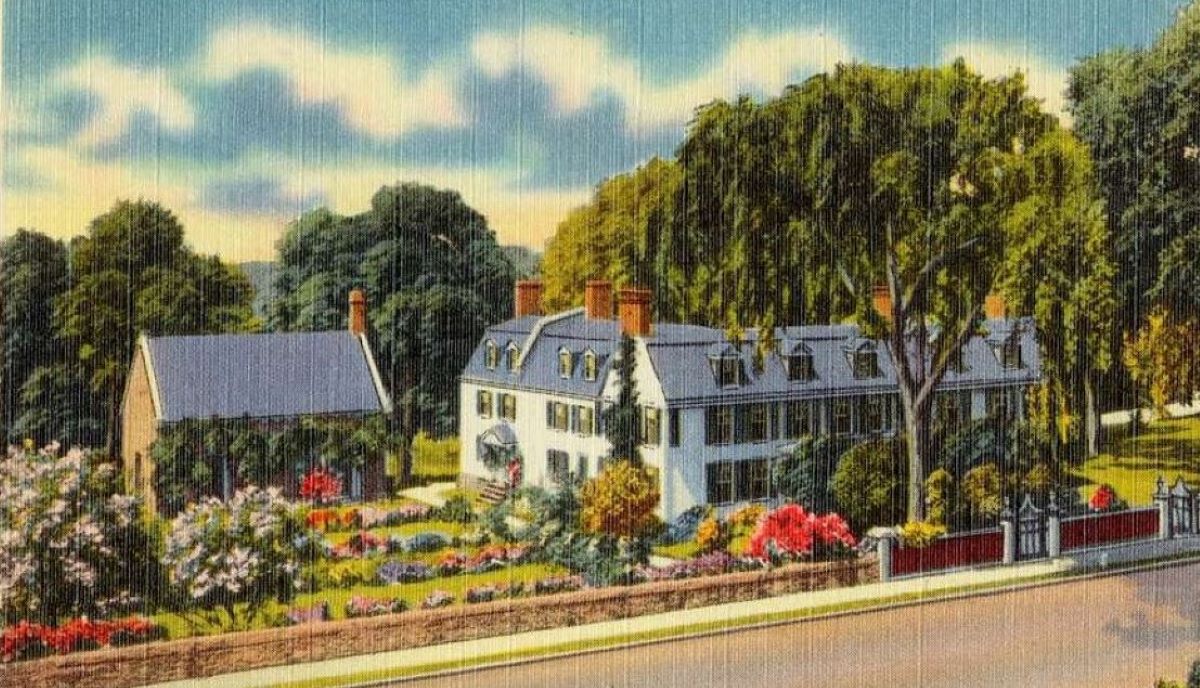
Abigail Adams (1744 – 1818) was a former first lady. She is one of only two women who have been the wife and mother to a United States…


Social Sciences
50 items in this collection
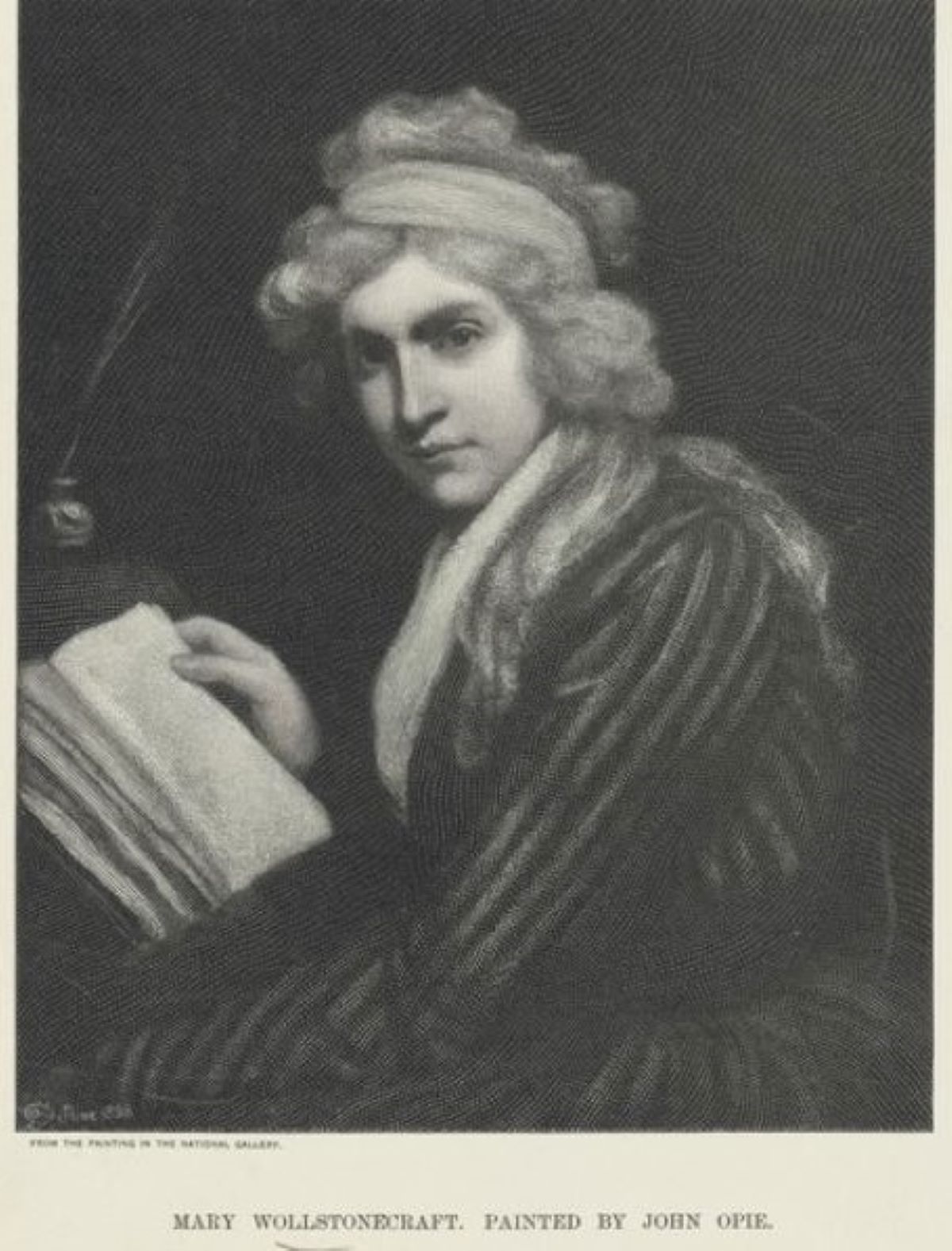
During the French Revolution a number of men and women began to argue in favor of granting women full civic and legal rights. In France this was taken up by Condorcet and Olympes de Gouge; in Britain by Mary Wollstonecraft. During the nineteenth century, whilst a Member of Parliament, John Stuart Mill, argued for the same thing.
In this collection
9 titles, earliest first.
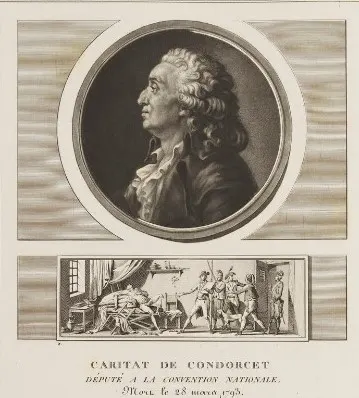
Marie-Jean-Antoine-Nicolas Caritat, Marquis de Condorcet · 1790
Condorcet’s essay is an early defence of the right of women to particpate in politcs. It was written during the first years of the French Revolution.
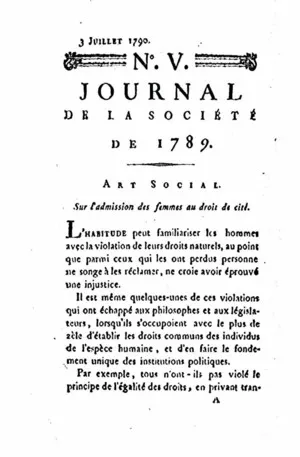
Marie-Jean-Antoine-Nicolas Caritat, Marquis de Condorcet · 1790
A facsimile of the first edition of this essay. Condorcet’s essay is an early defence of the right of women to particpate in politcs. It was written during the first years of the French Revolution.
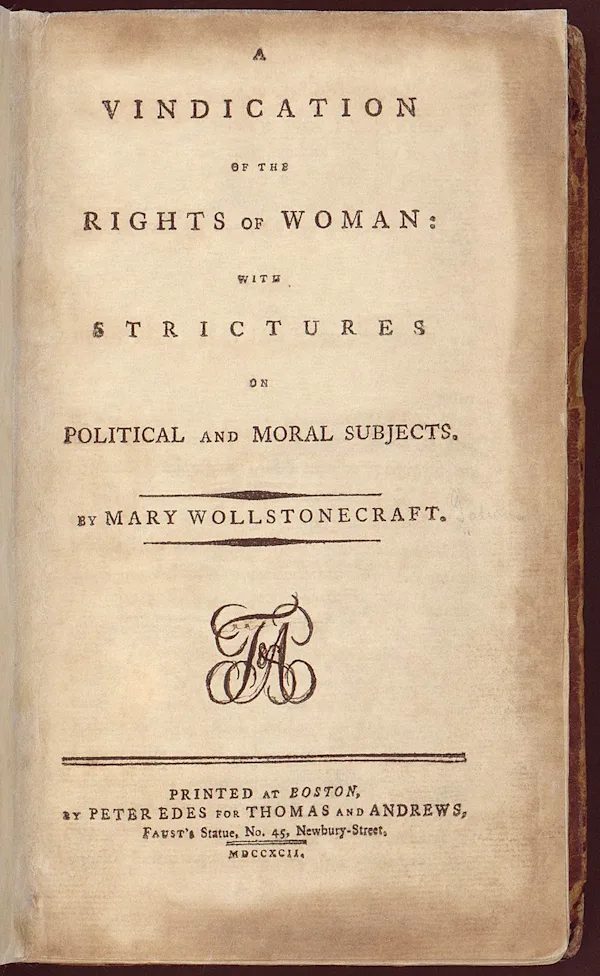
Mary Wollstonecraft · 1792
Wollstonecraft first defended the rights of men in response to Burke’s pamphlet on the French Revolution, then turned to the rights of woman a couple of years later. It is one of the key texts of modern feminist thought.
John Stuart Mill · 1825
Vol. 21 of the 33 vol. Collected Works contains a number of Mill’s essays on the law, women and children, the American Civil War, and his book on The Subjection of Women. It also contains in the Appendix Harriet…
Harriet Martineau · 1855
Thinking she was close to death Martineau wrote her autobiography in 1855 but lived for another 20 years. She recounts her activities in various mid-19th century reform movements, her struggle to become a professional…
Harriet Martineau · 1855
Thinking she was close to death Martineau wrote her autobiography in 1855 but lived for another 20 years. She recounts her activities in various mid-19th century reform movements, her struggle to become a professional…
Maria Weston Chapman · 1855
Thinking she was close to death Martineau wrote her autobiography in 1855 but lived for another 20 years. She recounts her activities in various mid-19th century reform movements, her struggle to become a professional…
John Stuart Mill · 1859
Mill had been somewhat coy about publishing The Subjection of Women during his lifetime because he feared the condemnation of his peers for daring to apply the general notions of individual liberty which he had clearly…
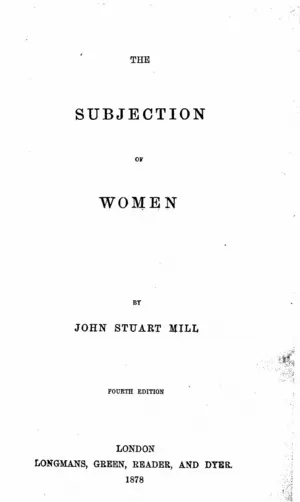
John Stuart Mill · 1869
Mill took up the cause of women’s rights in the face of much opposition from his colleagues in Parliament. In addition to his parliamentary speeches on the matter his most extended defense of the right of women to own…
In this collection
6 people central to Rights of Women.
1744–1818
Abigail Adams (1744 – 1818) was a former first lady. She is one of only two women who have been the wife and mother to a United States…

Darcy Nikol Bryan is an obstetrician gynecologist with an active practice at Women's Care Florida in Tampa. She earned an MD from Yale…

b. 1964
Melissa Matthes is currently full professor at the United States Coast Guard Academy where she teaches courses in religion and politics,…

1815–1902
Elizabeth Cady Stanton (1815 –1902) was an author, lecturer, and woman’s rights suffragist. She was the main force behind the 1848 Seneca…

1807–1858
Harriet Taylor was the long-time companion and eventually the wife of John Stuart Mill. She had a great influence on his thinking about the…

1759–1797
Wollstonecraft was an English author who rose to prominence with a very quick response to Burke’s Reflections on the Revolution in France .…
In this collection
From The Reading Room, Liberty Matters and the library’s other publications.
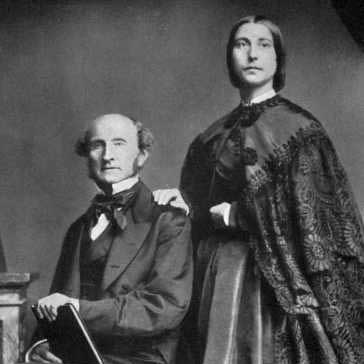
Giandomenica Becchio and others · 2024
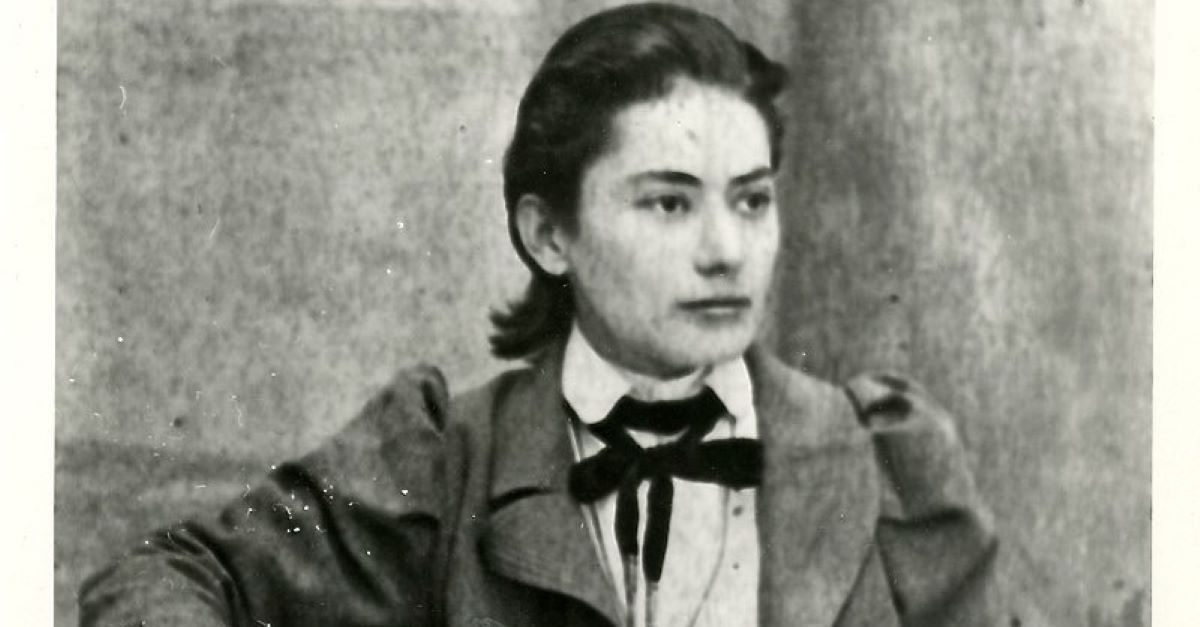
Irakli Javakhishvili · Dec 11, 2023
Peter Carl Mentzel · Apr 26, 2022

Sarah Skwire · Dec 27, 2021
Caroline Breashears · Oct 04, 2021
Passages on this subject, chosen by OLL editors.
Observing woman’s agency, devotion, and efficiency in pleading the cause of the slave, gratitude for this high service early moved me to give favourable attention to the subject of what is called “Woman’s Rights,” and caused me to be denominated a woman’s-rights-man. I am glad to say I have never been ashamed to be thus designated. Recognising not sex, nor physical strength, but moral intelligence and the ability to discern right from wrong, good from evil, and the power to choose between them, as the true basis of Republican Government, to which all are alike subject, and bound alike to obey, I was not long in reaching the conclusion that there was no foundation in reason or justice for woman’s exclusion from the right of choice in the selection of the persons who should frame the laws, and thus shape the destiny of all the people, irrespective of sex.
Trades and occupations have almost everywhere ceased to be privileges. Thus exclusion after exclusion has disappeared, until privilege has ceased to be the general rule, and tends more and more to become the exception: it now no longer seems a matter of course that there should be an exclusion, but it is conceded that freedom and admissibility ought to prevail, wherever there is not some special reason for limiting them. Whoever considers how immense a change this is from primitive opinions and feelings, will think it nothing less than the very most important advance which has hitherto been made in human society. It is nothing less than the beginning of the reign of justice, or the first dawn of it at least. It is the introduction of the principle that distinctions, and inequalities of rights, are not good things in themselves, and that none ought to exist for which there is not a special justification, grounded on the greatest good of the whole community, privileged and excluded taken together.
... the principle which regulates the existing social relations between the two sexes—the legal subordination of one sex to the other—is wrong in itself, and now one of the chief hindrances to human improvement; and that it ought to be replaced by a principle of perfect equality, admitting no power or privilege on the one side, nor disability on the other.
Some will object, that a comparison cannot fairly be made between the government of the male sex and the forms of unjust power which I have adduced in illustration of it, since these are arbitrary, and the effect of mere usurpation, while it on the contrary is natural. But was there ever any domination which did not appear natural to those who possessed it? There was a time when the division of mankind into two classes, a small one of masters and a numerous one of slaves, appeared, even to the most cultivated minds, to be a natural, and the only natural, condition of the human race. No less an intellect, and one which contributed no less to the progress of human thought, than Aristotle, held this opinion without doubt or misgiving; and rested it on the same premises on which the same assertion in regard to the dominion of men over women is usually based, namely that there are different natures among mankind, free natures, and slave natures; that the Greeks were of a free nature, the barbarian races of Thracians and Asiatics of a slave nature. But why need I go back to Aristotle? Did not the slaveowners of the Southern United States maintain the same doctrine, with all the fanaticism with which men cling to the theories that justify their passions and legitimate their personal interests? Did they not call heaven and earth to witness that the dominion of the white man over the black is natural, that the black race is by nature incapable of freedom, and marked out for slavery? some even going so far as to say that the freedom of manual labourers is an unnatural order of things anywhere. Again, the theorists of absolute monarchy have always affirmed it to be the only natural form of government: issuing from the patriarchal, which was the primitive and spontaneous form of society, framed on the model of the paternal, which is anterior to society itself, and, as they contend, the most natural authority of all. Nay, for that matter, the law of force itself, to those who could not plead any other, has always seemed the most natural of all grounds for the exercise of authority.
… men suppose that all is now as it should be in regard to the marriage contract; and we are continually told that civilization and Christianity have restored to the woman her just rights. Meanwhile the wife is the actual bondservant of her husband: no less so, as far as legal obligation goes, than slaves commonly so called. She vows a lifelong obedience to him at the altar, and is held to it all through her life by law. Casuists may say that the obligation of obedience stops short of participation in crime, but it certainly extends to everything else. She can do not act whatever but by his permission, at least tacit. She can acquire no property but for him: the instant it becomes hers, even if by inheritance, it becomes ipso facto his. In this respect the wife’s position under the common law of England is worse than that of slaves in the laws of many countries…
Sir, I rise to make the Motion of which I have given notice... When the complaint is made that certain citizens of this nation, fulfilling all the conditions and giving all the guarantees which the Constitution and the law require from those who are admitted to a voice in determining who shall be their rulers, are excluded from that privilege for what appears to them, and for what appears to me, an entirely irrelevant consideration, the least we can do is to ascertain what number of persons are affected by the grievance, and how great an addition would be made to the constituency if this disability were removed... I entertain the firmest conviction that whatever holds out an inducement to one-half of the community to exercise their minds on the great social and political questions which are discussed in Parliament, and whatever causes the great influence they already possess to be exerted under the guidance of greater knowledge, and under a sense of responsibility, cannot be ultimately advantageous to the Conservative or any other cause, except so far as that cause is a good one. And I rejoice in the knowledge that in the estimation of many honourable Gentlemen of the party opposite, the proposal made in the petition is, like many of the most valuable Reforms, as truly Conservative, as I am sure it is truly Liberal. I listened with pleasure and gratitude to the right honourable Gentleman who is now Chancellor of the Exchequer, when in his speech on the second reading of the Reform Bill, he said he saw no reason why women of independent means should not possess the electoral franchise, in a country where they can preside in manorial courts and fill parish offices--to which let me add, and the Throne. (Hear, hear. )
The object of this Essay is to assert one very simple principle, as entitled to govern absolutely the dealings of society with the individual in the way of compulsion and control, whether the means used be physical force in the form of legal penalties, or the moral coercion of public opinion. That principle is, that the sole end for which mankind are warranted, individually or collectively, in interfering with the liberty of action of any of their number, is self-protection. That the only purpose for which power can be rightfully exercised over any member of a civilized community, against his will, is to prevent harm to others. ... In the part which merely concerns himself, his independence is, of right, absolute. Over himself, over his own body and mind, the individual is sovereign.
One thing is pretty clear, that all those individuals whose interests are indisputably included in those of other individuals, may be struck off without inconvenience. In this light may be viewed all children, up to a certain age, whose interests are involved in those of their parents. In this light, also, women may be regarded, the interests of almost all of whom are involved either in that of their fathers or that of their husbands.

Political Science
618 titles · 60 publications · 383 people
Political Science
3 titles · 16 publications · 9 people
Economic theory. Demography
473 titles · 88 publications · 293 people

Language and Literature
17 titles · 3 publications · 40 people

Sociology
62 titles · 3 publications · 35 people
Economic theory. Demography
48 titles · 1 publication · 55 people