The Analects
- Confucius(author)
- William Edward Soothill(translator)
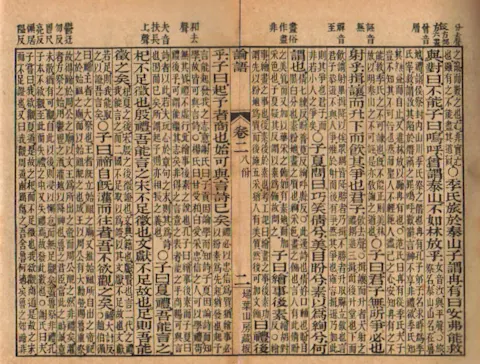
A 1,000 page book which includes the original Chinese text, a translation, and commentaries.
About This Edition
Citation
The Analects of Confucius by William Edward Soothill (Yokohama: Fukuin Printing Co, 1910). The text is in the public domain.
Confucius. The Analects. translated by William Edward Soothill, Fukuin Printing Company, 1910. Online Library of Liberty, https://oll.libertyfund.org/titles/soothill-the-analects.
Confucius. (1910). The Analects. Fukuin Printing Company. https://oll.libertyfund.org/titles/soothill-the-analects
@book{confucius1910analects,
  author = {Confucius},
  title = {The Analects},
  publisher = {Fukuin Printing Company},
  address = {Yokohama},
  year = {1910},
  url = {https://oll.libertyfund.org/titles/soothill-the-analects},
  note = {Online Library of Liberty}
}TY - BOOK AU - Confucius A3 - Soothill, William Edward TI - The Analects PY - 1910 CY - Yokohama PB - Fukuin Printing Company UR - https://oll.libertyfund.org/titles/soothill-the-analects DB - Online Library of Liberty ER -
Copyright
The text is in the public domain.

About the author
Confucius 551 BC–479 BC
Confucius is China’s most famous teacher, philosopher, and political theorist. In a time of great political upheaval, he sought an intellectual basis for a stable political and social order which he believed lay with a ruler who would rule with wisdom and virtue and would be opposed to force and violence.
Related People
Mencius
Author
Mencius was tutored by the grandson of Confucius and he soon became a leading expert in Confucian thought in his own right. Mencius believed he could help bring order by tutoring the princes of the various provinces. He instructed his pupils that a stable and happy society is one in which princes guard the well-being of the common people by promoting economic growth and education.
Lao Tzu
Author
The semi-legendary founder of Daoism (or Taoism). His teachings are often contrasted with those of Confucius.
Mo Tzu
Author
He was the founder of one of the classical schools of Chinese philosophy and was born around the time of Confucius’ death. An opponent of both Confucianism and Daoism, he was a strong proponent of egalitarianism.


Critical Responses
Works that answer or challenge this text.
- Article
Confucianism's Piety Problem
David K. SchneiderVisit site ↗Confucianism emphasized the obedience and uniformity, but not freedom and individuality as in the West. Confucius sought to restore the ancient and crumbling feudal order in China. While at the heart of the feudal order was a social and political hierarchy that demanded obedience and submission to authority.
Connected Readings
What to read next.
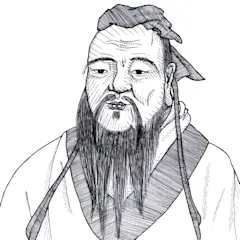 Book
The Ethics of Confucius
ConfuciusView title >A collection of Confucius’ ethical writings on topics such as superior man, self-development, human relations, the family, the state, the cultivation of the fine arts, and religion.
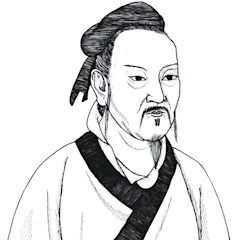 Book
The Chinese Classics: Vol. 2 The Life and Teachings of Mencius
MenciusView title >This volume contains a long introduction on the life and works of Mencius, following by 7 books from his writings.
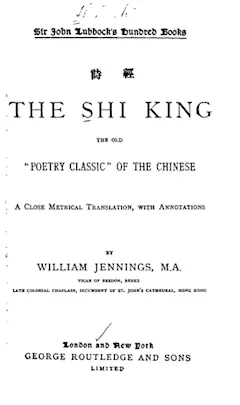 Book
The Shi King, the Old “Poetry Classic” of the Chinese
ConfuciusView title >Shi King, also rendered in English as the Shih Ching and Shijing, it is the oldest collection of Chinese poetry, and one of the “Five Classics” said to have been compiled by Confucius.
- Podcast
Confucian Natural Law?
Law & LibertyVisit site ↗A podcast addressing the Confucian classics and how compatible they are with Classical Liberalism.