The Consolation of Philosophy
- Boethius(author)
- Walter John Sedgefield(translator)
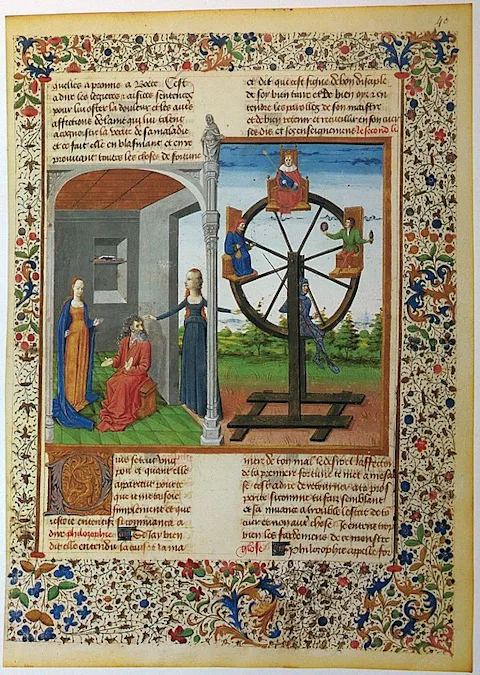
While under arrest and awaiting execution by King Theodoric for threatening his position by attempting to reconcile a schism between Rome and Constantinople in 524, Boethius wrote his best know work, The Consolation of Philosophy, in which he argues that despite the seeming injustice of the world, there is, in Platonic fashion, a higher realm and that all else is subordinate to that divine Providence.
About This Edition
Citation
King Alfred’s Version of the Consolations of Boethius. Done into Modern English, with an Introduction by Walter John Sedgefield Litt.D. (Oxford: Clarendon Press, 1900).
Boethius. The Consolation of Philosophy. translated by Walter John Sedgefield, Clarendon Press, 1900. Online Library of Liberty, https://oll.libertyfund.org/titles/sedgefield-the-consolation-of-philosophy.
Boethius. (1900). The Consolation of Philosophy. Clarendon Press. https://oll.libertyfund.org/titles/sedgefield-the-consolation-of-philosophy
@book{boethius1900philosophy,
  author = {Boethius},
  title = {The Consolation of Philosophy},
  publisher = {Clarendon Press},
  address = {Oxford},
  year = {1900},
  url = {https://oll.libertyfund.org/titles/sedgefield-the-consolation-of-philosophy},
  note = {Online Library of Liberty}
}TY - BOOK AU - Boethius A3 - Sedgefield, Walter John TI - The Consolation of Philosophy PY - 1900 CY - Oxford PB - Clarendon Press UR - https://oll.libertyfund.org/titles/sedgefield-the-consolation-of-philosophy DB - Online Library of Liberty ER -
Copyright
The text is in the public domain.

About the author
Boethius 470–524
Boethius was an important Neoplatonist philosopher who helped craft the theology and philosophy of the early medieval church. He served the Roman Empire both as a consul and as a senator, but his real love was philosophy.
Related People
Plato
Author
Platonic thought exerted a major influence on both Boethius’s philosophy. This is particularly true with regard to Boethius’s metaphysics and ethics.
Aristotle
Author
Boethius translated and wrote commentaries on several of Aristotle’s works and was strongly influenced by Aristotelian thought on logic, reason, and mind.
Plotinus
Author
Boethius was strongly influenced by Plotinian and Neoplatonic thought and made a major effort in The Consolation to incorporate the philosophy into a Christian framework.
St. Thomas Aquinas
Author
Boethius is cited heavily in several of Aquinas’s major works, including the Summa Theologiae, and is referred to by him as “Beatus Boethius” (Blessed Boethius).
Geoffrey Chaucer
Author
Notably, Chaucer completed a translation The Consolation of Philosophy, and incorporated Boethian themes and imagery into several of his works, including The Canterbury Tales, and Troilus and Criseyde.


Critical Responses
Works that answer or challenge this text.
 Book
The Cambridge Companion to Boethius
John MarenbonVisit site ↗The The Cambridge Companion is structured in large part as an exploration of The Consolation and it’s legacy as Boethius’s seminal work. It situates the work in relation to Boethius’s other thought, earlier thinkers Boethius drew upon, and later medieval thinkers who it inspired.
Connected Readings
What to read next.
 Book
Dialogues, vol. 2
PlatoPhaedo
View title >Both the Phaedo and The Consolation of Philosophy share a major theme of philosophy as a means of attaining comfort and salvation for the immortal soul in the face of misfortune and death.
 Book
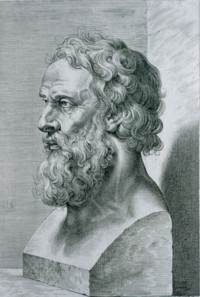
Dialogues, vol. 3 - Republic, Timaeus, Critias
PlatoPlato's Republic
View title >Both works contain closely connected philosophical explorations of justice, notably with regard to its role in unifying the soul. Philosophy is treated as the only reliable means by which the soul can reach the Form of the Good and attain true happiness.
 What to read next.
The Nicomachean Ethics
AristotleView title >Both works understand happiness as being the ultimate human good. Both identify true happiness as being fundamentally rational.
 Book
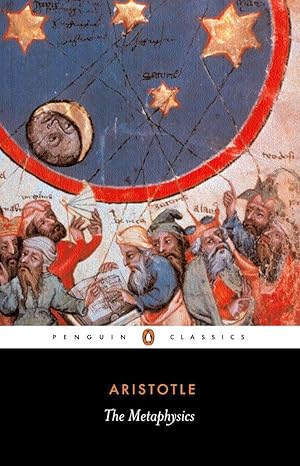
The Metaphysics
AristotleVisit site ↗As in Aristotle’s Metaphysics, Boethius understands the highest being in the universe (for Aristotle, the Unmoved Mover; for Boethius, the Christian God) as the source of all being and the goal of all desire. For both of them, the highest being is eternal, unchanging, pure actuality.
More in Philosophy, Psychology, and Religion
See all >The Chief Works of Benedict de Spinoza, vol 1
Benedict de SpinozaThe Philosophical Works of David Hume, vol. 3 (Essays Moral, Political, and Literary) (1828 ed.)
David HumeThe English Works, vol. X (Iliad and Odyssey)
HomerDialogues, vol. 5 - Laws, Index to the Writings of Plato
PlatoDialogues, vol. 4 - Parmenides, Theaetetus, Sophist, Statesman, Philebus
PlatoDialogues, vol. 3 - Republic, Timaeus, Critias
PlatoDialogues, vol. 2
PlatoThe Works of John Locke, vol. 4 Economic Writings and Two Treatises of Government
John LockeThe Works, vol. 2 An Essay concerning Human Understanding Part 2 and Other Writings
John Locke