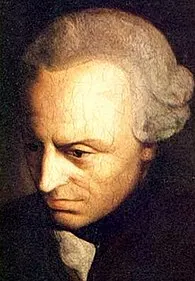
Critique of Pure Reason
- Immanuel Kant(author)
- Friedrich Max Müller(translator)
One of Kant’s most important philosophical works and one of the most important of the Enlightenment as well. In it he argues that the world that we know is structured by the way that we perceive and think about the world. Reason is universal and objective but our understanding and imagination shape the way we experience the world.
About This Edition
Citation
Immanuel Kant’s Critique of Pure Reason. In Commemoration of the Centenary of its First Publication. Translated into English by F. Max Mueller (2nd revised ed.) (New York: Macmillan, 1922).
Kant, Immanuel. Critique of Pure Reason. translated by Friedrich Max Müller, Macmillan, 1922. Online Library of Liberty, https://oll.libertyfund.org/titles/ller-critique-of-pure-reason.
Kant, I. (1922). Critique of Pure Reason. Macmillan. https://oll.libertyfund.org/titles/ller-critique-of-pure-reason
@book{kant1922reason,
  author = {Immanuel Kant},
  title = {Critique of Pure Reason},
  publisher = {Macmillan},
  address = {New York},
  year = {1922},
  url = {https://oll.libertyfund.org/titles/ller-critique-of-pure-reason},
  note = {Online Library of Liberty}
}TY - BOOK AU - Kant, Immanuel A3 - Müller, Friedrich Max TI - Critique of Pure Reason PY - 1922 CY - New York PB - Macmillan UR - https://oll.libertyfund.org/titles/ller-critique-of-pure-reason DB - Online Library of Liberty ER -
Copyright
The text is in the public domain.

About the author
Immanuel Kant 1724–1804
Kant was a German philosopher who taught for many years at the University of Koenigsberg. He made pivotal contributions to the study of ethics and epistemology and was a leading figure in the German Enlightenment.
Related People
René Descartes
Author
Descartes was among the first to question how things are known. Descartes’s work’s sparked the epistemological age of philosophy in which Kant is a key figure.
David Hume
Author
Hume was an English philosopher who wrote on empiricism, skepticism, and naturalism. Much of Kant’s work is in response to Hume’s writings.
Like Kant, Thomas Reid wrote in response to Hume and empiricism. He promoted common sense as a reliable base of knowledge.


Critical Responses
Works that answer or challenge this text.
 Book
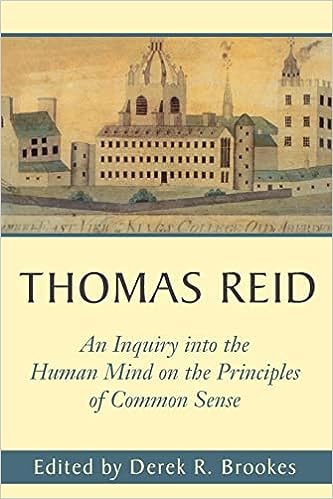
An Inquiry into the Human Mind on the Principles of Common Sense
Thomas ReidVisit site ↗Known as the Father of Common Sense, Reid offers an alternative response to Hume, Locke, and Berkley’s empiricism.
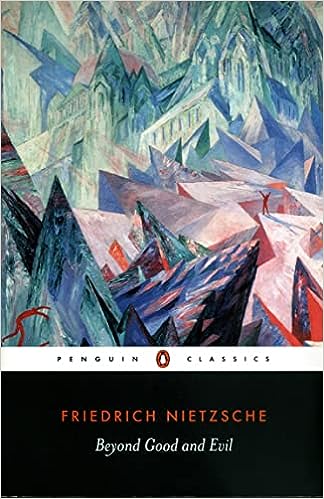 Book
Beyond Good and Evil
Friedrich NietzscheVisit site ↗Nietzsche criticizes Kant and all Western philosophical tradition.
Connected Readings
What to read next.
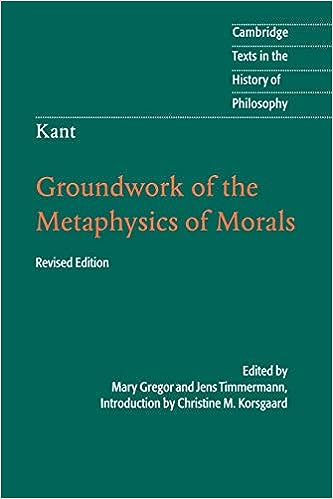 Book
Groundwork for the Metaphysics of Morals
Immanuel KantVisit site ↗Kant philosophically defends morality and the categorical imperative.
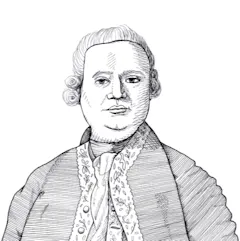 Book
Enquiries Concerning the Human Understanding and Concerning the Principles of Morals
David HumeView title >Critique of Pure Reason was written in response to Hume’s Enquiries.
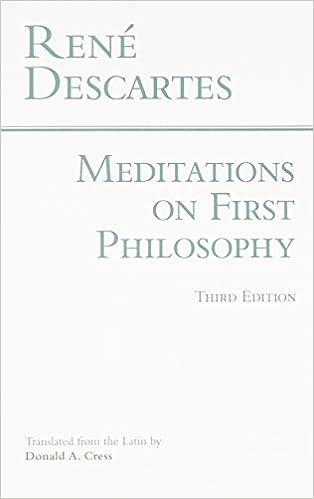 Book
Meditations on First Philosophy
René DescartesVisit site ↗Meditations was the original skeptic work in which Descartes discredits all his beliefs and logically raises them again. This is the work that sparked Hume’s work on empiricism.
- Video
What is Empiricism? The Philosophy of Locke, Berkeley and Hume
The Living PhilosophyVisit site ↗This video explains the difference between empiricism and rationalism, the influence of Descartes, and the empiricisms of Locke, Berkeley and Hume.
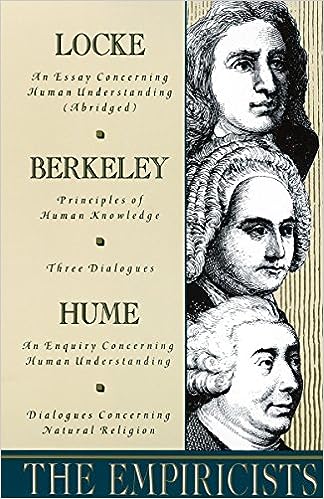 Book
The Empiricists
John Locke, George Berkeley, David HumeVisit site ↗This book is a collection of the significant empirical works of John Locke, George Berkeley, and David Hume.
More in Philosophy, Psychology, and Religion
See all >The Chief Works of Benedict de Spinoza, vol 1
Benedict de SpinozaThe Philosophical Works of David Hume, vol. 3 (Essays Moral, Political, and Literary) (1828 ed.)
David HumeThe English Works, vol. X (Iliad and Odyssey)
HomerDialogues, vol. 5 - Laws, Index to the Writings of Plato
PlatoDialogues, vol. 4 - Parmenides, Theaetetus, Sophist, Statesman, Philebus
PlatoDialogues, vol. 3 - Republic, Timaeus, Critias
PlatoDialogues, vol. 2
PlatoThe Works of John Locke, vol. 4 Economic Writings and Two Treatises of Government
John LockeThe Works, vol. 2 An Essay concerning Human Understanding Part 2 and Other Writings
John Locke