The Chinese Classics
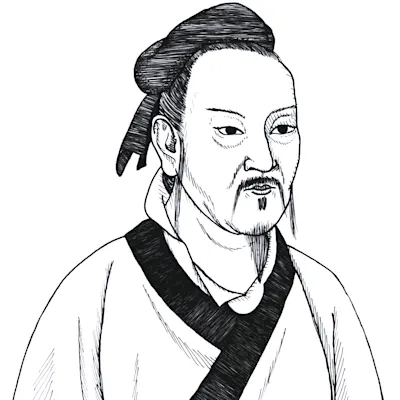
- Mencius(author)
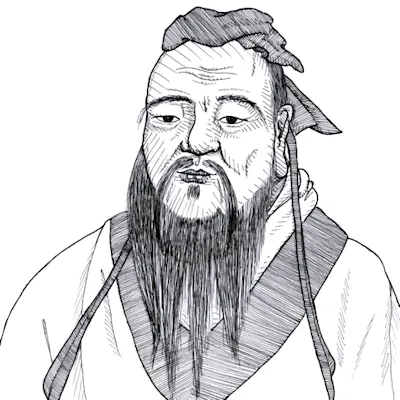
- Confucius(author)
- James Legge(translator)
Legge provides lengthy introductions to leading Chinese philosophical works and is own translations.
About This Edition
Citation
Mencius. The Chinese Classics: Translated into English with Preliminary Essays and Explanatory Notes by James Legge. Second Edition (London: N. Trübner, 1869).
Mencius and Confucius. The Chinese Classics. translated by James Legge, N. Trübner, 1869. Online Library of Liberty, https://oll.libertyfund.org/titles/legge-the-chinese-classics.
Mencius & Confucius. (1869). The Chinese Classics. N. Trübner. https://oll.libertyfund.org/titles/legge-the-chinese-classics
@book{mencius1869classics,
  author = {Mencius and Confucius},
  title = {The Chinese Classics},
  publisher = {N. Trübner},
  address = {London},
  year = {1869},
  url = {https://oll.libertyfund.org/titles/legge-the-chinese-classics},
  note = {Online Library of Liberty}
}TY - BOOK AU - Mencius AU - Confucius A3 - Legge, James TI - The Chinese Classics PY - 1869 CY - London PB - N. Trübner UR - https://oll.libertyfund.org/titles/legge-the-chinese-classics DB - Online Library of Liberty ER -
Copyright
The text is in the public domain.

About the author
Mencius 371 BC–289 BC
Mencius was born into a minor noble family in the small state of Tsou in the present-day province of Shandong, As a young scholar Mencius was tutored by the grandson of Confucius and he soon became a leading expert in Confucian thought in his own right.
Related People
Confucius
Author
Confucius is the latinized form of Kong Fu Tzu, who lived 551-479 BCE, a period of violence and political turmoil. His work, tremendously important for subsequent Chinese history, sought to establish the foundations for a stable and just social and political order.
Mencius
Author
Frequently called the “Second Sage” of Confucianism, he expanded on Confucius’ work. Basing his philosophy on the premise that human nature is basically good, he stressed the importance of ethics and virtue.
Mo Tzu
Author
A rival of the Confucianists, whose work was later singled out by Mencius for particular attack, he founded a philosophy known as Mohism that stressed universal love and egalitarianism.


Critical Responses
Works that answer or challenge this text.
 Article
The Promise of Confucian Liberty
James Dominic RooneyVisit site ↗The author argues that Confucian philosophy need not lead to statist authoritarianism. The piece includes a good historical overview of the development of Confucian thought.
 Article
Confucianism’s Piety Problem
David K. SchneiderVisit site ↗In contrast to Response 1, this author argues that Confucianism, as developed by both Confucius and Mencius, is ultimately too hierarchical to provide the foundation for a truly liberal order.
Connected Readings
What to read next.
- Book
Confucian School
OLL EditorView title >A wide selection of writings from various Confucian scholars.
- OLL Quote
Confucius on Prudence and the Superior Man
OLL EditorView title >An excerpt with commentary from The Ethics of Confucius.
 Book
The Analects
ConfuciusView title >One of the central texts of Confucianism, it consists mainly of sayings attributed by Confucius and compiled by his disciples.
 Book
The Shi King, the Old “Poetry Classic” of the Chinese
ConfuciusView title >It is the oldest collection of Chinese poetry, and one of the “Five Classics” said to have been compiled by Confucius.