

Augustin Thierry
1795–1856
Augustin Thierry (1795-1856) was a classical liberal historian who pioneered the collection, publication, and analysis of primary sources,…


History of the Americas
19 items in this collection
The Online Library of Liberty contains a number of collections of primary sources dealing with history and political thought.
In this collection
17 titles, earliest first.
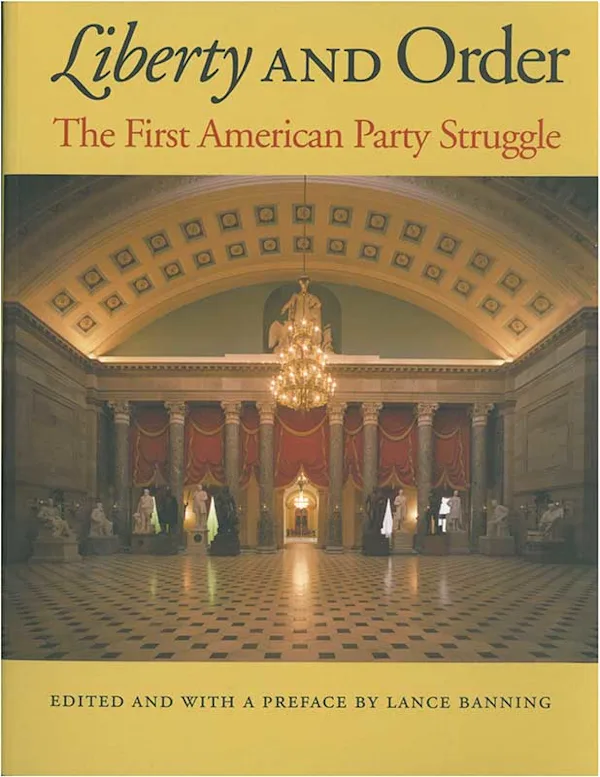
Lance Banning · 1787
An anthology of primary sources which documents the first great party struggle in American history between the Federalists and the Anti-Federalists over the proper construction of the new Constitution, political…
Tench Coxe · 1787
A collection of anti-federalist pamphlets written between 1787-88 by Elbridge Gerry, Noah Webster, John Jay, Melancthon Smith, Pelatiah Werster, Tench Coxe, James Wilson, John Dickinson, Alexander Contee Hanson, Edmund…
Daniel Webster · 1790
Taussig has collected speeches and reports by Alexander Hamilton, Albert Gallatin, R.J. Walker, Henry Clay, and Daniel Webster on the issue of free trade and tariffs. He used these documents in his course at Harvard…
Edgar Holmes McNeal · 1905
A 600 page collection of primary sources on such topics as the Germans and the Empire, the Papacy, the struggle between the Empire and the Papacy, the Church, Feudalism, the Courts, Monasticism, the Crusades, and Social…
Samuel Rawson Gardiner · 1906
A collection of constitutional documents from the English Revolution of the mid-17th century. They include parliamentary speeches, letters and declarations by the monarch, legal proceedings, and other documents. They…
A Pearce Higgins · 1909
This volume contains the text (often in both French and English) of the major conventions concerning peace and the laws of warfare from the Declaration of Paris (1856), the Geneva Convention of 1864, of the two Peace…
Dugald Stewart · 1915
Johnston introduces his selection of some representative works of the Scottish School of Common Sense by Thomas Reid, Adam Ferguson, James Beattie, and Dugald Stewart.
Charles S. Hyneman · 1983
These volumes provide a selection of seventy-six essays, pamphlets, speeches, and letters to newspapers written between 1760 and 1805 by American political and religious leaders. Many are obscure pieces, but all…
Charles S. Hyneman · 1983
These volumes provide a selection of seventy-six essays, pamphlets, speeches, and letters to newspapers written between 1760 and 1805 by American political and religious leaders. Many are obscure pieces , but all…
Ellis Sandoz · 1991
Volume I of a large two volume collection of sermons written between 1730-1805 by people such as Jonathan Mayhew, John Wesley, Moses Mather, John Witherspoon, Richard Price, Jonathan Edwards, and Noah Webster.
William Emerson · 1991
Volume 2 of a large two volume collection of sermons written between 1730-1805 by people such as Jonathan Mayhew, John Wesley, Moses Mather, John Witherspoon, Richard Price, Jonathan Edwards, and Noah Webster.
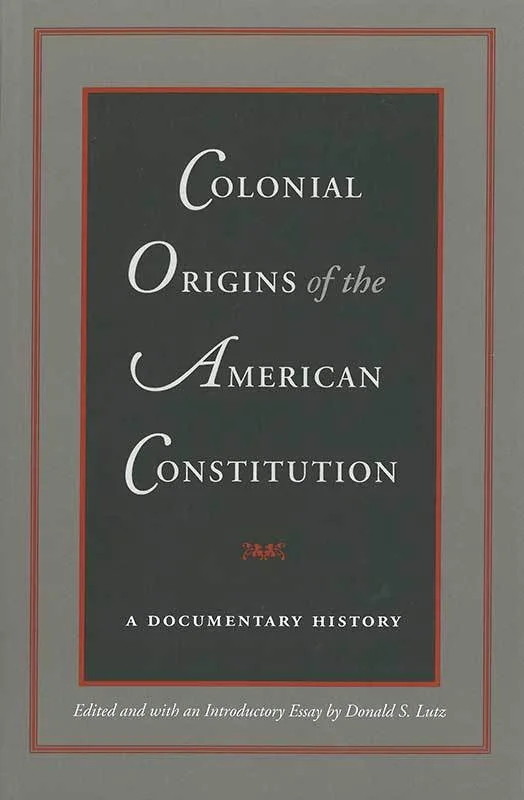
Donald S. Lutz · 1998
A collection of eighty documents which demonstrate how local government in colonial America was the seedbed of American constitutionalism. Most of these documents, commencing with the Agreement of the Settlers at Exeter…
Joyce Lee Malcolm · 1999
The political tracts of the English peoples in the seventeenth century established principles of governance and of liberty that benefited not only themselves but the founders of the American republic. These writings, by…
Joyce Lee Malcolm · 1999
The political tracts of the English peoples in the seventeenth century established principles of governance and of liberty that benefited not only themselves but the founders of the American republic. These writings, by…
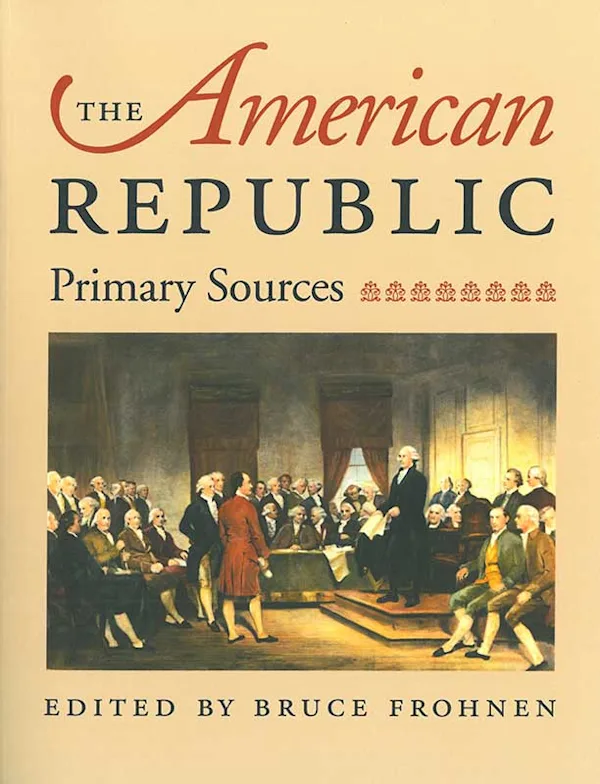
Bruce Frohnen · 2002
The American Republic is an excellent textbook for classroom use which provides, in a single volume, critical, original documents revealing the character of American discourse on the nature and importance of local…
Henry C. Clark · 2003
In this Liberty Fund book the editor has compiled some of the more important writings on economics before the appearance of Smith’s Wealth of Nations in 1776. It is particularly strong on the French contribution. Not…
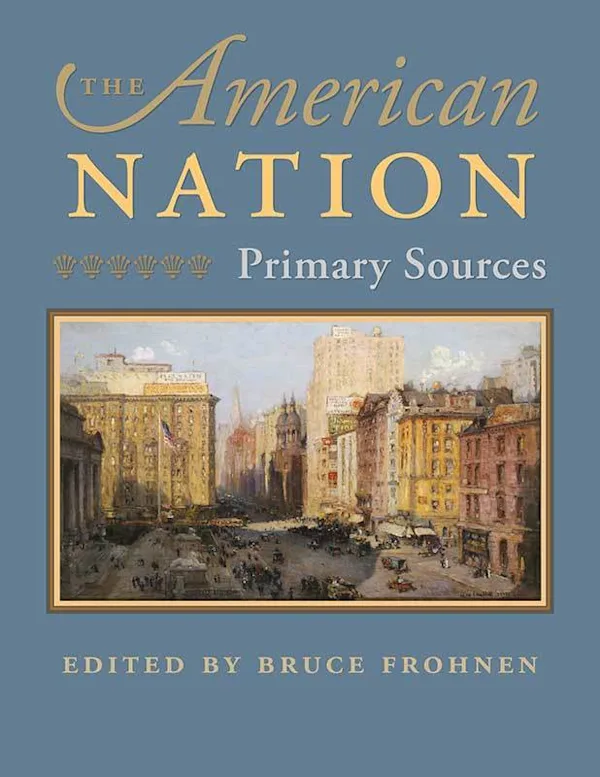
Bruce Frohnen · 2008
This volume is a continuation of Frohnen’s earlier collection of primary sources The American Republic. It contains material from the Civil War to the outbreak of World War Two in the Pacific.
In this collection
2 people central to Primary Sources.
1795–1856
Augustin Thierry (1795-1856) was a classical liberal historian who pioneered the collection, publication, and analysis of primary sources,…
d. 1666
George Thomason (??-1666) was a London bookseller and friend of the poet John Milton who collected 23,000 books, pamphlets and newspapers…
Passages from titles in this collection, chosen by OLL editors.
"I, A. B. do declare that it is not Lawful upon any pretence whatsoever, to take up Armes against the King, and that I do abhorr that Traiterous position of taking Armes by His authority, against His Person, or against those that are commissioned by Him in pursuance of such Commission; And I do swear that I will not at any time endeavor the Alteration of the Government, either in Church or State, so help me God."...
(T)he design is to declare us first into another Government more Absolute, and Arbitrary, than the Oath of Allegiance, or old Law knew, and then make us swear unto it,...
’tis the leaven that corrupts the whole lump; for if that be true, I am sure Monarchy is not to be bounded by human Laws, and the 8. chap. of I. Samuel, will prove (as many of our Divines would have it) the Great Charter of the Royal Prerogative, and our Magna Charta that says Our Kings may not take our Fields, our Vineyards, our Corn, and our Sheep is not in force, but void and null, because against divine Institution; and you have the Riddle out, why the Clergy are so ready to take themselves, & impose upon others such kind of Oaths as these, they have placed themselves, and their possessions upon a better, and a surer bottom (as they think) than Magna Charta, and so have no more need of, or concern for it.
Within three years of the inauguration of the new federal Constitution, America’s revolutionary leaders divided bitterly over the policies most appropriate for the infant nation. Within five years, two clashing groups were winning thousands of ordinary voters to their side. Within a decade, the collision had resulted in a full-blown party war.
There has never been another struggle like it. These were the first true parties in the history of the world—the first, that is, to mobilize and organize a large proportion of a mass electorate for a national competition. More than that, these parties argued at a depth and fought with a ferocity that has never been repeated. The Federalists and the Jeffersonian Republicans—the friends of order and the friends of liberty as they sometimes called themselves— were both convinced that more than office, more than clashing interests, and more, indeed, than even national policy in the ordinary sense were fundamentally at stake in their quarrel. Their struggle, they believed, was over nothing less profound than the sort of future the United States would have, the sort of nation America was to be. Each regarded the other as a serious threat to what was not yet called the American way. And from their own perspectives, both were right.
Others may with regret complain
That ’tis not fair Astrea’s reign,
That the famed golden age is o’er
That Saturn, Rhea rule no more:
Or, to speak in another style,
That Eden’s groves no longer smile.
For my part, I thank Nature sage,
That she has placed me in this age...
I have, I own, a worldly mind,
That’s pleased abundance here to find;
Abundance, mother of all arts,
Which with new wants new joys imparts
The treasures of the earth and main,
With all the creatures they contain:
These, luxury and pleasures raise;
This iron age brings happy days.
8th. ... that if the acts before specified should stand, these conclusions would flow from them; that the general government may place any act they think proper on the list of crimes and punish it themselves whether enumerated or not enumerated by the constitution as cognizable by them: that they may transfer its cognizance to the President, or any other person, who may himself be the accuser, counsel, judge and jury, whose suspicions may be the evidence, his order the sentence, his officer the executioner, and his breast the sole record of the transaction...
... that these and successive acts of the same character, unless arrested at the threshold, necessarily drive these States into revolution and blood and will furnish new calumnies against republican government, and new pretexts for those who wish it to be believed that man cannot be governed but by a rod of iron: that it would be a dangerous delusion were a confidence in the men of our choice to silence our fears for the safety of our rights: that confidence is everywhere the parent of despotism — free government is founded in jealousy, and not in confidence; it is jealousy and not confidence which prescribes limited constitutions, to bind down those whom we are obliged to trust with power: that our Constitution has accordingly fixed the limits to which, and no further, our confidence may go; and let the honest advocate of confidence read the Alien and Sedition acts, and say if the Constitution has not been wise in fixing limits to the government it created, and whether we should be wise in destroying those limits, Let him say what the government is, if it be not a tyranny, which the men of our choice have conferred on our President, and the President of our choice has assented to, and accepted over the friendly stranger to whom the mild spirit of our country and its law have pledged hospitality and protection: that the men of our choice have more respected the bare suspicion of the President, than the solid right of innocence, the claims of justification, the sacred force of truth, and the forms and substance of law and justice. In questions of powers, then, let no more be heard of confidence in man, but bind him down from mischief by the chains of the Constitution.

Political Science
618 titles · 60 publications · 383 people

History of the Americas
181 titles · 80 publications · 149 people

History of the Americas
343 titles · 67 publications · 239 people
Economic theory. Demography
473 titles · 88 publications · 293 people

Textbooks
3 titles · 6 people · 4 quotes

Language and Literature
282 titles · 6 publications · 321 people