

H.B. Acton
1908–1974
H.B. Acton (1908-1974) taught at Bedford College (London), the University of Edinburgh, and the University of Chicago; was editor of…


Socialism. Communism. Anarchism
47 items in this collection
The modern form of socialism emerged in Britain, France and Germany in the 1830s and 1840s and has continued to evolve ever since. Various strands make up the socialist school of thought including voluntary socialists who wished to set up communities where socialism could be put into practice among the members (such as Robert Owen), revolutionary socialism or Marxism which advocated the seizure of political and economic power by force in order to impose nation-wide socialism, and Fabian socialism or parliamentary socialism (or labourism in the British context) where socialist legislation would be gradually passed by means of the parliamentary system (George Bernard Shaw).
In this collection
16 people central to Socialism.
1908–1974
H.B. Acton (1908-1974) taught at Bedford College (London), the University of Edinburgh, and the University of Chicago; was editor of…

1810–1871
One of the authors in the volume of anti-socialist essays edited by Thomas Mackay and published by the Liberty and Property Defence League.


1897–1969
William Henry Chamberlin (1897–1969) was an American journalist best known for his writings on the Cold War, Communism, and U.S. foreign…

1820–1895
The son of a wealthy German cotton manufacturer, Friedrich Engels (1820-1895) is best known for his collaboration with Karl Marx in…

1818–1883
Karl Marx was one of the leading 19th Century theorists of socialism. He prided himself on having discovered the “laws” which governed the…
A translator of Marx into Engish.

1845–1915
John Rae is best known today for his biography of Adam Smith. He also wrote on socialism and the eight hour day.

1853–1921
One of the authors in the volume of anti-socialist essays edited by Thomas Mackay and published by the Liberty and Property Defence League.…

1838–1906
Eugen Richter (1838-1906) was one of the very few radical liberals in late 19th century Germany. As a member of the Reichstag, he…
1834–1923
One of the authors in the volume of anti-socialist essays edited by Thomas Mackay and published by the Liberty and Property Defence League.

1856–1950
The playwright George Bernard Shaw, along with the writers and educators Sidney and Beatrice Webb, the feminist Emmeline Pankhurst, and the…

1854–1939
Benjamin R. Tucker (1854 – 1939) was an American individualist anarchist and libertarian socialist. He opposed state socialism; however, he…


1861–1927
An America sociaist writer who edited the American edition of G. Bernard Shaw’s Fabian Essays in Socialism.
In this collection
From The Reading Room, Liberty Matters and the library’s other publications.
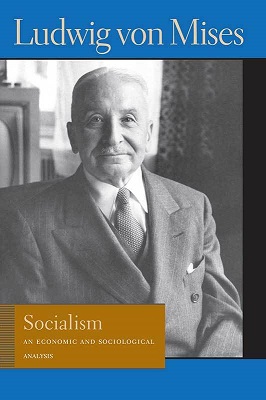
Virgil Henry Storr and others · 2022

Peter Carl Mentzel · May 30, 2022
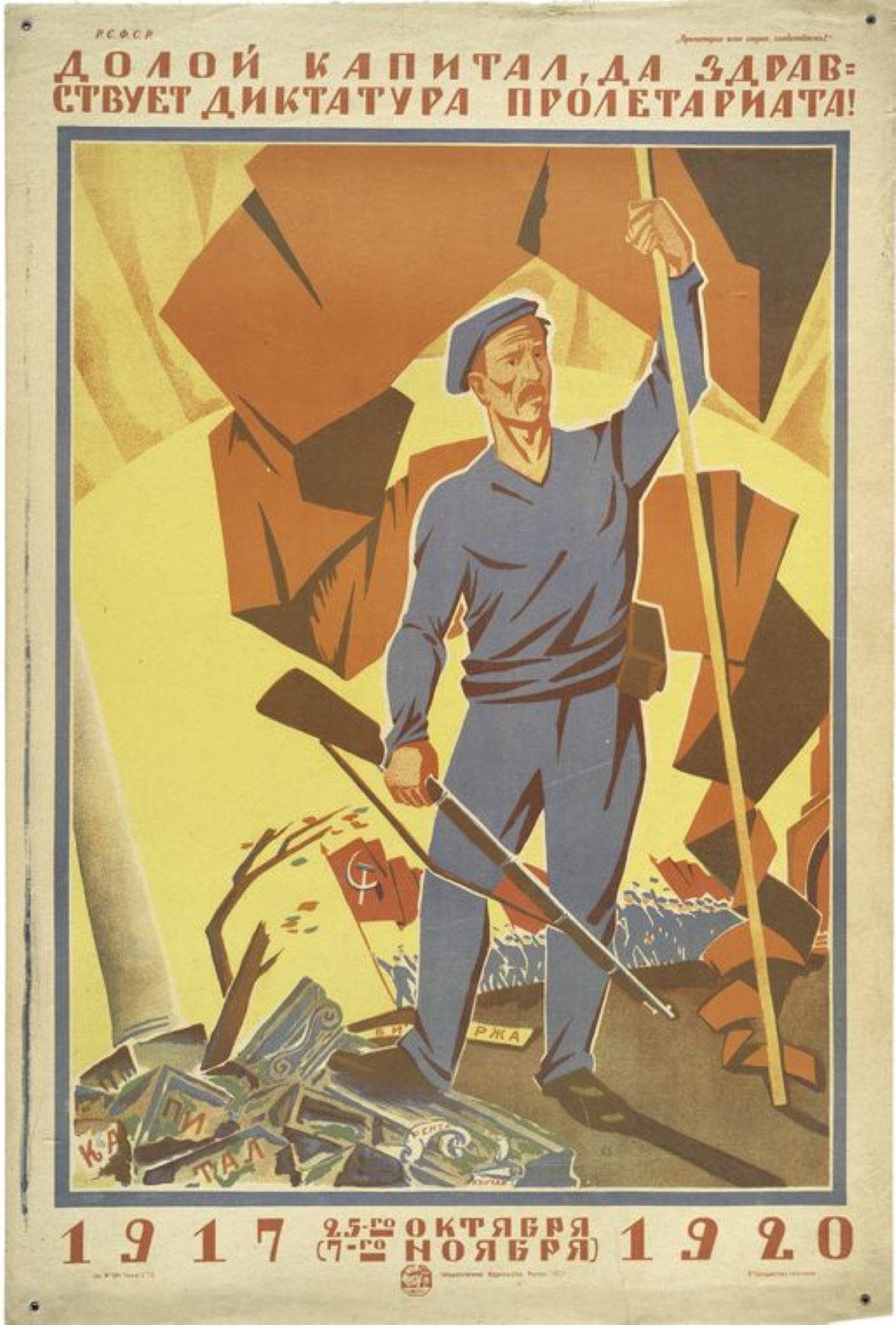
Garth Bond · Oct 18, 2021
Passages on this subject, chosen by OLL editors.
Now, a third and final trait, one which, in my eyes, best describes socialists of all schools and shades, is a profound opposition to personal liberty and scorn for individual reason, a complete contempt for the individual. They unceasingly attempt to mutilate, to curtail, to obstruct personal freedom in any and all ways. They hold that the State must not only act as the director of society, but must further be master of each man, and not only master, but keeper and trainer. [“Excellent.”] For fear of allowing him to err, the State must place itself forever by his side, above him, around him, better to guide him, to maintain him, in a word, to confine him. They call, in fact, for the forfeiture, to a greater or less degree, of human liberty, [Further signs of assent.] to the point where, were I to attempt to sum up what socialism is, I would say that it was simply a new system of serfdom. [Lively assent.]
In the first place, the Post Office has always been a monopoly. There never was a time when any private agency was permitted to compete with the State in the work of distributing letters. ... I cannot refrain from noticing the breakdown of letter-delivery arrangements which has taken place at Christmas every year since the Christmas card came into fashion. ... One would think that if, by the mere fact of belonging to a department of Government, a preternatural faculty of dealing with statistics were conferred upon officials, the officials of the Post Office ought, after a brief experience, to have been able to foresee and provide for this recurring difficulty. Yet no sooner does Christmas come within measurable distance, than every Post Office is placarded and every newspaper filled, with plaintive appeals from the Postmaster-General to the Christmas card dispatching public, to ‘post early, so as to ensure the punctual delivery of letters!’
For all its theories about systems and (all) its efforts it appears that socialism, however indulgent it is toward itself, cannot avoid catching a glimpse of the monster which is legal plunder. But what does it do? It cleverly shrouds it from all eyes, even its own, under the seductive names of fraternity, solidarity, organization, and association. And because we do not ask so much of the law since we require only justice from it, (socialism) presumes that we are rejecting fraternity, solidarity, organization, and association and hurls the epithet “Individualist!” at us. It ought to know, therefore, that what we are rejecting is not natural organization, but coerced organization.
Notwithstanding the very profitable nature of the letter-carrying monopoly, it cannot be said that, at times of great press of business, the public is served with that absence of fuss and effort which ought to characterise a great and wealthy corporation. At Christmas-time the Post Office is completely disorganised. Its customers are pitifully implored not to pay exclusive regard to their own convenience, and to despatch their packages and letters according to a timetable drawn up by the Post Office to suit its own convenience...
It may, however, be pointed out that private carriers do not cry to be let off, but rise to the requirements of the occasion, provide additional facilities, and all the time by prodigal advertisement solicit rather than deprecate the patronage of the public.
I will end by giving what I believe to be the plain reasons why plain men should not be Socialists. It is not because Socialists are innovators or agitators or preach things contrary to the Book of Daniel, or are this, that, or the other, but simply and solely because Socialism is nonsense. Let me try then to put my reasons for not being a Socialist in the simplest possible form—the form which is patronizingly called suitable for children and uneducated persons, but which in reality is the form in which everyone reasons out a subject in his own mind.
Should those who desire, above all things, an improvement in the condition of the labourer become Socialists? No.
Why not? Because Socialism, if carried out, would injure, instead of benefiting, the labourer.
Why would Socialism injure the labourer? For the following reason: If the condition of the working men is to be improved, that is, if they are to have more food, more room in their houses, more clothes, more firing, more of everything they desire, it is evident that there must be more of all these things in the world. That is, there must be more wealth, for these things make up wealth. But in order that there shall be more wealth, i. e. more of the things men need and desire, more must be produced. If ten men have only five loaves between them, and need one each, the only way they can be made comfortable is by getting five more. It follows, therefore, that nothing which decreases the total wealth of the world, which diminishes, that is, the corn grown, the wool clipped, the houses built, the cotton spun, or the coal dug, can improve the condition of the poor. If, then, Socialism would diminish the production of the things needed by mankind it would be injurious.
But would it diminish the wealth of the world, and so makes less to go round? Yes.
The bourgeoisie, wherever it has got the upper hand, has put an end to all feudal, patriarchal, idyllic relations. It has pitilessly torn asunder the motley feudal ties that bound man to his “natural superiors”, and has left remaining no other nexus between man and man than naked self-interest, than callous “cash payment”. It has drowned the most heavenly ecstasies of religious fervour, of chivalrous enthusiasm, of philistine sentimentalism, in the icy water of egotistical calculation. It has resolved personal worth into exchange value, and in place of the numberless indefeasible chartered freedoms, has set up that single, unconscionable freedom – Free Trade. In one word, for exploitation, veiled by religious and political illusions, it has substituted naked, shameless, direct, brutal exploitation.
The fundamental objection advanced against the practicability of socialism refers to the impossibility of economic calculation. It has been demonstrated in an irrefutable way that a socialist commonwealth would not be in a position to apply economic calculation. Where there are no market prices for the factors of production because they are neither bought nor sold, it is impossible to resort to calculation in planning future action and in determining the result of past action. A socialist management of production would simply not know whether or not what it plans and executes is the most appropriate means to attain the ends sought. It will operate in the dark, as it were. It will squander the scarce factors of production both material and human (labour). Chaos and poverty for all will unavoidably result.
A government cannot have too much of the kind of activity which does not impede, but aids and stimulates, individual exertion and development. The mischief begins when, instead of calling forth the activity and powers of individuals and bodies, it substitutes its own activity for theirs; when, instead of informing, advising, and, upon occasion, denouncing, it makes them work in fetters, or bids them stand aside and does their work instead of them. The worth of a State, in the long run, is the worth of the individuals composing it; and a State which postpones the interests of their mental expansion and elevation, to a little more of administrative skill, or of that semblance of it which practice gives, in the details of business; a State which dwarfs its men, in order that they may be more docile instruments in its hands even for beneficial purposes—will find that with small men no great thing can really be accomplished; and that the perfection of machinery to which it has sacrificed everything, will in the end avail it nothing, for want of the vital power which, in order that the machine might work more smoothly, it has preferred to banish.
For more information see:
Economic theory. Demography
473 titles · 88 publications · 293 people

Sociology
62 titles · 3 publications · 35 people

Economic theory. Demography
48 titles · 1 publication · 55 people
Social media
25 titles · 17 publications · 22 people

Social Sciences
18 titles · 22 people

Language and Literature
17 titles · 3 publications · 40 people