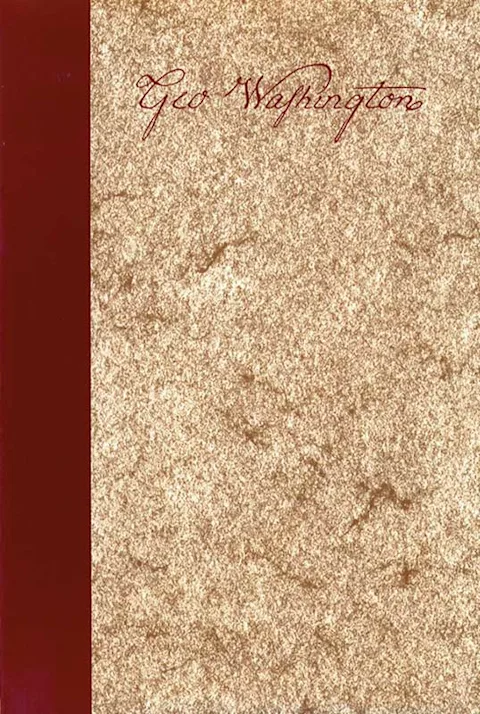
George Washington: A Collection
- George Washington(author)
- William Barclay Allen(editor)
George Washington speaks for himself on behalf of liberty and the emerging American republic. Drawing extensively on his correspondence, this volume includes all of his presidential addresses, various public proclamations, his last will and testament, and the most comprehensive recompilation of the “discarded first inaugural” ever printed.
Key Quotes
Passages from this text chosen by OLL editors.
- Presidents, Kings, Tyrants, & Despots“
It is important, likewise, that the habits of thinking in a free Country should inspire caution in those entrusted with its administration, to confine themselves within their respective Constitutional spheres; avoiding in the exercise of the Powers of one department to encroach upon another. The spirit of encroachment tends to consolidate the powers of all the departments in one, and thus to create whatever the form of government, a real despotism. A just estimate of that love of power, and proneness to abuse it, which predominates in the human heart is sufficient to satisfy us of the truth of this position.
- Presidents, Kings, Tyrants, & Despots“
What astonishing changes a few years are capable of producing! I am told that even respectable characters speak of a monarchical form of government without horror. From thinking proceeds speaking, thence to acting is often but a single step. But how irrevocable and tremendous! What a triumph for the advocates of despotism to find that we are incapable of governing ourselves, and that systems founded on the basis of equal liberty are merely ideal and fallacious! Would to God that wise measures may be taken in time to avert the consequences we have but too much reason to apprehend.
- Politics & Liberty“
The Great rule of conduct for us, in regard to foreign Nations is in extending our commercial relations to have with them as little political connection as possible.
About This Edition
Citation
George Washington: A Collection, compiled and edited by W.B. Allen (Indianapolis: Liberty Fund, 1988).
Washington, George. George Washington: A Collection. Edited by William Barclay Allen, Liberty Fund, 1988. Online Library of Liberty, https://oll.libertyfund.org/titles/washington-george-washington-a-collection.
Washington, G. (1988). George Washington: A Collection. Liberty Fund. https://oll.libertyfund.org/titles/washington-george-washington-a-collection
@book{washington1988collection,
  author = {George Washington},
  editor = {William Barclay Allen},
  title = {George Washington: A Collection},
  publisher = {Liberty Fund},
  address = {Indianapolis},
  year = {1988},
  url = {https://oll.libertyfund.org/titles/washington-george-washington-a-collection},
  note = {Online Library of Liberty}
}TY - BOOK AU - Washington, George A2 - Allen, William Barclay TI - George Washington: A Collection PY - 1988 CY - Indianapolis PB - Liberty Fund UR - https://oll.libertyfund.org/titles/washington-george-washington-a-collection DB - Online Library of Liberty ER -
Copyright
The copyright to this edition, in both print and electronic forms, is held by Liberty Fund, Inc.

About the author
George Washington 1732–1799
George Washington (1732-1799) was the military leader of the American revolutionary armies and became the first president of the United States of America.
Related People
Thomas Jefferson
Author
Thomas Jefferson served as Secretary of State under George Washington from 1790 to 1793. While they worked together in the early government, they often disagreed on political issues—especially Jefferson’s support for limited government and France, versus Washington’s alignment with Alexander Hamilton's stronger federalist vision. These tensions led Jefferson to resign from the cabinet in 1793.
Alexander Hamilton
Author
Alexander Hamilton was George Washington’s top military aide during the Revolutionary War and later became his most trusted advisor as the first Secretary of the Treasury. He helped shape U.S. financial policy and drafted key documents like Washington’s Farewell Address. Washington consistently supported Hamilton’s Federalist ideas, and the two shared a deep bond of trust and collaboration in both war and government.
John Adams
Author
John Adams was closely connected as Washington's Vice President and fellow Founding Father. They worked together during the early years of the United States. Though they had different personalities and weren’t especially close, they shared a mutual respect.
Marquis de Lafayette was a trusted general and close friend of George Washington during the Revolutionary War. They shared a father–son-like bond, and Lafayette played a vital role in key battles and securing French support for the American cause. Their lifelong friendship continued after the war through letters and visits, making Lafayette one of Washington’s most important allies.


Critical Responses
Works that answer or challenge this text.
 Correspondence
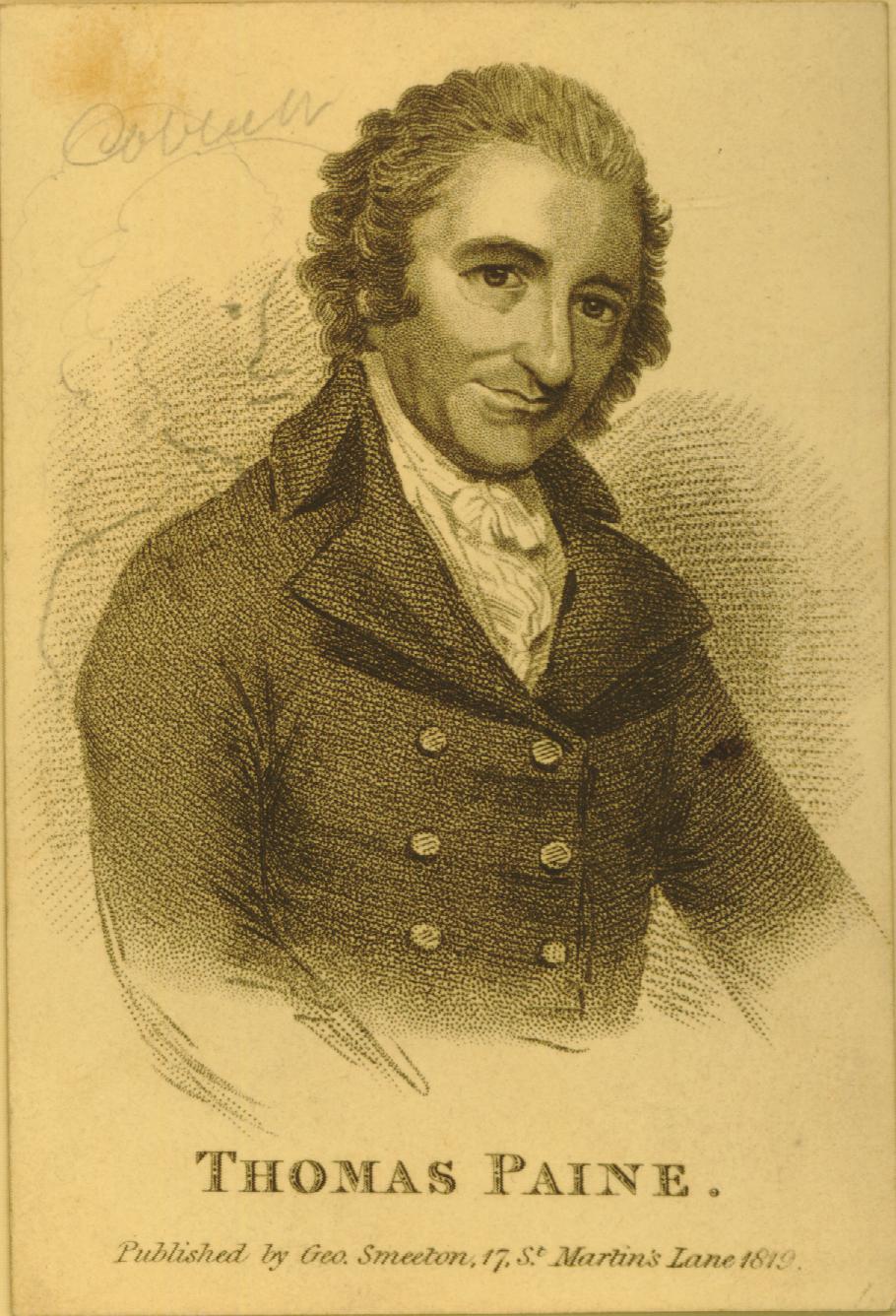
Letter to George Washington, 30 July 1796
Thomas PaineVisit site ↗Thomas Paine delivers a fierce denunciation of the former president in this letter. Writing after his imprisonment in France and feeling abandoned by Washington, Paine accuses him of betrayal and ingratitude. He charges Washington with political corruption, cowardice, and excessive deference to aristocratic interests, painting him as a hypocrite who had betrayed both the ideals of the Revolution and his friends.
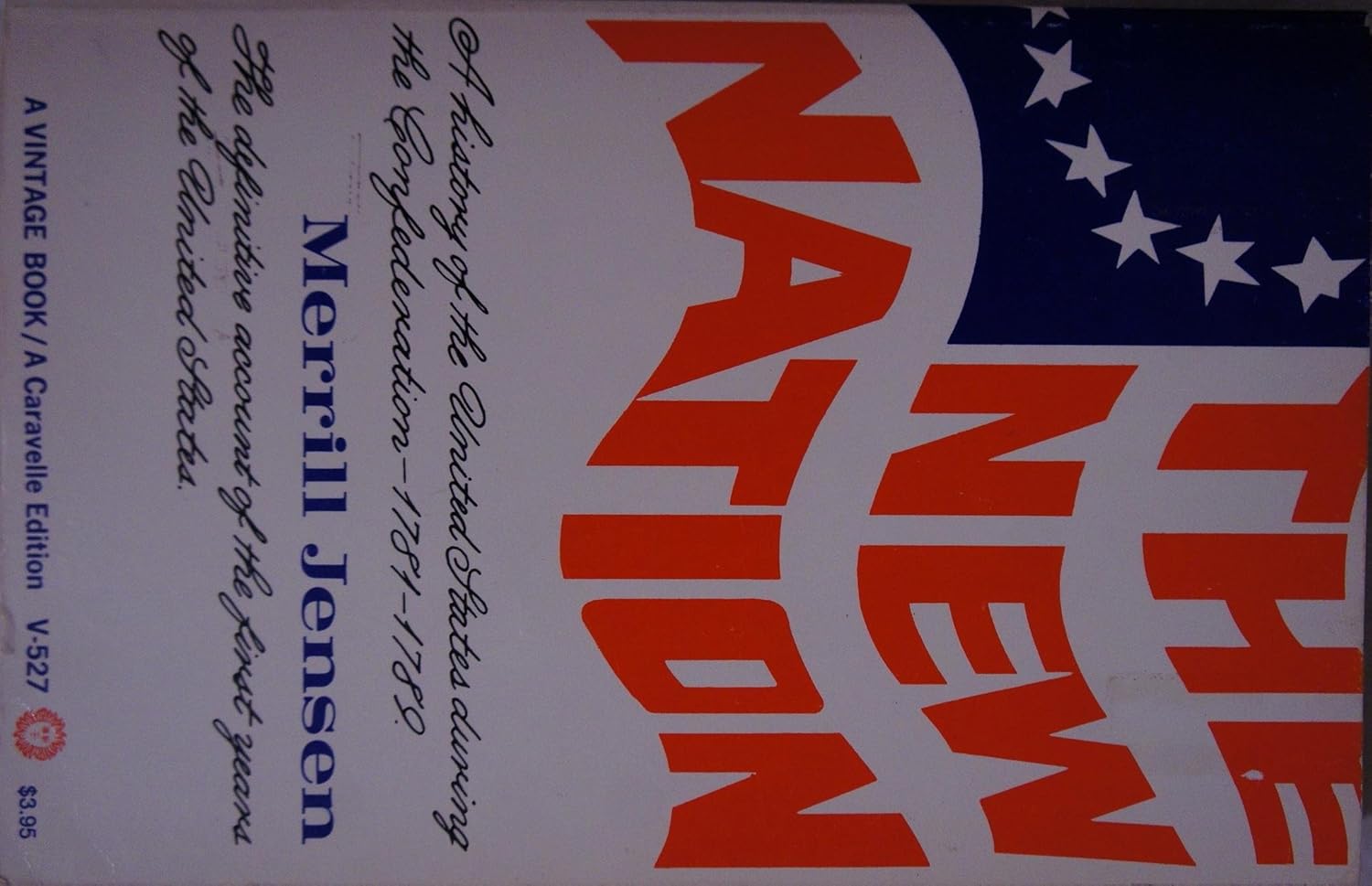 Book
New Nation: A History of the United States During the Confederation, 1781-1789
Merrill JensenVisit site ↗Merrill Jensen contends that Washington’s presidency, though claiming neutrality, closely aligned with Federalist goals. By backing Hamilton’s financial system and suppressing dissent like the Whiskey Rebellion, Washington favored centralized authority and elite control over grassroots democracy, steering the nation toward a more conservative path than many revolutionaries envisioned.
Connected Readings
What to read next.
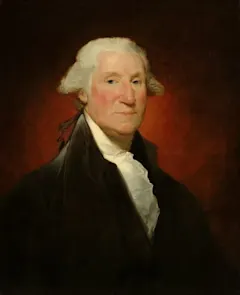 Book
The Writings of George Washington, 14 vols.
George WashingtonView title >The Writings of George Washington is the original, exhaustive source of Washington’s documents, while George Washington: A Collection is a modern, thematic selection derived from it. The two books are deeply connected, with Allen’s collection relying on Ford’s editorial foundation to present Washington’s enduring legacy in a more accessible form.
- Video
A Design for Liberty: The American Constitution
Visit site ↗George Washington: A Collection presents Washington’s personal writings, offering direct insight into his values, leadership, and vision for the nation. In contrast, the video “A Design for Liberty: The American Constitution” explores the broader constitutional framework that shaped, and was shaped by, Washington’s role in founding the United States. Together, they provide a complementary understanding of Washington’s legacy—combining the personal voice of the first president with the structural design of the government he helped establish.
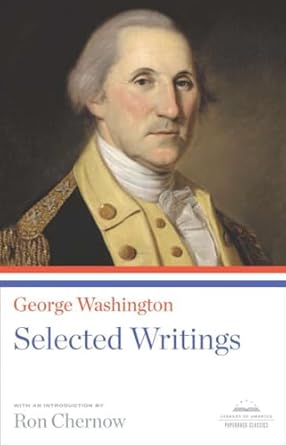 Book
George Washington: Selected Writings: A Library of America
Ron ChernowVisit site ↗George Washington: Selected Writings and George Washington: A Collection are companionable in purpose but distinct in approach. While both draw from Washington’s vast correspondence and state papers, Selected Writings emphasizes narrative and historical breadth, and A Collection emphasizes philosophical insight and thematic clarity—together offering a complementary view of Washington’s mind and legacy.
More in History of the Americas
See all >History of the Rise, Progress, and Termination of the American Revolution vol. 2
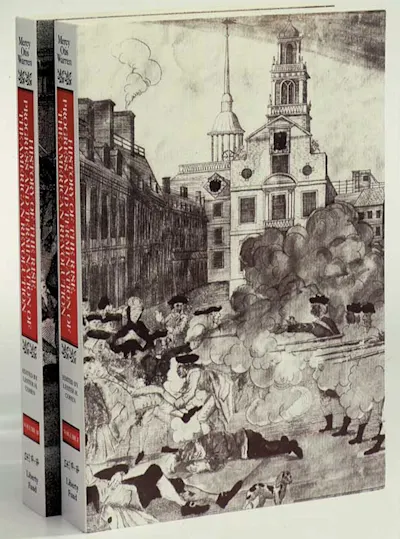
Mercy Otis WarrenHistory of the Rise, Progress, and Termination of the American Revolution 2 vols
Mercy Otis WarrenThe Works of Benjamin Franklin, Vol. II Letters and Misc. Writings 1735-1753
Benjamin FranklinThe Writings, vol. 8 (1808-1819)
James MadisonThe Works and Correspondence of David Ricardo, Vol. 9 Letters 1821-1823
David RicardoStrictures upon the Declaration of the Congress at Philadelphia (1776)
Thomas HutchinsonThe Crisis: A British Defense of American Rights, 1775–1776
Neil L. YorkCollected Political Writings of James Otis
James OtisTo Secure the Blessings of Liberty: Selected Writings
Gouverneur Morris