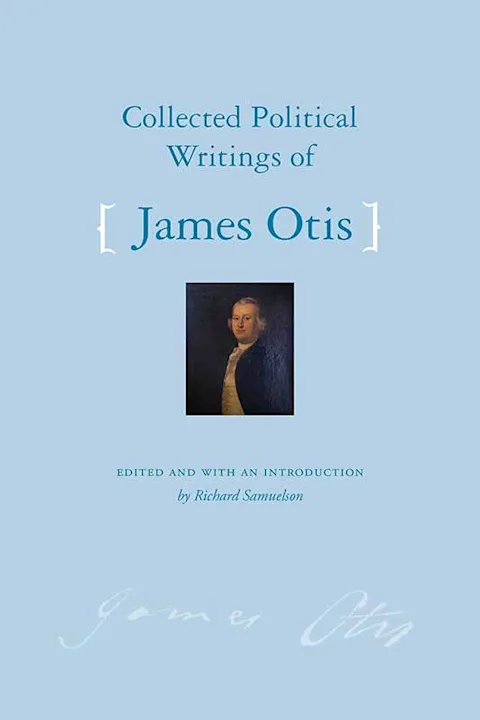
The Collected Political Writings of James Otis
- James Otis(author)
- Richard Samuelson(editor)
Key Quotes
Passages from this text chosen by OLL editors.
- Origin of Government“
The form of government is by nature and by right so far left to the individuals of each society, that they may alter it from a simple democracy or government of all over all, to any other form they please. Such alteration may and ought to be made by express compact: But how seldom this right has been asserted, history will abundantly show. For once that it has been fairly settled by compact; fraud force or accident have determined it an hundred times. As the people have gained upon tyrants, these have been obliged to relax, only till a fairer opportunity has put it in their power to encroach again.
About This Edition
Citation
The Collected Political Writings of James Otis. Edited and with an Introduction by Richard Samuelson (Indianapolis: Liberty Fund, 2015).
Otis, James. Collected Political Writings of James Otis. Edited by Richard Samuelson, Liberty Fund, 2015. Online Library of Liberty, https://oll.libertyfund.org/titles/collected-political-writings.
Otis, J. (2015). Collected Political Writings of James Otis. Liberty Fund. https://oll.libertyfund.org/titles/collected-political-writings
@book{otis2015writings,
  author = {James Otis},
  editor = {Richard Samuelson},
  title = {Collected Political Writings of James Otis},
  publisher = {Liberty Fund},
  address = {Indianapolis},
  year = {2015},
  url = {https://oll.libertyfund.org/titles/collected-political-writings},
  note = {Online Library of Liberty}
}TY - BOOK AU - Otis, James A2 - Samuelson, Richard TI - Collected Political Writings of James Otis PY - 2015 CY - Indianapolis PB - Liberty Fund UR - https://oll.libertyfund.org/titles/collected-political-writings DB - Online Library of Liberty ER -
Copyright
The copyright to this edition, in both print and electronic forms, is held by Liberty Fund, Inc.

About the author
James Otis 1725–1783
James Otis (1725–83) was a lawyer in Massachusetts and a member of the Massachusetts Legislature. In the mid-1760s he wrote a number of important pamphlets in favor of American independence and is said to have coined the revolutionary phrase "no taxation without representation".
Related People
Samuel Adams
Author
Samuel Adams was a close ally in early resistance to British rule. He opposed British taxation, especially the Writs of Assistance and the Stamp Act. Otis laid the legal foundation with powerful arguments, while Adams organized protests and public action. Together, they helped launch the Sons of Liberty and sparked revolutionary sentiment in the colonies.
Mercy Otis Warren
Author
Mercy Otis Warren was deeply connected to James Otis not only as his sister but also as his intellectual ally. She shared his passion for liberty and used her talents as a writer to support the revolutionary cause. Inspired by James's political views, Mercy wrote plays, poems, and historical works that criticized British rule and promoted independence.
Thomas Hutchinson
Author
Thomas Hutchinson and James Otis were political opponents in colonial Massachusetts. Otis strongly opposed Hutchinson’s support for British policies, especially the Writs of Assistance and taxation without representation. Their rivalry became intense when Otis resigned his post as advocate general to fight against the writs—directly challenging Hutchinson’s authority.


Critical Responses
Works that answer or challenge this text.
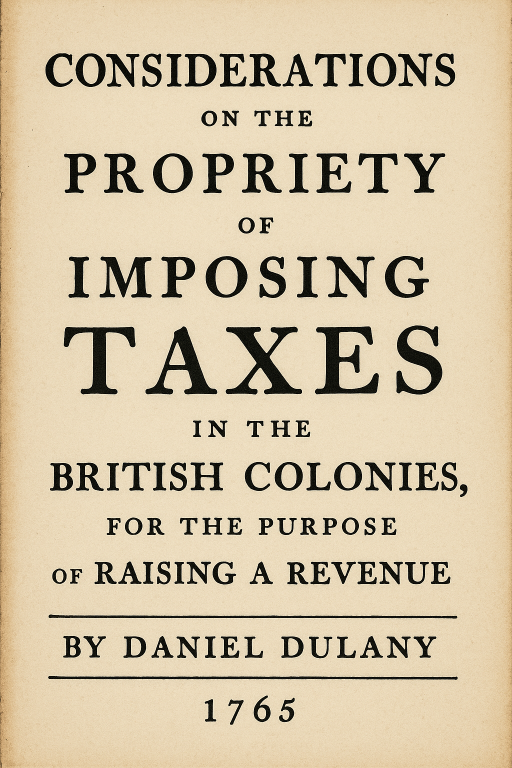
Considerations on the Propriety of Imposing Taxes (1765)
Daniel DulanyVisit site ↗Daniel Dulany’s 1765 pamphlet is a direct response to the arguments Otis and other patriots advanced. While Dulany agreed that Parliament should not impose taxes on the colonies without consent, he argued within a Loyalist framework, emphasizing legal and constitutional loyalty to Britain.
The American Revolution: A Constitutional Interpretation
Charles Howard McIlwainVisit site ↗Charles Howard McIlwain critiques James Otis for inconsistently blending natural rights theory with English constitutional law. McIlwain argues that Otis attempted to justify colonial resistance by appealing both to the inalienable rights of individuals and the traditional rights of Englishmen—two foundations that often conflicted.
Connected Readings
What to read next.
 Pamphlet
Rights of British Colonies Asserted
James OtisView title >In this pamphlet, Otis outlines his core political philosophy, arguing that taxation without representation is a violation of both natural law and the British constitution. It captures his belief in universal rights and limited government—key themes that appear throughout his collected works. This pamphlet not only influenced revolutionary thought but also served as a central text in shaping early American political ideals.
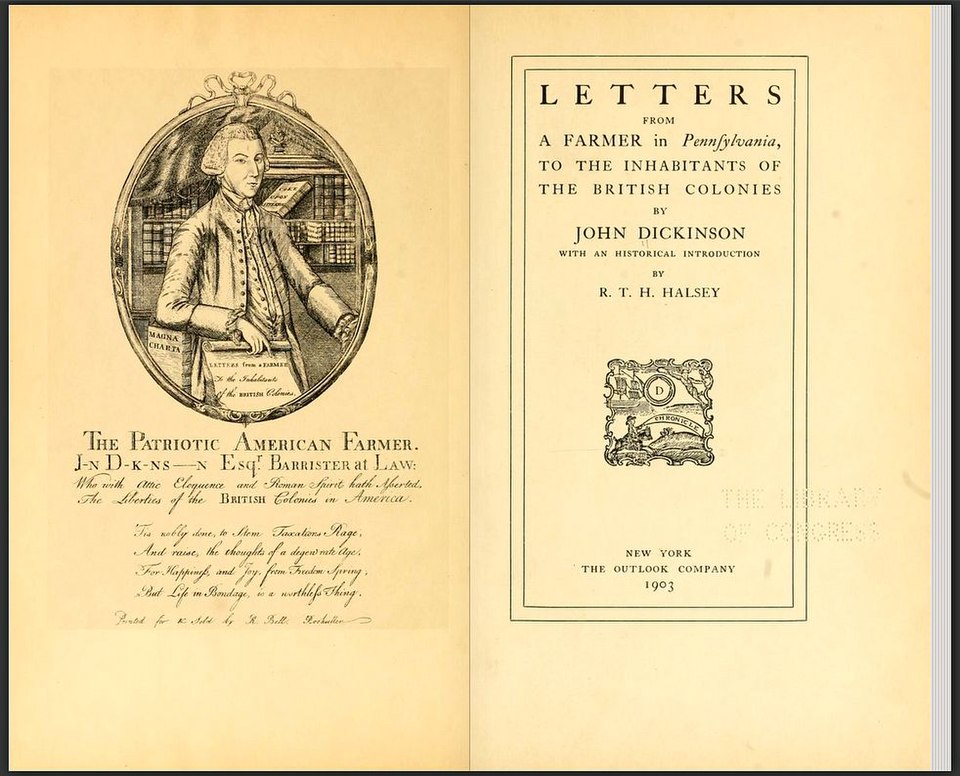 Book
Letters from a Farmer in Pennsylvania
John DickinsonVisit site ↗This writing is connected through its shared opposition to British taxation without colonial representation. Dickinson echoed Otis’s earlier arguments—especially the idea that external taxes imposed by Parliament violated colonial rights. While Dickinson took a more moderate tone, both writers grounded their claims in constitutional principles and helped lay the intellectual foundation for American resistance.
 Book
The Two Treatises of Civil Government (Hollis ed.)
John LockeView title >John Locke’s book is a key philosophical foundation for James Otis’ Collected Political Writings. Locke’s ideas about natural rights, government by consent, and the right to resist tyranny deeply influenced Otis’s arguments against British authority. Otis drew on Locke’s social contract theory to claim that colonial subjects retained the same rights as English citizens—including protection from taxation without representation.
More in History of the Americas
See all >History of the Rise, Progress, and Termination of the American Revolution vol. 2
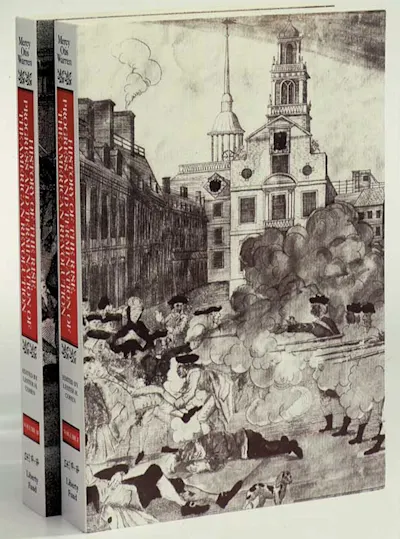
Mercy Otis WarrenHistory of the Rise, Progress, and Termination of the American Revolution 2 vols
Mercy Otis WarrenThe Works of Benjamin Franklin, Vol. II Letters and Misc. Writings 1735-1753
Benjamin FranklinThe Writings, vol. 8 (1808-1819)
James MadisonThe Works and Correspondence of David Ricardo, Vol. 9 Letters 1821-1823
David RicardoStrictures upon the Declaration of the Congress at Philadelphia (1776)
Thomas HutchinsonThe Crisis: A British Defense of American Rights, 1775–1776
Neil L. YorkTo Secure the Blessings of Liberty: Selected Writings
Gouverneur MorrisThe Webster-Hayne Debate on the Nature of the Constitution: Selected Documents
Edward Livingston