

Aurelian Craiutu
Lead essay · Mar 04, 2019
"Thought is nothing without enthusiasm." Germaine de Staël
Staël's Uncertain Place in the Liberal Canon
Catriona Seth
Response · Mar 05, 2019 · Own page
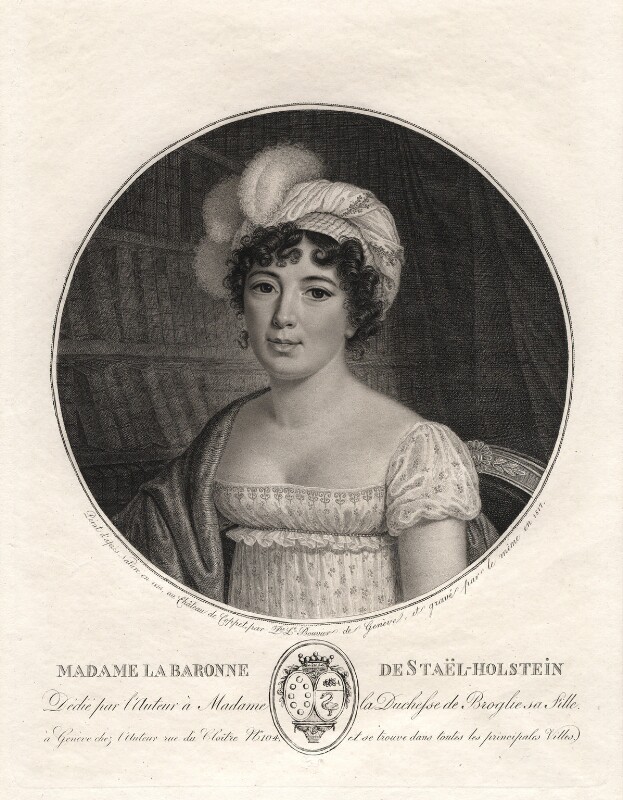
On January 22, 2019, French president Emmanuel Macron quoted Germaine de Staël in a speech given at Aachen to mark the signing of a new Franco-German treaty. He mentioned the emotion he felt when he recalled something Staël said: "When my heart is looking for a word in French and can't find it, I sometimes look for it in the German language."[31] A fine sentiment for a true European, and one who had actively promoted cross-border friendship like Staël, except that, according to academic specialists questioned as part of a TV investigation,[32] whilst she might have been sympathetic to the idea, she apparently left no trace of having actually ever said or written this; nor has the Elysée palace come up with a source. This paradoxical anecdote—one can only rejoice at Staël being quoted by France's top statesman but deplore that words are being put in her mouth—ties in with Aurelian Craiutu's claim that her actual contributions to political thought are underappreciated. I believe gender has much to do with this state of things,[33] and I would like to stress this by looking at an early work, absent from Prof. Craiutu's essay, which gives an insight into how Staël developed her rejection of fanaticism and the spirit of party but defended the idea that emotions might have a place in politics.
Je reviens à vous, femmes immolées toutes dans une mère si tendre, immolées toutes par l'attentat qui serait commis sur la faiblesse, par l'anéantissement de la pitié, c'en est fait de votre empire si la férocité règne, c'en est fait de votre destinée si vos pleurs coulent en vain.[39](I return to you, women all sacrificed through such a tender mother, all sacrificed by the attack which would be committed on weakness, by the annihilation of pity. Your rule is over if ferocity reigns. Your fate is sealed if your tears run in vain).
Staël's only arms were her words. She was eloquent even in this hastily drafted text. As her Considerations on the Principal Events of the French Revolution shows, she came to consider that the Revolution was a political necessity against which no action taken by the king or queen could have had any effect:
The Queen, Marie Antoinette, was one of the most amiable and gracious persons who ever occupied a throne: there was no reason why she should not preserve the love of the French, for she had done nothing to forfeit it. As far, therefore, as personal qualities went, the King and Queen might claim the hearts of their subjects; but the arbitrary form of the government, as successive ages had moulded it, accorded so ill with the spirit of the times, that even the Virtues of the sovereigns were overlooked amid the accumulation of abuses. When a nation feels the want of political reform, the personal character of the monarch is but a feeble barrier against the impulse. A sad fatality placed the reign of Louis XVI in an era in which great talents and profound knowledge were necessary to contend with the prevailing spirit, or, what would have been better, to make a fair compromise with it.[40]
Staël was reflecting with hindsight in the Considerations. In the Réflexions sur le procès de la reine, she was writing on the spur of the moment and hoping for action rather than taking stock of events. She was horrified by the death of Marie Antoinette on October 16, 1793, and in the Considerations recalled it as an act of barbarism:
The assassination of the Queen, and of Madame Elizabeth,[41] excited perhaps still more astonishment and horror than the crime which was perpetrated against the person of the King; for no other object could be assigned for these horrible enormities than the very terror which they were fitted to inspire.[42]
Staël was dejected that her pamphlet had had no effect, that her rational words had not swayed her audience. As she wrote to fellow author Isabelle de Charrière, it had been a useless effort and indeed one which increased her vulnerability as a target in the revolutionaries' eyes. By executing Marie Antoinette, they had, as Staël predicted, turned the queen into a martyr, an enemy more dangerous in death than in life[43]—again, an example worth thinking about in the current climate.[44] The queen's execution was, as I have written elsewhere, a triple defeat "for words, for women, for liberty."[45]
K Steven Vincent
Response · Mar 07, 2019 · Own page
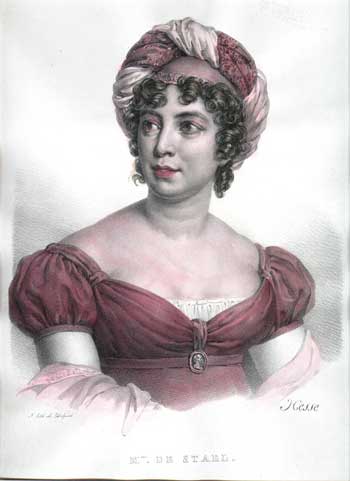
Germaine de Staël was an important writer of the era of the French Revolution and best known for her novels and her book on Germany.[47] I agree with Professor Craiutu that her political thought merits more attention than it has generally received. Professor Craiutu elegantly highlights the "moderation" of Staël's political stance, which is certainly one of its notable elements. I would wish to emphasize equally her pragmatic focus on which action and/or ideal required emphasis at any particular time. Whether or not she recommended moderation – a concept that suggests an avoidance of extremes in all situations – depended on the nature of the situation she confronted. I would prefer to characterize her political stance as a form of "pragmatic liberalism."
It is obvious that there is no absolute system of government that does not need to be modified by circumstances. And what circumstance is more influential than a revolution? ... This boiling fermentation produces a new world; one day is able to render impossible the plan of the previous day; and for those who advance always toward the same goal of liberty, the means continuously change.[55]
The circumstances in late-1790s France recommended both the Republic and moderation. The same pragmatism at other times, however, recommended a more strident stance. During the years of the Empire, for example, Staël firmly opposed the regime of Napoleon.[56] It is this which makes me wish to qualify the "moderate" label. While I do not disagree that moderation often marked her politics, I would emphasize that there were times when she was "immoderate." "Pragmatic liberalism," I would suggest, captures her distinctive political stance.
Benjamin Hoffmann
Response · Mar 07, 2019 · Own page

I welcome the opportunity to share my reactions to Professor Aurelian Craiutu's timely paper on Germaine de Staël's enthusiasticdefense of moderation – a paradox he has illuminated thanks to his thoughtful comments on Staël's political vocabulary. Craiutu's paper has done a masterful job at analyzing three passions–fanaticism, the spirit of party, and enthusiasm–whose destructive power Staël witnessed firsthand during the Revolutionary period, and I am grateful for his insights on the reasons why she holds an uncertain place in the liberal canon. I certainly agree with Craiutu's chief explanation: if Staël rarely appears in textbooks and histories of political thought, it is certainly due to the widespread suspicion against political moderates. Craiutu himself has done much to advance our understanding of political moderation and reminds us, in this paper and in previous books as well, of two of the most frequent criticisms against moderates: cowardice and hypocrisy.[64] Indeed, moderates are regularly suspected of being too timid to fight for their own convictions--when they are not accused of lacking convictions altogether. Moderates, seen this way, suffer from a moral flaw, while their tendency to make compromises goes hand in hand (or so it seems to their adversaries) with irresoluteness. Hypocrisy is another reproach frequently formulated against them, as if their willingness to accept contradiction is nothing but a way of advancing a personal agenda behind a deceiving mask of tolerance: larvatus prodeo (I go forward bewitched) is the motto of all moderates, at least if we are to believe their opponents. Seen in this light, Staël's stance on political moderation would explain the relative oblivion to which her political work has succumbed.
…Let us contemplate the horrors of fifteen centuries, all frequently renewed in the course of a single one; unarmed men slain at the feet of altars; kings destroyed by the dagger or by poison; a large state reduced to half its extent by the fury of its own citizens; the nation at once the most warlike and the most pacific on the face of the globe, divided in fierce hostility against itself; the sword unsheathed between the sons and the father; usurpers, tyrants, executioners, sacrilegious robbers, and bloodstained parricides violating, under the impulse of religion, every convention divine or human—such is the deadly picture of fanaticism.[73]
In her Considerations, Staël also condemned the fury unleashed by the French Revolution and underlined the singularity of this period by insisting on the exceptional violence it provoked: "The events which we have been recalling until this point have been the only kind of history for which we can find examples elsewhere. But an abyss is now about to open under our feet; we do not know what course to pursue in such a gulf, and the mind leaps in fear from disaster to disaster, till it reaches the annihilation of all hope and of all consolation."[74] In addition, Voltaire insisted on fanaticism's method of diffusion by comparing it to a disease of the mind, thus underlining its contagious nature: "Fanaticism is, in reference to superstition, what delirium is to fever, or rage to anger."[75] This horrifying sickness can be contracted by anyone, including the greatest minds, such as Newton who fell victim to it: "the exalted Newton imagined that he found the modern history of Europe in the Apocalypse.… [I]t seems as if superstition were an epidemic disease, from which the strongest minds are not always exempt."[76] Craiutu reminds us that Staël felt the same way about another remarkable intellect: indeed, she thought that the great mathematician Condorcet was also possessed by the fever of political fanaticism during the French Revolution.
Aurelian Craiutu
Madame de Stael, Our Contemporary · Mar 08, 2019
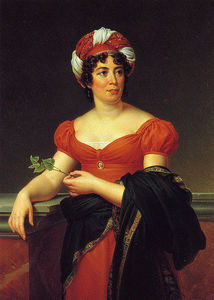
Montesquieu once wrote: "Il ne faut pas toujours tellement épuiser un sujet, qu'on ne laisse rien à faire au lecteur. Il ne s'agit pas de faire lire, mais de faire penser." ("One should not try to always exhaust a subject so that nothing is left for the reader to do. The real question is not to make someone read, but to make someone think.") He was certainly right if one judges by Catriona Seth's, Steven Vincent's, and Benjamin Hoffmann's thoughtful responses to my essay on Germaine de Staël's writings on fanaticism and enthusiasm. Whether drawing upon lesser-known texts such as Staël's Réflexions sur le procès de la reine (Reflections on the Queen's Trial, 1793), placing her works within the wider cultural movement of sensibilité, or showing the similarities and differences between Staël's analysis of fanaticism and Voltaire's critique of this nefarious passion, the three responses shed fresh light on key aspects of Staël's writings and invite us to take our dialogue in new directions.Catriona Seth's commentary highlights the ways in which Staël regarded Queen Marie Antoinette's execution as a triple defeat "for words, for women, and for liberty." Seth raises interesting questions about the role of women in society, while Vincent's and Hoffmann's responses point out the links between religious and political fanaticism and comment on the pragmatic nature of Staël's liberalism. After noting the originality of Staël's analysis of political passions, Vincent singles out the peculiar nature of her moderation, noting that there were times when she behaved immoderately and adopted a form of pragmatism that might surprise even her friends. In turn, Hoffmann argues that Staël's political vocabulary and emphasis on passions offer a fruitful case-study of the intellectual evolution from the 18th to the 19th centuries, that is, from the Age of Reason to the Age of Sentiments. In this regard, he notes, Staël "applied the reading grid Voltaire created to identify the causes and mechanisms of religious zealotry to her own analysis of political passions," while rejecting his virulent anti-Christianism. These are all important points that I hope we will continue to discuss here. They prove that Staël is an original and important author whose writings illustrate so well the values and principles embraced by Liberty Fund: liberty, responsibility, and civility.To begin our conversation, I would like to focus on a few points on which we all agree. Germaine de Staël was a larger-than-life figure who fascinated her contemporaries and interpreters. During her lifetime, some admired Staël for her ideas and unique gift for conversation; others envied her fabulous wealth. After all, she was the daughter of Jacques Necker (1732-1804), one of the richest men in Europe at that time and a prominent politician and political thinker. Still others were intrigued by her adventurous lifestyle. Almost everyone who met Staël in the salons of Paris, Coppet, London, Vienna, Moscow, or St. Petersburg was impressed by her sparkling and unforgettable personality. Unfortunately, she did not live long enough to play the leading intellectual and political role that she hoped for during the Bourbon Restoration, which witnessed a liberal renaissance in France. After suffering a debilitating stroke in February 1817, she died five months later on July 14, 1817, leaving unfinished her political testament, Considerations on the Principal Events of the French Revolution. The posthumous publication of her book in 1818 transformed Staël into what a modern historian (Laurent Theis) called "the historical and political muse of the Restoration."[79] Considerations became a main reference point for a new generation of liberals who came of age during the Bourbon Restoration and remained an object of special interest for liberal-minded intellectuals until the 1850s.[80] In the chapter dedicated to Staël in her superb book Les salons de Paris, the Duchess d'Abrantès unambiguously claimed that Staël was "the most remarkable woman of her time"[81] for whom social conversation was an inescapable necessity.It is then even more surprising that Staël's political thought has been unduly neglected in the recent past. There are a few important differences and interesting paradoxes here. If the dual bicentenary of both Staël's death and the publication of her political magnum opus was overlooked in North America, known for its strong feminist movements, it did not go unnoticed in Europe, a place where feminism is arguably less vocal but perhaps more eloquent.[82] In 2017 the prestigious Pléiade collection published a long-overdue collection of her literary works edited by Catriona Seth. A substantial edition of Staël's most important (though not all!) political works was published by Theis in the well-known Bouquins series at Robert Laffont.[83] A new critical edition of Staël's works has begun being published under the auspices of la Société des études staëliennes. Divided into three parts—Œuvres critiques, Œuvres littéraires, and Œuvres historiques, each containing three volumes—this new critical edition has yet to be completed but has already become indispensable to anyone interested in doing research on Staël. Finally, an international conference devoted to her was organized in November 2017 at the Suor Orsola Benincasa University in Naples, Italy, with the participation of major scholars from several European countries.Regrettably, on the American side of the ocean, all this is barely known, and the bicentenary of Staël's death passed largely unnoticed by political theorists and historians of political thought. To the best of my knowledge, no new editions of her political and literary works appeared in English to mark this event. The reasons for this oversight are complex. As Benjamin Hoffmann remarks, if Staël holds an uncertain place in the liberal canon, it is also due to the widespread suspicion against political moderates, often accused of hypocrisy, cowardice, or weakness. I can hardly agree with him more on this issue. According to Catriona Seth, there is no doubt that this oversight has something to do with Staël's gender. In turn, Steven Vincent points to her pragmatic liberalism linked to her moderate political agenda, which often placed Staël between warring factions. A few historians are still inclined to reduce Staël's life to a host of anecdotes and tend to ridicule her political ambitions, which, in their (biased) view, were too high for a mere salon hostess, brilliant as she may have been. This dismissive attitude might explain why Staël always seemed second to her famous companion, Benjamin Constant, or as a mere complement to the doctrines of her father. It is no mere coincidence then that we still have no Cambridge Companion to Madame de Staël, though there are such volumes dedicated to Rousseau, Burke, Constant, and Tocqueville.The contrast between Staël's and Burke's analyses of the French Revolution would make for a fascinating article or book.[84] The differences between them become obvious once we consider, for example, Staël's endorsement of the same principles of 1789 which Burke flatly rejected, or her insistence (in the first chapter of the Considerations) that the Revolution of 1789 in France and the Glorious Revolution of 1688-89 in England belonged to the same wave of history and were equally legitimate. Yet there were also important similarities between the two thinkers that must not be overlooked. Consider, for example, their common condemnation of the Terror. In this regard, Staël shared to a considerable extent Burke's critique of fanaticism while avoiding sounding Burkean. In Burke's view, the concept was linked to the revolutionary fervor of those who rejected prudence and embraced a utopian form of social engineering. Staël had as little sympathy as the author of Reflections on the Revolution in France for the fanatism of the revolutionary mind. What distinguishes her position from Burke's is that she proposed an enlightened form of enthusiasm as a cure for fanaticism and the excesses of the spirit of party. This may appear surprising to anyone who remembers the close association between fanaticism, superstition, and enthusiasm in 18th-century political thought. But as I have already argued, it was consistent with Staël's general theory of passions and political moderation, which I hope we will continue to discuss in this forum.Equally interesting, as Benjamin Hoffmann suggests, is the contrast between Staël's and Voltaire's proposals for combatting fanaticism. The author of Considerations chose a solution—enthusiasm—that Voltaire unambiguously rejected. The latter was deeply skeptical of enthusiasm and instead placed his faith in the power of philosophy to dispel superstition. The intellectual dialogue on fanaticism between Staël and Voltaire would deserve an entire article. I can only remark here that for Hoffmann, Staël's proposed remedy for fanaticism holds more promise to ease political passions than Voltaire's confidence in the power of reason. The appeal of Staël's position is also discussed by Vincent, who points out that she emphasized those sentiments that grow from identification with the plight of others and allow us to see our mutual interconnectedness. Hoffmann and Vincent both may be right, especially when one looks around and sees various forms of fanaticism spreading and threatening to tear us apart and isolate us in bubbles and echo chambers. It is in this regard that Madame de Staël remains, to quote Catriona Seth, "a woman for our times," who reminds us of the importance of generosity, pity, and compassion for others, three essential virtues that our world badly needs today.Endnotes[79.] Laurent Theis, "Présentation," in Madame de Staël, La Passion de la liberté, ed. Laurent Theis (Paris: Robert Laffont, 2017), p. 299.[80.] Staël's admirers applauded her defense of the principles of 1789 and agreed with her critique of the Terror of 1793-94 and Napoleon. They endorsed her liberal agenda for political reform and shared her strong appreciation for the English political system. For a comprehensive account of the posterity of Staël's Considerations, see Stéphanie Tribouillard, Le Tombeau de Madame de Staël: Les discours de la postérité staëlienne (1817-1850) (Geneva: Slatkine, 2007).[81.] Duchess d'Abrantès, Les Salons de Paris (Paris: Balland, 1984), p. 69. Also see the chapter dedicated to Staël in Mona Ozouf, Women's Words: An Essay on French Singularity (Chicago: University of Chicago Press, 1998), pp. 64-87.[82.] On the singularity of French "feminism," see Ozouf, Women's Words, pp. 229-84. It is worth noting that Ozouf's excellent book, which was widely commented on in France, was poorly received in the United States, where it was never released in paperback.[83.] La Passion de la liberté has over 1,000 pages and includes four major books: De l'Influence des passions sur le bonheur des individus et des nations, Des circonstances actuelles qui peuvent terminer la Révolution et des principles qui doivent fonder la république, Considérations, and Dix Années d'exil. A full edition of Staël's political works, including Réflexions sur le procès de la reine, Réflexions sur la paix, addressées à M. Pitt et aux Français, Réflexions sur la paix intérieure, Idées sur une déclaration de droits, and Fragment sur le droit d'initiative, can be found in Madame de Staël, Œuvres Complètes, Serie III: Œuvres historiques, Tome I, Des circonstances actuelles et autres essays politiques sous la Revolution, ed. Lucia Omacini (Paris: Honoré Champion, 2009).[84.] The same could be said about her account and Tocqueville's. See Burke, Reflections on the Revolution in France (1790) and Further Reflections on the Revolution in France available online at <https://oll.libertyfund.org/titles/656> and <https://oll.libertyfund.org/titles/660>. And also Alexis de Tocqueville, The Old Regime and the Revolution (1856) <https://oll.libertyfund.org/titles/2419>.Benjamin Hoffmann
A Thought Experiment: On the Political Use of Enthusiasm · Mar 12, 2019
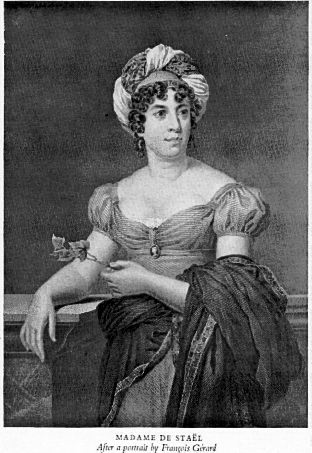
Reading a previous article authored by Aurelian Craiutu (on Tocqueville's Democracy in America), I was struck by a passage where he suggested the following "thought experiment":Suppose that Tocqueville were to submit Democracy in America as a doctoral dissertation to the faculty of a political science department at a top research university. Would those of our colleagues who stress the importance of statistical and quantitative skills be willing to give him a pass, given his imprecise use of the concept of democracy, his unique style of explanation that made him prone to contradict himself, and his many omissions (political parties, industrial revolution, etc.) from his analysis?[85]
I found Craiutu's suggestion not only quite entertaining but extremely stimulating as a way to question the scientific norms governing present-day academia while underlining some problematic confusions in Tocqueville's magnum opus (in particular: the various and partially conflicting meanings he gave to his key concept democracy). In my turn, I would like to suggest a comparable thought experiment, this time on the question of "enthusiasm" as defined by Germaine de Staël. Craiutu observed in his response that we all agree that Staël's political thought has been unduly neglected in the recent past (especially in the United States) and that we also agree on the relevance of her work for our divided time, a work that reminds us of several virtues (generosity, pity, compassion) and that could certainly play a preeminent role in today's contentious political discourse. Let's see if Staël's concept of enthusiasm could actually be applied to assuage some of the divisions currently tearing apart the very fabric of American society, a society where, without a doubt, political passions are burning and opinions are polarized to the extreme.[86] It could be a sort of practical test to question our shared hypothesis on the relevance of Staël's political work for our time.First things first: what did Staël mean by enthusiasm? A key component of this concept is its antinomy to selfishness. Staël developed this idea in her work Germany: "Enthusiasm only can counter-balance the tendency to selfishness, and this is with the help of this divine sign that we must recognize immortal creatures."[87] Whereas the direct consequence of a person's selfish reasoning is valuing only what serves her best interest (for example: "health," "money," and "power"[88]), enthusiasm lifts us above the pettiness of these self-serving goals and drives us to "sacrifice our well-being or our own life"[89] Another dimension of Staël's conception of enthusiasm deserves to be underlined: its distinctly aristocratic undertone. Indeed, Staël constantly opposed selfishness to enthusiasm while insisting on the vile nature of the former. Staël associated striving for one's own success with "vulgarity," "indignity," "and degradation."[90] She had no qualms about chastising "selfishness's vulgar ascendency."[91] However, she did not merely allude to the aristocratic nature of enthusiasm by comparing it to the plebeian stigma attached to selfishness. Thanks to a network of metaphors, she also underlined how the experience of enthusiasm revealed the very best in each of us, a noble nature that can be awakened at all times. Thus, a person experiencing enthusiasm will feel "a noble quaking," and her heart will beat for "high feelings."[92] In other words, enthusiasm is not a passion but rather "a disposition of the soul";[93] and this disposition is not conditioned by an aristocratic origin but by the occasional manifestation of individuals' noblest penchants. Indeed, while being associated with nobility, enthusiasm is not the preserve of the aristocratic class. In her Considerations, Staël mentioned several instances of "popular enthusiasm"[94] and described a scene at the outset of the Revolution when a large crowd was animated by a "true and upright enthusiasm."[95] This is an important detail as it reveals that the above-mentioned "disposition of the soul" does not come with birth and a special upbringing but can, ultimately, be manifested by anyone under special circumstances.Now that we have a clearer idea of what enthusiasm is, according to Staël, how can we use this concept to fight the animosity of political fanaticism? In his lead essay, Aurelian Craiutu reminded us of the therapeutic role played by enthusiasm, according to Staël, in times of political unrest. But how do you inspire people to follow the inspirations coming from the best part of themselves? If enthusiasm is the opposite of selfishness, how can we encourage such attitudes as self-sacrifice and generosity in a society where the pursuit of one's personal success is intertwined with the very concept of Americanness,a society obsessed with performance and the attainment of personal, ultimately selfish goals, a society where the betterment of each individual trumps the collective effort to bring social change? I would be curious to hear my colleagues' views on the following question: what would be a concrete, practical use of Staël's concept of enthusiasm to calm the political passions of our time? No doubt that these very divided United States could be a good place to undertake the cure – assuming it does exist.Endnotes[85.] Aurelian Craiutu, "Tocqueville's New Science of Politics Revisited," May 2014, Liberty Matters Forum, <https://oll.libertyfund.org/pages/tocqueville-s-new-science-of-politics>.[86.] On the growing gap between liberals and conservatives in the United States, see the numerous studies published by the Pew Research Center: "Political Polarization" <https://www.pewresearch.org/topics/political-polarization/>.[87.] Staël, De l'Allemagne (1810) (Paris: Librairie Stéréotype, 1814), 3: 383. All translations are mine.[88.] Staël, De l'Allemagne, 3: 383[89.] Staël, De l'Allemagne, 3: 383.[90.] See Staël, De l'Allemagne, 3: 383 and 387.[91.] Staël, De l'Allemagne, 3: 387.[92.] Staël, De l'Allemagne, 3: 384.[93.] Staël, De l'Allemagne, 3: 387.[94.] Germaine de Staël, Considerations on the Principal Events of the French Revolution, newly revised translation of the 1818 English edition, edited, with an introduction and notes by Aurelian Craiutu (Indianapolis, IN: Liberty Fund, 2008), p. 126. <https://oll.libertyfund.org/titles/2212#Stael_1459_331>.[95.] Germaine de Staël, Considerations, p. 157. <https://oll.libertyfund.org/titles/2212#Stael_1459_390>.Catriona Seth
A Cosmopolitan in Life and Works · Mar 14, 2019
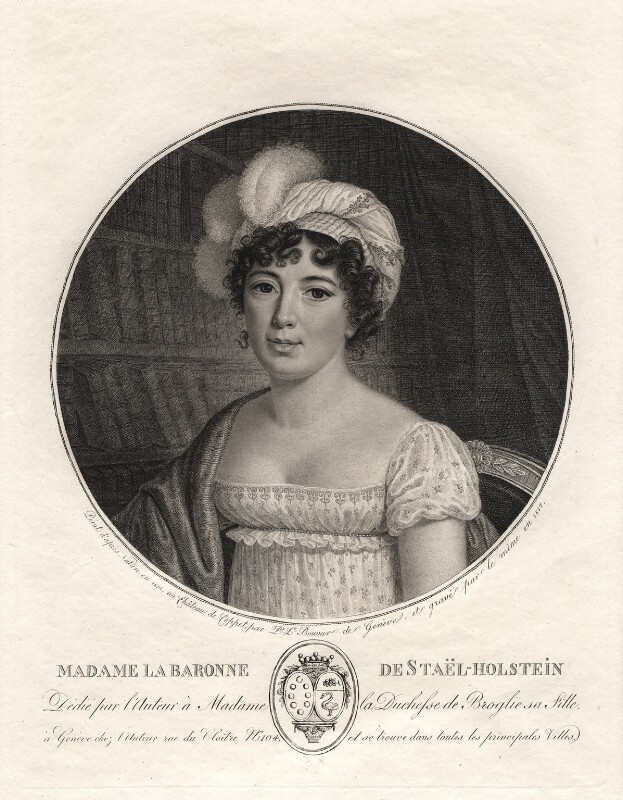
As has already been mentioned by Benjamin Hoffmann and Aurelian Craiutu, enthusiasm is a positive force for Staël in many fields. I would like to look at something which is often associated with her treatment of enthusiasm. One of the core values in Staël's approach to combatting the spirit of party and which nobody has yet mentioned is, I think, her cosmopolitanism. Let me explain what I mean. Staël was in many ways a "natural" cosmopolitan, if there is such a thing: she was born in Paris to Swiss Protestant parents. Her mother was of French Huguenot heritage; her paternal grandfather was born in Brandenburg (then an electorate, now part of Poland). During her childhood in the family's "salon," she had occasion to meet a wide variety of visitors, including most of France's leading thinkers, but also many foreigners. She traveled to England as a child, and her father purchased a château by the shores of Lake Geneva where they spent time. During her years of exile after the Revolution, Staël brought together European intellectuals in this château, Coppet, which came to represent what Stendhal referred to as "the Estates General of European opinion."[96] She also spent time in various European countries, including Italy, Sweden, current-day Germany, Russia, England, etc. As a writer, too, Staël showed her openness to foreign cultures. In On Literature (1800), she defended the idea of distinct Northern and Southern aesthetics as well as political traditions and showed her preference at once for Ossian and melancholy poetry and for parliamentary regimes. In Corinne ou l'Italie (1807), she penned a tragic sentimental tale which is also a reflection on the future of Europe and how Italy—then a set of fragmented little States—could, through culture and a common sense of history, become a great nation once again. Staël's major essay, De l'Allemagne (On Germany) was only finally published in 1813: Napoleon's police had seized the proofs and tried to stop it from coming out. The official reason subsequently given was edifying as the author recounts: "mon ouvrage n'étoit pas françois" ("My work was not French.").[97] With its wide-ranging discussion of German society and culture, the book showed that language and culture can provide foundations for national unity, and it invited the French to take interest in intellectual and literary trends across the Rhine. It did a lot to raise interest in Kantian philosophy and the whole of the Romantic movement.At a time when Napoleon was seeking to impose a one-size-fits-all approach to politics, Staël was pleading for individual differences and openness to other traditions. She saw difference as an opportunity to learn from others rather than to charge in and overturn centuries of tradition. For her, encounters with foreigners were not to be considered as threats one might have to forfeit anything, but rather as guarantees of gain. This is possibly best summed up in something she wrote in "On Germany":"Nul homme, autant supérieur qu'il soit, ne peut deviner ce qu'il se développe naturellement dans l'esprit de celui qui vit sur un autre sol et respire un autre air. On se trouvera donc bien en tout pays, d'accueillir des pensées étrangères car dans ce genre, l'hospitalité fait la fortune de celui qui reçoit."[98]"No man, however superior, can guess what develops naturally in the mind of one who lives on a different soil and breathes in a different air. As a result, in any country, one would do well to welcome foreign thoughts for, in this area, hospitality makes the fortune of he who receives."
Surely that is a thought for our time. Getting our contemporaries to take this on board and act upon the consequences of such an idea would doubtless be a step in the right direction if we are to hope to further the greater common good.Endnotes[96.] Stendhal, Rome, Naples et Florence (Paris, 1817), p. 327-28.[97.] Staël, Préface, De l'Allemagne, Œuvres complètes (Paris: Treuttel et Würtz, 1820), vol. X, p. 13.Aurelian Craiutu
The Many Windows of the World · Mar 14, 2019
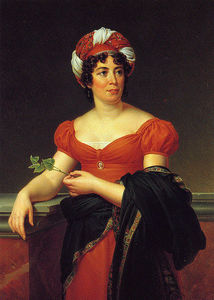
Benjamin Hoffmann asks an interesting question: assuming we have a clearer idea of what enthusiasm is in Madame Staël's view, how can we use this concept to fight the animosity of political fanaticism? I am not sure I have a good answer to this question. For the moment I'd like to return to what Staël regarded as the core of fanaticism before we try to solve the puzzle. I use the word puzzle on purpose because like Professor Hoffmann, I am intrigued that Staël proposed enthusiasm as a cure for fanaticism.In her opinion, fanaticism consists in the attempt to derive everything from a single idea. (Morality, she notes, is the only single idea that seems innocuous[99]). Those who fall prey to fanaticism discredit every cause or principle by drawing extreme consequences from what at the outset may very well be a valid idea or value. Thus, there are fanatics of reason, liberty, equality, and inequality, but also of justice, duty, virtue, property, nation, and noninterference. In turn, each group can be divided into various subgroups and nuances. They all use litmus tests to distinguish between the pure and impure ones, the worthy and unworthy ones. And they all dislike compromise. Their basic idea is that no good principle or value may ever be the object of a reasonable compromise with other values and principles.This is what Isaiah Berlin understood by the danger of monism. It has to do with the temptation to reduce the diversity of the world to one dimension and judge everything else in light of it. This tendency becomes dangerous and is pregnant with significant political implications when we assess the legitimacy of institutions and evaluate proposals for reforming them. In this regard, fanatics of all stripes prove to be intransigent and unmoved by any criticism or debate; they know the answers before any questions are asked. To give just a few examples, for some who believe that Marx had all the answers to our political questions, capitalism is vicious and inhuman simply because it engenders inequality. All millionaires or billionaires, without exception, are evil. Private property is theft, and Wall Street must be occupied. For those who endorse an originalist interpretation of the U.S. Constitution, any attempt to question the idea of retrieving the original intention of the Founding Fathers is declared a nonstarter. For still others, any attempt to increase taxes is a sign of socialism. The list goes on and on.Madame de Staël opposed this intransigent approach. No social or political question can be decided, she believed, except by trying to find a judicious balance between the pluses and minuses of all proposed solutions. All we can do is balance inconveniences, compare, and calculate. There is no absolute good on earth, pure and untainted by the imperfection of our realm.[100] That is why, for moderates like Staël (and Berlin), the world can and should never be seen through any single window. Such a unique window is only a figment of the imagination. Our social, political, and personal lives presuppose a permanent tension and confrontation amongdifferent ideas and principles. Our task is to try, as best as we can, to find a decent balance among them. Any absolute idea or principle is simply an impossibility, a utopian and costly dream.To conclude, in response to Professor Hoffmann's question, I am prepared to make the following suggestion. It is no accident that Madame de Staël makes an éloge of enthusiasm in the concluding section of the second volume of De l'Allemagne. Her book was criticized by Napoleon and his followers for not being French. They judged her work from a narrow perspective according to which it was unacceptable that a French liberal would go to such lengths to praise the culture and institutions of a rival country. Staël saw no contradiction in this approach. For her, enthusiasm was a form of openness toward the world, combined with an appreciation for the plurality of cultures, institutions, mores, and customs. Such an openness was supposed to foster an ecumenical spirit combining a genuine appreciation for the universal with a recognition of national differences. Far from being a shallow form of cosmopolitanism, it is a fruitful and thoughtful way to overcome our selfishness and narrowness. When we manage to do that, we are freed from the obsession with any single idea, principle, or nation. Understood in this light, enthusiasm gives us a chance to be re-enchanted by the beauty of the world around us. It opens for us many windows through which we can contemplate its richness and diversity.Endnotes[99.] "La morale est la seule idée unique sans danger," (Des Circonstances actuelles, p. 255).K Steven Vincent
Arenas for the Cultivation of Sociability and "Enthusiasm" · Mar 19, 2019
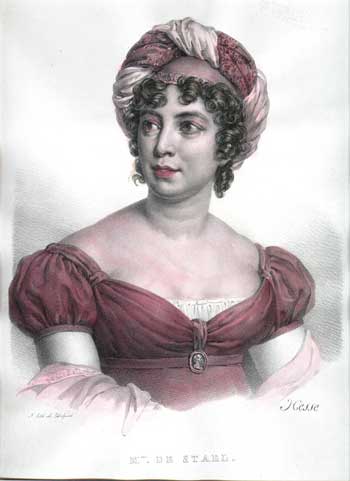
I would like to pick up a thread of the conversation suggested by Benjamin Hoffmann, namely, the aristocratic undertone of Staël's discussion of "enthusiasm" and the contrast with plebian "selfishness." Staël did not argue, of course, that enthusiasm and the other positive sentiments were restricted to the aristocratic class. Rather, she fervently hoped that these "dispositions of the soul" would spread broadly in society to counter selfish passions and "fanaticism." Nonetheless, this undertone points to an element of Staël's position that poses an important question concerning any potential application of her political thought today.Staël assumed that certain arenas of sociability were more likely to encourage enthusiasm and other positive sentiments than others. The most favored locations for her were, I believe, salons, especially salons of the late-Old Regime and early years of the Revolution. For Staël, these were the model locations for the gathering of people who might disagree about political, scientific, and aesthetic issues, but who related to each other without rancor or physical conflict. They were the locus classicus of an open communication of ideas, where an intelligent elite could discuss and mediate their differences. In a notable passage in Considérations sur la Révolution française, she wrote:Foreigners are not able to conceive the charm and brilliance of Parisian society, if they have not seen France twenty years ago. One is able to say with truth that never has a society been at the same time as brilliant and serious as during the three or four first years of the revolution, running from 1788 to the end of 1791. As public affairs were still in the hands of the best people, all vigor, liberty, and grace of the old politesse, were united in the same individuals.[101]
There is a sense of nostalgic affection here, I believe, one that comes from Staël's perception that the world in which these salons existed had disappeared. She pointed out that under Napoleon, salons had been largely replaced by grand official ceremonies that were intellectually deadening. Even the salons that remained, she observed, had become venues where suspicion, careerism, and venal passions prevailed. As she put it in a letter to Benjamin Constant, high society had become "a labyrinth of interests and ambitions."[102] She was worried that the refined sociability and reasoned deliberation that salons represented were gone, replaced by official ceremonies, bad manners, vulgarity, and fanaticism.Bronislaw Baczko has argued that, for Staël, the salon was a utopian space where aesthetics and politics made a perfect mix.[103] It was the arena where she imagined it was possible to detach the urbanity, good taste, and sociability – that is, the moeurs – of the Old Regime and transfer them to the republican postrevolutionary era. In short, it was the privileged location for a melding of republican politics and aristocratic culture.With their decline, the question becomes (to return to the thought experiment suggested by Benjamin Hoffmann): "Where in modern society can such positive sentiments be nourished?" Catriona Seth has suggested that, for Staël, one answer was to encourage cosmopolitanism. This is persuasive, and it would clearly help. I am not convinced, however, that this would be sufficient to overcome the political rancor and xenophobic nationalism of our own era. (Nor was it sufficient in Staël's own era.)When I contemplate potential answers, my mind wanders to Tocqueville's view of the importance of local politics, of associations, of judicial traditions (the jury system in America, for example). And I think of Durkheim's focus on the social solidarity created by professional groups, though I do not believe (as he did) that these groups would be any more unselfish than traditional groups. What Staël and Tocqueville shared was a belief that an important part of the answer was the arena of modern representative politics, where the give-and-take of incommensurable interests could take place in a manner that could lead to compromise. What they also shared, however, was an inattentiveness to dimensions that, in my opinion, are of equal importance: the issue of "class," the problems created by extreme economic inequality. Perhaps the privileged backgrounds of French liberals like Staël and Tocqueville made them insensitive to such issues. This might be the most important "aristocratic undertone" of their thought.Endnotes[101.] Germaine de Staël, Considérations sur la Révolution Françaises, seconde partie, chapitre XVII (Paris: Charpentier, 1862), t. 1, p. 299.[102.] Germaine de Staël to Benjamin Constant (27 October 1815), cited by Steven Kale, French Salons: High Society and Political Sociability from the Old Regime to the Revolution of 1848 (Baltimore: Johns Hopkins University Press, 2004), p. 100.Catriona Seth
Crimes in the Name of Liberty · Mar 19, 2019

Since two of us (K. Steven Vincent and I) mentioned the importance of the Réflexions sur le procès de la reine as a founding text in Staël's political writings, I would like to add a couple of thoughts about it. It seems to me that it is an instance of her attempting to claim a role for those who were not yet known as "intellectuals" in public life. It further demonstrates her belief, which is also present, for instance, in the second half of her great essay on literature, De la littérature (1800), that texts have potential agency in politics. The failure of her brochure and the queen's execution were both indicators of the attacks on liberty by the revolutionary regime. This was particularly unbearable for Staël since the early stages of the Revolution had seemed to bring the promise of liberty—as the French national motto Liberté, Egalité, Fraternité continues to proclaim.On November 25, 1793, Staël wrote to the Dutch-Swiss author Isabelle de Charrière:Quel sort cependant est réservé aux premiers amis de la liberté en France ! en relation presque avec tous, chaque jour j'éprouve une nouvelle peine.[104]Yet what fate is reserved to the first friends of liberty in France! For nearly all of them I feel a new sadness every day.
A couple of months later, on January 26, 1794, she sent the Swiss scientist Lavater, who had asked for it, a copy of her Réflexions sur le procès de la reine. She drew a direct link between the queen's execution and the perverse attitude of the regime to liberty:Aucun acte réunît autant de caractères de barbarie que le long supplice de cette malheureuse victime. Ah ! Que d'horreurs commises au nom de la plus sainte des idées, de la liberté, et quelle notion certaine peut-il rester du juste et de l'injuste quand on a pris soin de les confondre avec tant d'art ? Je reviens sans cesse à cette France : je l'ai tant aimée[105]No action unites so many barbarous characters as the long torture of this unhappy victim. Ah! How many horrific acts have been committed in the name of the holiest of ideas, that of liberty, and what secure notion of the just and the unjust can remain when one has taken care to confuse them so artfully? I return time and time again to France which I have loved so much.
The gratuitousness of the queen's execution after a summary trial came, for Staël and for many others, to offer a paradigmatic expression of the way in which people who had claimed to be acting for freedom had in fact betrayed this central value. She was particularly conscious of the way in which words are often cynically bandied about by politicians to unite people. This is an invitation to us to analyze discourse and to be wary of grandiloquence when it is empty discourseEndnotes[104.] Correspondance générale, ed. Beatrice Fink (Paris: Jean-Jacques Pauvert, 1960), vol. II, p. 507.[105.] Ibid., p. 559. The comment is reminiscent of Jeanne-Marie Roland's supposed last words before she was executed: "Oh, Liberty! What crimes are committed in your name!"Benjamin Hoffmann
Against Machiavelli: The Question of Selfishness · Mar 19, 2019
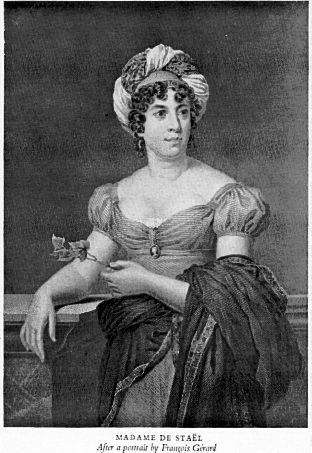
I am grateful to Professor Craiutu for his answer to the "thought experiment" I suggested earlier this month. By linking the concept enthusiasm to Staël's cosmopolitanism, both Aurelian Craiutu and Catriona Seth have made a convincing point: welcoming the variety of beliefs and opinions that prevail around the world gives us a better chance of avoiding the frightening excesses of political fanaticism. Although the point I am about to make will probably sound somewhat trivial to my distinguished colleagues – who, without a doubt, long ago adopted Staël's cosmopolitanism, open-mindedness, and distaste for one-size-fits-all solutions to complex intellectual problems – it appears that Staël's lesson is indeed relevant for our time, especially in the United States where the staggering disappearance of language programs from numerous universities across the nation is hindering the diffusion of what Craiutu calls the "openness toward the world, combined with an appreciation for the plurality of cultures, institutions, mores, and customs." Each of these closings contribute to the intellectual impoverishment of the wealthiest nation in the world by reducing the available cultural currency.[106]In two successive posts, I would like to explore a little more what Aurelian Craiutu suggested regarding Staël's refusal of a form of intellectual reductionism that adopts a single concept as the touchstone to judge principles, actions, and individuals. More precisely, I would like to underline her refusal of Machiavellianism. The Prince (1532) has diffused a forceful, yet highly problematic definition of politics as the art of gaining and maintaining power without any regard for the immorality of the means employed to achieve those two ends. This form of extreme pragmatism – the value of any political decision derives from its capacity to help the acquisition and conservation of power – holds all the warning signs of monism (a term I am using after Professor Craiutu borrowed it from Isaiah Berlin). In his last post, Aurelian Craiutu indeed underlined that Staël conceived fanaticism as an attempt to derive everything from one idea – whether it be liberty, equality, inequality, duty, virtue, property, nation, or noninterference. The idea of efficiency can be added to this list and the name Machiavelli to those of Marx, Adam Smith, and the Founding Fathers, whom other monists have heralded in the past or are still invoking today to justify their decisions. "Timeo hominem unius libri": "I fear the man of a single book." No doubt Staël would have agreed with this phrase attributed to Saint Thomas Aquinas, as the "man of a single book" may very well become obsessed with a single idea and, to quote Aurelian Craiutu again, "reduce the diversity of the world to one dimension and judge everything else in light of it." In particular, The Prince would have never become Staël's personal book of reference because of its clear antinomy with her concept enthusiasm and the values that underpin it. Two reasons can explain Staël's stance regarding Machiavelli's magnum opus: first, this work deconstructs the equivalence between selfishness and evil that Plato established in The Republicthrough the dialogue between Socrates and Thrasymachus; second, Staël identified Machiavelli's political thought as a clear influence on Napoleon's style of government.Previous posts have already explored the concept enthusiasm in Staël's political thinking and, in particular, insisted that one of the main characteristics of this "disposition of the soul" consists in encouraging individuals to sacrifice their personal interests for the greater good. Far from seeing the sacrifice of one's life as a grandiose gift, The Prince asserted that the preservation of one's life is a priority: "for Machiavelli what is politically virtuous will first of all answer to the needs of security, stability, duration."[107] Indeed, Machiavelli's work is deprived of any sort of idealism: it aspires to describe mankind and politics as they truly are rather than as they ought to be. Starting with a pessimistic understanding of human nature which involves the certainty that appetites are aggressive and untamable and that people are fundamentally evil (which is an obvious common point with the Christian dogma of original sin), Machiavelli saw morality as "enlightened self-interest" and society as a "relatively safe arena of selfishness."[108] These definitions are diametrically opposite to Staël's conception of enthusiasm as the cure for political fanaticism and the best way to defeat selfish, vulgar penchants.Endnotes[106.] On this question, see the following article by Steve Johnson, "Colleges Lose a 'Stunning' 651 Foreign-Language Programs in 3 Years," <https://www.chronicle.com/article/Colleges-Lose-a-Stunning-/245526>.[107.] Asher Horowitz, "Machiavelli, Political Morality and an 'Economy of Violence,'" <http://www.yorku.ca/horowitz/courses/lectures/19_machiavelli_economy_violence.html>.Benjamin Hoffmann
Against Machiavelli: The Prince, a Political Manual for Bonaparte · Mar 21, 2019

Besides the question of selfishness, Staël's anti-Machiavellianism has at least a second source: she saw The Prince as a political manual followed by Napoléon Bonaparte. This idea is particularly developed in chapter XVIII of the Considerations on the Principal Events of the French Revolution, "On the Political Doctrine of Bonaparte." Indeed, she accused the emperor of being "intoxicated with the vile draught of MachiavellismItalian tyrants of the fourteenth and fifteenth centuries" while comparing him with the "."[109] It is worth quoting the following paragraph where she particularly developed Machiavelli's influence on Bonaparte's conception of the aim of politics:I am inclined to think that Machiavelli, detesting above everything the yoke of foreigners in Italy, tolerated, and even encouraged, the means, whatever they were, which the princes of the country could employ in order to be masters, hoping that they would one day be powerful enough to repulse the German and French troops. Machiavelli analyzes the art of war in his writings like a military man; he reverts continually to the necessity of a military organization entirely national; and if he sullied his reputation by his indulgence for the crimes of the Borgias, it was perhaps because he felt too strongly the desire of attempting every means of recovering the independence of his country. Bonaparte did not certainly examine the Prince of Machiavelli in this point of view; but he sought there what still passes for profound wisdom with vulgar minds, the art of deceiving mankind. This policy must fall in proportion to the extension of knowledge, as the belief in witchcraft has fallen since the true laws of natural philosophy have been discovered.[110]
Admittedly, it remains possible to underline certain similarities between ideas held by Staël and Machiavelli, especially if we consider the question of political acumen. As Professor Craiutu puts it: "No social or political question can be decided, [Staël] believed, except by trying to find a judicious balance between the pluses and minuses of all proposed solutions. All we can do is balance inconveniences, compare, and calculate." (My emphasis.) No doubt Machiavelli would have agreed that politics is the art of calculating the pros and cons and finding the least bad solution to a given problem. However, there remains between them a fundamental divergence on what good and evil consist of, or, in other words, on the nature of the criterion standing at the center of their respective "balance." For Machiavelli, humans are selfishly aggressive and the political game necessarily entails that a player's victory happens at the expense of an opponent's loss. Staël, on the contrary, looked for a way of encouraging people to rise above their self-interest, express their intrinsic noble nature, and understand that a feeling of mutual responsibility should blossom from their fundamental interconnectedness. Enthusiasm is her solution to that problem, and it could not be further from Machiavelli's casual acceptance of selfishness.Endnotes[109.] Germaine de Staël, Considerations on the Principal Events of the French Revolution, newly revised translation of the 1818 English edition, ed. with an introduction and notes by Aurelian Craiutu (Indianapolis, IN: Liberty Fund, 2008), p. 517.Aurelian Craiutu
The Cosmopolitanism of the Coppet Group · Mar 21, 2019
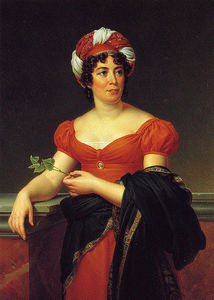
In her previous comment, Catriona Seth mentioned a key trait of Madame de Staël's Weltanschauung that deserves further consideration: her cosmopolitanism. This was indeed the defining character of the so-called Coppet group to which she and her friends belonged.[111] This was a genuine island of freedom and civility, whose refinement evoked that douceur de vivre which we tend to associate with the Old Regime. It was a small universe in which philosophers and writers were welcome and played a key role.But who were the other members of Coppet beside Madame de Staël and her father, Jacques Necker? The list of those who came to this place is a who's who of European intelligentsia at that time: Benjamin Constant, Prosper de Barante, the Schlegel brothers, Mathieu de Montmorency, Sismonde de Sismondi, Friedrich Tieck, and Charles-Victor de Bonstteten, as well as a host of distinguished Russian visitors. The Coppet group was already active in 1798, even though its golden days were from 1804 (when Necker died) to roughly 1810. Literature was eventually replaced by politics, which eventually became the most prominent subject of conversation at Coppet. After Madame de Staël's death on July 14, 1817, Coppet became a true lieu de mémoire, a place of memory, where distinguished visitors subsequently came to pay homage to the genius of the hostess and her mother and father.The famous French literary critic Sainte-Beuve went so far as to call the Coppet group "the Elysée intellectual of an entire generation," the Romantic generation. More importantly, the Coppet group constituted an island of freedom and moderation in the middle of an oppressed and unfree Europe. Its geographical position was significant. Located in Switzerland— "un singulier pays, on y parle français, on y pense à l'anglaise" ("a singular country, where people speak French and think like the English"), as Schlegel once said— Coppet evolved into a vibrant center of opposition to Napoleon. Nonetheless, the circle around Madame de Staël was much more than a mere opposition group. Situated at the intersection of three cultures, Coppet was above all a cosmopolitan place where a spirit of openness and inquisitiveness dominated. At Coppet, the doors were open all the time and the guests were literally subjected to relentless and intense socialization. In-depth discussions of literary works (from Calderon, Goethe, and Sophocles to Sappho, Racine, and Shakespeare) were punctuated by moments of (savvy) political gossip. The theater had a special place at Coppet; every month two new plays were staged there. The guests of Madame de Staël were also allowed to enjoy private reading and writing time, and often they went out on long walks around the chateau. The beauty of nature (most notably the glacier at Chamonix) and the cultural riches of Geneva were additional attractions.Not surprisingly, those who returned from Coppet were overwhelmed by the cultural riches lavished upon them there. After spending a few days in the company of Madame de Staël and her friends in 1804, Bonstetten confessed to a friend upon returning home that he was exhausted from too much socialization and intellectual exchange. The unique creativity of the place was confirmed by another guest (Voght). Everyone present at Coppet was doing something, he wrote. There was always something exciting going on. Everyone there was doing something, he wrote. As someone was writing an essay on Germany, others were talking about a play or an opera, while a few others were discussing philosophy and politics. Madame de Staël's works reflect and bear the cosmopolitan imprint of the Coppet group.Endnotes[111.] Editor's Note: There is in Paris an Institut Coppet which states as its mission: "la mission est de participer, par un travail pédagogique, éducatif, culturel et intellectuel, à la renaissance et à la réhabilitation de l'école française d'économie politique, et à la promotion des différentes écoles de pensée favorables aux valeurs de liberté, de propriété, de responsabilité et de libre marché." Website: <https://www.institutcoppet.org>.K Steven Vincent
The Importance of Constitutions and Political Institutions · Mar 21, 2019

Thus far, our discussion has focused primarily on Germaine de Staël's analysis of moeurs, of the sentiments and dispositions that she believed were critical if France was to weather the storm of the Revolution and to become a stable regime. This has led to a productive consideration of central dimensions of her political stance: her fear of "fanaticism;" her belief that pity, generosity, and "enthusiasm" were important sentiments; her desire to embrace a cosmopolitan orientation; and her distance from Machiavellian politics. I'd like to add another element to the mix: the importance of political and juridical institutions and of the constitutions that could provide the framework for their instantiation and survival.Like her father, Jacques Necker, and like her lover during the 1790s, Benjamin Constant, Staël favored a constitutional regime that protected civil liberties and provided a space where political differences and divergent interests could be debated and, hopefully, compromised. One of the constitutions that were of special concern to her was the constitution that created the Directory Government (1795-1799). This constitution was debated in the Convention during the summer of 1795, accepted by this body on August 22, approved in a national plebiscite in September, and put into effect on October 26. This 1795 constitution retained the fundamental features of the 1789 Declaration of the Rights of Man and Citizen and of the Constitution of 1791: protection of civil liberties, popular sovereignty, political authority exercised by elected officials, an independent judiciary, rule by law, and the sanctity of property. It also was designed to avoid the danger of dictatorship by one committee or one institution. (The memory of the power of the Committee of Public Safety during the Terror was strong among the "Thermidorians" who wrote the Constitution.) Staël and her father were unhappy that the Constitution lacked provisions for more coordination of, and checks between, the executive and legislative bodies – that is, they wanted more provisions for a "balance of power."[112] Nonetheless, she was generally supportive, relieved that an institution as radical as the Convention had pushed through such a reasonable constitution. France, she believed, was moving in the right direction. This was true even though she was forced into exile at this time due to her close association with former nobles and émigrés.Juridical and constitutional issues remained important for Staël. These were the years when she and Constant were connected romantically and intellectually. Constant was working on a manuscript, unpublished until 1991, now entitled Fragments d'un ouvrage abandonné sur la possibilité d'une constitution républicaine dans un grand pays.[113] At the same time, Staël was working on a manuscript, which would also be unpublished at the time, entitled Des circonstances actuelles qui peuvent terminer la Révolution et qui doivent fonder la République en France.[114] Both works were centrally concerned with constitutional issues, and both have been viewed by scholars as essentially joint projects. The point to emphasize is that both were concerned with more than human character, sensibilité, and moeurs; they also focused on the constitutional-institutional framework essential for a liberal society.Given the state of American politics, it is perhaps not surprising that our own conversation has focused primarily on culture – the lamentable decline of civil discourse, the need to encourage generous "dispositions of the soul." However essential this is, though, it is important to restate the obvious: namely, that a successful liberal order also requires appropriate institutional structures. In Staël's era, liberals were facing crises on both fronts – institutional and cultural – and the instabilities created by the torrent of the French Revolution culminated in the rise to power of a tyrant, Napoleon. We can only hope that, in the United States, as civility declines, the legal and constitutional institutions will prove sufficiently robust to resist such an outcome.Endnotes[112.] At the time, there was a vigorous debate concerning the details of the Constitution of 1795, a debate that has continued in subsequent scholarship. For a review of this debate, see: 1795: Pour une République sans Révolution, sous la direction de Roger Dupuy et Marcel Morabito (Rennes: Presses Universitaires de Rennes, 1996); and, Constitution de l'an III: Boissy d'Anglas et la naissance du libéralisme constitutionnel, sous la direction de Gerard Conac et Jean-Pierre Machelon (Paris: PUF, 1999).[113.] Benjamin Constant, Fragments d'un ouvrage abandonné sur la possibilité d'une constitution républicaine dans un grand pays, edited by Henri Grange (Paris: Aubier, 1991). Composed mostly between 1798 and 1803 (when Constant and Staël were together), and finished in 1807 or 1808, it was unpublished until 1991.[114.] Madame de Staël, Des circonstances actuelles qui peuvent terminer la Révolution et qui doivent fonder la République en France, ed. Lucia Omacini (Genève: Droz, 1979).Aurelian Craiutu
Madame de Staël on the Liberty of the Moderns · Mar 25, 2019
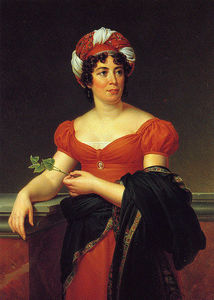
In his latest comment, Steven Vincent mentioned that juridical and constitutional issues remained important for Madame de Staël throughout her entire career. This is a significant point worth highlighting in our conversation. Even if she was arguably less interested (and precise) than Constant in analyzing the concrete mechanisms of representative government, it is important to remember that beginning with the Directory, Staël offered a vigorous defense of what came to be known later as the liberty of the moderns. Today we associate this term with Constant's famous essay from 1819 on the liberty of the moderns compared to the liberty of the ancients.[115] Yet the distinction had appeared for the first time in Staël's writings, two decades earlier. This detail is often neglected by political theorists, and it is time to set the record straight.To this effect, we should turn our attention to Staël's Des circonstances actuelles qui peuvent terminer la Révolution et qui doivent fonder la République en France (1798), "one of the most representative texts of republican constitutionalism"[116] ever written. It is no mere coincidence that at about the time she was working on this manuscript, two of her closest friends were drafting their own manuscripts addressing similar questions regarding the constitutional and political means for "ending" the French Revolution. Sismondi started drafting his Recherches sur les constitutions des peuples libres in 1797, a manuscript which he completed four years later but which remained unpublished.[117] In turn, Constant examined the possibility of creating a republic in a large state in Fragments d'un ouvrage abandonné (1802). We know that Staël, Sismondi, and Constant commented on each other's drafts and borrowed freely from each other's ideas. A few years later, Constant drafted the first version of his most important political work, Principles of Politics (1806),[118] by revisiting many of the ideas of Staël and Sismondi.The importance and value of Des circonstances actuelles can hardly be overestimated. In that manuscript Staël argued that "[t]he liberty of present times consists of everything that guarantees the independence of citizens against the power of the government."[119] In modern societies, she wrote, citizens are allowed to freely pursue their self-interest, while in ancient republics, the emphasis was on civic virtue and direct political participation. Ancient citizens were asked to sacrifice their individual interests for the sake of their communities. Such a demand, Staël argued, ceases to be legitimate in the context of modern society, in which it is no longer possible to expect citizens to spontaneously identify themselves with a putative common good. On the contrary, modern individuals ought to be allowed to pursue their own private interests as they think fit. Therefore laws and institutions in modern society should protect property and the private sphere from any form of illegitimate interference from outside.During the Directory, Staël expressed concern for the low public spiritedness of the French, which she regarded as a corollary of civic apathy engendered by postrevolutionary fatigue and the failure of the Revolution. Understanding and respecting the distinctive nature of modern liberty was, in her view, the only way to end the revolutionary cycle and make representative institutions work in the aftermath of the Terror. "In order to finish the revolution," she wrote in 1795, "one must find a center and a common link.… This center which we need is property; this link is personal interest."[120] Staël's language was anything but Rousseauian. Hers was a bold agenda of reform at the heart of which lay the principle of political moderation, the opposite of the spirit of party she denounced in her writings. Two and a half decades later, Constant followed in her footsteps when he made his own case for recognizing the distinctive nature of modern liberty.Endnotes[115.]Benjamin Constant, The Liberty of Ancients Compared with that of Moderns (Unknown, 1819). <https://oll.libertyfund.org/titles/2251>.[116.] Mauro Barberis, "Constant, Mme de Staël et la constitution républicaine: un essai d'interprétation," in Le groupe de Coppet et le monde moderne: conceptions-images-débats, ed. Francoise Tilkin (Geneva: Droz, 1998), p. 193.[117.] Sismondi's Recherches sur les constitutions des peoples libres were edited and published by Marco Minerbi at Droz (Geneva) in 1965. The published text represents only the last batch of the entire manuscript, which consists of three other parts. The second part was published in Roberta di Reda ed., Libertà e scienza del governo in Jean Charles Léonard de Sismondi, vol. II: Essais sur les constitutions des peoples libres (Rome: Jouvence, 1988).[118.] A later and expanded version of this book was published as Benjamin Constant, Principles of Politics Applicable to all Governments, trans. Dennis O'Keeffe, ed. Etienne Hofmann, Introduction by Nicholas Capaldi (Indianapolis: Liberty Fund, 2003). <https://oll.libertyfund.org/titles/861>.[119.] Des Circonstances actuelles, p. 111.[120.] Germaine de Staël, Œuvres Complètes de Madame la baronne de Staël publiées par son fils (Paris: Treuttel and Würtz, 1821), vol. I, p. 58.