


Author
Jeremy Bentham
1748–1832
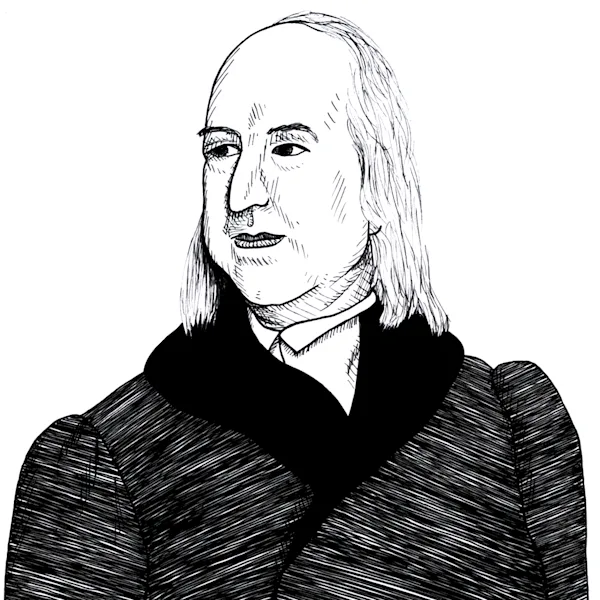
Jeremy Bentham (1748-1832) trained as a lawyer and founded the early 19th century school of political thought known as “Benthamism” later called utilitarianism - based on the idea that governments should act so as to promote “the greatest good of the greatest number” of people.
Biography
He spent much of his life attempting to drawn up an ideal Constitutional Code, but he was also active in parliamentary reform, education, and prison reform. He influenced the thinking of James Mill and his son John Stuart Mill. [The image comes from “The Warren J. Samuels Portrait Collection at Duke University.”]
Bentham featured as the February 2021 OLL Birthday. Read it here
Works by Jeremy Bentham
16 titles in the library
Jeremy Bentham · 1843
The Works of Jeremy Bentham, vol. 10 (Memoirs Part I and Correspondence)
An 11 volume collection of the works of Jeremy Bentham edited by the philosophic radical and political reformer John Bowring. Vol. 10 contains Memoirs Of Jeremy Bentham (Chaps I-XXII). For a complete list of the titles…
Jeremy Bentham · 1843
The Works of Jeremy Bentham, vol. 3
An 11 volume collection of the works of Jeremy Bentham edited by the philosophic radical and political reformer John Bowring.
Jeremy Bentham · 1843
The Works of Jeremy Bentham, vol. 1
An 11 volume collection of the works of Jeremy Bentham edited by the philosophic radical and political reformer John Bowring.
Jeremy Bentham · 1843
The Works of Jeremy Bentham, vol. 4
An 11 volume collection of the works of Jeremy Bentham edited by the philosophic radical and political reformer John Bowring.
Jeremy Bentham · 1843
The Works of Jeremy Bentham, vol. 2
An 11 volume collection of the works of Jeremy Bentham edited by the philosophic radical and political reformer John Bowring.
Jeremy Bentham · 1843
Works of Jeremy Bentham, 11 vols.
An 11 volume collection of the works of Jeremy Bentham edited by the philosophic radical and political reformer John Bowring. For a complete list of the titles in The Works of Jeremy Bentham see this page. ### Vol. 1…
Jeremy Bentham · 1787
Defence of Usury
An 1818 edition which combines Bentham’s defence of the practice of charging interest on loans with a critique of certain taxes which increased the cost of appearing before the courts. Another copy of this book can be…
Jeremy Bentham · 1843
The Works of Jeremy Bentham, vol. 11 (Memoirs of Bentham Part II and Analytical Index)
An 11 volume collection of the works of Jeremy Bentham edited by the philosophic radical and political reformer John Bowring. Vol. 11 contains Memoirs of Bentham Part II and an analytical index to the Works. The Index…
Jeremy Bentham · 1843
The Works of Jeremy Bentham, vol. 8
An 11 volume collection of the works of Jeremy Bentham edited by the philosophic radical and political reformer John Bowring.
Jeremy Bentham · 1897
British Moralists vol. 1
Vol. 1 contains selections from the work of Shaftesbury, Hutcheson, Butler, Adam Smith, and Bentham.
Jeremy Bentham · 1843
The Works of Jeremy Bentham, vol. 9 (Constitutional Code)
An 11 volume collection of the works of Jeremy Bentham edited by the philosophic radical and political reformer John Bowring. Vol. 9 contains Constitutional Code. For a complete list of the titles in The Works of Jeremy…
Jeremy Bentham · 1843
The Works of Jeremy Bentham, vol. 7 (Rationale of Judicial Evidence Part 2)
An 11 volume collection of the works of Jeremy Bentham edited by the philosophic radical and political reformer John Bowring. Vol. 7 contains Rationale Of Judicial Evidence. (Books V-X). For a complete list of the…
Jeremy Bentham · 1843
The Works of Jeremy Bentham, vol. 5 (Scotch Reform, Real Property, Codification Petitions)
An 11 volume collection of the works of Jeremy Bentham edited by the philosophic radical and political reformer John Bowring.
Jeremy Bentham · 1843
The Works of Jeremy Bentham, vol. 6
An 11 volume collection of the works of Jeremy Bentham edited by the philosophic radical and political reformer John Bowring. Vol. 6 contains An Introductory View Of The Rationale Of Evidence; Rationale Of Judicial…
Jeremy Bentham · 1818
A Protest against Law-Taxes
From an 1818 edition which combines Bentham’s defence of the practice of charging interest on loans with a critique of certain taxes which increased the cost of appearing before the courts.
Jeremy Bentham · 1823
An Introduction to the Principles of Morals and Legislation
One of Bentham’s most important works in which he develops his theory of ‘utility’ at considerable length and discusses how the penal system (especially punishments) could be based on this theory. One of the founding…
Quotes from Jeremy Bentham
8 quotes from the library