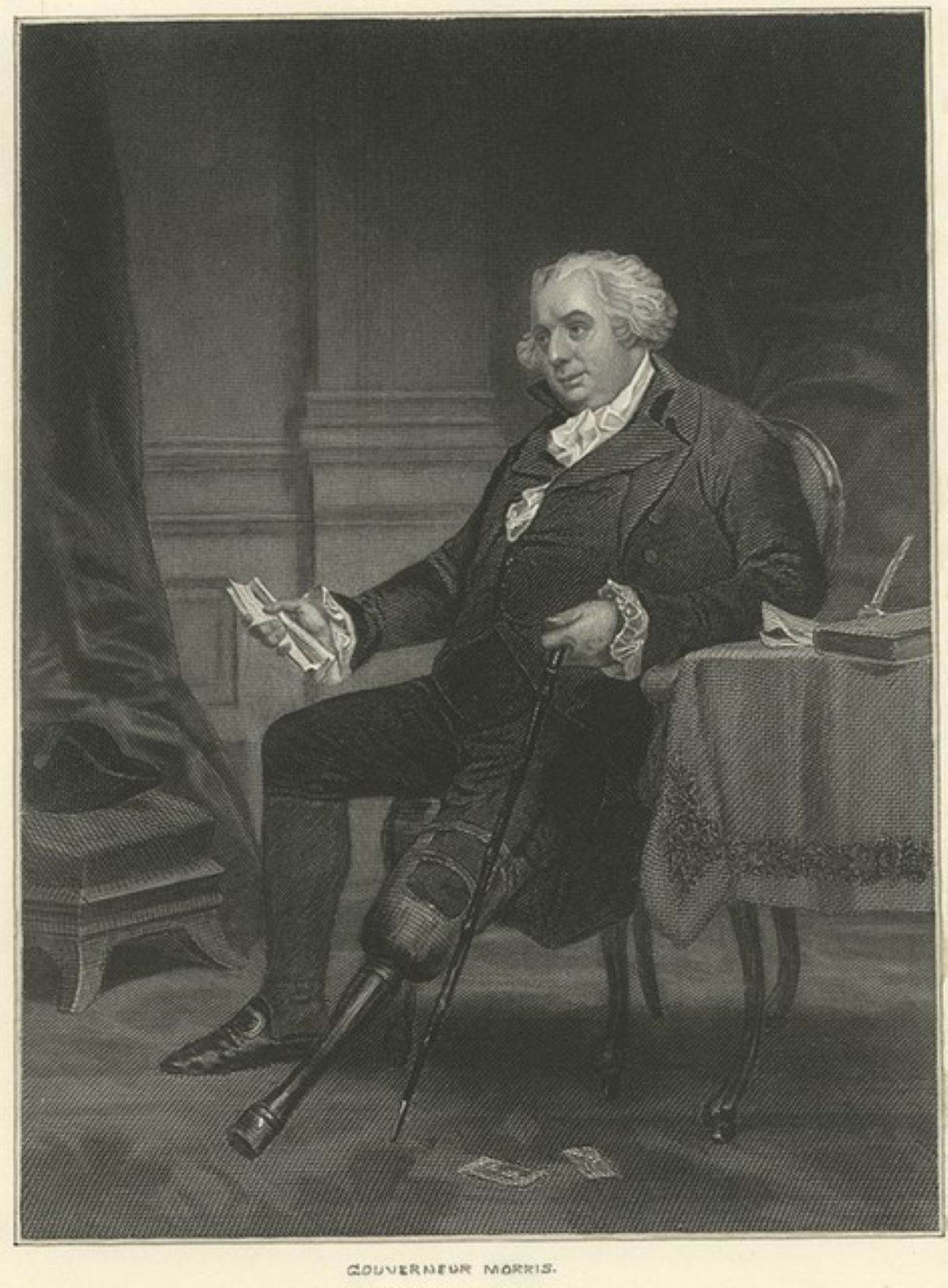
The Preamble to the US Constitution was written by a 35-year-old man named Gouverneur Morris. He wrote with a beautiful but spare eloquence that resembles that of Lincoln, and he was considered one of the greatest speakers of his day. George Washington respected Morris and enjoyed his company, Since Alexander Hamilton receives much attention these days, it is worth mentioning that they were great friends: indeed, Hamilton's wife told Morris he was her husband's "best friend" when Hamilton was dying, and it was Morris who gave his funeral oration. Morris despised and opposed slavery; he admired and respected women. He had an extraordinary life and performed extraordinary services for our country, but he had no interest in popularity in his own time, or in his posterity, one of the reasons he has largely been overlooked. Among his services: chairing (and doing the work of) critical committees of the Continental Congress during the Revolutionary War; managing, along with his friend Robert Morris, the finances of the country during the Revolution; playing a major role at the Constitutional Convention - some scholars are now beginning to suggest he deserves to be considered its "Father" more than James Madison; serving as our minister to France during the worst violence of the French Revolution; advocating and initiating the Erie Canal; and overseeing the design of the Manhattan street grid we walk today.
This post, however, is concerned with the phrase "We the People of the United States." Because Morris was well known for his talents as a writer, he was chosen to compile and polish the final draft of the Constitution and to write the Preamble. As originally drafted in the Convention, the sentence began "We the people of the States of New Hampshire, Massachusetts," etc. At first glance that might seem to say the same thing, but look again. Morris changed the lead-in words in a way that was practical, because it was not yet known if all the states would sign on -- Rhode Island had not sent a delegate -- but it was also profound because it reflected his strong belief that we are first and foremost a united people without regard to our states of residence, and that the Constitution was not to be an agreement between the states but an agreement among all of the people. During the Convention, Morris reiterated this position forcefully. As recorded in Madison's notes, he told the delegates that he had come "as a Representative of America; he flattered himself he came here in some degree as a Representative of the whole human race." Morris’s experiences during the Revolution had left him with little respect for the governments of the states or their ability to rise above local prejudices and interests for the good of all citizens. "State attachments, and State importance have been the bane of this Country," he urged. This position was relevant in many of the most important debates at the Convention: for example, Morris pushed for senators to be elected from the population at large; and in the debates regarding representation in the House, specifically, whether slaves should be counted in determining the number of representatives a state could have, something the southern states demanded. Morris denounced this in the most searing anti-slavery speech of the summer.
But returning to "We the People" - here, there is a critical adjunct to Morris's conception of the Constitution as a commitment by the people of all the states, one that seems to be forgotten or ignored by many in the current day: the necessity of compromise if the Constitution was going to work. As Morris pointed out in the cover letter sent with the Constitution to the states, "Individuals entering into Society must give up a Share of Liberty to preserve the Rest." Further on, he noted that "In all our Deliberations on this Subject we kept steadily on our View that which appears to us the greatest Interest of every true american. The Consolidation of our Union in which is involved our Prosperity Felicity Safety perhaps our national Existence."
The Constitution is our greatest national treasure, but only if we understand it. Morris had a profound grasp of human nature, and knew that unless this concept of the necessity of sacrificing some liberty was understood and accepted by the American people, the Constitution would have failed at the outset. That message could not be more on point for our country today.