

Sanford Ikeda
Lead essay · Feb 29, 2016
it may be said that limited intervention is illogical and unsuitable, that the economic system that works through such interventions is unworkable and unsuitable, and that it contradicts economic logic.[1]The middle system of property that is hampered, guided, and regulated by government is in itself contradictory and illogical. Any attempt to introduce it in earnest must lead to a crisis from which either socialism or capitalism alone can emerge.[2]
Yet the age of interventionism is reaching its end. Interventionism has exhausted all its potentialities and must disappear.[3]
- Monetary policy
- Price controls
- Redistribution
Denmark shows us that a much larger public sector and a much more robust social-insurance system need not come at the expense of a dynamic market economy. In other words, Denmark shows us that capitalism and a large welfare state are perfectly compatible and possibly complementary.
- Does this solution to the Misesian Paradox – that the doctrine of interventionism may stubbornly persist, but that any given interventionist regime cannot – involve an immunizing stratagem?
- Do the dynamics of interventionism of APE’s offer a useful addition to Public Choice and other approaches to political economy?
- What in fact is the essence of Mises’s critique of interventionism? Is it really redistribution, as he himself says? Does the present framework properly identify the singular elements of APE, which I identify as a concern with the impact over time of interventions on the system as a whole? Do the extensions I offer retain or change them in a helpful way?
- Is the distinction between RD and TD valid and useful?
- In addition to “myopia” and our living in an “age of illusion,” are there other explanations for the persistence of the interventionist mindset? For instance, Boettke[10] interprets Tyler Cowen[11] as arguing that we are now mired in a Great Stagnation, in which the forces of bloated and pernicious government have finally overcome the efficiency and innovativeness of the market. Is that a sufficient explanation of the Misesian Paradox? Do the TD of APE add anything important to such an explanation? (Perhaps see the “eight pattern predictions” I refer to earlier.)
- Is the pattern prediction presented here, on the relative sustainability of pure welfare-state capitalism, validly derived and is it, as well as any of the seven others offered elsewhere, [12] worth investigating?
Endnotes
Christopher Coyne
Response · Mar 02, 2016 · Own page
In his lead essay, Sandy Ikeda discusses what he calls the “Misesian Paradox.” This paradox refers to the prevalence of interventionism despite Mises’s claim that it is contradictory and unsustainable. In addition, Sandy makes the distinction between “Regulatory Dynamics” and “Transfer Dynamics” and discusses some implications and pattern predictions related to these concepts. In what follows, I would like to focus three points which I hope will lead to further discussion.
It’s possible then to rank the various categories of intervention in terms of their disruptive consequences as follows:(Nonprice regulation and fiscal policy lie somewhere between 2 and 3.)
- Monetary policy
- Price controls
- Redistribution
Robert Higgs
Response · Mar 03, 2016 · Own page
The title of my comment might well be read as an announcement that I intend to reject completely Sanford Ikeda’s argument in regard to what he calls “the Misesian Paradox.” But such is not the case. Indeed, I agree with pretty much everything that Ikeda says. Yet I draw an opposite conclusion about the historical sustainability of interventionism because even though the logic of the Misesian argument seems to be unimpeachable, I find that the conditions under which the argument is made are so restrictive that the argument has little “oomph” (to borrow Deirdre McCloskey’s felicitous term) in explaining the nature and destiny of the interventionist order that now prevails in nearly every country -- and soon will, I expect, prevail everywhere, in each country in a form tailored to suit local conditions.
Jeremy Shearmur
Response · Mar 07, 2016 · Own page
Introduction
Sanford Ikeda
Response to Coyne, Higgs, and Shearmer · Mar 08, 2016

I wish to thank the three scholars who have each made the effort to comment on my essay. While I may take issue with some of their criticisms, responding to them has deepened my understanding and clarified my thinking on Mises and interventionism. Unfortunately, space prevents me from addressing in full all of the interesting points they raise.Everyone, including me, appears to agree that Mises was wrong to suggest that only laissez faire or socialism would emerge after the numerous collapses of interventionist regimes, or that once defeated, an interventionist regime would somehow “disappear.” Coyne, Higgs, and I agree on the usefulness of Mises’s logic, while Shearmer apparently does not. However, each commenter takes issue in different ways with its empirical relevance.Coyne: Measure Relative HarmsChris Coyne focuses on a core issue of my revision of Misesian interventionism. He asks how we can know whether transfer dynamics result in greater relative sustainability than regulatory dynamics, and that is a fair point. He wonders, for example, whether a “fixed monetary rule that is both predictable and credible” might not be less disruptive to the market process than the regime uncertainty that “unpredictable and large-scale transfers” would pose. Indeed, it is hard to argue that the latter would not be more disruptive than the former.The theoretical question, I suggest, would probably be: which has greater disruptive potential -- a central bank or a legislature’s redistributive policies? But the other part of Coyne’s critique is that much of this boils down to empirics: do the facts fit the theory? To my knowledge no one has looked. I wish someone would.I fully endorse Coyne’s point about the relative rates of addition and depletion of the “reserve fund,” which is a point I make in my book (1997) and elsewhere, keeping in mind that the reserve fund may become inaccessible long before it actually “runs out” owing to knowledge problems or to the ability of producers to hide their wealth and so on. And I agree that the mixed economy can “sustain” itself in this fashion until it can’t, but certainly not in the long term.Again, let’s distinguish between the sustainability of a regime of interventionist policies within the framework of an existing state and the persistence, typically over a greater length of time, of that state, itself. This I think is more than a semantic point, but it also colors Higgs’s critique.Higgs: Ideology and War Need to Be Accounted forI am truly gratified that Bob Higgs agrees with “with pretty much everything” that I say, but his charge that my argument “is made are so restrictive that the argument has little ‘oomph’” is a serious one.In his fourth point Bob observes that Mises was making his argument during a time – the 1920s to the 1950s – when “the great contest that was playing out in many countries during his lifetime between socialism and capitalism” (which is a point relevant to one of Jeremy Shearmer’s criticisms). But while the debate among intellectuals in that era may have been between capitalism and socialism, the interventionist dynamic Mises analyzed does not depend on public choosers deliberately aiming for either pole of the politico-economic spectrum. Mises was careful to say that interventionists wanted to preserve the “good” properties of capitalism and not throw the capitalist baby out with the bathwater. For Mises, the drift toward socialism is an unintended consequence.Bob’s main criticism of Mises’s critique, however, is that “it leaves out so many factors of critical importance” – specifically ideology and war. Yes, Mises and I both do.As I have tried to explain in my other work and very briefly in my essay, the interventionist dynamic relies on public choosers making policy decisions at various “nodal points,” but Mises doesn’t really address why they might choose to go in the direction of more or less collectivism. That is partly a function of ideology, which I try to integrate into my own formulation.Regarding war, it might indeed appear to be a damaging omission on Mises’s (and my) part. Now, Bob is an excellent economic historian, and that means that in the explanation of historical phenomena he must approach his subject-matter thymologically and examine factors beyond the conventionally economic. Bad economic-policy decisions could contribute to war, but when war is the result of ambitious thugs seeking to dominate the world, it is outside the realm of economic theory – too far evidently for Mises.But ideology and war, especially war, each exacerbate the destabilizing forces Mises describes, do they not? And wasn’t Mises simply providing the bones of an analytic framework, the purely economic part, which by itself is sufficient to show that interventionism is unsustainable?And when Bob argues that “The experiments in Communist China, North Korea, Cuba, Vietnam, the USSR and its satellite countries, and elsewhere have shown as clearly as anything can be shown by historical experience that socialism ‘doesn’t work,’” does this not in fact support Mises’s point about unsustainability? These examples are not socialist economies but mixed economies. The interventionist regimes within these countries collapsed before they could achieve full-blown socialism. Thus, as Peter Boettke demonstrates,[28] the USSR was a “mixed economy,” and so were they all. In my essay I cite these as examples of the unsustainability of interventionism, along with New Zealand and Sweden.Bob maintains that the idea of interventionism is ancient, dominant, and probably ineradicable. Interventionism, as a doctrine and as a policy, will pick itself up time and time again. But that does not mean that it will not fail again and again in practice. Now, Mises may have been overly optimistic to think that subsequent generations of public choosers would eventually tire of all this, but he was not wrong about the inevitability of the collapse of any given interventionist regime. Actual systems did plunge headlong into collectivism or radically retrench back to relatively free markets. It happened!Shearmur: Not So Simple? Not So Fast!Jeremy Shearmer dismisses Mises as “simply incorrect.” The trouble is that his dismissal is itself too simple.When he warns that “we surely can’t simply repeat Mises’s case uncritically,” it makes me wonder to whom is he referring. Surely not to the contributors in Kurrild-Klitgaard (2005) (which includes Bob Higgs and me), which he cites in his comment?Indeed, much of what Jeremy’s critique amounts to is either an assertion that “Things aren’t as simple as Mises presents them” or a question: “Yes, but how do we know [that the interventionist dynamic works that way]?” Such broad criticisms are frankly not very helpful and so are difficult to address, but I will do my best.He argues that we “need to make use of historical evidence alongside abstract argument, to make a telling case that the issues which Mises raises hold good in an imperfect world.” But is this not what the historical research of Boettke,[29] Robert L. Bradley,[30] and Higgs,[31] to name just a few, have done? If Jeremy is aware of this research, at whom is he aiming his criticism? Of course reality is messy, and we do need even more historical investigation, as Coyne also recommends in his comment. Mises, I think, would not disagree. And to see where “abstract theorizing” can still take us, Jeremy would profit from a look at the recent conceptual work of Higgs[32] and also of Richard Wagner[33] on the political economy of “entanglement.”Similarly he suggests that in macroeconomics there are “competing research programs” against Mises (by which I assume he means the Mises-Hayek business-cycle theory) as if unaware of the significant progress in Austrian macroeconomics in the past 20 years. Again, to name just a few, there is Roger Garrison,[34] Peter Lewin,[35] and Steven Horwitz.[36]I agree with Jeremy that if Manuel Castells’s account of East Asian development (which I find interesting) is correct then it might pose a challenge to my economic analysis (whether or not I’m a “classical liberal”). But the remark is frankly too off the cuff to warrant much attention at this time, except to refer back to the empirical and historical work I have cited.Two final points. First, Jeremy asserts that “it is worth bearing in mind that if intervention produces problematic unintended consequences, it is in principle possible that these could be addressed through further policy measures with learning by trial and error.”It struck me as odd that he would offer trial and error as a way of avoiding the interventionist dynamic when my argument is precisely that incentive and knowledge problems generated by interventionism itself throw the feedback mechanism, on which trial and error depend, out of whack. This comes very close to claiming to “solve” a problem by assuming its solution (an old economist’s trick). And as Public Choice has shown, the feedback from the political process also works pretty poorly.Second, Jeremy feels compelled to remind me that “if we take account of the limitations of people’s knowledge … we may find that things are sometimes rather messier than Mises’s arguments present them as being.” Of course, I have great sympathy with that view, since imperfect knowledge, error, and entrepreneurship are central to my analysis. Again, whom is he addressing?Endnotes[28.] Peter J. Boettke, The Political Economy of Soviet Socialism: The Formative Years (Norwell, MA: Kluwer, 1990).[29.] Ibid.[30.] Robert L. Bradley , Capitalism at Work: Business, Government, and Energy (Salem, MA: M & M Scrivener Press, 2009).[31.] Robert Higgs, Crisis and Leviathan: Critical Episodes in the Growth of American Government (New York: Oxford University Press, 1987).[32.] Peter Kurrild-Klitgaard, ed, Intervention, Regulation and Redistribution in the Mixed Economy (Amsterdam: Elsevier, 2005).[33.] For example, Meg Patrick and Richard E. Wagner, “From Mixed Economy to Entangled Political Economy: A Paretian Social-Theoretic Orientation,” Public Choice, 164(1) 2015: 103-16.[34.] Roger W.Garrison, Time and Money: The Macroeconomics of Capital Structure (New York: Routledge, 2000).[35.] Peter Lewin, Capital in Disequilibrium (New York: Routledge, 1999).[36.] Steven Horwitz, Microfoundations of Macroeconomics: An Austrian Perspective (New York: Routledge, 2000).Jeremy Shearmur
A More Piecemeal Case against Intervention · Mar 09, 2016
At the heart of our disagreement is a methodological issue. Let me explain how I see the matter – from which it should then become clear why I wrote as I did in some aspects of my criticism of Sandy to which he takes exception. (Other points will require a separate response.)In both the social and the natural sciences, there are some claims about which we can usefully argue in a purely theoretical way, because they are related to the necessary characteristics of structures. We are familiar with these in the context of Mises’s and Hayek’s arguments about the role of prices in a large-scale economy with an extended division of labor. Clearly there are empirical issues here (i.e., does the description being given of the characteristics of the economy apply?). But once one has agreement about that, the argument can be purely theoretical. One finds similar issues in aspects of physics. (Compare, say, Karl Popper’s discussion of an issue of a similar kind exemplified by Leibniz’s criticism of Descartes’s theory of the atom: Popper offers a useful brief description of this in his “Philosophy and Physics,” in his The Myth of the Framework, London: Routledge, 1995.)By contrast, there are other issues which involve us in both theoretical and empirical argument. To argue effectively here, one needs to put forward claims concerning some phenomenon, where these need to be able to withstand theoretical criticism, and also to show that they can offer good explanations of actual empirical and historical phenomena. What we produce here will typically be guided by a “paradigm” or (better, because this way of describing things stresses that rational argument can take place about it), a “research program,” of which Austrian economics is one example.What is needed here is: (i) to offer theoretical explanations which will, in themselves, withstand criticism and (ii) to be able to offer explanations of empirical and historical phenomena which do better than the alternatives. Here, the ability to account for what has taken place and to make predictions of things which we would not otherwise expect to occur, which are then confirmed, are widely regarded as important.It is in the light of this that my earlier comments should be understood.It seems to me that Mises himself presents his arguments against intervention as if they had the same purely theoretical status as do his arguments about economic calculation. But this is surely not the case. There is nothing offered which has any inevitability to it – other than the unlikely case in which a government pursues some goal by way of an economic intervention and then progressively takes over control of everything that prevents its goal from being realized. While there may be examples which illustrate the early stages of this, just because of its problematic economic consequences, it is unlikely that governments would go all the way. (It is something of a cliché from studies of pluralistic systems of political science that governments typically accord weight to lobbying from industry because their popularity depends on good economic performance.) More typically, inept intervention seems simply to stick with the production of a limited range of problematic consequences which governments judge that they can handle politically – as in the case of rent control. In addition there are the claims – which both Sandy and I agree give rise to concern for the classical liberal – about East Asian governments being able to intervene in ways which have been productive of economic growth.It was this that stood behind the rather general claims that I made, to the effect that if one was going to set out to reconstruct and defend Mises’s arguments about the problems of intervention, one would need to do so in a way that treated them not as claims of pure theory, but as theoretical claims the correctness of which as explanations would have to be argued in terms of empirical and historical phenomena. As I suggested above, if one is advancing a theory in this context, one needs to defend its cogency in general terms, as well as to show that it really delivers the goods – and, crucially, performs better than competitors – in specific cases.It is in the context of the general cogency of Mises’s theory that I raised two points: first, that it would seem as if what Mises allows for, in terms of the limited role that he accords to government, involves things that, in the course of his discussion of interventionism, he would rule out (see my initial paper); second, that it would have to be the case that the economy itself can function without intervention, in which context I mention Robbins’s abandonment of his earlier Austrian position.Now in response to this last point, and to my argument that the case had to be made on empirical and historical grounds, Sandy pointed to the fact that work has been done in the tradition of Austrian trade-cycle theory, and applications have been made of Mises’s ideas elsewhere. To this my response is: it is good, and important, that such work is taking place. But what needs to be done to vindicate a Misesian position is to argue that it offers better explanations than alternative views. It is not clear to me that this has been done, and it would clearly require work of a different kind from what Sandy was able to do in his interesting paper.All told, it would seem to me that all of Sandy’s commentators agree that there are problems about Mises’s argument. In saying this, and also that I am not an admirer of this aspect of Mises’s work, I am not saying that I am a proponent of governmental intervention -- only that the case against it, it seems to me, would have to be more piecemeal, making use of rational-choice arguments (which can allow for a range of different motives), institutional arguments, and also moral arguments.Christopher Coyne
On the Importance of the Dynamics of Interventionism · Mar 11, 2016

All of the commentators in this symposium, including me, have identified various issues and tensions with the Mises-Ikeda (and one could also add Rothbard[37] and Kirzner[38]) rendering of the dynamics of interventionism. I believe all of the points raised are important and, hopefully, will lead to further discussion. But I also think it is important not to forget the power of the dynamics of interventionism as an analytical framework.The theory of the market process[39] is one of the defining contributions of those working in the Austrian tradition. This theory offers insight into how economic actors, guided by prices and profit and loss, coordinate their actions. The theory assumes some established conditions, such as well-defined and well-enforced property rights. Within this framework, certain pattern predictions emerge regarding the tendencies of the market and the allocation of resources. What happens when the unhampered market becomes hampered? Exploring the answer to this question is why the dynamics of interventionism are so important.The dynamics of interventionism provide a means of tracing the series of adjustments resulting from some initial intervention into the market. In doing so it focuses on both the direct and indirect effects of interventions into markets. Of course, those working in the Austrian tradition are not the only ones to recognize these dual effects. Textbook discussions of rent controls, for instance, discuss both the direct effects—shortage—and indirect effects—less investment in upkeep and new housing—of price controls. But the dynamics of interventionism add more meat to the bones of these discussions of unintended consequences by providing a means of studying the step-by-step effects of interventions on the broader market process.At the core of this discussion is how interventions warp the ability of actors to engage in economic calculation. By distorting prices and profit/loss, economic actors receive signals that do not reflect the true underlying conditions that would be signaled absent the intervention. This is important because interventions do not just affect the allocation of resources in the immediate area of intervention, but also throughout the broader structure of production. If one appreciates the theory of the market process, then one should likewise appreciate the dynamics of interventionism since the two are related.The dynamics of interventionism also bring to the forefront many of the, often implicit, assumptions of intervention. For example, interventionism assumes that interveners know what the desired outcome should be. It also assumes that interveners can design interventions to achieve that end. Finally, it assumes that interveners know the opportunity cost of scarce resources—that is, what would have been produced and how. These insights are relevant for claims such as: government intervention X caused economic development. Economic growth requires reallocating scarce resources to new and better uses. Claiming that government intervention can cause development requires certain assumptions about the economic knowledge possessed by interveners. The dynamics of interventionism shed light on the assumptions being made while also emphasizing the importance of subsequent distortions due to the initial intervention.As I noted in my initial response to Sandy’s lead essay, among other issues, I believe that the claim that interventionism is unstable is too strong absent further clarification of specific conditions. Some of the other commentators in this symposium have raised this same point. My purpose here is to note that we should not lose sight of the importance of the dynamics of interventionism for understanding the consequences of government intervention into market. This understanding is empirical in nature and requires one to explore the specific conditions under which interventions are designed and implemented. These conditions will influence the trajectory of interventions and their overall effect on economic activity.For the most part, I don’t view this as being at odds with what the previous commentators have noted. Mises may have overstated the inevitability claim, but, in pointing this out, we need to be sure not to understate the relevance and importance of the dynamics of interventionism for understanding the effects of government intervention on the market process.Endnotes[37.] Murray N. Rothbard, Power and Market: Government and the Economy. Fourth Edition (Auburn, Alabama: Ludwig von Mises Institute, 2006). <https://mises.org/library/power-and-market-government-and-economy>.[38.] Israel M. Kirzner, “The Perils of Regulation: A Market-Process Approach,” [1979] in Discovery and the Capitalist Process (Chicago: University of Chicago Press, 1985) pp. 119-149. <http://fff.org/explore-freedom/reading-list/perils-regulation-marketprocess-approach-1979/>.[39.] Israel M. Kirzner, "Entrepreneurial Discovery and the Competitive Market Process: An Austrian Approach,” Journal of Economic Literature, vol. 35, no. 1 (March 1997), pp. 60-85. <https://econfaculty.gmu.edu/pboettke/summer/summer%20docs/kirzner1997.pdf>.Sanford Ikeda
Still Missing the Target · Mar 17, 2016

Jeremy Shearmur bases his response to my rebuttal on the following: “It seems to me that Mises himself presents his arguments against intervention as if they had the same purely theoretical status as do his arguments about economic calculation.”That may be true of Mises, but it certainly isn’t true of me. Again, Jeremy’s target doesn’t seem to be my analysis so much as what he thinks Mises’s is. In truth, however, I’m pretty sure even Mises himself didn’t hold the position Jeremy attributes to him. Why else would Mises take pains to explain, in almost every significant piece on interventionism that he wrote, and as anyone familiar with his argument would recognize, that at each nodal point (my term) in the process at which negative unintended consequences arise, public choosers may decide to abandon interventionism or not.If the authority is not willing to remedy the evils caused by such isolated intervention, by cancelling the price control measure, then it has to follow up this first step with further measures.[40]
This is a point that I state very clearly in my book and subsequent essays on intervention, where I lay out the nondeterministic nature of the interventionist dynamic. Here’s just one example:The process of ideological change that I outline here departs somewhat from standard methodology in that it makes ideological change partly endogenous. Only partly so, however, because it also includes a crucial role for the indeterminacy of (exogenous) genuine choice, especially at what I will later call the “nodal points” of the interventionist process.[41]
Which is why, of course, I am (and believe Mises was as well) very open to empirical and historical investigation. It’s just that, empirically, interventionism has led to failure so often – as the pieces I cited in my previous response document – that cases such as those suggested by Castells, which I did say were interesting “if true” (to quote Jeremy’s original qualifier), don’t worry me as much as they seem to worry Jeremy. I’m not that concerned that that broken clock still tells the correct time once or twice a day. And being a classical liberal isn’t really the point. Indeed, if you’re looking for extreme criticisms of interventionism, ones that do indeed appear to rise to the level of the “pure theory” Jeremy is so critical of, you need look no further than the leftist critiques of interventionism of Juergen Habermas, Claus Offe, and indeed Karl Marx.So I’m afraid Jeremy’s impression is incorrect, and thus the criticisms he bases on that misinterpretation are thus also incorrect.If the critique of interventionism is not theoretically airtight, however, then that goes many times for any proposed “theory of interventionism.” The subtitle of my book, as I’ve noted before, is unfortunate since, as I said in my original essay for this forum, “[T]here is indeed no ‘theory of interventionism’ to tell us how piecemeal interventions can or even should work together or avoid generating negative unintended consequences.” Interventionism doesn’t have a theoretical backbone of any kind, save perhaps for Keynes’s macroeconomics (and I’m not bothered by Robbins’s bailing from the Austrian camp; it happens the other way, too), so Jeremy’s willingness to put so much weight on “trial and error” in a distorted mixed economy remains unexplained and so still baffling to me. It ignores even the most basic lesson of Mises’s critique, of which Chris Coyne reminds us in his latest response.Endnotes[40.] Ludwig von Mises, Interventionism: An Economic Analysis (Irvington-on-Hudson, NY: Foundation for Economic Education, (1998 [1940]). Online version </titles/2394>.[41.] See for example Sanford Ikeda, Dynamics of the Mixed Economy: Toward a Theory of Interventionism (New York: Routledge, 1997), p. 115.
The discussion so far has touched on a variety of issues related to the Austrian Theory of Interventionist Dynamics (ATID). Sandy Ikeda and each of the discussants have raised questions about the theory as originally formulated by Ludwig von Mises and later amended and extended by Ikeda and others. Perhaps the major question that has arisen again and again pertains to the explanatory power of the theory (if indeed it is a theory, properly speaking) in application to specific historical instances where it has been or might have been applied.The Misesian Paradox, as Ikeda calls it, recognizes that interventionism, though “unsuitable” and “impossible” in a Misesian sense, has always been and remains the only sustainable (or, if not sustainable, then repeatedly reconstructed) “system” in practice, and I have maintained that indeed it is the gravity well into which most countries’ politico-economic systems have already been sucked and into which the remaining countries’ systems will probably be sucked sooner or later.The ATID has at its core a sort of impossibility theorem: the proposition that intervention cannot “work” in the sense of attaining the intervenors’ ostensible goals and ultimately must lead either to complete socialism or to complete abandonment of the interventions and reversion to a full-fledged free-market politico-economic order.Yet, apart from the theorem’s apparent failure to be confirmed in practice, a critical difficulty pervades all attempts to formulate a more detailed and successful theorem because the institutional arrangements to which such a theorem would be applied are themselves so amorphous. As Ikeda aptly says, there is no theory of intervention because, as both Mises and F. A. Hayek observed, the interventions as a whole are simply chaotic. Intervenors do not aim at constructing an edifice with a definite shape and dimensions. They simply intervene here, then there, and then somewhere else, in utter disregard of the second-, third-, and higher order repercussions of each of their immediate actions and in equal disregard of the extent to which each of the interventions works at cross purposes with others.In order for us to theorize about a system, there must be a system to be theorized about, and interventionism in practice gives rise not a system of any sort, but to a complete mess. It seems unlikely therefore that any theory of interventionism can get us very far. In his extraordinarily careful writing in this area, Ikeda has modestly formulated only a set of pattern predictions. Yet even these, as shown by the foregoing commentaries, may be challenged on various grounds.Perhaps, then, the best that we can do in this area is to carry out the most thorough thymological research we can, informed by the ATID, to be sure, yet for the most part simply scrutinizing the history of specific instances of intervention in the light of all that we can learn about the social, economic, ideological, political, and other factors that may reasonably be linked to the observed sequence of events. From this sort of historical work it will be hard – perhaps impossible -- to generalize about interventionism in general. Nonetheless, given that the object of our studies is little more than a chaotic mess, this approach may be the best one we can take.Christopher Coyne
Types of Interventions · Mar 22, 2016
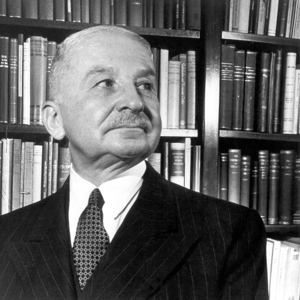
In his original essay Sandy made an important distinction between different types of “interventionist dynamics.” He focused on two broad categories of dynamics—Regulatory Dynamics and Transfer Dynamics. I hope that we can return to discussing the relevance of the dynamics of interventionism framework for understanding different types of interventions. To begin, let me provide a brief overview of the evolution of the dynamics of interventionism, which included a recognition of the need to consider different types of government interventions.Mises originally focused on the dynamics of interventionism in the context of price controls, first in the Theory of Money and Credit (1912), and later in his article “The Theory of Price Controls” (1923).[42] In a subsequent essay, “Interventionism” (1926), [43] Mises expanded his notion of interventionism slightly and discussed restrictions on production and interventions which distort the structure of prices. He further broadened his analysis of interventionism in Human Action (1949) to include taxation and macroeconomic issues. As Mises’s writings on the topic make clear, the notion of interventionism has a variety of applications, given the many ways that government meddles with markets.In Power and Market (1977), Murray Rothbard expanded on Mises by providing a taxonomy of interventions. Specifically, Rothbard differentiated three types of interventions. An “autistic intervention” is one which restricts a person’s autonomous actions, while a “binary intervention” occurs when the government uses its coercive power to force a person to engage in an exchange. Finally, “triangular intervention” refers to situations where government interferes with a voluntary exchange between two people. While Rothbard’s taxonomy was an advancement in the dynamics of interventionism, there is much work to be done. As Don Lavoie (1982) wrote:The proliferation of new forms of government interference into the market is certain to present many new challenges for the analyst in the future. Rothbard's extensive applications of the Misesian theory were far from exhaustive when he wrote them, and numerous interventionist innovations that require further study have since appeared. But I believe all these will prove susceptible to the Misesian critique of interventionism and that this susceptibility is enhanced by the extensions of the scope of the theory that Mises and Rothbard have made and, in particular, to the inventions by the latter of a general typology into which any interventionist policy can be classified.[44]
The opening identified by Lavoie was filled, at least partially, by Sandy’s book, Dynamics of the Mixed Economy (1997). Sandy’s book provides the most complete and developed theory of Misesian interventionism to date. This includes a discussion of the Regulatory Dynamics and Transfer Dynamics that he mentions in his lead essay.I believe that Lavoie’s central point remains relevant today. Government intervention is everywhere, both domestic and international. This presents both an opportunity and a challenge to analysts concerned with the dynamics of interventionism. It is an opportunity because there is a “natural experiment” at every turn. It is a challenge because the broad theory of interventionism must be applied in a way that appreciates the context-specific nuances of government intrusion into the market process.One promising avenue for thinking about some of these issues is provided by Robert L. Bradley Jr., who, building on Sandy’s work, offers his own typology of interventionist dynamics in a working paper, “Typology of Interventionist Dynamics” and the version in Humane Economics: Essays in Honor of Don Lavoie, edited by Jack High.[45] I cannot do his framework justice in my short comment, and I urge the interested reader to review Bradley’s work on this topic in its entirety. That said, his typology offers some examples of key categories for considering different types of regulatory interventions, which I will mention briefly.One is the distinction between “dormant interventions” and “causal interventions.” The former refers to interventions that are irrelevant either because the market already does what the regulation states, or because conditions have changed. The latter refers to situations where the regulation actually influences the actions of market participants. Another important distinction is between “non-initiating interventions” and “initiating interventions.” The former, in contrast to the latter, refers to interventions that do not initiate subsequent government interventions. Bradley also emphasizes the process aspect of the dynamics of interventionism. The full effects of interventions unfold over time and can have expansionary or contractionary—deregulation—elements. In addition, regulations can be revised over time, which will influence their effect on economic activity.Taken together, I believe that the existing work on the dynamics of interventionism shows how fruitful it is as an avenue for continued research, both theoretically and empirically. In his response to my initial essay, Sandy highlighted one such avenue for further exploration. Specifically, in response to my claim that we cannot, ex ante, determine the relative disruptions caused by Regulatory Dynamics versus Transfer Dynamics, Sandy writes: “The theoretical question, I suggest, would probably be: which has greater disruptive potential -- a central bank or a legislature’s redistributive policies?” What exactly this potential entails and how one goes about determining it, both conceptually and empirically, is an open question worthy of exploration. Among other things, it requires an appreciation for the scope of government action, which refers to the type and range of activities under the control of state actors.Another interesting, and related, line of inquiry would be to look at the relationship between the dynamics of interventionism and research on “political capitalism,” which focuses on the interactions between the political and economic elite. See, for example Randall G. Holcombe's “Political Capitalism” (2015) and “Crony Capitalism: Product of Big Government," (2103) ..[46] This work is important, among other reasons, because it highlights that some interventions are intended to reward specific vested interests. These interventions are fundamentally different from other, system-wide interventions—e.g., interventions by a central bank—which have broader economic effects.The issues and tensions identified in previous comments are an indication that the dynamics of interventionism is an open and lively research program. Much work remains to be done in developing and applying the dynamics of interventionism, and that work is crucial for understanding how government intervention affects the market.Endnotes[42.] Ludwig von Mises, “The Theory of Price Controls” (1923). "Preistaxen: I. Theorie" (Price Controls: I. Theory) Handwörterbuch der Staatswissenschaften, 4th ed. (Jena: Gustv Fischer, 1923), vol. 6, pp. 1055-62. Reprinted in A Critique of Interventionism (1977).[43.] Ludwig von Mises, “Interventionismus" (Interventionism), Archiv für Sozialwissenschaft und Sozialpolitik, 56, (1926), pp. 610-53. Translated in A Critique of Interventionism (1977) by Hans F. Sennholz.[44.] Don Lavoie, “The Development of the Misesian Theory of Interventionism” (with comment by Murray N. Rothbard), in Method, Process, and Austrian Economics: Essays in Honor of Ludwig von Mises, ed. Israel M. Kirzner (Lexington, MA: Lexington Books, 1982), p. 180.[45.] Robert L. Bradley Jr., “Typology of Interventionist Dynamics” and the version in Humane Economics: Essays in Honor of Don Lavoie, edited by Jack High (Edward Elgar, 2006).[46.] Randall G. Holcombe, “Political Capitalism,” Cato Journal, Winter 2015, pp. 41-66 and Randall G. Holcombe, “Crony Capitalism: Product of Big Government,” Independent Review, Spring 2013, pp. 541-99.Sanford Ikeda
On the Robustness of Mises’s Calculation Argument · Mar 24, 2016

Another way to think about how much we can rely on mere theorizing about interventionist dynamics is to ask how robust the Austrian critique of pure collectivism is.As I noted in an earlier comment, the economic collapse of the USSR and its final dissolution in 1991 does not vindicate that critique – that occurred back in 1921 – but rather corroborates Mises’s critique of interventionism, because the USSR after 1921 (with perhaps the exception of World War II) was simply a highly interventionist mixed economy.But think of Mises’s critique of pure collectivism as a kind of impossibility theorem: An economic system in which all means of production are completely collectively controlled would render rational economic calculation impossible, the practical implication of the theorem being that pure collectivism would as a result be both unworkable and unsustainable (though not contradictory the way interventionism is).If we accept Jeremy’s characterization of Mises’s impossibility theorem as methodologically sound, we might then ask what happens if we relax some of its assumptions: To what degree would relaxing complete collective control over all the means production render Mises’s argument against pure collectivism inapplicable? It seems reasonable to assume that the impossibility theorem becomes weaker the farther the system departs from pure collectivism, and stronger the closer it comes to pure collectivism. Hence, predictions about the highly interventionist USSR (or perhaps contemporary North Korea) are more reliable than predictions about U.S.-style interventionism. The particular shape of the system’s trajectory between laissez-faire capitalism and pure collectivism is of course still the issue.(Seen in this light, Mises’s strong statements about the end of interventionism and so on are perhaps understandable if (1) he detected a strong empirical tendency for public choosers to push relentlessly for ever more intervention and (2) as the mixed economy gets closer to pure collectivism, the forces outlined in his impossibility theorem grow much stronger, and so the less workable and sustainable the system becomes.)I argued in my 1997 book and elsewhere that Mises’s impossibility theorem (I did not use that term there) is indeed robust in the sense that in a system of, say, 90 percent control over 90 percent of all means of production would still make rational economic calculation impossible and result in a system that is still unworkable and unsustainable. Lenin’s grip on the “commanding heights” under his New Economic Policy represented an even more radical departure from the earlier period of collectivist “war communism.” How valid are Interventionist Dynamics – which encounter the same kinds of problems as pure collectivism though in less extreme form – under those circumstances?Jeremy Shearmur
The Character of the Case Against Interventionism · Mar 29, 2016

I earlier tried to explain one issue which Sandy raised about my initial response to him: why I was making a particular kind of point about the need for empirical work. I suggested that there were two kinds of argument that might be offered in this field. The first, relating to the structural characteristics of something, can – like Mises’s and Hayek’s arguments about economic calculation – be conducted on purely theoretical grounds. Mises, it seems to me, attempted this in his own argument about intervention; it would also seem to be needed to sustain the kinds of unconditional claims that he was making about interventionism. The second, in which it seems to me that we are largely involved in this area, would seem to require theoretical argument, but also empirical (or historical) argument that our theoretical claims are true of the specific material with which we were dealing. Sandy refers to Habermas. A good example of my second kind of argument is in fact Habermas’s account of “the structural transformation of the public sphere.”[47]The key issue here is which kind of theoretical claim, and form of evaluation, should be used, when Mises claimed what he did about interventionism. (See my initial piece for documentation about this: I had taken it that Sandy’s concern was to offer a discussion and reconstruction of Mises’s arguments. I can’t, for reasons of space, widen the argument to a discussion of Sandy’s book.) My argument was that, aside from one particular kind of “dumb” intervention in which a government tries to bring about a particular result, and systematically reacts by controlling more of the economy each time people react in rational ways to what it has undertaken so far, so as to frustrate its aims, it is not clear that we are dealing with the first kind of argument. Accordingly, my claim was that one would have to argue both theoretically and empirically/historically. (About these kinds of arguments, I said something in my initial and subsequent reply). Here, what Castells reports about East Asia is pertinent. As I indicated initially, I’m not in a position to evaluate the empirical claims made in the material to which he refers; and as Coyne has mentioned, one clearly needs to take into account issues about opportunity costs (although this relates to the wisdom of intervention, rather than to claims about its instability). But on the face of it, one has claims that government has been effective in the fostering of economic growth, of a kind which looks as if it has to be evaluated empirically and historically.This is also pertinent to the “trial and error” issue, which I was not able to take up in my previous response to Sandy for reasons of space. To invoke this in the face of arguments like those about economic calculation would be futile, and I would agree that this would also be the case for the special example of “dumb” interventionism. But in the context of interventionism in general, trial and error seems to me to have a point. First, pace Mises (see my initial discussion), people could have concerns other than economic efficiency and preferences concerning phenomena that emerge from the actions of all of them in the economy, to which they can’t respond at the level of individual action. To this, while there are public-choice problems, a political response might seem reasonable, and it is not clear that Misesian inevitable-instability problems have to occur. We might, say, be concerned that children under 12 years of age should have access to adequate nutrition. A specific tax might be levied on certain kinds of economic activity for this purpose; and different schemes might then be tried out to achieve this specific goal. Now that such a tax is levied will have other economic effects; but there is no special reason why these should be problematic. (After all, it would seem to be identical to the taxes that Mises himself presumably has to agree must be levied to support the limited activities of government he favored.) There would seem, in this example, to be no Misesian reason why intervention would have to escalate. Rather, if initial ideas about how such a tax might be levied proved problematic, they could be rescinded and changed. Similarly, if the specific welfare measures which are tried lead to problematic unintended consequences, we could again rescind the measures and try something else. It is also important to bear in mind, here, that not all forms of government behave in the same way.[48] I should also stress that I am not advocating this. But the problems would look to me to be of a public-choice rather than of a Misesian kind.More generally, in the face of Mises’s claims about the inevitable instability (or, on occasion, uneconomic character) of intervention, one can surely also consider Hayek’s rather different claims. The broad argument of his Road to Serfdom was that certain kinds of intervention, if they were persisted with systematically, would have disastrous consequences for the economy and for people’s freedom. But as he developed his views in the face of criticism (not least concerning the interventionist aspects of his own views), he articulated an account under which certain kinds of interventionism, while not necessarily wise, would not have bad consequences of these kinds. He also argued for some specific sorts of intervention – e.g., that the government should provide certain kinds of information services, and that if people wished for it, a nonmarket welfare safety net could be provided in richer countries. In each case, however, the intervention would need to take place on a specific basis. [49] It is not my argument here that Hayek is correct, or that his ideas can withstand public-choice or moral objections. My point, rather, is that the cogency of his views about intervention, as compared to those of Mises, needs to be assessed by means of both theoretical and empirical/historical argument.Endnotes[47.] See Jürgen Habermas, The Structural Transformation of the Public Sphere (Cambridge, MA: MIT Press, [1962] 1989), and Craig Calhoun, ed., Habermas and the Public Sphere (Cambridge, MA: MIT Press, 1992).[48.] See, in the context of arguments about environmental policy, Albert Weale, “Nature versus the State? Markets, States, and Environmental Protection,” Critical Review 6, Issue 2-3, 1992, pp. 153-70.[49.] See, for discussion, my “Hayek, Keynes and the State,” History of Economics Review 26, Winter-Summer 1997, pp. 68-82.Jeremy Shearmur
Some More Positive Remarks about the Study of Interventionism · Mar 31, 2016

My comments so far have been largely concerned with critical methodological argument with Sandy about how we should study interventionism. I would like, here, to turn to some more positive suggestions.First, while the phenomena focused on by classical liberals who have studied interventionism are important, we may need to refine what we are talking about. For we can ask: with what is intervention being contrasted? Is our background model with which governmental intervention is being contrasted some form of free-market anarchism or a limited state? If it is a limited state, what is its character, and how do we separate the kinds of action that it can legitimately take from those with which we are concerned?If my earlier arguments against a Misesian approach are accepted, then it seems to me that we are likely to find ourselves engaged in the development of a variety of different approaches and models to address different kinds of situations. However, classical liberals – and also, from a different perspective, Marxists[50] – will typically also wish to argue that there are certain kinds of structural constraints imposed by the character of a market order on the kinds of things that can be done without damaging the operations of that order. There will also obviously be opportunity-cost issues raised by actions which don’t have this damaging character.My first positive suggestion, here, is that we should welcome a plurality of different approaches, provided that they make interesting theoretical claims, and testable empirical claims, about the material with which we are dealing. Some writers have argued that we need to adopt a single model concerning human motivation, across both economics and political science.[51] But this seems to me incorrect. While it may be possible to offer an account of all human action as taking place on the basis of people’s preferences, once one goes beyond this to specify what those preferences are, there seems to me no reason why we may not accept they may differ in differing situations. In addition, institutions and forms of government may differ significantly, as may the character of the constraints under which people act. It is also worth noting that there may be important commonalities between a classical-liberal perspective and those of other people. Note, in this context, the way in which classical-liberal class theory is paralleled in some important ways by the kind of analysis that Frank Parkin developed drawing on Max Weber, in his Marxism and Class Theory: A Bourgeois Critique.[52]My second suggestion is that we should not restrict ourselves to work undertaken by economists or more generally within rational choice theory. For example, one really important and interesting study of why government does not achieve what is sets out to do was provided by Pressman and Wildavsky’s Implementation: How Great Expectations in Washington Are Dashed in Oakland; Or, Why It's Amazing that Federal Programs Work at All….[53] It would seem to me, more generally, that there is a great deal of important work on which classical liberals could usefully draw in political science, public administration, sociology, and law – to say nothing of history – both in themselves and as models for other studies. While economic and rational-choice approaches may be fruitful, to restrict ourselves to such work seems to me to pose an unnecessary limitation on ourselves.Finally, I have written here – and elsewhere in these responses – about a classical-liberal approach. It seems to me that there is no intellectual problem about identifying what we are doing as such. (Although clearly there may be pragmatic reasons against it; e.g., if someone is seeking tenure in a department with people in it who have silly prejudices against classical liberalism.) Essentially, classical liberalism can – along with competing approaches – form the core of a “research program” which can guide work within science in competition with other approaches. Classical liberals can – and need to – engage in argument, of many sorts, about our theoretical ideas, but we also need to show that we can produce better explanatory work than can those with whom we are competing. Such a view may be seen as a competitor to a Kuhnian one, in which people are simply seen as committed to paradigms, about which there can be no fruitful critical discussion. It may also be contrasted with the kind of “justificationist” approach which tried to demonstrate that its assumptions are correct. There is not the space to write more about these issues here, but the references below offer two further discussions of this theme which may be of use for those who wish to take issue with it.[54]Endnotes[50.] My point here is not to endorse Marxism – although some Marxist analysis of the constraints under which people act, is interesting. It is, rather, to suggest that there are important commonalities between the approach of classical liberalism and Marxism. Compare also Murray Rothbard’s enthusiasm for the historical work of Gabriel Kolko.[51.] See, for example, James Buchanan and Geoffrey Brennan, “The Normative Purpose of Economic Science,” International Review of Law and Economics, 1, December 1981, pp. 155-66.[52.] Frank Parkin, Marxism and Class Theory: A Bourgeois Critique (London: Tavistock, 1979).[53.] Jeffrey L. Pressman and Aaron Wildavsky, Implementation: How Great Expectations in Washington Are Dashed in Oakland; Or, Why It's Amazing that Federal Programs Work at All… (Berkeley: University of California Press, 1973).[54.] Jeremy Shearmur, “Popper, Lakatos and Theoretical Progress in Economics,” in Appraising Modern Economics: Studies in the Methodology of Scientific Research Programmes, ed. M. Blaug and N. de Marchi, Aldershot (Cheltenham: Elgar, 1991), pp. 35-52, and “Commitment, Scholarship and Classical Liberalism,” The Independent Review, Spring 2003 7, no. 4, pp. 575-85.