The Online Library of Liberty

Search the library

Press Enter to see all results. Esc closes.

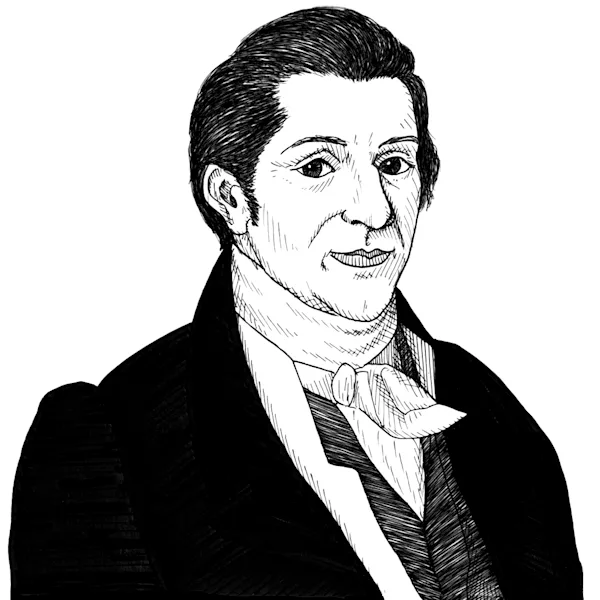
Portrait of Jean-Baptiste Say

Author

Jean-Baptiste Say

1767–1832

See more works by Say ›2 titles in the library

Biography

Quotes from Jean-Baptiste Say

6 quotes from the library

  • A Treatise on Political Economy
    The property a man has in his own industry, is violated, whenever he is forbidden the free exercise of his faculties and talents, except insomuch as they would interfere with the rights of third parties…. The industrious faculties are, of all kinds of property, the least questionable; being derived directly either from nature, or from personal assiduity. The property in them is of higher pretensions than that of the land, which may generally be traced up to an act of spoliation; for it is hardly possible to show an instance, in which its ownership has been legitimately transmitted from the first occupancy. It ranks higher than the right of the capitalist also; for even taking it for granted, that this latter has been acquired without any spoliation whatever, and by the gradual accumulations of ages, yet the succession to it could not have been established without the aid of legislation, which aid may have been granted on conditions. Yet, sacred as the property in the faculties of industry is, it is constantly infringed upon, not only in the flagrant abuse of personal slavery, but in many other points of more frequent occurrence.
  • A Treatise on Political Economy
    All these losses fall chiefly upon the class of home-consumers, a class of all others the most important in point of number, and deserving of attention on account of the wide diffusion of the evils of any vicious system affecting it, as well as the functions it performs in every part of the social machine, and the taxes it contributes to the public purse, wherein consists the power of the government. They may be divided into two parts; whereof the one is absorbed in the superfluous charges of raising the colonial produce, which might be got cheaper elsewhere; this is a dead loss to the consumer, without gain to any body. The other part, which is also paid by the consumer, goes to make the fortunes of West-Indian planters and merchants. The wealth thus acquired is the produce of a real tax upon the people, although, being centred in few hands, it is apt to dazzle the eyes, and be mistaken for wealth of colonial and commercial acquisition. And it is for the protection of this imaginary advantage, that almost all the wars of the eighteenth century have been undertaken, and that the European states have thought themselves obliged to keep up, at a vast expense, civil and judicial, as well as marine and military, establishments, at the opposite extremities of the globe.
  • A Treatise on Political Economy
    What, then, are we to think of the principles laid down by those writers, who have laboured to draw an essential distinction between public and private wealth; to show, that economy is the way to increase private fortune, but, on the contrary, that public wealth increases with the increase of public consumption: inferring thence this false and dangerous conclusion, that the rules of conduct in the management of private fortune and of public treasure, are not only different, but in direct opposition?
  • A Treatise on Political Economy
    There are some truths so completely self-evident, that demonstration is quite superfluous. This is one of that number. For who will attempt to deny, that the certainty of enjoying the fruits of one's land, capital and labour, is the most powerful inducement to render them productive? Or who is dull enough to doubt, that no one knows so well as the proprietor how to make the best use of his property? Yet how often in practice is that inviolability of property disregarded, which, in theory, is allowed by all to be so immensely advantageous? How often is it broken in upon for the most insignificant purposes; and its violation, that should naturally excite indignation, justified upon the most flimsy pretexts? So few persons are there who have a lively sense of any but a direct injury, or, with the most lively feelings, have firmness enough to act up to their sentiments! There is no security of property, where a despotic authority can possess itself of the property of the subject against his consent. Neither is there such security, where the consent is merely nominal and delusive.
  • A Treatise on Political Economy
    But personal interest is no longer a safe criterion, if individual interests are not left to counteract and control each other. If one individual, or one class, can call in the aid of authority to ward off the effects of competition, it acquires a privilege to the prejudice and at the cost of the whole community; it can then make sure of profits not altogether due to the productive services rendered, but composed in part of an actual tax upon consumers for its private profit; which tax it commonly shares with the authority that thus unjustly lends its support.
  • A Treatise on Political Economy
    Indeed, this very exorbitance of profit shows, that the industry of the master is paid out of all proportion with that of the slave. To the consumer it makes no difference. One of the productive classes benefits by the depression of the rest; and that would be all, were it not that the vicious system of production, resulting from this derangement, opposes the introduction of a better plan of industry. The slave and the master are both degraded beings, incapable of approximating to the perfection of industry, and, by their contagion, degrading the industry of the free man, who has no slaves at his command.