On War, vol. 1
Part of On War
- Carl von Clausewitz(author)
- Colonel James John Graham(translator)
Vol. 1 of Clausewitz’s magnum opus in which he ponders the revolution in military affairs made possible by the “nation at arms” during the French Revolution. He did not live to see the book appear in print but its influence was profound in Prussia and then in the unified German nation state during the course of the 19th century. This edition is noteworthy for appearing during the First World War in England.
About This Edition
Citation
Clausewitz, Carl von. On War, trans. Col. J.J. Graham. New and Revised edition with Introduction and Notes by Col. F.N. Maude, in Three Volumes (London: Kegan Paul, Trench, Trubner & C., 1918). Vol. 1.
Clausewitz, Carl von. On War, vol. 1. translated by Colonel James John Graham, Kegan Paul, Trench, Trubner, and Company, 1918. Online Library of Liberty, https://oll.libertyfund.org/titles/clausewitz-on-war-vol-1.
Clausewitz, C. v. (1918). On War, vol. 1. Kegan Paul, Trench, Trubner, and Company. https://oll.libertyfund.org/titles/clausewitz-on-war-vol-1
@book{clausewitz19181,
  author = {Carl von Clausewitz},
  title = {On War, vol. 1},
  publisher = {Kegan Paul, Trench, Trubner, and Company},
  address = {London},
  year = {1918},
  url = {https://oll.libertyfund.org/titles/clausewitz-on-war-vol-1},
  note = {Online Library of Liberty}
}TY - BOOK AU - Clausewitz, Carl von A3 - Graham, Colonel James John TI - On War, vol. 1 PY - 1918 CY - London PB - Kegan Paul, Trench, Trubner, and Company UR - https://oll.libertyfund.org/titles/clausewitz-on-war-vol-1 DB - Online Library of Liberty ER -
Copyright
The text is in the public domain.

About the author
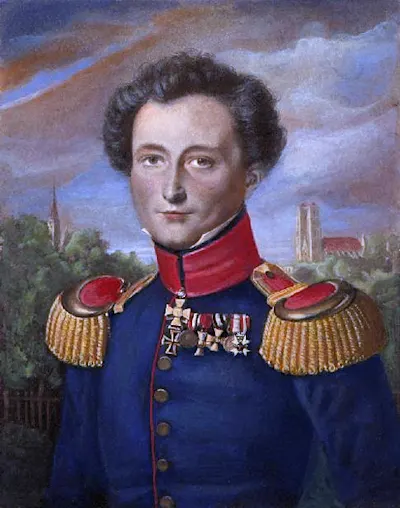
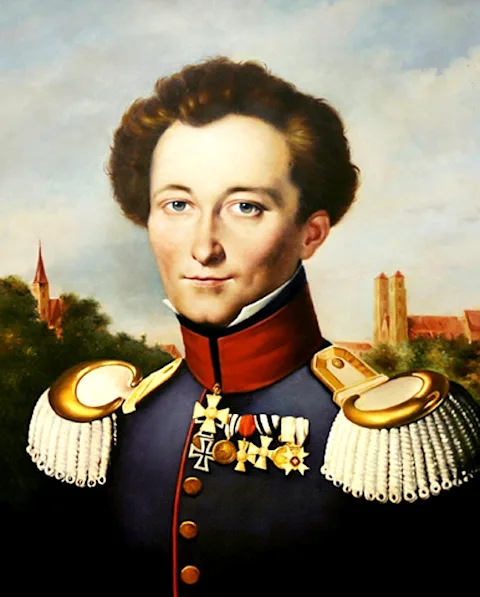
Carl von Clausewitz 1780–1831
Clausewitz witnessed at first hand the revolution in military affairs made possible by the French Revolution and utilised by Napoleon. Clausewitz did not live to see his magnum opus in print but he influenced Prussian military thinking for the rest of the 19th century.
Related People
Napoléon Bonaparte
Author
Clausewitz's book owes much to his participation in the Napoleonic Wars. Clausewitz was intrigued with Napoleon's ability to enagage the populace in his war campaigns, leading to his abilty to capture ever more state resources for his pursuits.

Connected Readings
What to read next.
 What to read next.
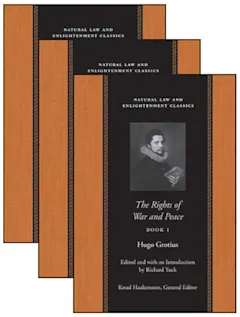
The Rights of War and Peace (2005 ed.) 3 vols
Hugo GrotiusView title >Grotius’s Rights of War and Peace is a classic of modern public international law which lays the foundation for a universal code of law and which strongly defends the rights of individual agents - states as well as private persons - to use their power to secure themselves and their property.
Rousseau on War
View title >The two Essays here translated give Rousseau's views upon such subjects as the horrors of war, the means by which they may be reduced within measurable limits, the grounds on which (and on which alone) war may be justly undertaken, the possibility of abolishing it for all time, and a Federation of Europe as the only practicable, or indeed conceivable, means of loing so. All these are burning questions at the present day. And behind them all lies another question, not less burning at this moment: the rights of the small States, which Rousseau, as citizen of Geneva, regarded with passionate interest, and in preserving and multiplying which, as he held, lay the best hope for the future of Europe.
More in Military Science (General)
See all >On War
Carl von ClausewitzOn War, vol. 3
Carl von Clausewitz