

“8th. ... that if the acts before specified should stand, these conclusions would flow from them; that the general government may place any act they think proper on the list of crimes and punish it themselves whether enumerated or not enumerated by the constitution as cognizable by them: that they may transfer its cognizance to the President, or any other person, who may himself be the accuser, counsel, judge and jury, whose suspicions may be the evidence, his order the sentence, his officer the executioner, and his breast the sole record of the transaction... ... that these and successive acts of the same character, unless arrested at the threshold, necessarily drive these States into revolution and blood and will furnish new calumnies against republican government, and new pretexts for those who wish it to be believed that man cannot be governed but by a rod of iron: that it would be a dangerous delusion were a confidence in the men of our choice to silence our fears for the safety of our rights: that confidence is everywhere the parent of despotism — free government is founded in jealousy, and not in confidence; it is jealousy and not confidence which prescribes limited constitutions, to bind down those whom we are obliged to trust with power: that our Constitution has accordingly fixed the limits to which, and no further, our confidence may go; and let the honest advocate of confidence read the Alien and Sedition acts, and say if the Constitution has not been wise in fixing limits to the government it created, and whether we should be wise in destroying those limits, Let him say what the government is, if it be not a tyranny, which the men of our choice have conferred on our President, and the President of our choice has assented to, and accepted over the friendly stranger to whom the mild spirit of our country and its law have pledged hospitality and protection: that the men of our choice have more respected the bare suspicion of the President, than the solid right of innocence, the claims of justification, the sacred force of truth, and the forms and substance of law and justice. In questions of powers, then, let no more be heard of confidence in man, but bind him down from mischief by the chains of the Constitution.”
Presidents, Kings, Tyrants, & Despots
Tocqueville on the "New Despotism" (1837)
Thus it daily makes the exercise of free choice less useful and rarer, restricts the activity of free will within a narrower compass, and little by little robs each citizen of the proper use of his own faculties. Equality has prepared men for all this, predisposing them to endure it and often even regard it as beneficial.
Having thus taken each citizen in turn in its powerful grasp and shaped men to its will, government then extends its embrace to include the whole of society. It covers the whole of social life with a network of petty, complicated rules that are both minute and uniform, through which even men of the greatest originality and the most vigorous temperament cannot force their heads above the crowd. It does not break men’s will, but softens, bends, and guides it; it seldom enjoins, but often inhibits, action; it does not destroy anything, but prevents much being born; it is not at all tyrannical, but it hinders, restrains, enervates, stifles, and stultifies so much that in the end each nation is no more than a flock of timid and hardworking animals with the government as its shepherd.
Context
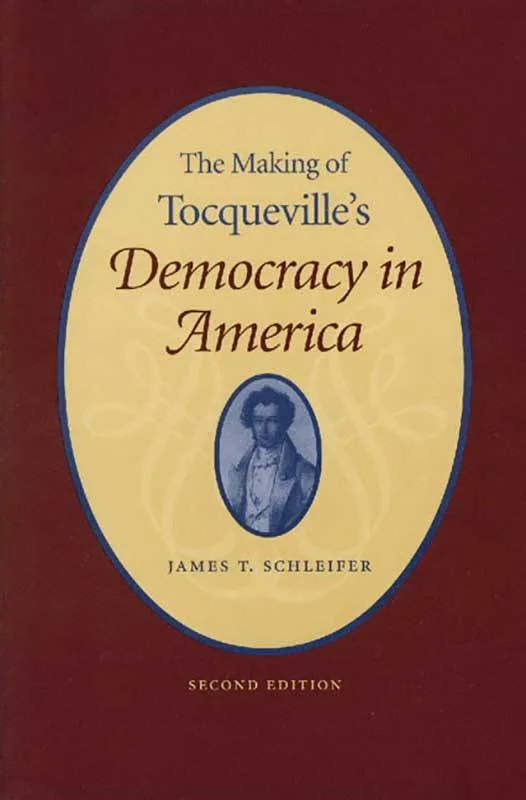
For volume 2 of Democracy in America (1840) Alexis de Tocqueville (1805-1859) drew up several drafts of his thoughts on the nature of what he called the "new despotism" which he predicted would gradually emerge and turn the nation into "a flock of timid and hardworking animals". This draft is quoted at length in James Schleifer's book on Tocqueville:
Further thoughts
In the late 1830s when Tocqueville was getting the second volume of Democracy in America ready for publication (in 1840) his view of the kind of despotism which lay in wait for European and American societies changed. In correspondence with his friend Louis de Kergolay, Tocqueville gradually shifted his view from seeing a form of military despotism being the major threat to liberty to thinking that a form of "democratic despotism" would be the way modern societies lost their liberties. His idea of military despotism came from his analysis of Julius Caesar and Napoléon Bonaparte whose depostism came about as a result of war.
Following on from comments made by Kergolay, Tocqueville began to fear that a democracy might hand powers to a single person without the need for a crisis like a war providing the impetus. Equality and the demand for security would create a paternalistic "immense, protective power" which would take over running the lives of individuals, turning the nation into "a flock of timid and hardworking animals with the government as its shepherd." It seems that Tocqueville did not imagine a case where bother factors could coexist at the same time.
Found in
Read the passage in context, or cite the edition.
More on Presidents, Kings, Tyrants, & Despots
- Presidents, Kings, Tyrants, & Despots
“What astonishing changes a few years are capable of producing! I am told that even respectable characters speak of a monarchical form of government without horror. From thinking proceeds speaking, thence to acting is often but a single step. But how irrevocable and tremendous! What a triumph for the advocates of despotism to find that we are incapable of governing ourselves, and that systems founded on the basis of equal liberty are merely ideal and fallacious! Would to God that wise measures may be taken in time to avert the consequences we have but too much reason to apprehend.”
- Presidents, Kings, Tyrants, & Despots
“But admitt, that monarchy of it self may be convenient to som nations, yet to us who have thrown it out, received back again, it cannot but prove pernicious. For [the] kings to com, never forgetting thir former ejection, will be sure to fortifie and arme themselves sufficiently for the future against all such attempts heerafter from the people: who shall be then so narrowly watch’d and kept so low, [as that besides the loss of all thir blood, and treasure spent to no purpose,], that though they would never so fain and at the same rate of thir blood and treasure, they never shall be able to regain what they now have purchasd and may enjoy, or to free themselves from any yoke impos’d upon them. nor will they dare to go about it; utterly disheartn’d for the future, if these thir highest attempts prove unsuccesfull; which will be the triumph of all tyrants heerafter over any people that shall resist oppression; and thir song will then be, to others, how sped the rebellious English? to our posteritie, how sped the rebells your fathers?”


