

The Online Library of Liberty

Search the library

Press Enter to see all results. Esc closes.

Philosophy

Marcus Aurelius on using reason to live one's life "straight and right" (170)

5. Do nothing with reluctance, or forgetting the kind social bond, or without full inquiry, or hurried into it by any passion. Seek not to set off your thoughts with studied elegance. Be neither a great talker, nor undertaker of many things. And let the God within thee find he rules a man of courage, an aged man, a good citizen, a Roman, who regulates his life, as waiting for the signal to retreat out of it, without reluctance at his dissolution; who needs not for a bond of obedience, either the tie of an oath, or the observation of others. Join also a chearful countenance, an independence on the services of others, a mind which needs not retirement from the world, to obtain tranquillity; but can maintain it without the assistance of others. One should rather appear to have been always straight and right, and not as amended or rectified.

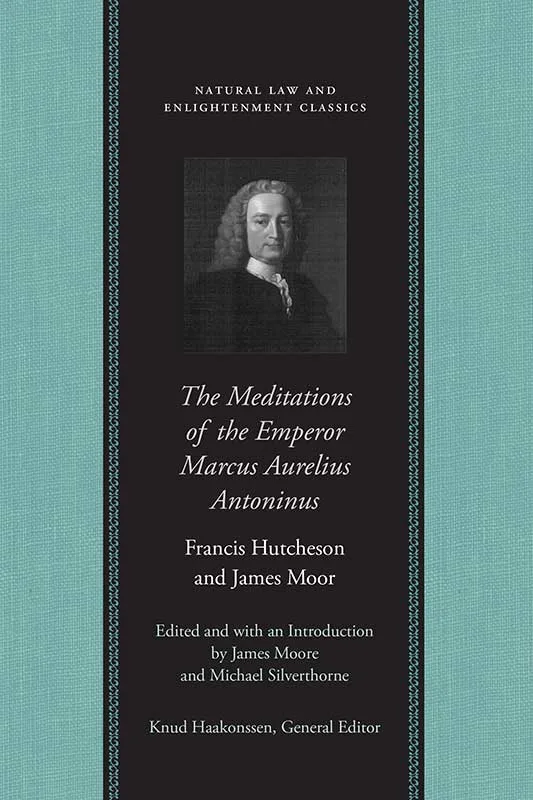
— Marcus Aurelius Antoninus, The Meditations of the Emperor Marcus Aurelius Antoninus (2008)

Context

Further thoughts

  • Philosophy
    “But souls which are pregnant—for there certainly are men who are more creative in their souls than in their bodies—conceive that which is proper for the soul to conceive or contain. And what are these conceptions?—wisdom and virtue in general. And such creators are poets and all artists who are deserving of the name inventor. But the greatest and fairest sort of wisdom by far is that which is concerned with the ordering of states and families, and which is called temperance and justice. And he who in youth has the seed of these implanted in him and is himself inspired, when he comes to maturity desires to beget and generate. He wanders about seeking beauty that he may beget offspring—for in deformity he will beget nothing—and naturally embraces the beautiful rather than the deformed body; above all when he finds a fair and noble and well–nurtured soul, he embraces the two in one person, and to such an one he is full of speech about virtue and the nature and pursuits of a good man; and he tries to educate him; and at the touch of the beautiful which is ever present to his memory, even when absent, he brings forth that which he had conceived long before, and in company with him tends that which he brings forth; and they are married by a far nearer tie and have a closer friendship than those who beget mortal children, for the children who are their common offspring are fairer and more immortal. Who, when he thinks of Homer and Hesiod and other great poets, would not rather have their children than ordinary human ones? Who would not emulate them in the creation of children such as theirs, which have preserved their memory and given them everlasting glory?”
  • Philosophy
    “Hence it is evident that the state is a creation of nature, and that man is by nature a political animal. And he who by nature and not by mere accident is without a state, is either above humanity, or below it; he is the ‘Tribeless, lawless, hearthless one,’ whom Homera denounces—the outcast who is a lover of war; he may be compared to a bird which flies alone.”
  • Philosophy
    “The Specters may impose on us, whilst we refuse to turn ’em every way, and view their Shapes and Complexions in every light. For that which can be shewn only in a certain Light, is questionable. Truth, ’tis suppos’d, may bear all Lights: and one of those principal Lights or natural Mediums, by which Things are to be view’d, in order to a thorow Recognition, is Ridicule it-self, or that Manner of Proof by which we discern whatever is liable to just Raillery in any Subject. So much, at least, is allow’d by All, who at any time appeal to this Criterion. The gravest Gentlemen, even in the gravest Subjects, are suppos’d to acknowledg this: and can have no Right, ’tis thought, to deny others the Freedom of this Appeal; whilst they are free to censure like other Men, and in their gravest Arguments make no scruple to ask, Is it not Ridiculous? (FROM: PART I, SECTION I)”

    Anthony Ashley Cooper, Earl of Shaftesbury: Shaftesbury on Raillery and Truth

    Characteristicks of Men, Manners, Opinions, Times, vol. 1