

The Online Library of Liberty

Search the library

Press Enter to see all results. Esc closes.

Politics & Liberty

John Calhoun and the Unchecked Majority

But to return to the point immediately under consideration. I know that it is not only the opinion of a large majority of our country, but it may be said to be the opinion of the age, that the very beau ideal of a perfect government is the government of a majority, acting through a representative[446] body, without check or limitation on its power; yet, if we may test this theory by experience and reason, we shall find that, so far from being perfect, the necessary tendency of all governments, based upon the will of an absolute majority, without constitutional check or limitation of power, is to faction, corruption, anarchy, and despotism; and this, whether the will of the majority be expressed directly through an assembly of the people themselves, or by their representatives. I know that, in venturing this assertion, I utter what is unpopular both within and without these walls; but where truth and liberty are concerned, such considerations should not be regarded. (FROM SPEECH ON THE REVENUE COLLECTION [FORCE] BILL February 15–16, 1833) - John C. Calhoun

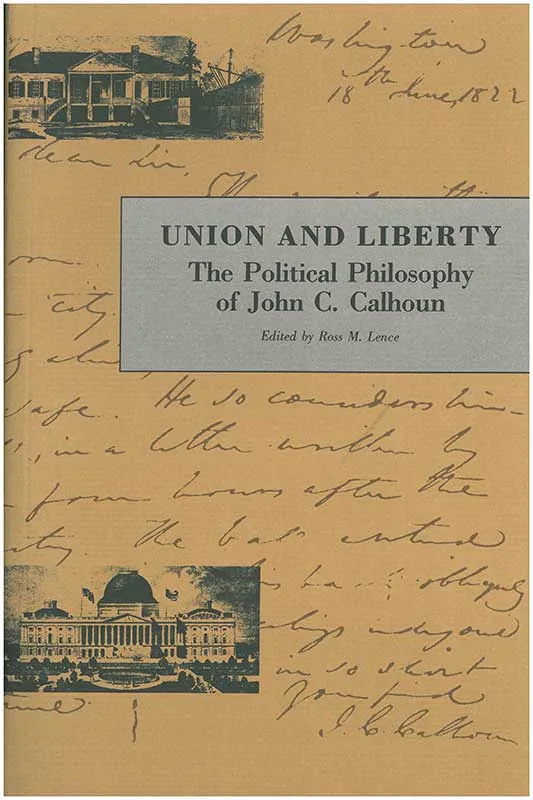
— John C. Calhoun, Union and Liberty: The Political Philosophy of John C. Calhoun

Context

Further thoughts

More on Politics & Liberty

  • Politics & Liberty
    “It was scarcely possible that the eyes of contemporaries should discover in the public felicity the latent causes of decay and corruption. This long peace, and the uniform government of the Romans, introduced a slow and secret poison into the vitals of the empire...Their personal valour remained, but they no longer possessed that public courage which is nourished by the love of independence, the sense of national honour, the presence of danger, and the habit of command. They received laws and governors from the will of their sovereign, and trusted for their defence to a mercenary army. The posterity of their boldest leaders was contented with the rank of citizens and subjects.”
  • Politics & Liberty
    “Obsta principiis, nip the shoots of arbitrary power in the bud, is the only maxim which can ever preserve the liberties of any people. When the people give way, their deceivers, betrayers, and destroyers press upon them so fast, that there is no resisting afterwards. The nature of the encroachment upon the American constitution is such, as to grow every day more and more encroaching. Like a cancer, it eats faster and faster every hour. The revenue creates pensioners, and the pensioners urge for more revenue. The people grow less steady, spirited, and virtuous, the seekers more numerous and more corrupt, and every day increases the circles of their dependents and expectants, until virtue, integrity, public spirit, simplicity, and frugality, become the objects of ridicule and scorn, and vanity, luxury, foppery, selfishness, meanness, and downright venality swallow up the whole society.”
  • Politics & Liberty
    “To prevent the weaker members of the community from being preyed upon by innumerable vultures, it was needful that there should be an animal of prey stronger than the rest, commissioned to keep them down. But as the king of the vultures would be no less bent upon preying on the flock than any of the minor harpies, it was indispensable to be in a perpetual attitude of defence against his beak and claws. The aim, therefore, of patriots was to set limits to the power which the ruler should be suffered to exercise over the community; and this limitation was what they meant by liberty. It was attempted in two ways. First, by obtaining a recognition of certain immunities, called political liberties or rights, which it was to be regarded as a breach of duty in the ruler to infringe, and which, if he did infringe, specific resistance, or general rebellion, was held to be justifiable. A second, and generally a later expedient, was the establishment of constitutional checks, by which the consent of the community, or of a body of some sort, supposed to represent its interests, was made a necessary condition to some of the more important acts of the governing power.”