

The Online Library of Liberty

Search the library

Press Enter to see all results. Esc closes.

The State

John Calhoun on Unchecked Majorities

But to return to the point immediately under consideration. I know that it is not only the opinion of a large majority of our country, but it may be said to be the opinion of the age, that the very beau ideal of a perfect government is the government of a majority, acting through a representative[446] body, without check or limitation on its power; yet, if we may test this theory by experience and reason, we shall find that, so far from being perfect, the necessary tendency of all governments, based upon the will of an absolute majority, without constitutional check or limitation of power, is to faction, corruption, anarchy, and despotism; and this, whether the will of the majority be expressed directly through an assembly of the people themselves, or by their representatives. I know that, in venturing this assertion, I utter what is unpopular both within and without these walls; but where truth and liberty are concerned, such considerations should not be regarded. (FROM SPEECH ON THE REVENUE COLLECTION [FORCE] BILL February 15–16, 1833) - John C. Calhoun

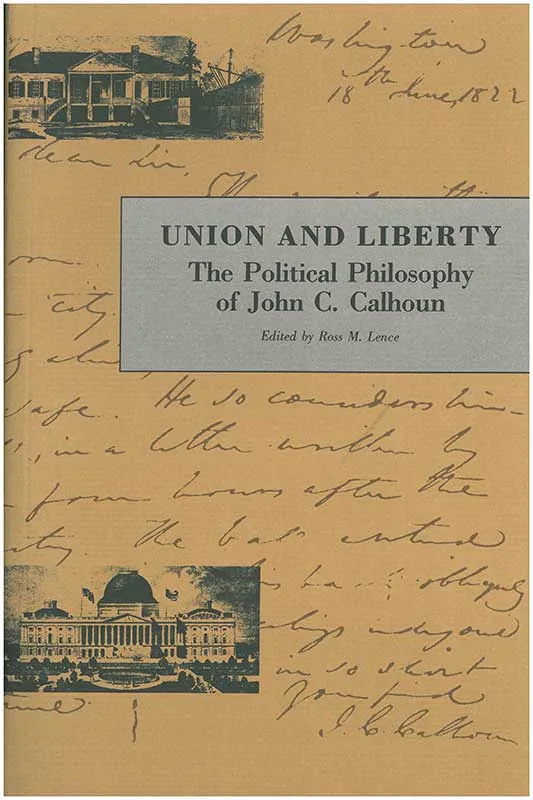
— John C. Calhoun, Union and Liberty: The Political Philosophy of John C. Calhoun

Context

Further thoughts

  • The State
    “If a state well performed its functions of providing peace, order and security, as conditions under which the people could live and work, it would be the proudest proof of its triumphant success that it had nothing to do — that all went so smoothly that it had only to look on and was never called to interfere; just as it is the test of a good business man that his business runs on smoothly and prosperously while he is not harassed or hurried. The people who think that it is proof of enterprise to meddle and “fuss” may believe that a good state will constantly interfere and regulate, and they may regard the other type of state as “non-government.””
  • The State
    “No man can have a power over a nation otherwise than de jure, or de facto. He who pretends to have a power de jure, must prove that it is originally inherent in him or his predecessor from whom he inherits; or that it was justly acquired by him. The vanity of any pretence to an original right appears sufficiently, I hope, from the proofs already given, that the first fathers of mankind had it not; or if they had, no man could now inherit the same, there being no man able to make good the genealogy that should give him a right to the succession.”
  • The State
    “Such people as have been bred up to liberty, and subject to no other dominion but the authority of their own will, look upon all other form of government as monstrous and contrary to nature. Those who are inured to [260] monarchy do the same; and what opportunity soever fortune presents them with to change, even then, when with the greatest difficulties they have disengaged themselves from one master, that was troublesome and grievous to them, they presently run, with the same difficulties, to create another; being unable to take into hatred subjection itself.”