

The Online Library of Liberty

Search the library

Press Enter to see all results. Esc closes.

Colonies, Slavery & Abolition

John Calhoun on Slavery as a Positive Good

But I take higher ground. I hold that in the present state of civilization, where two races of different origin, and distinguished by color, and other physical differences, as well as intellectual, are brought together, the relation now existing in the slaveholding States between the two, is, instead of an evil, a good—a positive good. I feel myself called upon to speak freely upon the subject where the honor and interests of those I represent are involved. I hold then, that there never has yet existed a wealthy and civilized society in which one portion of the community did not, in point of fact, live on the labor of the other. Broad and general as is this assertion, it is fully borne out by history. This is not the proper occasion, but if it were, it would not be difficult to trace the various devices by which the wealth of all civilized communities has been so unequally divided, and to show by what means so small a share has been allotted to those by whose labor it was produced, and so large a share given to the non-producing classes. (FROM SPEECH ON THE RECEPTION OF ABOLITION PETITIONS February 6, 1837) - John C. Calhoun

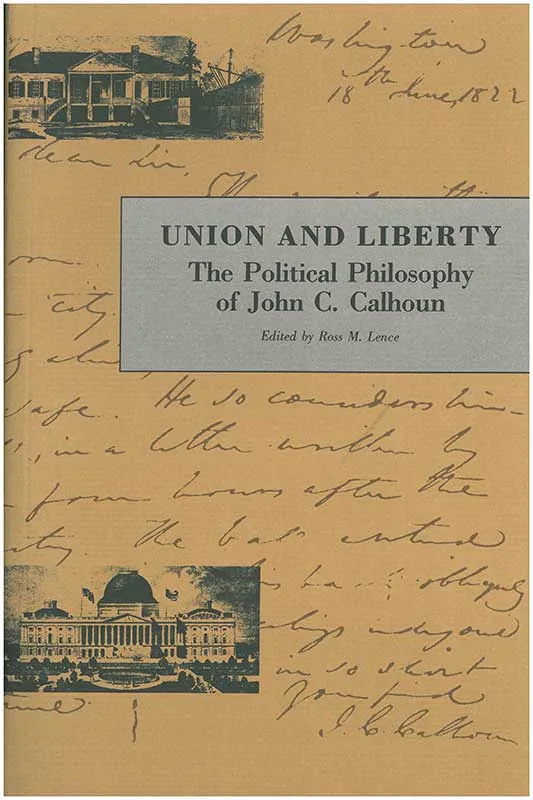
— John C. Calhoun, Union and Liberty: The Political Philosophy of John C. Calhoun

Context

Further thoughts

More on Colonies, Slavery & Abolition

  • Colonies, Slavery & Abolition
    “I have formerly observed that pure and proper slavery does not, nay, cannot, subsist in England: such, I mean, whereby an absolute and unlimited power is given to the master over the life and fortune of the slave. And indeed it is repugnant to reason, and the principles of natural law, that such a state should subsist anywhere. The three origins of the right of slavery assigned by Justinian are all of them built upon false foundations ... Upon these principles the law of England abhors, and will not endure the existence of, slavery within this nation; so that when an attempt was made to introduce it, by statute 1 Edw. VI. c. 3, which ordained, that all idle vagabonds should be made slaves, and fed upon bread and water, or small drink, and refuse meat; should wear a ring of iron round their necks, arms, or legs; and should be compelled, by beating, chaining, or otherwise, to perform the work assigned them, were it never so vile; the spirit of the nation could not brook this condition, even in the most abandoned rogues; and therefore this statute was repealed in two years afterwards. And now it is laid down, that a slave or negro, the instant he lands in England, becomes a freeman; that is, the law will protect him in the enjoyment of his person, and his property.”
  • Colonies, Slavery & Abolition
    “I see my way in the constitution. I cannot in a compromise. A compromise is but an act of Congress. It may be overruled at any time. It gives us no security. But the constitution is stable. It is a rock. On it we can stand, and on it we can meet our friends from the non-slaveholding States. It is a firm and stable ground, on which we can better stand in opposition to fanaticism, than on the shifting sands of compromise. Let us be done with compromises. Let us go back and stand upon the constitution! (FROM: SPEECH ON THE INTRODUCTION OF HIS RESOLUTIONS ON THE SLAVE QUESTION)”

    John C. Calhoun: John Calhoun on Compromises

    Union and Liberty: The Political Philosophy of John C. Calhoun

  • Colonies, Slavery & Abolition
    “The physiognomy of governments can be best detected in their colonies ... (In Canada) One might fancy one’s self in the midst of modern centralization and in Algeria. Canada is, in fact, the true model of what has always been seen there. In both places the government numbers as many heads as the people; it preponderates, acts, regulates, controls, undertakes every thing, provides for every thing, knows far more about the subject’s business than he does himself—is, in short, incessantly active and sterile. In the United States, on the contrary, the English anti-centralization system was carried to an extreme. Parishes became independent municipalities, almost democratic republics. The republican element, which forms, so to say, the foundation of the English constitution and English habits, shows itself and develops without hindrance. Government proper does little in England, and individuals do a great deal; in America, government never interferes, so to speak, and individuals do every thing.”