

The Online Library of Liberty

Search the library

Press Enter to see all results. Esc closes.

Natural Rights

Francis Hutcheson on the difference between “perfect” and “imperfect” rights (1725)

The Rights call’d perfect, are of such necessity to the publick Good, that the universal Violation of them would make human Life intolerable; and it actually makes those miserable, whose Rights are thus violated. On the contrary, to fulfil these Rights in every Instance, tends to the publick Good, either directly, or by promoting the innocent Advantage of a Part. Hence it plainly follows, “That to allow a violent Defence, or Prosecution of such Rights, before Civil Government be constituted, cannot in any particular Case be more detrimental to the Publick, than the Violation of them with Impunity.” And as to the general Consequences, the universal use of Force in a State of Nature, in pursuance of perfect Rights, seems exceedingly advantageous to the Whole, by making every one dread any Attempts against the perfect Rights of others.

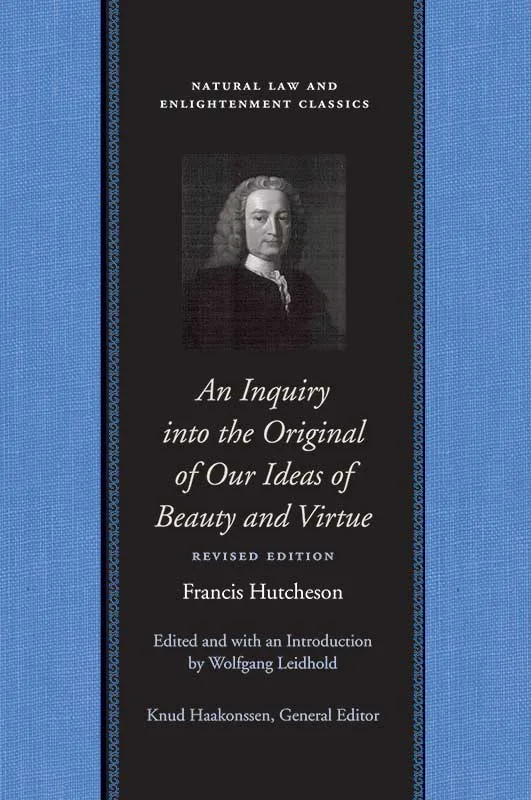
— Francis Hutcheson, An Inquiry into the Original of Our Ideas of Beauty and Virtue (1726, 2004)

Context

Further thoughts

More on Natural Rights

  • Natural Rights
    “To every individual in nature is given an individual property by nature not to be invaded or usurped by any. For every one, as he is himself, so he has a self-propriety, else could he not be himself; and of this no second may presume to deprive any of without manifest violation and affront to the very principles of nature and of the rules of equity and justice between man and man. Mine and thine cannot be, except this be. No man has power over my rights and liberties, and I over no man's. I may be but an individual, enjoy my self and my self-propriety and may right myself no more than my self, or presume any further; if I do, I am an encroacher and an invader upon another man's right — to which I have no right. For by natural birth all men are equally and alike born to like propriety, liberty and freedom; and as we are delivered of God by the hand of nature into this world, every one with a natural, innate freedom and propriety — as it were writ in the table of every man's heart, never to be obliterated — even so are we to live, everyone equally and alike to enjoy his birthright and privilege; even all whereof God by nature has made him free.”
  • Natural Rights
    “I here close my examination into those natural rights, which, in my humble opinion, it is the business of civil government to protect, and not to subvert, and the exercise of which it is the duty of civil government to enlarge, and not to restrain. I go farther; and now proceed to show, that in peculiar instances, in which those rights can receive neither protection nor reparation from civil government, they are, notwithstanding its institution, entitled still to that defence, and to those methods of recovery, which are justified and demanded in a state of nature.”