

The Online Library of Liberty

Search the library

Press Enter to see all results. Esc closes.

Liberty

De Lolme on Liberty as equality under the laws (1784)

What then is Liberty? Liberty, I would answer, so far as it is possible for it to exist in a Society of Beings whose interests are almost perpetually opposed to each other, consists in this, that, every Man, while he respects the persons of others, and allows them quietly to enjoy the produce of their industry, be certain himself likewise to enjoy the produce of his own industry, and that his person be also secure. But to contribute by one’s suffrage to procure these advantages to the Community,—to have a share in establishing that order, that general arrangement of things, by means of which an individual, lost as it were in the croud, is effectually protected,—to lay down the rules to be observed by those who, being invested with a considerable power, are charged with the defence of individuals, and provide that they should never transgress them,—these are functions, are acts of Government, but not constituent parts of Liberty.

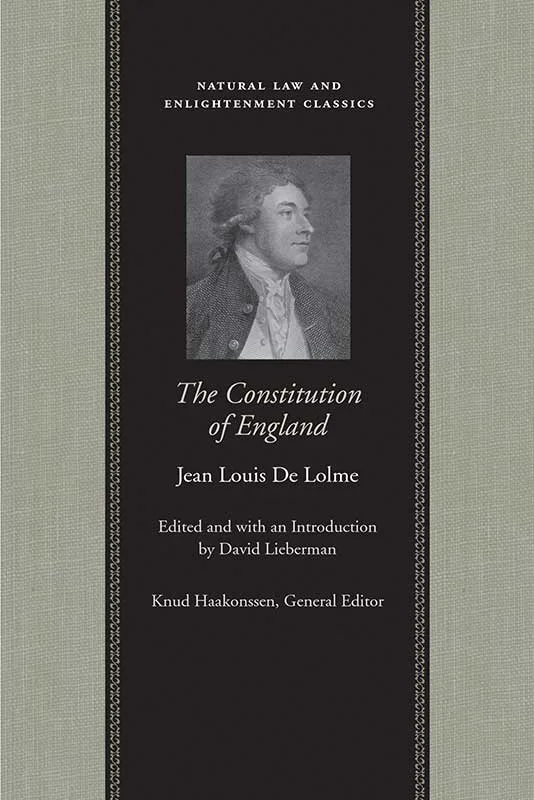
— Jean Louis De Lolme, The Constitution of England; Or, an Account of the English Government

Context

Further thoughts

  • Liberty
    “(Some) think it best, that every thing, which is not properly of a civil nature, should be entirely overlooked by the civil magistrate; that it is for the advantage of the society, upon the whole, that all those things be left to take their own natural course, and that the legislature cannot interfere in them, without defeating its own great object, the public good.”
  • Liberty
    “We have, therefore, on this occasion, peculiar reasons for thanksgiving—But let us remember that we ought not to satisfy ourselves with thanksgivings. Our gratitude, if genuine, will be accompanied with endeavours to give stability to the deliverance our country has obtained, and to extend and improve the happiness with which the Revolution has blest us—Let us, in particular, take care not to forget the principles of the Revolution. ... I would farther direct you to remember, that though the Revolution was a great work, it was by no means a perfect work; and that all was not then gained which was necessary to put the kingdom in the secure and complete possession of the blessings of liberty.”
  • Liberty
    “Article I - Men are born and remain free and equal in rights. Social distinctions can be founded only on the common utility. Article II - The goal of any political association is the conservation of the natural and imprescriptible [i.e., inviolable] rights of man. These rights are liberty, property, safety and resistance against oppression. Article III - The principle of any sovereignty resides essentially in the Nation. No body, no individual can exert authority which does not emanate expressly from it. Article IV - Liberty consists of doing anything which does not harm others: thus, the exercise of the natural rights of each man has only those borders which assure other members of the society the enjoyment of these same rights. These borders can be determined only by the law.”