

“But souls which are pregnant—for there certainly are men who are more creative in their souls than in their bodies—conceive that which is proper for the soul to conceive or contain. And what are these conceptions?—wisdom and virtue in general. And such creators are poets and all artists who are deserving of the name inventor. But the greatest and fairest sort of wisdom by far is that which is concerned with the ordering of states and families, and which is called temperance and justice. And he who in youth has the seed of these implanted in him and is himself inspired, when he comes to maturity desires to beget and generate. He wanders about seeking beauty that he may beget offspring—for in deformity he will beget nothing—and naturally embraces the beautiful rather than the deformed body; above all when he finds a fair and noble and well–nurtured soul, he embraces the two in one person, and to such an one he is full of speech about virtue and the nature and pursuits of a good man; and he tries to educate him; and at the touch of the beautiful which is ever present to his memory, even when absent, he brings forth that which he had conceived long before, and in company with him tends that which he brings forth; and they are married by a far nearer tie and have a closer friendship than those who beget mortal children, for the children who are their common offspring are fairer and more immortal. Who, when he thinks of Homer and Hesiod and other great poets, would not rather have their children than ordinary human ones? Who would not emulate them in the creation of children such as theirs, which have preserved their memory and given them everlasting glory?”
Philosophy
David Hume on the Perception of Beauty
On the contrary, a thousand different sentiments, excited by the same object, are all right: Because no sentiment represents what is really in the object. It only marks a certain conformity or relation between the object and the organs or faculties of the mind; and if that conformity did not really exist, the sentiment could never possibly have being. Beauty is no quality in things themselves: It exists merely in the mind which contemplates them; and each mind perceives a different beauty. One person may even perceive deformity, where another is sensible of beauty; and every individual ought to acquiesce in his own sentiment, without pretending to regulate those of others. To seek the real beauty, or real deformity, is as fruitless an enquiry, as to pretend to ascertain the real sweet or real bitter. (FROM ESSAY XXIII: OF THE STANDARD OF TASTE) - David Hume
Context
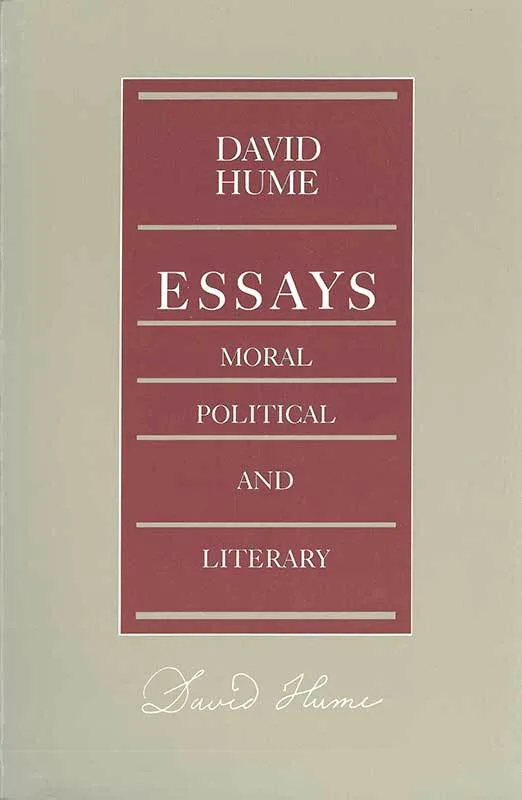
David Hume (1711-1776) was a moral philosopher, historian, and leading member of the Scottish Enlightenment. In an essay entitled, “Of the Standard of Taste,” included at the end of Part I of the Liberty Fund collection of his essays, Hume outlines his perception-and-contemplation-driven account of judgements concerning taste and beauty:
Further thoughts
In this quote, Hume stresses that beauty is not a quality of objects in themselves; nor is it located in the “eye of the beholder.” No, beauty is a descriptive quality (or an aesthetic sense) that originates in the thinking mind of an observer, who judges and thereafter deems something to be “beautiful.” In other words, beauty is a subjective finding, because as Hume says in this very quote, “each mind perceives a different beauty.” Different individuals with different minds—shaped by different experiences and carrying different preconceptions—can, and often do make different evaluations of what is and what is not “beautiful.” In the most extreme cases, Hume says, what is “beautiful” to one person might appear “deformed” to another.
For this reason, Hume counsels against trying to come up with objective guides for taste and for beauty. As he writes near the beginning of the essay, “We are apt to call barbarous whatever departs widely from our own taste and apprehension: But soon find the epithet of reproach retorted on us.” In a similar vein Hume suggests it would be “fruitless” to come up with a ‘gold standard’ (“the real beauty”) for either evaluative judgement. Rather Hume uses normative language (“ought”) to argue that everyone should “acquiesce” (from the Latin, “to rest”) in their own judgements of what is beautiful (or ugly) and in high (or poor) taste. If others do not share these judgements, Hume says, so be it. If in his view discovering true beauty or deformity is impossible even for a singular observer as an academic exercise, then it is no surprise that Hume would warn against attempts to impose alternative standards of taste and beauty-judgement on those with their own views in the real world. Under such circumstances an intellectual problem becomes a social and political one, particularly insofar as coercion is employed to try to standardize differing judgements of beauty and taste.
*“De gustibus non est disputandum.”
*
Found in
Read the passage in context, or cite the edition.
More on Philosophy
- Philosophy
- Philosophy
“Hence it is evident that the state is a creation of nature, and that man is by nature a political animal. And he who by nature and not by mere accident is without a state, is either above humanity, or below it; he is the ‘Tribeless, lawless, hearthless one,’ whom Homera denounces—the outcast who is a lover of war; he may be compared to a bird which flies alone.”
- Philosophy
“The Specters may impose on us, whilst we refuse to turn ’em every way, and view their Shapes and Complexions in every light. For that which can be shewn only in a certain Light, is questionable. Truth, ’tis suppos’d, may bear all Lights: and one of those principal Lights or natural Mediums, by which Things are to be view’d, in order to a thorow Recognition, is Ridicule it-self, or that Manner of Proof by which we discern whatever is liable to just Raillery in any Subject. So much, at least, is allow’d by All, who at any time appeal to this Criterion. The gravest Gentlemen, even in the gravest Subjects, are suppos’d to acknowledg this: and can have no Right, ’tis thought, to deny others the Freedom of this Appeal; whilst they are free to censure like other Men, and in their gravest Arguments make no scruple to ask, Is it not Ridiculous? (FROM: PART I, SECTION I)”
Anthony Ashley Cooper, Earl of Shaftesbury: Shaftesbury on Raillery and Truth
Characteristicks of Men, Manners, Opinions, Times, vol. 1


