“But I have understanding as well as you; I am not inferior to you: yea, who knoweth not such things as these? I am as one mocked of his neighbour, who calleth upon God, and he answereth him: the just upright man is laughed to scorn. He that is ready to slip with his feet is as a lamp despised in the thought of him that is at ease. The tabernacles of robbers prosper, and they that provoke God are secure; into whose hand God bringeth abundantly.”
Religion & Toleration
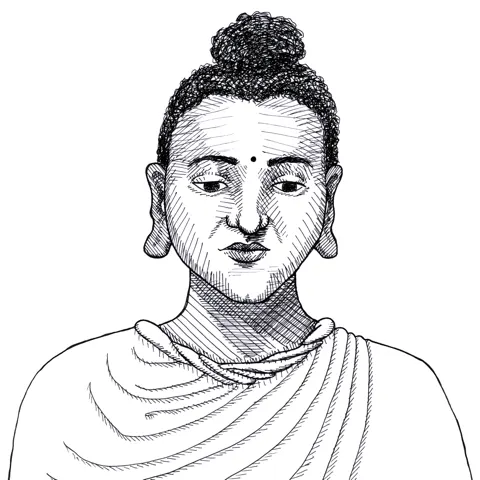
Buddha and his "Ten Commandments"
I exhort you to avoid the ten evils:
I. Kill not, but have regard for life.
II. Steal not, neither do ye rob; but help everybody to be master of the fruits of his labor.
III. Abstain from impurity, and lead a life of chastity.
IV. Lie not, but be truthful. Speak the truth with discretion, fearlessly and in a loving heart.
V. Invent not evil reports, neither do ye repeat them. Carp not, but look for the good sides of your fellow-beings, so that ye may with sincerity defend them against their enemies.
VI. Swear not, but speak decently and with dignity.
VII. Waste not the time with gossip, but speak to the purpose or keep silence.
VIII. Covet not, nor envy, but rejoice at the fortunes of other people.
IX. Cleanse your heart of malice and cherish no hatred, not even against your enemies; but embrace all living beings with kindness.
X. Free your mind of ignorance and be anxious to learn the truth, especially in the one thing that is needful, lest you fall a prey either to scepticism or to errors. Scepticism will make you indifferent and errors will lead you astray, so that you shall not find the noble path that leads to life eternal.
(FROM: XLVI: AVOIDING THE TEN EVILS) - Buddha
Context
This passage is an excerpt from The Gospel of Buddha, a 1915 work by Paul Carus. The work as a whole, and this passage in particular, is a reflection of Carus’ goal of making Buddhism more familiar and accessible, and thus sympathetic, to a Western audience.
Further thoughts
The Buddha, of course, never himself issued anything like the “Ten Commandments.” Yet, Carus has carefully assembled this list from several of the Buddha’s sermons and other sources. Most of these “Ten Commandments” are, in fact, drawn from a central Buddhist teaching called the Noble Eightfold Path (Aryastangamarga). The different injunctions or elements of this Path were themselves assembled by Buddhist sages out of some of the very earliest Buddhist writings.
The first four of the ten “evils” on this list are more-or-less verbatim translations from the Five Precepts, themselves a component of the injunction of Right Action, one of the parts of the Eightfold Path. Interestingly, Carus omitted the fifth of the Five Precepts from his own list: Avoidance of intoxicants.
Commandments number V through VII of his list are all based on Right Speech, another part of the Eightfold Path. The ninth commandment seems to be a composite of Samma Sankapa (Right Intention, or Right Emotion) and Samma Vayama (Right Effort, or Right Energy). These two parts of the Eightfold Path involve freeing the mind from evil. The last of the Commandments on this list is based on Samma Ditthi (Right View or Right Understanding).

Found in
Read the passage in context, or cite the edition.
More on Religion & Toleration
- Religion & Toleration
“... it does not follow, that because it is a sin it ought therefore to be punished by the magistrate. For it does not belong unto the magistrate to make use of his sword in punishing every thing, indifferently, that he takes to be a sin against God. Covetousness, uncharitableness, idleness, and many other things are sins, by the consent of all men, which yet no man ever said were to be punished by the magistrate. The reason is, because they are not prejudicial to other men’s rights, nor do they break the public peace of societies.”
John Locke: John Locke believed that the magistrate should not punish sin but only violations of natural rights and public peace (1689)
The Works, vol. 5 Four Letters concerning Toleration
- Religion & Toleration
“Enter into the Royal Exchange of London, a place more respectable than many courts, in which deputies from all nations assemble for the advantage of mankind. There the Jew, the Mahometan, and the Christian bargain with one another as if they were of the same religion, and bestow the name of infidel on bankrupts only... Was there in London but one religion, despotism might be apprehended; if two only, they would seek to cut each other’s throats; but as there are at least thirty, they live together in peace and happiness.”
Voltaire: Voltaire notes that where Commerce and Toleration predominate, a Multiplicity of Faiths can live together in Peace and Happiness (1764)
The Works of Voltaire, Vol. VI (Philosophical Dictionary Part 4)