
Literature & Music
“So you must be the first that gives this sentence, And he that suffers. O! it is excellent To have a giant’s strength, but it is tyrannous To use it like a giant.”

Literature & Music
1) Liebster Gott, wann werd’ ich sterben?
Meine Zeit läuft immer hin,
Und des alten Adams Erben,
Unter denen ich auch bin,
Haben dies zum Vatertheil,
Dass sie eine kleine Weil
Arm und elend sein auf Erden.
Und dann selber Erde werden.[Dearest God, when will I die?
My time runs away continually,
and the old legacy of Adam,
which includes me as well,
has this as its inheritance;
for a little time
to be poor and wretched on the earth
and then to become earth itself.]6) Herrscher uber Tod und Leben,
Mach’ einmal mein Ende gut,
Lehre mich den Geist aufgeben
Mit recht wohlgefasstem Muth.
Hilf, dass ich ein ehrlich Grab
Neben frommen Christen hab’
Und auch endlich in der Erde
Nimmermehr zu Schanden werde.[Sovereign over death and life,
make my end a good one,
teach me to resign my spirit
with a well-composed courage.
Help, that I might have an honorable grave
next to righteous Christians
and also at last, in the earth,
nevermore be dishonored!]
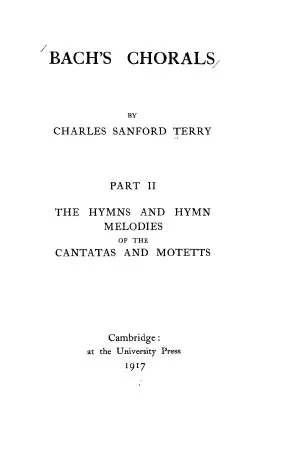
J.S. Bach's Cantata No. 8 was based upon a hymn by Caspar Neumann (1700) and a melody by Daniel Vetter (1713) which was sung for the first time at the funeral of Jakob Wilisius, Cantor of St Bernhardin’s Church at Breslau. In the Cantata two searing questions are asked, "when will I die" and "what will happen to me afterwards?":
The hymn on which this very moving cantata by Bach was based, was written for the funeral of a church cantor in the early 18th century. It asks two of the hardest questions imaginable - when will I die, and what will happen to me afterwards? The Lutheran faith of Bach as his contemporaries gave them the answer to the second question: "the sovereign over life and death" would take the soul where it could "stand before Jesus". The answer to the first question is not answered. No human being knows "when my last hour strikes." All we know for certain is that "for a little time (we will) be poor and wretched on the earth and then (we will) become earth itself."
Read the passage in context, or cite the edition.
“So you must be the first that gives this sentence, And he that suffers. O! it is excellent To have a giant’s strength, but it is tyrannous To use it like a giant.”
“Candide, as he was returning home, made profound reflections on the Turk’s discourse. “This good old man,” said he to Pangloss and Martin, “appears to me to have chosen for himself a lot much preferable to that of the six kings with whom we had the honor to sup.” ... “Neither need you tell me,” said Candide, “that we must take care of our garden.” “You are in the right,” said Pangloss; “for when man was put into the garden of Eden, it was with an intent to dress it: and this proves that man was not born to be idle.” “Work then without disputing,” said Martin; “it is the only way to render life supportable.””
The Works of Voltaire, Vol. I (Candide)
“They set themselves in armour bright, These mischiefs to prevent; With all the yeomen brave and bold That were in fruitful Kent. At Canterbury did they meet, Upon a certain day, With sword and spear, with bill and bow, And stopt the conqueror’s way. “Let us not yield, like bond-men poor, To Frenchmen in their pride, But keep our ancient liberty, What chance so e’er betide: “And rather die in bloody field, With manly courage prest, Than to endure the servile voke, Which we so much detest.””
History of the Conquest of England by the Normans vol. 1