

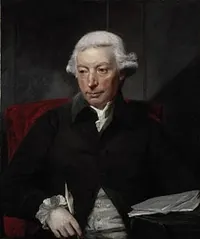
“But souls which are pregnant—for there certainly are men who are more creative in their souls than in their bodies—conceive that which is proper for the soul to conceive or contain. And what are these conceptions?—wisdom and virtue in general. And such creators are poets and all artists who are deserving of the name inventor. But the greatest and fairest sort of wisdom by far is that which is concerned with the ordering of states and families, and which is called temperance and justice. And he who in youth has the seed of these implanted in him and is himself inspired, when he comes to maturity desires to beget and generate. He wanders about seeking beauty that he may beget offspring—for in deformity he will beget nothing—and naturally embraces the beautiful rather than the deformed body; above all when he finds a fair and noble and well–nurtured soul, he embraces the two in one person, and to such an one he is full of speech about virtue and the nature and pursuits of a good man; and he tries to educate him; and at the touch of the beautiful which is ever present to his memory, even when absent, he brings forth that which he had conceived long before, and in company with him tends that which he brings forth; and they are married by a far nearer tie and have a closer friendship than those who beget mortal children, for the children who are their common offspring are fairer and more immortal. Who, when he thinks of Homer and Hesiod and other great poets, would not rather have their children than ordinary human ones? Who would not emulate them in the creation of children such as theirs, which have preserved their memory and given them everlasting glory?”
Philosophy
Adam Ferguson on Love, Self-Interest, and Pleasure
Love is an affection which carries the attention of the mind beyond itself, and is the sense of a relation to some fellow-creature as to its object. Being a complacency and a continued satisfaction in this object, it has, independent of any external event, and in the midst of disappointment and sorrow, pleasures and triumphs unknown to those who are guided by mere considerations of interest.
Context
In Part 1, Sect. 2, of An Essay on the History of Civil Society (1767), Adam Ferguson reflects on how love leads us to a sort of satisfaction which goes beyond what mere self-interested pleasures can give us:
Further thoughts
The tension between higher aspirations and self-interested pursuits—and indeed the role the moral sentiments (like love) play in resolving this tension—is a common theme in Ferguson’s Essay and much of the British moral sentimentalist tradition (e.g., Adam Smith and David Hume).
Here, we might read Ferguson against a nearby contemporary, Jeremy Bentham (1748-1832), who infamously argued that there was no difference between higher and lower pleasures. John Stuart Mill (1806-1873) sums up Jeremy Bentham’s infamous position by the oft-remembered quip that, for Bentham, Push-pin (an old English children’s game) is as good as poetry.
Ferguson seems to fall squarely in-line with Mill insofar as he claims that love “carries the attention of the mind beyond itself,” which leads to a kind of pleasure qualitatively higher than pleasures derived from self-interest.
Found in
Read the passage in context, or cite the edition.
More on Philosophy
- Philosophy
- Philosophy
“Hence it is evident that the state is a creation of nature, and that man is by nature a political animal. And he who by nature and not by mere accident is without a state, is either above humanity, or below it; he is the ‘Tribeless, lawless, hearthless one,’ whom Homera denounces—the outcast who is a lover of war; he may be compared to a bird which flies alone.”
- Philosophy
“The Specters may impose on us, whilst we refuse to turn ’em every way, and view their Shapes and Complexions in every light. For that which can be shewn only in a certain Light, is questionable. Truth, ’tis suppos’d, may bear all Lights: and one of those principal Lights or natural Mediums, by which Things are to be view’d, in order to a thorow Recognition, is Ridicule it-self, or that Manner of Proof by which we discern whatever is liable to just Raillery in any Subject. So much, at least, is allow’d by All, who at any time appeal to this Criterion. The gravest Gentlemen, even in the gravest Subjects, are suppos’d to acknowledg this: and can have no Right, ’tis thought, to deny others the Freedom of this Appeal; whilst they are free to censure like other Men, and in their gravest Arguments make no scruple to ask, Is it not Ridiculous? (FROM: PART I, SECTION I)”
Anthony Ashley Cooper, Earl of Shaftesbury: Shaftesbury on Raillery and Truth
Characteristicks of Men, Manners, Opinions, Times, vol. 1


