

Richard Ebeling
Lead essay · Apr 01, 2015
We have seen innumerable variations of the vexing game of trying to generate political contentment through material concessions. If formerly the Parliaments were the guardians of thrift, they are today far more like its sworn enemies.Nowadays the political and nationalist parties . . . are in the habit of cultivating a greed of all kinds of benefits for their co-nationals or constituencies that they regard as a veritable duty, and should the political situation be correspondingly favorable, that is to say correspondingly unfavorable for the Government, then political pressure will produce what is wanted. Often enough, though, because of the carefully calculated rivalry and jealousy between parties, what has been granted to one [group] has also to be conceded to others—from a single costly concession springs a whole bundle of costly concessions.[4]
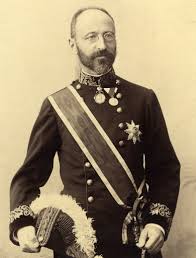
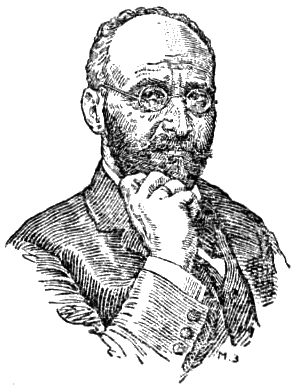
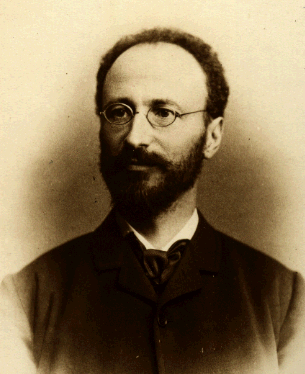
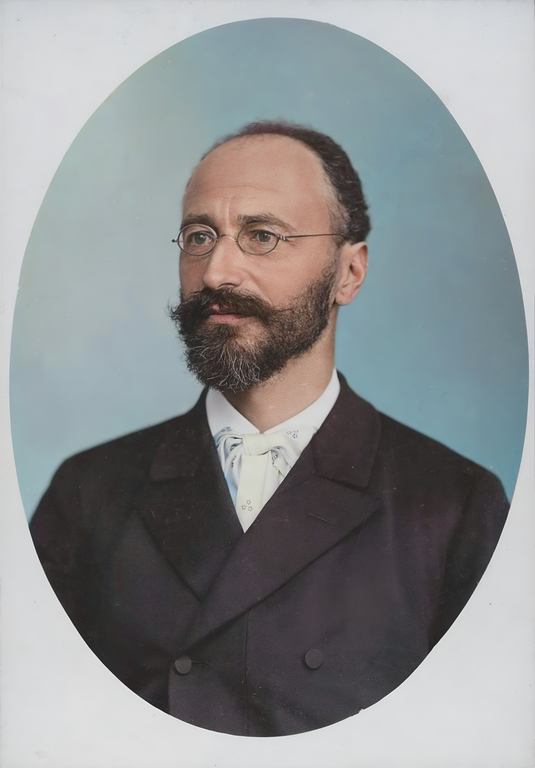
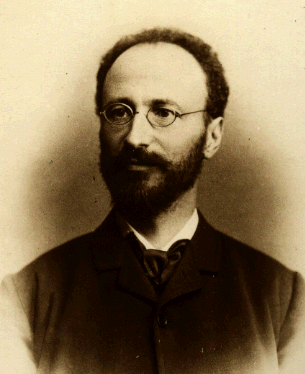
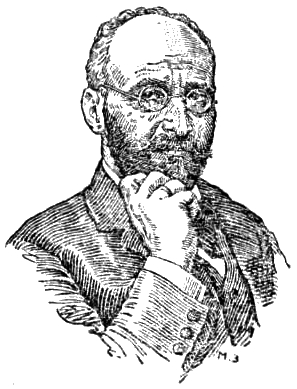
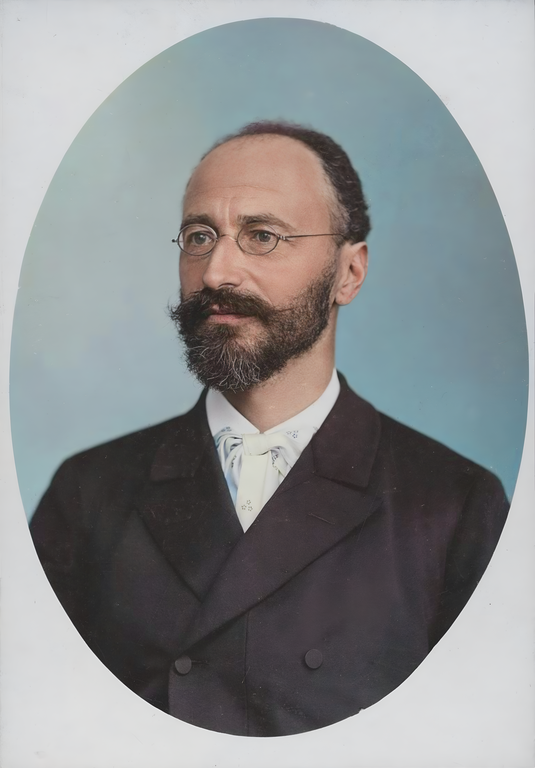
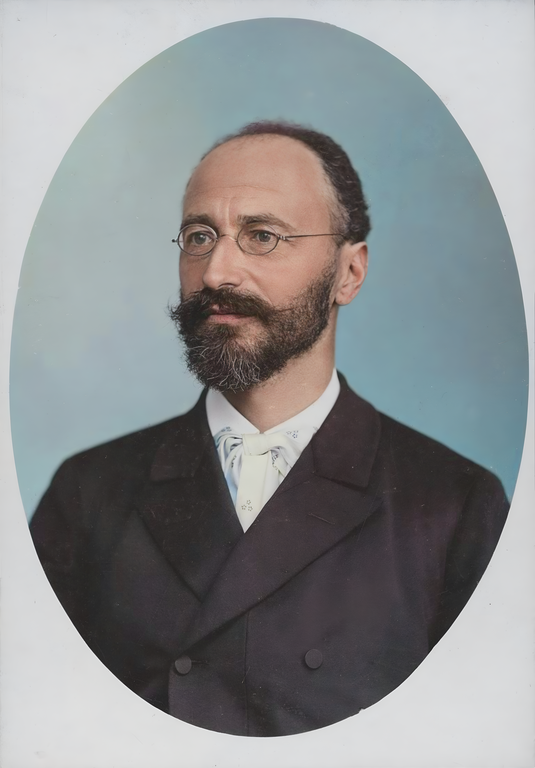
Böhm-Bawerk was of pleasing appearance, with gracious manners and an always uniformly friendly demeanor. His face reflected benevolence, intelligence and an extraordinary degree of vigor, properties which, combined with his great practical wisdom, soon acquired him the affection and confidence of all those with whom he came into contact.He was one of those people who always have a good deal of enthusiasm, energy, and goodwill to willingly provide support for all those in need of it in the service of the public interest. Although he was a controversial figure constantly involved in polemics, Böhm-Bawerk may possibly have had many opponents [of his economic theories], but certainly not a single enemy.[5]
Eugen von Böhm-Bawerk will remain unforgettable to all who have known him. The students who were fortunate enough to be members of his seminar [at the University of Vienna] will never lose what they have gained from the contact with this great mind. To the politicians who have come into contact with the statesman, his extreme honesty, selflessness and dedication to duty will forever remain a shining example.And no citizen of this country [Austria] should ever forget the last Austrian minister of finance who, in spite of all obstacles, was seriously trying to maintain order of the public finances and to prevent the approaching financial catastrophe. Even when all those who have been personally close to Böhm-Bawerk will have left this life, his scientific work will continue to live and bear fruit.[6]
Joseph T. Salerno
Response · Apr 03, 2015 · Own page
In his contribution, Richard Ebeling briefly notes that Böhm-Bawerk developed a theory of price formation that was based exclusively on the subjective valuations of buyers and sellers. In Böhm-Bawerk’s theory, prices are determined within the limits set by the “the marginal pairs” of buyers and sellers. Unfortunately Böhm-Bawerk’s pioneering work in price theory has been overshadowed by his brilliant contributions to capital and interest theory. I shall therefore focus my comment on delineating the key features of Böhm-Bawerk’s price theory.[24]
. . . is worked out within the broad framework of the market, then it is no longer a matter of direct relation to individual subjective wants, but of relation through them, by indirection, to money. Money furnishes, as it were, the neutral common denominator for the otherwise noncomparable needs and emotions of different individuals.[42] (250)
Roger W. Garrison
Response · Apr 06, 2015 · Own page
Despite the fact that many Austrian-oriented economists have an aversion to the term “macroeconomics,” I begin this essay with the claim that Eugen von Böhm‑Bawerk was a macroeconomist ‒ and a self‑reflective one at that. Richard Ebeling’s short sections on Böhm‑Bawerk’s theorizing about capital and interest give me a hook for making and justifying this claim. The classical economists, especially David Ricardo, could in retrospect be considered macroeconomists in an era that predates any specific attention to the micro/macro distinction. The word “macroeconomics,” of course, is a relatively modern one. It was Paul Samuelson who almost singlehandedly reorganized the subject matter of economics on the basis of a first‑order distinction between micro and macro, perversely putting macro ahead of micro in the pedagogical sequence. Samuelson traced the distinction itself to Ragnar Frisch and Jan Tinbergen and attributed the word’s debut in print to Erik Lindahl in 1939.[45]
Böhm‑Bawerk’s scientific work forms a uniform whole. As in a good play each line furthers the plot, so with Böhm‑Bawerk every sentence is a cell in a living organism, written with a clearly outlined goal in mind…. And this integrated plan was carried out in full. Complete and perfect his lifework lies before us. There cannot be any doubt about the nature of his message.
Böhm‑Bawerk’s work [was not] permitted to mature: it is essentially (not formally) a first draft whose growth into something much more perfect was arrested and never resumed. Moreover, it is doubtful whether Böhm‑Bawerk’s primitive technique and particularly his lack of mathematical training could have ever allowed him to attain perfection. Thus, the work, besides being very difficult to understand, bristles with inadequacies that invite criticism ‒ for instance, as he puts it, the “production period” is next to being nonsense ‒ and impedes the reader's progress to the core of his thought.
Peter Lewin
Response · Apr 07, 2015 · Own page
True to form Richard Ebeling has provided us with an engaging and informative introduction to the life and work of Eugen von Böhm-Bawerk. Richard’s extensive knowledge of the period and the details of the lives of the prominent economists has equipped him well to tell the story of this remarkable economist, and remarkable man. Though well-known during his life and the half-century following, Böhm-Bawerk is not someone known to contemporary economists in general – which is a great pity because, as Richard as clearly shown, his pioneering contributions are as relevant today as they were in his own time – and in some cases their relevance and applicability has grown, as I argue below.
I want to thank the three discussants for their insightful remarks, all of which filled in many aspects of an appreciation of Böhm-Bawerk that I could not attempt in my brief overview of his life and contributions.I.Dr. Joseph Salerno, in his response, “Eugen von Böhm-Bawerk: Pioneer of Causal-Realist Theory,” highlights an essential element to Böhm-Bawerk’s exposition of the theory of value and price.In the standard, textbook explanations of the determination of market equilibrium price, it is assumed that individuals are offered a set of alternative prices, to which they respond by informing the “price-giver” how much they would be interested in either buying or selling at those alternative prices.Having derived each individual’s price schedule as buyer and seller, the price-giver adds up the respective supply and demand schedules for each good in each market, and then determines at what set of prices would each and every market be in market-clearing equilibrium.The “Austrians” followed a different route for explaining the emergence of market prices and their tendency toward a market-clearing balance. Theirs has been what one leading Austrian economist of the interwar period referred to as the “causal-genetic” approach to price theory.[57]That is, it is an attempt to explain the causal origin of price out of the individual subjective valuations of the market participants, and how out of these subjective valuations prices emerge and are formed on the market. [58]In Böhm-Bawerk’s world, individuals enter the market knowing the quantity of the goods they have for sale and what it is they may wish to buy. But each individual has only a clouded conception concerning the maximum price they might be willing to pay to buy or the minimum price they might accept in order to sell.All the resulting market actions are, now, grounded in people’s expectations – expectations about the degree to which the good they might purchase is important to their future well-being, and therefore the intensity of the marginal significance that the good has for them.There would begin to take form in the individual’s mind the maximum bid that he might be willing to make to acquire it; and as he starts to interact with others in the market, he will form an expectation of what minimum price he would have to bid to successfully beat out his closest rival in the contest of purchasing the good.Similar expectations would be at work in the minds of those on the supply-side about the minimum price they would accept to part with the good, if necessary, and what maximum price they could ask, without running the risk of losing the sale to a more eager competitor also anxious to make a sale.[59]It is only in the interactions of the market process that men discover actually how much they value what they could buy or how little they value what they could sell. In Böhm-Bawerk’s world, the traders initiate the bids and offers. They decide whether they value a good more than they originally thought, so as not to lose out to the next most interested buyer who also wants to purchase that desired commodity.Up goes the price, with each transactor deciding if the latest bid by one of his demand-side rivals has pushed the price up to the maximum threshold at which he chooses to bow out, due to the price now being greater than what he thinks that good to be worth at the margin.The same process plays itself out on the supply-side, with suppliers eager to not miss out on a profitable sale by allowing one of their rivals to underbid him. Each weighs whether or not the price has reached a minimum below which it is not worth selling and becomes better to hold on to the good for some other use or purpose.The two-sided competition continues until a price range has been reached within which all willing buyers on the demand-side are successfully matched with willing sellers on the supply-side.Böhm-Bawerk’s version of an auction was clearly only a first approximation of the actual complexity of price formation in the developed market process. But it is one in which the actors make the bids and offers; they initiate the actions that form the prices they finally bring markets into balance. They do not passively rely upon a “price-giver.”Böhm-Bawerk’s actors have reflective minds, they evaluate what things might be worth to them, what they might have to bid or offer to get it, and how far it is worth going in the actual interchange and process of market competition before deciding to fall by the wayside under the pressure of some rival with a demand to buy or a willingness to sell more intense than their own.Through this “causal-genetic” market process approach, Böhm-Bawerk attempted to demonstrate that “price is, from beginning to end the product of subjective valuation.”[60] The evaluating logic of active individual human minds is the foundational starting-point from which insights into the workings of the complex market order arise.Or as Carl Menger expressed it – and which Böhm-Bawerk adopted as his own method of analysis – the task is to “reduce the complex phenomena of human economic activity to the simplest elements that can still be subjected to accurate observation [individual acting man], apply to these elements the measure corresponding to their nature, and constantly adhering to this measure, to investigate the manner in which the most complex economic phenomena evolve from their elements according to definite principles”[61]Through this method the Austrians combined methodological individualism with a methodological subjectivism that analyzes social and market processes from the respective actors’ points-of-view with all of their intended and unintended consequences.[62](It is in Philip Wicksteed’s, The Common Sense of Political Economy (1910) that one finds the logical next step of the “Austrian” analysis of price formation, in which he explains how in the division of labor it is the retail entrepreneurs who set prices for the trading day based on their appraisement of consumers’ demands when potential buyers only appear in the market in sequence over the trading period. And how discovery of errors in anticipating that consumers’ demand at the end of the trading period brings about changes in prices in the next trading period, and influences the demand for goods at the wholesale level and then for the factors of production up through the stages of production.)[63]II.Roger Garrison’s commentary focuses on “Böhm-Bawerk as Macroeconomist.” As Dr. Garrison says, Austrian economists have tended to eschew the term “macroeconomics” due to its identification with Keynesian Economics. Yet, the link between the “micro” and the “macro” has been a central part of much of modern Austrian Economics.This is most clearly seen in the writings of the Austrians on money and the business cycle over the last one hundred years. Their approach has been to ask what is the institutional connecting link between the interactions and outcomes in individual markets and the systemic periodic fluctuations in production, output and employment over the economy as a whole?They have seen that linchpin in the monetary system, since money is the one commodity that is on one side of every exchange. Changes in the supply of and the demand for money, therefore, can send out disturbing repercussions throughout the entire market system.The Austrian theory of monetary dynamics focuses on the fact that such changes, especially in the supply of money, do not simply work their effect on the economy through changes in the general purchasing power of the monetary unit (the “price level”). Their emphasis has been on the sequential-temporal process through which the structure of relative prices and wages are modified, starting from the specific “microeconomic” point in the market where the change in the quantity of money is injected (or withdrawn) from the economic system.As Dr. Garrison points out, Böhm-Bawerk never extended his analysis to the area of money and the business cycle. But Böhm-Bawerk did see the relevance of such investigations. As he once said:A theory of crisis can never be an inquiry into just one single phase of economic phenomena. If it is to be more than an amateurish absurdity, such an inquiry must be the last, or the next to last, chapter of a written or unwritten economic system. In other words, it is the final fruit of knowledge of all economic events and their interconnected relationships.[64]
Perhaps it was his untimely death at the relatively young age of 63 that prevented Böhm-Bawerk adding such a final chapter to his own body of published works. As it was, this was a task taken up by later Austrians, especially first Ludwig von Mises and then Friedrich A. Hayek.[65]Nonetheless, there was one aspect of the modern macroeconomic arena of theoretical controversy that Böhm-Bawerk did take up at the start of the 20th century: the role of savings in influencing economic activity and the relevancy of Say’s Law of Markets.In the 1920s and 1930s, there arose the notion of the ”paradox of savings.”[66] While it is rational and reasonable for any one individual to set aside apart of his income for future uses and planned expenditures, if a wide segment of the income-earning community were to do so, this very act of increased economy-wide savings would “paradoxically” diminish the demand for investment.An economy-wide increase in savings by necessity implies an economy-wide decrease in consumption. But if the consumer demand for final output decreases, what then happens to the profit motive for undertaking greater investment projects that would lead to even greater over-capacity of production facilities?An economist named L. G. Bostedo leveled this charge against Böhm-Bawerk in 1900. Bostedo argued that since market demand stimulates manufacturers to produce goods for the market, a decision by income-earners to save more and consume less destroys the very incentive for undertaking the new capital projects that greater savings are supposed to facilitate. He concluded that greater savings, rather than an engine for increased investment, served to retard investment and capital formation.[67]The following year, 1901, in “The Function of Savings,” Böhm-Bawerk replied to this criticism.[68] “There is lacking from one of his premises a single but very important word, “ Böhm-Bawerk pointed out. “Mr. Bostedo assumes . . . that savings signifies necessarily a curtailment in the demand for consumption goods.” But, Böhm-Bawerk continued:Here he has omitted the little word "present." The man who saves curtails his demand for present goods but by no means his desire for pleasure-affording goods generally . . .The person who saves is not willing to hand over his savings without return, but requires that they be given back at some future time, usually indeed with interest, either to himself or his heirs.Through savings not a single particle of the demand for goods is extinguished outright, but, as J. B. Say showed in a masterly way more than one hundred years ago in his famous theory of the ‘vent or demand for products,’ the demand for goods, the wish for means of enjoyment is, under whatever circumstances men are found, insatiable. A person may have enough or even too much of a particular kind of goods at a particular time, but not of goods in general nor for all time. The doctrine applies particularly to savings.For the principle motive of those who save is precisely to provide for their own futures or for the futures of their heirs. This means nothing else than that they wish to secure and make certain their command over the means to the satisfaction of their future needs, that is, over consumption goods in a future time. In other words, those who save curtail their demand for consumption goods in the present merely to increase proportionally their demand for consumption goods in the future.[69]But even if there is a potential future demand for consumer goods, how shall entrepreneurs know what type of capital investments to undertake and what types of greater quantities of goods to offer in preparation for that higher future demand?
Böhm-Bawerk 's reply was to point out that production is always forward-looking, a process of applying productive means today with a plan to have finished consumer goods for sale tomorrow. The very purpose of entrepreneurial competitiveness is to constantly test the market, so as to better anticipate and correct for existing and changing patterns of consumer demand. Competition is the market method through which supplies are brought into balance with consumer demands. And if errors are made, the resulting losses or less than the anticipated profits act as the stimuli for appropriate adjustments in production and reallocations of labor and resources among alternative lines of production.When left to itself, Böhm-Bawerk argued, the market successfully assures that demands are tending to equal supply, and that the time horizons of investments match the available savings needed to maintain the society's existing and expanding structure of capital in the long run.[70]III.Dr. Peter Lewin brings out that Eugen von Böhm-Bawerk was “A Man for His Time, and Ours.”The significance of time and its meaning in the market process is emphasized by Dr. Lewin in his comments. And as he rightly points out, the “time element” was crucial to Böhm-Bawerk’s theory of capital and interest.The meaning of capital and its relationship to the passing of time was central, for example, to Böhm-Bawerk’s debates with the American economist, John Bates Clark. In a nutshell, Clark suggested conceiving of capital as a perpetual “fund” that reproduces itself as concrete elements of this “fund” – specific capital goods – are used up.In this conceptual setting, time and the notion of a period of production is irrelevant and meaningless, in Clark’s view. There is no “waiting” for production to generate output because both are happening simultaneously. He visualized a forest in which there are rows of trees of varying maturity. As one row of trees are cut down and harvested another row of saplings are being planted. And as long as this “synchronization” of simultaneous investment and consumption continues the fund of trees remains constant and having trees to harvest next year requires no waiting today or tomorrow.Böhm-Bawerk responded that there is no “fund” of capital independent of the individual capital goods organized in complementary relationships of productive use through a sequence of interconnected stages of production leading to a final finished consumption good.The “synchronization” that creates the conceptual illusion of no waiting because consumption and production are occurring at the same time, is due to time-laden decisions to choose to replant a row of sapling trees as a mature row of trees is harvested, period after period of time.The trees harvested and used “today” are not the ones planted simultaneously in the present. The trees cut down now are the trees planted ten or twenty or more years earlier. A time decision had to be made in the past that it would be worth foregoing the resources and actions that might have been used for other things at that earlier time, and planting those trees instead and “waiting” for the “reward” of what those trees would enable to be done in the future when they had reached a certain stage of maturity.Any break or disruption in the repeated decision-making and actions that have been made in the past and that hid from clearer view the conscious time-related choices of resource use and intertemporal trade-offs would soon show the reality of stages and time-structures of production activity precisely because the presumed “equilibrium” relationships taken for granted by Clark would no longer hold.[71]The meaning of time and its “periods” has required a particular conceptual turn when looked at through the Austrian subjectivist perspective. Dr. Lewin suggests some of the implications of this in his remarks.Ludwig von Mises attempted to highlight the meaning and relevance of time periods within a methodological subjectivist approach. All action occurs in and is inseparable from time. All action implies a before and an after, a sooner and a later, a becoming and a became.This means that it is impossible for man to be indifferent to the passing of time, Mises said. Indeed, it is in the contemplation of action that man becomes most conscious of time. And in Mises’ view, it is the “potential for action” that delineates the past from the present and the present from the future. Mises argued:That which can no longer be done or consumed because the opportunity for it has passed away, contrasts the past with the present. That which cannot yet be done or consumed, because the conditions for undertaking it or the time for its ripening have not yet come, contrasts the future with the past.The present offers to acting opportunities and tasks for which it was hitherto too early and for which it will be hereafter too late. The present qua duration is the continuation of the conditions and opportunities given for acting. Every kind of action requires special conditions to which it must be adjusted with regard to the aims sought. The concept of the present is therefore different for various fields of action. It has no reference whatever to the various methods of measuring the passing of time by spatial movements. The present contrasts itself, according to the various actions one has in view, with the Middle Ages, with the nineteenth century, with the past year, month, or day, but no less with the hour, minute, or second just passed away.If a man says: Nowadays Zeus is no longer worshipped, he has a present in mind other than that of the motorcar driver who thinks: Now it is still too early to turn. And as the future is uncertain it is always undecided and vague how much of it we can consider as now and present. If a man had said in 1913: At present – now – in Europe freedom of thought is undisputed, he would have not foreseen that this present would very soon be a past. [72]
In this conception of time, individuals pursuing various goals invariably operate simultaneously in terms of "periods" of varying length. Each action has its own time horizon. For some plans, the actor is in the middle of the "present" period; for other plans, the "present" period is coming to a close; for yet other plans the "future" period is just becoming the "present." For still other plans, the potentials for action are still in a "future" period.Nor are these periods of equal length. For some actions, the "present" period is an instant as measured by the movement of the clock, and then is gone; for other actions, the "present" extends far into the future as measured by the clock. Each planning period would have its sub-periods divided into "past," "present" and "future" (for instance, "Right now I'm working on my undergraduate degree" would have the sub-period, "Right now I'm in my first year," which would have the sub-period "Right now I'm having lunch in between my morning and afternoon classes").In the market changes usually do not impact simultaneously on all transactors. Instead, a change in market conditions originates at some point in the economic system. From this "epicenter" the consequences of the change, in terms of changes in the actions and plans of those initially impacted, emanates out in a particular path-dependent sequential and temporal order. Some individuals in the social system of division of labor will be affected by this – to a greater or lesser extent – at a different time than others; some individuals may be impacted at the same time; some will be impacted sooner, others later. At each of those moments at which the change reaches each individual, each of them will have to weigh the meaning and significance of the change in terms of requiring a "change in plans," that is in terms of when, how and how much.How one fully integrates such a subjectivist orientation and framework into the problems and analysis of the market process, into the capital structure and investment, and the dynamics of the business cycle and general economic development and change is the challenging legacy left to us by Böhm-Bawerk and those others who followed him in extending and refining the Austrian Economics tradition.Endnotes[57.] Hans Mayer, “The Cognitive Value of Functional Theories of Price: Critical and Positive Investigations Concerning the Price Problem” [1932], translated in, Israel M. Kirzner, ed., Classics in Austrian Economics: A Sampling in the History of a Tradition, Vol. II: “The Interwar Period” (London: William Pickering, 1994) pp. 55-168, especially p. 57.[58.] Eugen von Böhm-Bawerk, Capital and Interest, Vol. II: The Positive Theory of Capital (South Holland, Ill: Libertarian Press, 1959) pp. 203-222.[59.] Ibid., pp. 240-243.[60.] Ibid., p. 225.[61.] Carl Menger, Principles of Economics (New York: New York University Press, [1871] 1981), p. 46.[62.] On the development and ideas of the Austrian School from the 1870s to the First World War, and in comparison to the “Neoclassical” economics tradition of that time, see, Richard M. Ebeling, “An ‘Austrian’ Interpretation of the Meaning of Austrian Economics: History, Methodology, and Theory,” Advances in Austrian Economics, Vol. 14 (2010) pp. 43-68.[63.] Philip Wicksteed, The Common Sense of Political Economy (New York: Augustus M. Kelley, [1910] 1969), pp. 218-236.[64.] Quoted in Ludwig von Mises, “Monetary Stabilization and Cyclical Policy” [1928] in On the Manipulation of Money and Credit (Dobbs Ferry, NY: Free Market Books, 1978) pp. 61-62.[65.] For an exposition of the Austrian theory of money, credit and the business cycle, with a comparison to the Keynesian approach in the context of explaining the causes and “cures” for the Great Depression, see, Richard M. Ebeling, Political Economy, Public Policy, and Monetary Economics: Ludwig von Mises and the Austrian Tradition (New York: Routledge, 2010), Chapter 7: “The Austrian Economists and the Keynesian Revolution: The Great Depression and the Economics of the Short-Run,” pp. 203-272.[66.] For an “Austrian” explanation and critique of the idea of the “paradox of thrift,” see, F. A. Hayek, “The Paradox of Savings,” in Profits, Interest and Investment, and Other Essays on the Theory of Industrial Fluctuations (New York: Augustus M. Kelley, [1939] 1969). Pp. 199-263.[67.] L. G. Bostedo, “The Function of Savings,” Annals of the American Academy of Political and Social Sciences (January, 1900), reprinted in Richard M. Ebeling, ed., Austrian Economics: A Reader (Hillsdale, MI: Hillsdale College Press, 1991) pp. 393-400.[68.] Eugen von Böhm-Bawerk, “The Function of Savings” Annals of the American Academy of Political and Social Sciences (May, 1901), reprinted in Richard M. Ebeling, ed., Austrian Economics: A Reader (Hillsdale, MI: Hillsdale College Press, 1991), pp. 401-413.[69.] Ibid., p. 407.[70.] Ibid., pp. 408-412.[71.] Eugen von Böhm-Bawerk, “The Positive Theory of Capital and Its Critics, I: Professor Clark’s Views on the Genesis of Capital,” Quarterly Journal of Economics, January 1895, pp. 113-31; “The Origin of Interest,” Quarterly Journal of Economics, July 1895, pp. 380-87; “Capital and Interest Once More: I. Capital vs. Capital Goods,” Quarterly Journal of Economics, November 1906, pp. 1-21; “Capital and Interest Once More: II. A Relapse to the Productivity Theory,” Quarterly Journal of Economics, February 1907, pp. 247-82; and, “The Nature of Capital: A Rejoinder,” Quarterly Journal of Economics, Nov. 1907, pp. 28-47; and by John Bates Clark, “The Genesis of Capital,” Yale Review, November 1893, pp. 302-315; “The Origin of Interest,” Quarterly Journal of Economics, April 1895, pp. 257-78; “Real Issues Concerning Interest,” Quarterly Journal of Economics, October 1895, pp. 98-102; and “Concerning the Nature of Capital: A Reply,” Quarterly Journal of Economics, May 1907, pp. 351-70.[72.] Ludwig von Mises, Human Action: A Treatise on Economics (Chicago, Ill: Henry Regnary, 3rd revised ed., 1966) pp. 100-101.Peter Lewin
Böhm-Bawerk on Price Formation and Action in Disequilibrium · Apr 17, 2015
Richard Ebeling’s further elaborations in response to our initial comments, enrich the picture of Böhm-Bawerk as an economist with a wide range of interests and abilities. He made important contributions in the areas of, what we would call today, microeconomics, macroeconomics as well as capital theory. This discussion should serve to establish that his expertise went far beyond the last mentioned for which he is justly famous.In the area of microeconomics, or more accurately, price theory, and more specifically, the question of price formation, he offers a unique picture in which we see action in disequilibrium that plausibly leads to the formation of the price and the continuous clearing of the market. As Richard has pointed out, this account stays within the methodological agenda outlined by Menger, of providing an account of economic action that derives faithfully from the subjective valuations of economic actors. The subjective valuations are the cause of everything that follows from them – and it is a process in time not reducible to a set of simultaneous relations at a single point in time, as suggested by the Walrasian approach. This causal-genetic approach is a unifying fundamental in all of Böhm-Bawerk’s contributions. (It seems to me the technicalities of the APP in which he became involved was something of an aberration.)Action in disequilibrium is something that is mostly assiduously ignored in the corpus of economic analysis. There are very few attempts to treat it as all, and even fewer to provide a systematic account. There is no standard theory of how people act in disequilibrium, beyond the notion of purposeful action on the basis of perceived alternatives and subjective valuations. In this regard then, Böhm-Bawerk’s contribution is notable. To be sure it is not meant to be an account of how price setters generally proceed in every situation. Rather it is a window into the type of process we might expect as people grapple with the unfolding, formative economic process in real time.In the field of macroeconomics, Böhm-Bawerk effectively answers Keynes’s paradox of thrift in his discussion of Savings – which contains a more accurate portrayal of the position of J. B. Say than the straw man attacked by Keynes. By the time Keynes wrote the General Theory, however, this contribution had been mostly forgotten and clearly was never read by Keynes, who proclaimed his ignorance of capital theory and the Austrians as a sort of badge of honor.In his discussion of the role of time in production, Böhm-Bawerk implicitly points to the notion of individual planning. Subsequent scholars in the Austrian tradition have elaborated on this, most notably Friedrich Hayek. The notion of the “the plan” has turned out to be a pivotal one raising important issues about time-intervals, uncertainty and coordination, as indicated by Richard in his final paragraphs.Roger W. Garrison
On Böhm-Bawerk’s ‘Unforced Error’ in Defending his APP · Apr 20, 2015
In his comment of April 19, Peter Lewin claims ‒ correctly, in my view ‒ that the “causal-genetic approach is a unifying fundamental in all of Böhm-Bawerk’s contributions.” And he added parenthetically that “[i]t seems to me the technicalities of the APP [Average Period of Production] in which he became involved was something of an aberration.”An aberration, yes ‒ and worse, the APP, along with the associated “roundaboutness,” became the target of many of Böhm-Bawerk’s detractors. Putting the emphasis on physically defined inputs, Schumpeter reminded us[73] that iron mined in Roman times may be present in a modern-day pocket knife. True enough, but unless there is a causal link between the perceived demand for mid-twentieth-century pocket knives and the Roman mining operations, the intervening time span does not qualify as “production time” in any economically relevant sense. The physical continuum is a strict irrelevancy.Earl Rolph, a longtime critic of Austrian capital theory, focused on redwood fences rather than pocket knives. He called the concept of roundaboutness into question on the grounds that “not infrequently, a squirrel must be given credit for planting the proverbial [redwood] acorn.[74] Well, the squirrel gives the argument a whole new dimension, but even if the acorn was planted by an eighteenth-century conservation agent, the agent’s input would not be the starting point for measuring the Böhm-Bawarkian “roundaboutness” associated with the creation of today’s redwood fences.When Bohm-Bawerk responded[75] to contemporaneous critics of the APP, he committed what in baseball is called an “unforced error.” He could’ve ‒ should’ve ‒ responded on the basis of the distinction between physical continua and causal links. But, instead, he argued that production activities of the remote past are so heavily discounted that they can be safely neglected. Higher powers of the discount rate are sufficiently close to zero that for practical purposes they are equal to zero. Böhm-Bawerk’s lapsing from the causal-genetic approach here is likely what caused Menger to charge him with “one of the greatest errors ever committed.” (For a fuller discussion of what I am now calling an unforced error.[76]Still, Böhm-Bawerk’s rough-and-ready treatment of production time reminded his readers of the facts that (1) production takes time and (2) some production processes take more time than others. Further, time preferences as reflected in interest rates help entrepreneurs to choose between (a) relatively short production processes that have only modest yields and (b) relatively long production processes that have substantially higher yields. These are the critical aspects of capital that were wholly eclipsed by Clark’s and Knight’s sterile stock-flow conception that simply neglects production time ‒ a conception adopted wholesale by many modern macroeconomists.Endnotes[73.] Schumpeter, Joseph A. History of Economic Analysis. New York: Oxford University Press, 1954, p. 108).[74.]Rolph, Earl R. “On Austrian Capital Theory,” Economic Inquiry, vol. 18, no. 3 (July, 1980), pp. 501-3. Quote, p. 102.[75.]Böhm-Bawerk, Eugen von. Capital and Interest, 3 vols. in one (1997). South Holland, IL: Libertarian Press. Trans. by George D. Huncke and Hans F. Sennholz, 1959. Quote, vol. 2, p. 86.[76.]Garrison, Roger W. “Austrian Capital Theory: the Early Controversies,” History of Political Economy, supplement to vol. 22, 1990, pp. 133‑54. Published as Bruce J. Caldwell, ed., Carl Menger and his Legacy in Economics, Durham, NC: Duke University Press, 1990. Quote, pp. 135-39.Richard Ebeling
Böhm-Bawerk and J. S. Mill’s “Fourth Fundamental Proposition” on Capital · Apr 27, 2015
In The Pure Theory of Capital, F. A. Hayek quoted from Leslie Stephen’s 1876 book, History of English Thought in the Eighteenth Century, that John Stuart Mill’s fourth fundamental proposition on capital is a “doctrine so rarely understood, that its complete apprehension is, perhaps, the best test of an economist.”[77]In his Principles of Political Economy, J. S. Mill presented four propositions concerning the nature and use of capital:- “While, on the one hand, industry is limited by capital, so on the other, every increase of capital gives, or is capable of giving, additional employment to industry; and this without assignable limit.”[78]
- “To consume less than is produced, is saving; and that is the process by which capital is increased.”[79]
- “Everything which is produced is consumed, both what is saved and what is said to be spent; and the former quite as rapidly as the latter . . . To the vulgar, it is not at all apparent that what is saved is consumed . . . If they [individuals] save any part [of their income], this also is not generally speaking, hoarding, but (through savings banks, benefit clubs, or some other channel) re-employed as capital and consumed “ [Mill adds the caveat]: “If merely laid by for future use, this is said to be hoarded, and while hoarded, is not consumed at all. But if employed as capital, it is all consumed, though not by the capitalist.”[80]
- “What supports and employs productive labor, is the capital expended in setting it to work, and not the demand of purchasers for the produce of the labor when completed. Demand for commodities is not demand for labor . . . The employment afforded to labor does not depend on the purchasers, but on the capital . . . This theorem [states] that to purchase produce is not to employ labor; that the demand for labor is constituted by the wages which precede the production, and not by the demand which may exist for the commodities resulting from the production.”[81]
The first two propositions need not be presumed to be excessively controversial. As long as there are unsatisfied wants, there are always potential employments if additional means to satisfy them, “capital,” become available. And if there are to be additions to capital to facilitate the ability to expand future productive capabilities, the requisite resources must be “freed” (saved) from possible more immediate uses so they may be employed in time-consuming production processes.But the third and fourth run counter to the entire direction of modern macroeconomics since the appearance of John Maynard Keynes’ The General Theory of Employment, Interest, and Money in 1936. And there have been few thorough going defenders of Mill’s four propositions in recent decades.[82]As I attempted to explain in my earlier “response” to commentators’ remarks, Böhm-Bawerk presented his own formulation of proposition 3 (Say’s Law of Markets) in his article on “The Function of Savings.”[83] An act of savings, Böhm-Bawerk argued, was not a decision to permanently forgo a portion of an individual’s potential consumption, but rather to defer it to a future point in time. A willingness and decision to increase one’s supply of savings “today” is a means through which one manifests an increased demand for consumer goods “tomorrow.” And, thus, a decision to save opens up a profitable opportunity for entrepreneurial investment in an anticipated direction to fulfill that future greater demand.Böhm-Bawerk’s own formulation of a version of Mill’s fourth proposition can be found in Chapter V of his Positive Theory of Capital devoted to “The Theory of the Formation of Capital.”[84] [85]If under primitive conditions of existence an individual is to do more than merely “survive” through the sheer use of his bare hands to pick berries and attempt to catch fish in a stream, he must invest in the manufacture of “capital,” – tools – to assist in improving and increasing the productivity derivable from his human labor.But to do so he must “save,” that is, he must out of his daily efforts to have enough for survival set aside a sufficient amount as a “store” of goods to live off to free up his time and resources that would otherwise go into immediate production for present consumption.He uses that freed up time and resources, as Böhm-Bawerk says, to make a bow and arrows, or a canoe and fishing net, so that after the requisite “period of production” during which he has lived off his “savings,” he will have the capital goods – the intermediate tools of production – that will then assist him to increase the quantities, varieties, and qualities of the consumption goods that previously were beyond his bare labor’s potential to obtain.In this way, he “employs himself” in making capital goods with his store of saved consumption goods to live off and his own labor diverted from more immediate berry picking and fishing with his bare hands.The manufacture of those capital goods and their use over a period of time once in existence must logically and temporally precede the greater availability of consumer goods that that capital’s existence now makes possible.Once produced, those consumer goods may provide previously unavailable satisfactions, but in their very consumption they are used up. And if the same consumer goods are to be available at the end of the next period, during that next period the individual must again employ himself in using the requisite resources, produced intermediate capital goods, and his own labor if the same consumer goods are to emerge at the next period’s end.At the same time, during the production processes the capital goods produced will themselves be used up to one degree or another, so he must divert a portion of labor, time, and resource use to the maintenance of his capital goods through repair and replacement.If he is to increase his supply of consumer goods even further from their existing amounts he must again divert an increased amount of his labor time and resource use to “investing” in more and/or better capital goods above that required to maintain his existing capital.In Böhm-Bawerk’s framework this entails the undertaking of more time-consuming, ‘roundabout methods of production. He portrayed this in the form of a series of concentric rings, conveniently reproduced by Dr. Garrison in his earlier “response,” above, on “Böhm-Bawerk as Macroeconomist.”Each of the rings, from the inner most ring to the outer most ring, represents a “stage of production” through which the production process passes, starting from extraction of raw materials to their transformation into a final, finished consumer good, with value added at each stage as labor and resources are combined with the as yet incomplete consumer good as it is passed on from the preceding stages leading to its final form as a useable consumption good.[86]Of course, in “modern society” the process is more complex than presented when using Robinson Crusoe as a starting first approximation of the logic of the theory. Böhm-Bawerk briefly suggests how such a multi-period production process would be undertaken by an socialist dictator on the assumption that he possessed all the needed knowledge and the unlimited power to direct by command both men and material.He, then, turns to how the process more like reality works in a competitive market system of independent private entrepreneurs guiding and directing the men and material they have hired, rented, or bought in the nexus of exchange.In this market setting, Böhm-Bawerk explains, entrepreneurial decision-makers are, themselves, guided by the system of market prices that reflect the types and amounts of goods that consumers desire, and on the basis of which entrepreneurs hope to make their profits. Changes in consumer demand patterns are expressed in changes in relative prices, which then direct entrepreneurs to shift the types and amounts of goods they decide to produce.This also applies to changes in intertemporal choices by consumers concerning their demand for consumer goods in the present versus consumer goods in the future. A decision to consume less and save more decreases current demand for goods, bringing about declines in their prices. The greater savings shows itself in the financial markets through a fall in the rate of interest, which lowers the costs of borrowing and brings about a shift to longer-term, more ‘roundabout investments that extend the time structure of production (adds to and extends the concentric rings of the stages of production).In what way might we say that Böhm-Bawerk’s analysis is consistent with or parallel to the reasoning in Mill’s fourth fundamental proposition on capital that the, “Demand for commodities is not demand for labor”?In my earlier response to the discussants, I highlighted Böhm-Bawerk’s debate with John Bates Clark over the nature of the capital-using process. Böhm-Bawerk had insisted that the very nature of the time structure of production means that the goods available for consumption today are goods the production of which extends backwards in time over many production periods of the past, over months or years of many “yesterdays.”And the production processes being begun “today” and which will continue over the time periods of many “tomorrows” will only be completed and ready in the form of finished consumer goods at some point in the future.The finished consumer goods – the “commodities” – bought today do not represent a “demand for labor” today. The entrepreneurs demanded that labor in the various stages of production at different times in the past while the consumer goods being purchased today were in the process of being produced.And the labor being demanded “today” in the various stages of production, each stage of which represents a product at a different degree of completion and that will be, respectively, ready for sale as a consumer good at different time periods of the future, is a demand by entrepreneurs looking to future sales, not current period consumer demand for “commodities.”But this “demand for labor” by entrepreneurs through these future-oriented stages of production is entirely dependent upon the extent to which incomes and revenues earned in the present and future periods (and the resources they represent) are partly saved and not consumed.It is this savings of resources not being utilized for more immediate consumption purposes, that “frees” part of the productive capacity of the society to be diverted to the making and maintaining of capital, and providing the means to “advance” wages to workers who will be hired and employed in the respective processes of production for long periods of time before those specific goods in the manufacture of which they are participating will be offered for sale, and generating a revenue in the future.Thus, it is savings that represents the greater part of the “demand for labor” in the production processes of the market and not the current period’s “demand for commodities.”Keynes, of course, missed all this in The General Theory, because all “capital” is reduced to a homogeneous aggregate subsumed under the “marginal efficiency of capital,” and possessing no time dimension analogous to that in the “Austrian” analysis.[87]In Keynes’ not only simplified but simplistic “macro” world, various amounts of labor and capital are waiting around “idle,” needing nothing more than “aggregate demand” spending to be increased to generate the profitability of employing more workers at institutionally “given” money wage rates, with greater aggregate output seemingly instantaneously forthcoming in the job creation’s wake. The only “time element” in the world of The General Theory is the speed with which the income multiplier operates to bring more of the unemployed into the active workplace.[88]We, therefore, see, that Böhm-Bawerk’s conception of capital and capital using processes reinforces one of the important contributions of the “classical” economists: that it is savings that is the linchpin of production and employment, and the basis therefore of an ability to demand as a reflection of a capacity to supply.Endnotes[77.] F. A. Hayek, The Pure Theory of Capital reprinted in Lawrence H. White, ed., The Collected Works of F. A. Hayek, vol. 12 (Chicago: University of Chicago Press [1941] 2007), p. 388-394, especially, p. 389.[78.] John Stuart Mill, Principles of Political Economy, with Some of Their Applications to Social Philosophy (Fairfield, NJ: Augustus M. Kelley, [1909] 1976), Book I, Chapter 5, Section 3, p. 66. Online version: The Collected Works of John Stuart Mill, Volume II - The Principles of Political Economy with Some of Their Applications to Social Philosophy (Books I-II), ed. John M. Robson, introduction by V.W. Bladen (Toronto: University of Toronto Press, London: Routledge and Kegan Paul, 1965). </titles/102>.[79.] Ibid., Book I, Chapter 5, Section 4, p. 70.[80.] Ibid., Book I, Chapter 5, Section 5, pp. 70-71.[81.] Ibid., Book I, Chapter 5 Section 9, pp. 79-80.[82.] The exception has been Steven Kates, Say’s Law and the Keynesian Revolution: How Macroeconomic Theory Lost Its Way (Northampton, MA: Edward Elgar, 1998), pp. 68-73; Kates, Free Market Economics: An Introduction for the General Reader (Northampton, MA: Edward Elgar, 2011), pp. 74-80; Kates, “Mill’s Fourth Fundamental Proposition on Capital: A Paradox Explained,” Selected Works of Steven Kates (January 2012), <http://works.bepress.com/stevenkates/2>.[83.] Eugen von Böhm-Bawerk, “The Function of Savings,” Annals of the American Academy of Political and Social Sciences (May 1901), reprinted in Richard M. Ebeling, ed., Austrian Economics: A Reader (Hillsdale, MI: Hillsdale College Press, 1991) pp. 401-413.[84.] Eugen von Böhm-Bawerk, Capital and Interest, Vol. 2: Positive Theory of Capital (South Holland, Ill: Libertarian Press, [1889] 1959), pp. 102-118; or the earlier William Smart translation, The Positive Theory of Capital (Freeport, NY: Books for Libraries Press, [1891] 1971), pp. 106-118. Smart translation is online: Eugen von Böhm-Bawerk, The Positive Theory of Capital, trans. William A. Smart (London: Macmillan and Co., 1891). Book II, Chapter V: Formation of Capital in a Community </titles/283#Boehm-Bawerk_0183_236>.[85.] This not to suggest that Böhm-Bawerk was consciously or intentionally attempting to formulate his own version of Mill’s argument. But, rather, the reasoning in Böhm-Bawerk’s own exposition is consistent with or parallel to the logic of Mill’s statement. There are, in fact, few references to Mill throughout The Positive Theory of Capital, and none directly related to Mill’s four fundamental propositions on capital.[86.] Later, Hayek conveyed the same logic of a time-structure of production in his famous “triangles” in chapter II of Prices and Production [1931] reprinted in Hansjoerg Klausinger, ed., The Collected Works of F. A. Hayek, Vol. 7: Business Cycles, Part I (Chicago: University of Chicago Press, 2012), pp. 227-241.[87.] John Maynard Keynes, The General Theory of Employment, Interest, and Money, reprinted in, The Collected Writings of John Maynard Keynes, Vol. VII (London: MacMillan [1936] 1973).[88.] Hayek had, already, in his detailed and lengthy critique of Keynes’ earlier, A Treatise on Money, 2 vols. (1930), pointed out the superficial and inadequate conceptions of capital that occupied Keynes’ mind. See, F. A. Hayek, “Reflections on the Pure Theory of Money of Mr. J. M. Keynes,” Pts. I and II, Economica (Nov. 1931 & February 1932), reprinted in, Bruce Caldwell, ed., The Collected Works of F. A. Hayek, Vol. IX: Contra Keynes and Cambridge: Essays and Correspondence (Chicago: University of Chicago Press, 1995) pp. 121-146 & 174-197.Peter Lewin
Beer Barrels, Blast Furnaces, and Hotel-room Furniture · Apr 27, 2015
Beer barrels, blast furnaces, hotel-room furniture and harbor installations; these things are capital by virtue of their functions, by virtue of what they do for us.[89] As Richard Ebeling explains in his last response, simple spending on “capital” does not, in itself, create jobs. The “capital” has to have the right form, the right structure to employ the workers to produce those goods and services that consumers will want.This is a complex problem, one that is beyond the capability of any human to solve. The incredibly huge number of specific types of capital goods that fit together in any production facility, within the network of many different types of production facilities, arrayed at different points of a supply-chain with multiple links branching out backwards and forwards, facilitating the flow of services from productive resources to produce consumer goods and services in bewildering variety; cannot be designed or sensibly manipulated by human minds, though it is the result of purposeful individual human action. To the extent that it works, and, most of the time, it works miraculously well, it works because of the functioning of capital-markets, markets for investible funds. These markets transfer funds (generalized purchasing power) from those who have them (because some people have saved them) to those who believe they can use them. The capital-market provides a giant experimental arena for prospective production projects, many of which fail, some of which succeed, some of which succeed spectacularly and provide amazing benefits to consumers, and fabulous wealth for their creators. Without the capital market this could not happen and there would be no real economic growth.We forget the lessons of Böhm-Bawerk at our peril. Saving is necessary for economic growth, but not sufficient. Capital markets to channel this saving to entrepreneurs who can function in open competition to try out their visions, are necessary as well. There is no simple link between the amount of capital spending and the level of employment. As the detailed structure of the productive resources forms and changes, the structure of employment will change as well. Capital accumulation changes the structure of production. And, as Böhm-Bawerk clearly understood, capital accumulation most often embodies technological change. The structure of employment will change. Some skills may be rendered obsolete, others will rise in value, and new opportunities will open up.To focus simply on the level of capital investment is to see only the forest and not the trees, and, this can be downright misleading. When China reports a 7% GDP growth, part of which is the level of capital spending (directed by the government) it obscures the impending disaster of investments in ghost-cities of thousands of offices and apartments that sit empty because there is no consumer or producer demand for them. Malinvested capital destroys jobs because it takes resources away from truly productive ventures. It subtracts from sustainable growth. Governments cannot be entrepreneurs. And when they try to be and plan on a grand scale like this, the inevitable result is disaster. The Great Recession is another example of central planning gone awry – via the residential housing market.We seem doomed to repeat the same mistakes over and over again because we cannot escape from the Keynesian blinders that obscure our vision. The role of those who appreciate the seminal work of Eugen von Böhm-Bawerk, and those who extended his work, is to persevere in battle for ideas. Austrian insights seem to be most relevant at times like this when the current wisdom has been shown to have failed.Endnotes[89.] Ludwig M. Lachmann, Capital and Its Structure (Kansas City: Sheed Andrews & McMeel [1956] 1978).Richard Ebeling
Böhm-Bawerk and Micro-Foundations to Capital and the Market Process · Apr 29, 2015
As Dr. Lewin points out in his remarks, above, on “Bear Barrels, Blast Furnaces, and Hotel-room Furniture,” the advantage of an approach such as that of the “Austrians” is precisely that it focuses on the microeconomic relative price and wage, and capital structure relationships that are at work beneath the macroeconomic surface of Keynesian-type aggregates and averages.Indeed, the Austrian economists, and most certainly including Eugen von Böhm-Bawerk, insisted from the beginning on what has become known as firm “micro-foundations” to macroeconomics. This is the basis of their long-standing insistence on methodological individualism and methodological subjectivism.Intentionality and the Planning and Maintaining of the Capital StructureIt is the leading reason for the Austrian rejection of an economic analysis that’s grounded on or operates primarily in terms of aggregates and averages. We saw it in Böhm-Bawerk’s criticisms of John Bates Clark’s notion of a perpetuated “fund” of capital. For Böhm-Bawerk, “capital” is comprised of specific intermediary products designed and invested in precisely to assist individual human actors for a more productive use of their own labor and complementary resources and raw materials in the manufacturing of desired consumer goods.Individuals must intentionally devote time and effort to produce those capital goods, utilize them in time-consuming structures of complementary and interdependent stages of production that lead to a final, finished products anticipated to serve the ends of specific individuals.The decision to produce such capital goods must be followed with plans and actions to maintain them, and to increase and improve them looking to the future. There is nothing “automatic” in this process that is independent of individual human choices concerning valuations involving alternative wants that can be satisfied closer to the present or further away in the future.The Austrian Critique of the Aggregate “Price Level”This same methodological view was behind Austrian criticisms of the theoretical and policy attention that was given to the notion of the general “price level” in the 1920s and 1930s. For instance, Ludwig von Mises had emphasized that all attempts to measure changes in the purchasing power of the monetary unit through construction of index numbers invariably hid from view the fact that all monetary changes (either an increase or a decrease in the quantity of money in circulation) only influence “prices in general” as the cumulative effect brought about through money’s impact on the structure of relative prices starting from the point from which the monetary change is introduced into the economic system.[90]In other words, monetary changes are inescapably “non-neutral” in their affect on the “real” economy. Monetary influences on the price structure modify relative profit margins as long as the monetary change is working its way through the market, and this influences the allocation of resources, labor and capital among their alternative uses.[91]“Injections” of money and credit into the banking system are one way that such monetary-induced changes being about a “misdirection” in relative prices and capital uses resulting in the phases of the business cycle.All this is hidden from sight and insight when the analytical focus is on changes in the general price level and output “as a whole.” As Gottfried Haberler emphasized almost 90 years ago, “The general price level is not a given, self-evident fact, but a theoretical abstraction . . . An economically relevant definition of the price level cannot be independent of the purpose in mind” for which it has been conceptually constructed. And when applied to explaining the sequences and phases of the business cycle, “Such a general [price] index rather cancels and submerges than reveals and explains those price movements which characterize and signify the movement of the cycle.”[92]Or as Friedrich A. Hayek generalized the argument in a famous passage in Prices and Production, in which he pointed out the futility of the attempt “to establish direct causal connection between the total quantity of money, the general level of all prices and, perhaps, also the total amount of production.”For none of these magnitudes as such ever exerts an influence on the decisions of individuals; yet it is on the assumption of a knowledge of the decisions of individuals that the main propositions of non-monetary economic theory are based. It is to this “individualistic” method that we owe whatever understanding of economic phenomena we possess; that the modern “subjective” theory has advanced beyond the classical school in its consistent use is probably its main advantage over their teaching.If, therefore, monetary theory still attempts to establish causal relations between aggregates and general averages, this means that monetary theory lags behind the development of economics in general. In fact, neither aggregates nor averages do act upon one another, and it will never be possible to establish necessary connections of cause and effect between them as we can between individual phenomena, individual prices, etc. I would even go so far as to assert that, from its very nature of economic theory, averages can never form a link in its reasoning . . .[93]
The Austrian insistence on the importance of analysis in terms of the relative price and production structural relationships was also strongly emphasized by Arthur W. Marget (surely the most widely read and knowledgeable monetary theorist of the interwar period) in his critique of Keynesian macroeconomics:It is a fundamental methodological proposition of "modern" versions of the "general" Theory of Value that all categories with respect to "supply" and "demand" must be unequivocally related to categories which present themselves to the minds of those "economizing" individuals (or individual business firms) whose calculations make the "supplies" and "demands" realized in the market what they are . . . [T]he type of problem raised by the necessity for establishing a relation between these "microeconomic" decisions and these "macroeconomic" processes is not solved by the arbitrary introduction of an "aggregate supply function" and an "aggregate demand function" for industry as a whole, in defiance of the fact that neither of these "functions" deals with elements which enter directly into the calculations of the individual entrepreneurs whose "microeconomic" decisions and actions make "macroeconomic" processes what they are. On the contrary, it must be said, of such an attempt at "solution," that it misconceives entirely the true nature of the relation between microeconomic analysis and macroeconomic analysis.[94]
As both Dr. Lewin and Dr. Garrison highlighted in their earlier comments, Böhm-Bawerk erred in his construction of a notion of a backward-looking “Average Period of Production.” And this concept, perhaps more than any other in his writings on capital and its time-structure, ended up causing the most confusion and controversy in terms of his legacy. It may be even argued that it was one of the central factors in the rejection of Austrian capital theory in the 1930s and 1940s.[95]But what it also inspired was several restatements and reorientations of the Austrian theory of capital in the post-World War II period and especially in the years following the “Austrian” revival in the 1970s, while remaining true to the Böhm-Bawerkian emphasis on capital goods as intermediate goods within time-structures of production guided by individual plans focused on anticipated future consumer demands.In this, the writings of Ludwig M. Lachmann must be given especial mention and attention. In the 1940s, Lachmann had challenged the Keynesian conception of capital as an aggregate of homogeneous and (implicitly) perfectly interchangeable goods. Particularly in two articles, “Complementarity and Substitution in the Theory of Capital” (1947)[96] and “Investment Repercussions” (1948),[97] he argued that capital needed to be looked at in terms of their construction and use in complementary structural relationships in and through time. Changes in plans caused by discovered changes in underlying supply and demand conditions held the potential of transforming those capital complementarities, with needed restructuring involving capital goods substituted into new complementary relationships in the face of those market changes.Central to Lachmann’s argument, and one that he expanded upon and refined in Capital and Its Structure (1956), was that the Keynesian macroeconomic approach was highly superficial and deceptive in that it submerged under the aggregate “marginal efficiency of capital” all of these microeconomic interrelationships in the uses of capital that helped understand the causes and consequences of economic imbalances and distortions during the business cycle.[98]The restatement of Austrian capital theory (especially in its Böhm-Bawerkian and Hayekian forms) by Murray N. Rothbard in his monumental economics treatise on thoroughgoing “Austrian” lines, Man, Economy, and State (1962), resulted in a “rediscovery” of this tradition by a new generation of young Austrian economists.[99]This was reinforced with Israel M. Kirzner’s An Essay on Capital (1966) that focused attention on the conception of multi-period plans, and the use of capital through time in complementary relationships within the same plan and between plans.[100]Out of this revival have come, most significantly, Peter Lewin’s Capital in Disequilibrium: The Role of Capital in a Changing World (1999)[101] and Roger Garrison’s Time and Money: The Macroeconomics of Capital Structure (2001).[102] In these works, Böhm-Bawerk’s legacy as reflected in Lachmann’s and Hayek’s contributions to capital theory have been refined and applied to the capital controversies and macroeconomic debates of the last half-century.And at a macroeconomic analysis and policy level, Mark Skousen’s formulation of Böhm-Bawerk’s and Hayek’s structure of production conception is now the basis of a new quarterly measurement of “Gross Output” by the Bureau of Economic Analysis. Looking beyond the standard Gross Domestic Product approach of a measurement of the market value of final goods and services during a given period, it incorporates the sales and receipts through the stages of production for a better appreciation of on-going gross investment in the production structure.[103]A century, now, after Böhm-Bawerk’s death in August 1914, his ideas on capital, interest and investment continue to offer as a general framework and inspiration for the Austrian School of Economics in the 21st century.Endnotes[90.] Ludwig von Mises, The Theory of Money and Credit (Indianapolis, IN: Liberty Classics, [1934; new ed., 1953] 1980) pp. 215-223; Mises, Monetary Stabilization and Cyclical Policy [1928] in On the Manipulation of Money and Credit (Dobbs Ferry, NY: Free Market Books, 1978) pp. 83-89; Mises, “The Suitability of Methods of Ascertaining Changes in Purchasing Power for the Guidance of International Currency and Banking Policy,” [League of Nations Official No. F/Gold/51 Oct. 10, 1930] in Richard M. Ebeling, ed., Money, Method and the Market Process: Essays by Ludwig von Mises (Norwell, MA: Klewer Academic Books, 1990), pp. 78-95; Mises, Human Action: A Treatise on Economics (Chicago: Contemporary Books, [1949] 3rd revised ed., 1966) pp.219-223.[91.] Mises, “The Non-Neutrality of Money” [1938] in Ebeling, ed., Money, Method, and the Market Process, pp. 69-77; see, also, Oskar Morgenstern, "Thirteen Critical Points in Contemporary Economic Theory: An Interpretation," Journal of Economic Literature, Vol. 10, no. 4 (December 1972): 1184; reprinted in Andrew Schotter, ed., Selected Economic Writings by Oskar Morgenstern, (New York: New York University Press, 1976), p. 288:“[If] no account is given where this additional money originates from, where it is injected, with what different magnitudes and how it penetrates (through which paths and channels and with what speed), into the body economic, very little information is given. The same total addition will have different consequences if it is injected via consumer's loans, or producer's borrowings, via the Defense Department, or via unemployment subsidies, etc. Depending on the existing conditions of the economy, each point of injection will produce different consequences for the same aggregate amount of money, so that the monetary analysis will have to be combined with an equally detailed analysis of changing flows of commodities and services.” [Emphasis in original.]
[92.] Gottfried Haberler, “A New Index Number and Its Meaning” Quarterly Journal of Economics (May, 1928), reprinted in, Anthony Y. C. Koo, ed., The Liberal Economic Order: Essays by Gottfried Haberler, Vol. II: Money, Cycles and Related Themes (Brookfield, VT: Edward Elgar, 1993) pp. 114-115; see, also, Haberler, The Different Meanings Attached to the Term ‘Fluctuations in the Purchasing Power of Gold’ and the Best Instrument or Instruments for Measuring Such Fluctuations (Geneva: League of Nations, Official No.: F/Gold/74, March 9, 1931).[93.] F. A. Hayek, Prices and Production [1931; 2nd ed., 1935] reprinted in Hansjoerg Klausinger, ed., The Collected Works of F. A. Hayek, Vol. 7: Business Cycles, Part I (Chicago: University of Chicago Press, 2012) pp. 195-196.[94.] Arthur W. Marget, The Theory of Prices, Vol. 2 (New York: Augustus M. Kelley, [1942] 1966), pp. 541 & 544; see, also, Raymond J. Saulier, Contemporary Monetary Theory: Studies of Some Recent Theories of Money, Prices, and Production (New York: Columbia University Press, 1938), pp. 379 & 358, where in a critique of Keynes’ General Theory, the author says:“The effects of monetary factors on the various elements of the price system must be studied with reference to the supply conditions of particular goods . . . There is not such thing as demand for goods in general, a general price level, the output of goods in general (even when categorized into producers’ and consumers’ goods), except as aggregates and averages of particular phenomena. What we have in fact is a set a set of demand and supply conditions for all the various goods and services of the community. If money exerts any influence on the price of a good, or upon its rate of output, it does so because it affects its particular cost and revenue conditions. Therefore, if we are to study the modus operandi of this effect we must do it in terms of changes in the demand (revenue) and supply (cost) conditions of that particular good. Our whole problem would be infinitely simplified, and much of this analysis could be avoided, if any given change in the money stock would raise all demand curve immediately and proportionally, and would alter all cost curves in an equally harmonious manner, or, alternatively, if the monetary disturbance would cause different degrees of change in the prices of different goods which could be dealt with in terms of an average change, without this procedure causing any of the important relations within the price structure to be overlooked. I think no one would be likely to argue that either of these happy states of affairs is apt to obtain . . . It can be said quite definitely that a closer attention to the particular and special conditions of different elements of the economic system, will yield a better understanding of how money affects the economic system . . . There is some possibility that a statement of price theory which centers as much interest as does Keynes’s theory on changes in prices [in general] may have the quite undesirable effect of diverting attention fro the relations between costs and prices – that is, from changes in the cost-price structure.”
[95.] For a detailed summary of the controversies and debates surrounding Austrian capital theory in the first half of the 20th century, as well as a restatement of Austrian capital theory, see, Mark Skousen, The Structure of Production (New York: New York University Press, 1990), a work not always appreciated as much as it deserves to be.[96.] Ludwig M. Lachmann, “Complementarity and Substitution in the Theory of Capital,” Economica (May, 1947) reprinted in Walter E. Grinder, ed., Capital, Expectations, and the Market Process: Essays on the Theory of the Market Economy by Ludwig M. Lachmann (Kansas City: Sheed, Andrews, and McMeel, 1977) pp. 197-213.[97.] Ludwig M. Lachmann, “Investment Repercussions,” Quarterly Journal of Economics (Nov. 1948) reprinted in Don Lavoie, ed., Expectations and the Meaning of Institutions: Essays in Economics by Ludwig M. Lachmann (New York: Routledge, 1994) pp. 131-144.[98.] Ludwig M. Lachmann, Capital and Its Structure (Kansas City: Sheed Andrews and McMeel [1956] 1978).[99.] Murray N. Rothbard, Man, Economy, and State: A Treatise on Economic Principles (Princeton, NJ: D. Van Nostrand, 1962.)[100.] Israel M. Kirzner, An Essay on Capital [1966] reprinted in Essays on Capital and Interest: An Austrian Perspective (Brookfield, VT: Edward Elgar, 1996 pp. 13-122.[101.] Peter Lewin, Capital in Disequilibrium: The Role of Capital in a Changing World (New York: Routledge, 1999).[102.] Roger W. Garrison, Time and Money: The Macroeconomics of Capital Structure (New York: Routledge, 2001).Roger W. Garrison
Capital’s Radical Heterogeneity and the Widespread Aversion to a Capital-Based Macroeconomics · Apr 29, 2015
Eugen von Bohm-Bawerk, following Menger’s Principles of Economics (1871), dealt head-on with the issues of capital theory. Subsequent Austrian economists, particularly Mises, Hayek, Lachmann and Rothbard embraced, in large part, Bohm-Bawerk’s theorizing and used it as the basis for their macroeconomics and, particularly, in their theorizing about business cycles. “Capital-based macroeconomics” has come to be virtually synonymous with “Austrian Macroeconomics.”By comparison, competing schools of thought (1) have allowed capital to have only a shadowy existence (Keynes), (2) have conceived capital strictly in terms of stocks of it and flows from it (John B. Clark and Frank Knight), or (3) have modeled capital as “dated labor,” that is, labor expended, e.g., so many months before the emergence of the final product (Cambridge capital theorists). These and related modes of theorizing all seem to be awkward constructions designed to avoid the so-called “thorny issues of capital theory.” I can remember Lachmann once remarking that Cambridge’s dated-labor theorizing amounts to “capital theory without capital”! More significantly, Keynes, in his summing-up article of 1937[104] can readily be seen as congratulating himself for separating capital theory from macroeconomics ‒ and thus setting the stage for pro-active, central-direction of the macroeconomy.The aversion to dealing head-on with capital theory derives from capital’s radical heterogeneity, which Peter Lewin highlighted in his most recent post. Of course, the other classically defined factors of production (land and labor) are also heterogeneous. I like to emphasize the dimensional heterogeneity of capital, which is the point in Lachmann’s itemizing beer barrels and blast furnaces, etc. We can quantify labor in terms of “worker-hours of labor,” recognizing that some worker-hours are more productive than others, and we can quantify land in terms of acres, recognizing that some acres are more fertile or more useful than others. But theorizing about ______ of capital poses a problem. How do we fill in the blank? Pounds or cubic feet won’t do. “Dollars’ worth” won’t do either; that measure conflates the quantity of capital with its price. I became sensitized to this units problem while in graduate school. I listened to professors lecturing about “doses,” “chunks,” and/or “units” of capital. “Doses” and “chunks” are big red flags here, and, of course, “unit” is itself not a unit. The floundering for a credible unit and the ultimate failure to find one demonstrates capital’s dimensional heterogeneity.The Austrian approach doesn’t entail quantifying the amount of capital but rather focuses on the internal integrity of capital’s temporal structure and on the structure’s overall compatibility with the time preferences and saving behavior of market participants. The fundamental idea is that if interest rates, broadly conceived, are allowed to be determined by unhampered market mechanisms, the temporal structure of capital will tend to be consistent with consumers’ (and savers’) preferred temporal pattern of consumption. And conversely, if interest rates are manipulated by a central monetary authority, the temporal structure will develop internal inconsistencies, will be at odds with the preferred temporal pattern, and will give rise to booms and busts.Endnotes[104.] Keynes, John Maynard, “The General Theory of Unemployment,” Quarterly Journal of Economics, vol. 51, pp. 209-23.Joseph T. Salerno
The Irrelevance of Equilibrium and Disequilibrium in Böhm-Bawerk’s Price Theory · Apr 30, 2015
As I noted in my first response, Böhm-Bawerk’s theory of price explains the determination of prices actually paid on every kind of market at every moment of what Arthur Marget called “clock time.” The primary virtue of this approach is that it obviates the need to parse the vexed equilibrium/disequilibrium distinction. Equilibrium is a (useful) mental construct in which action is absent and time is meaningless; disequilibrium is the negation of equilibrium and, at best, depicts a state of affairs (e.g., reverse valuations of the same good on the part of at least two persons) existing immediately before the actions comprising the pricing process have been initiated. Action therefore does not take place either in equilibrium or in disequilibrium, but in historical, or better yet, “lived” time.This is the reason that Böhm-Bawerk and other Austrian price theorists such as Menger, Mises, and Rothbard all begin their analyses at a specific moment in clock time and avoid reference to conditions of short-run or long-run equilibrium when explaining “realized” prices paid by living human actors.[105] At the moment when a Robertsonian “market day” begins, all sellers in the market have a fixed stock of goods determined by past production decisions. Any elasticity of their supply curves is due solely to their speculations about future prices of the good. Similarly all buyers arrive in the market with demand schedules conditioned by anticipated prices of the same good in future markets and by the expected array of prices of other goods they may desire. The realized price that emerges is one that exhausts all mutual gains from exchange in this market at this moment in time, given the existing disparate knowledge and expectations held by fallible market participants.There are a number of important properties of this price. First it is necessarily a market-clearing price, for if it were not, then there would be additional gains from exchange to be exploited in which case the market would not have come to a close at this price but at another price. Second, it is for this reason that Böhm-Bawerk called the situation that exists when this price has been realized a “momentary equilibrium.” (Mises called it a “plain state of rest.”). Last, market-clearing prices that yield temporary exchange equilibria are the only kind of prices that come into being in the real world and as such are the only prices that entrepreneurs are concerned with in the economic calculations that guide their production plans. In this specific and narrow sense, the market is a process that moves through time from the state of “disequilibrium” to a state of “equilibrium.” Action thus destroys the state of disequilibrium and comes to a close in equilibrium and, while absent from both states, constitutes the temporal link between them. But it is better to avoid these terms when analyzing the real-world pricing process.It is noteworthy Carl Menger well understood these qualities of the market price. He found “in each instance and at any given point in time, a limit up to which two persons can exchange their goods to their mutual economic advantage.“[106] Recognizing that stocks of goods, value scales, etc. change from one moment to the next, Menger argued further that market-clearing prices and momentary exchange equilibria could be observed to come into being again and again. Wrote Menger:[T]he foundations for economic exchanges are constantly changing, and we therefore observe the phenomenon of a perpetual succession of exchange transactions. But even in the exchange of transactions we can, by observing closely, find points of rest at particular times, for particular persons, and with particular kinds of goods. At these points of rest, no exchange of goods takes place, because an economic limit to exchange has already been reached. [Emphases are added.][107]
And one can easily observe Mengerian points of rest by standing outside of, for example, Walmart and observing customers pushing shopping carts to their vehicles. One shopper may emerge with a cart containing 4 DVDs, 2 gallons of milk, one dozen lemons, 5 pounds of flank steak and 6 lbs. of potatoes. She could have bought more or less. The fact that she did not indicates that, at least temporarily, she is in equilibrium, as is Walmart. The observation also indicates that the reservation prices temporarily posted by Walmart and paid by the shopper, which are based on Walmart’s speculation on the prospective pattern of demand over the next few days or weeks, are indeed market-clearing, realized prices.I close with Klaus Hennings perceptive summary of the difference between Böhm-Bawerkian and Marshallian price theory in terms of the marginal cost concept. Hennings pointed out:In Böhm’s model, producers are not able to adapt production except in the long run, so that . . . Böhm runs the Marshalllian long and short periods in to the momentary period. This means that in Böhm’s model momentary supply is always relatively inelastic with respect to price changes.[108]Of course, given the focus of Austrians on what Rothbard called the “immediate run” in price theory, Austrians have never had much use for the marginal cost curve. According to Hennings, Böhm-Bawerk knew of but was not “particularly keen on” the concept of increasing marginal costs. In contrast to Marshall, “he did not need it” to establish the stability of his momentary model.[109] In other words because Böhm-Bawerk focused on the momentary period with fixed stocks of goods and inevitably upward-sloping supply curves, the configuration of the total cost schedule is relevant for market stability. Nor does the marginal cost concept play a role in discussions of price theory in the works of Fetter, Davenport, Wicksteed, Mises, or Rothbard. In fact as Hennings further explained, Böhm-Bawerk only deployed long-run analysis and costs of production to explain the production decisions made by capitalist-entrepreneurs that give rise to the momentarily fixed stocks of goods. The latter, in turn, interact with contemporaneous value scales to establish the observed moment-to-moment prices that are the ultimate determinants of the success or failure of all past entrepreneurial endeavors and the starting point for calculating future entrepreneurial projects.Endnotes[105.] As Marget argued, “[T]he prices we must ultimately explain are the prices ‘realized’ at specific moment in clock time [and] the only demand and supply schedules which are directly relevant to the determination of these ‘realized prices’ are market demand and supply schedules prevailing at the moment the prices are ‘realized.’” Arthur W. Marget, The Theory of Prices: A Re-Examination of the Central Problem of Monetary Theory, 2 vols. (New York: Augustus M. Kelley), pp. 239-40.[106.] Carl Menger, Principles of Economics, trans. James Dingwall and Bert F. Hoselitz (Auburn: Mises Institute, 2007), p. 187.[107.] Ibid., p. 188.[108.] Klaus H. Hennings, The Austrian Theory of Value and Capital: Studies in the Life and Work of Eugen von Böhm-Bawerk (Brookfield, VT: Edward Elgar, 1997), p. 94.