

Peter J. Boettke
Lead essay · Nov 01, 2017
I had the great fortune to be both a student and a colleague of Gordon Tullock (1922-2014). During my student days he was an inspiring figure in his relentless application of the economic way of thinking to all walks of life. I attended George Mason University during the early 1980s, and my cohort was blessed with the opportunity to study a methodologically diverse faculty that included Austrian economists (most notably Don Lavoie), empirical economists (e.g., Robert Tollison, Mark Crain, and Kevin Grier), formal theoretical economists (e.g., Michael Alexeev), sociological economists (e.g., Viktor Vanberg), historical economists (e.g., Joe Reid, Thomas DiLorenzo, and Jack High), historians of economics (e.g., Karen Vaughn and David Levy), public-policy economists (e.g., James Bennett), and social philosophical economists (most notably James Buchanan and Kenneth Boulding). In some interesting way Tullock both touched on and transcended all of them.
Obviously, the opportunity to study with Buchanan, Boulding, and Tullock was a rare one – it's not everyday you can say your professors were a Nobel Prize-winner, the second John Bates Clark medalist, and a Distinguished Fellow of the American Economic Association. But I had that opportunity, and it was, as one might expect, amazing. For a young student who was motivated to study economics and pursue a career as an economist because he had read Ludwig von Mises and the Austrian school in general, the uniqueness of this opportunity was perhaps only matched in Vienna during the 1920s and 1930s and the London School of Economics during the 1930s and 1940s. To Buchanan, Boulding, and Tullock, Austrian economics was merely part of the common knowledge of any well-trained economist, and the ideas of Mises and F. A. Hayek were to be discussed just as one might discuss and debate the ideas of Kenneth Arrow or Paul Samuelson.
Tullock told us all that one of the only economics books he read in preparing to become an economist was Mises's Human Action. There is obviously some exaggeration here because in 1983 Tullock reprinted Henry Simons's Syllabus from which generations of students at the University of Chicago learned how to tackle price-theoretic puzzles. Simons's Syllabus wasn't a book as much as notes and problems. Tullock, though trained as a lawyer, mastered the economics lessons from that work, especially the power of price theory to explain a variety of social phenomena. Besides Mises, he was already familiar with Hayek and Karl Popper before he joined the Thomas Jefferson Center for Studies in Political Economy at the University of Virginia as a postdoc and began his collaboration with Buchanan.
Tullock saw himself in the tradition of Mises – a praxeologist who from a methodologically individualistic perspective would study human action across all social arrangements. Individuals pursue purposes and plans, and in doing so must arrange their means to obtain their ends as efficaciously as is in their power. Tullock's subject matter was humanity in all settings, and that included not just markets, but nonmarket setting such as law, politics, and charity. Along the way he made fundamental contributions to the theory of bureaucracy, constitutional construction, judicial decision-making, voting behavior, lobbying, scientific organization, redistribution, and even sociobiology.
Tullock was a polymath. This is all easily gleaned through a look at his 10-volume Selected Works published by Liberty Fund and through a perusal of the table of contents of his "textbook" with Richard McKenzie, The New World of Economics (2012 [1975]), where the reader is introduced not to only basic economic reasoning in terms of scarcity, trade-offs, and choice on the margin and against given constraints, but also applications to love and marriage, life and death, and everything in between. As they write at the beginning of chapter 8 on sexual behavior (123): "If you are at all typical of readers of this book, these are the first words that you have read. We understand why you choose to start at this chapter; however, you must realize that you have skipped over some important introductory material." No doubt, they tell us, sexual relations are complex and involve aspects of romance and love that to varying degrees produce patterns of behavior that defy scientific explanation. In fact, they even warn the reader that the attempt to fit the range of the sexual experience into economic analysis will be seriously mistaken. Yet their analysis sheds light on the human experience. It makes sense of the seemingly senseless patterns of human decisions and relationships from the most sacred and cherished to the most mundane and trivial. Scarcity, trade-offs, and choice on the margin and against given constraints abound.
A lot can be understood simply by recognizing that individuals strive to achieve the best they can as they perceive it, rather than asserting that they achieve best outcomes in their actions. And, similarly, a lot can be understood by stressing the evolution towards a solution involved in market and social interactions rather than focusing exclusively on solution states. But the price of that understanding is predicative power in social science. Tullock, though, was part of a generation of thinkers who understood that while measurement could be an important aspect of science, it didn't exhaust science. The problem with the plea that if something is important, measure it, is that work-a-day social scientists will start to believe that whatever they can measure is important. Tullock, unlike the next generation of scholars in economics and political economy, relied on multiple forms of evidence to illustrate and illuminate, and did not restrict his work to only those questions amenable to parsimonious models and sophisticated statistical techniques.
So yes, in his body of work we get very tight propositions about bureaucratic decision-making, voting behavior, logrolling, rent-seeking, redistribution, etc., but we also can find wisdom about the coordination problem that bureaucracies face, the social dilemma and paradox of revolution, and the problems that plague democracies, as well as succession struggles in autocratic regimes, daggers in automobile steering wheels, and incentive-compatible penalties to curb criminal behavior.
Tullock is mostly remembered for his persistent and consistent application of homo economicus to all walks of human life (and even nonhuman societies!). And, there is no doubt that he did push those boundaries of the explanation space. But it is vital to remember that while he was a "natural economist" – maximization, equilibrium, and equilibrium from maximizing behavior – he often spoke loosely about those, so we get striving, processes, and evolution towards solutions. This is most evident in the critique of behavioral economics in New World of Economics. (2012, 417) Tullock and MacKenzie start by quoting Richard Thaler (2017 Nobel Prize winner) and his coauthor Cass Sunstein's description of homo economicus (2008, 6) -- he "can think like Albert Einstein, store as much information as IBM's Big Blue, and exercise the willpower of Mahatma Gandhi" -- which establishes the normative benchmark against which Thaler and Sunstein judge real-life human decision-making. They claim this depiction of man is false – in fact, obviously false – and that such a false premise cannot be the starting point of an empirically valid theory.
In response, Tullock and MacKenzie do not resort exclusively to Milton Friedman's defense of unrealistic assumptions and the focus on prediction. They do make that argument, but they aren't content to simply rest their critical case on it. So they make the following arguments: Gerd Gigerenzer has demonstrated how individuals make themselves smarter by following rules of thumb, thus sidestepping the need to make complicated decisions; F. A. Hayek and others have argued that we delegate decisions to individuals not because they will make the best decisions, but because we have no way of identifying who would make better decisions; and that competitive market pressures and entrepreneurship tend to correct the consequences of errant decisions. The institutional environment – the ecology, if you will – is where the "rationality" is to be found since it frames decisions, provides feedback, and entices "correct" decisions, and disciplines "wrong" ones. Scarcity, trade-offs, choice on the margin against given constraints don't produce perfect decisions, but allow the analyst to illuminate "predictable rationality" of purposive human actors and the social relations they form given the institutional environment. Economics isn't limited to market behavior, let alone financial interests, but encompasses all exchange activity and the various institutions within which this activity transpires.
Tullock's work is not the caricature that many attribute to him. His work no doubt featured methodological individualism, rational choice, and exchange – just as the Public Choice Society motto proudly declares. But the meaning of those terms places him intellectually closer to Mises than to Thaler and Sunstein's straw man. Mises explicitly rejected the caricature of homo economicus and instead insisted that economists reason from the basic assumption of homo agens, or acting, purposive man. Man is not reactive, but proactive and capable of a multiplicity of ends. Yet, Mises contended, we can have a universal science of human action that studies humanity in realms far beyond the marketplace and commercial intercourse.
In Human Action Mises argued that economics, or catallactics, was just the most developed branch of the general science of human action, or praxeology. It was up to thinkers like Buchanan and Tullock to push praxeology in the direction of law, politics, and society in the second half of the 20th century. It is important to remember that Mises didn't think he was inventing a new science with praxeology but instead was just developing a line of scientific and philosophical thought that traced back through the history of the discipline. That "mainline" of economic thought had become disrupted in the 20th century due to excessive aggregation and excessive formalism – both of which squeezed human beings out of the sciences of man, thus requiring a reboot. Obviously the "Austrian" reboot was the task of Murray Rothbard, Israel Kirzner, and Ludwig Lachmann in the 1960s and 1970s. But in the decade between the publication of Human Action (and Hayek's Individualism and Economic Order) and the "Austrian" revival, the work of Armen Alchian, Buchanan, and Ronald Coase, as well as the older Austrians such as Fritz Machlup, started to resist the loss of the individual decision-maker, the decline in appreciation of the price system, and the disregard for the institutional framework in economic and social affairs. Tullock came of age as an economic thinker during the immediate post-World War II period and thus tapped into this emerging paradigm that would challenge the hegemony of the neoclassical synthesis of market-failure theory and macroeconomic demand-management theory.
I had the amazing opportunity to be at George Mason University when James Buchanan won the Nobel Prize in 1986 and then again when Vernon Smith won the Nobel Prize in 2002. It is a very heady time when one of your teachers or colleagues wins the Nobel Prize. It is the academic equivalent, I imagine, of working for the Chicago Bulls or New York Yankees when they win a world title and you know Michael Jordan or Derek Jeter. But, sadly, in both instances I stood near Gordon Tullock as the university announced the news. This was a prize that eluded him, and in my opinion he deserved his own prize for this various contributions to the study of human action beyond the realm of the market, that is, nonmarket decision-making – in law, politics, science, bureaucracies, nonprofits, and nature. Tullock was a trailblazer; he was always stalking taboo subjects and pushing out our intellectual boundaries.
As students of economics celebrate and read up on the contributions of Thaler, they would do well to consider the work of Gordon Tullock also. In many ways he is both the polar opposite and a forerunner of Thaler. I hope our conversation can stimulate the exploration of how this can be true. Tullock was a relentless praxeologist, yet he was not blind to human frailties. He sought to illustrate and illuminate how alternative institutional environments either exacerbate or ameliorate those frailties.
References
Hayek, F. A. 1948. Individualist and Economic Order. Chicago: University of Chicago Press.
MacKenzie, Richard, and Gordon Tullock. 2012 (1975). The New World of Economics. New New York: Springer.
Mises, Ludwig von. 1949. Human Action. New Haven, CT: Yale University Press.
Simons, Henry. 1983. Simons' Syllabus. ed. Gordon Tullock. Fairfax, VA: Center for Study of Public Choice.
Thaler, Richard, H., and Cass R. Sunstein. 2008. Nudge: Improving Decisions About Health, Wealth, and Happiness. New Haven, CT: Yale University Press.
Michael C. Munger
Response · Nov 03, 2017 · Own page
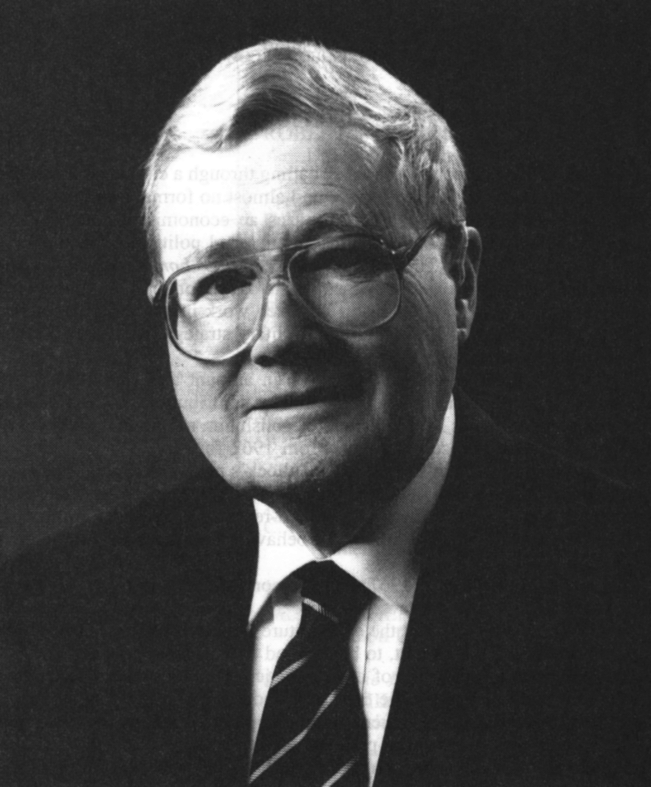
Praxis often means "practice," but it's closer to "doing." It comes from the Greek prattein.
Prof. Boettke, in his lead essay, makes a very particular claim about Gordon Tullock, one I had never seen before and certainly had never thought of. Boettke claims that Tullock is:
a praxeologist who from a methodologically individualistic perspective would study human action across all social arrangements. Individuals pursue purposes and plans, and in doing so must arrange their means to obtain their ends as efficaciously as is in their power. Tullock's subject matter was humanity in all settings, and that included not just markets, but nonmarket setting such as law, politics, and charity.
Tullock's own characterization of his early self was simply "the world's only independent scholar." I have said that Tullock was "Public Choice's Homeric Hero," because Gordon's life was given to academic and intellectual contestation. In fact, I compared Gordon to the Iliad's Hector. One reason is that Gordon hectored people constantly, especially if he liked them. But Tullock was "our" Hector also because there was no battle he would avoid, even if he should have expected to lose.
On reflection I think that Boettke has a point. Gordon had no one subject; he had a method. Of course, to a man who uses his method as a hammer, everything looks like a nail. Is "praxeology" really a method, and was it Tullock's method?
Praxeology
We might think that praxeology is "the study of praxis," and since praxis is practice or the application of theory, that might mean Tullock studied applications. But that would be a misunderstanding of praxeology (though it is one I have seen from the untutored). Praxeology derives from the Greek prattein, meaning to do or to act. The sense in which Ludwig von Mises Mises used the term followed the neologism of Alfred Espinas (1890, 114), but appropriated a more narrow meaning. For Mises, praxeology is the study of human action from a strongly a priori and theoretical perspective. The foundation of the approach is that human action is purposive. (For much more on the history and use of the term, see Roderick Long's 2008 book.)
Boettke notes that:
A lot can be understood simply by recognizing that individuals strive to achieve the best they can as they perceive it, rather than asserting that they achieve best outcomes in their actions. And, similarly, a lot can be understood by stressing the evolution towards a solution involved in market and social interactions rather than focusing exclusively on solution states. [Emphasis in original.]
This is in keeping with Austrian orthodoxy, and Boettke is right to point it out. I often suggest that students who are encountering the Austrian approach for first time avail themselves of certain tips. Specifically, T.I.P.S.:
- Time. Many actions are taken, and other actions are not taken, because of the influence of time. We buy a suit of clothes to have access to the stream of services associated with that ownership.
- Ignorance/Information. Information is not just incomplete, but idiosyncratic. We have "personal probabilities," as Bayesians say, and our perception of the best course of action may well depend on our perceptions of the distributions of likely outcomes. It may be useful to inquire whether we are correct in these beliefs, but it is more useful to recognize that, "correct" or not, such beliefs inform the way we act on our goals, given what we say as our available means. Further, information is so scattered and fragmented that no one knows everything she would need to plan even her own actions, much less the actions of a group.
- Purposes and Plans. Purposes and plans are not automatically harmonious; far from it, in fact. Some mechanism for reconciling purposes and plans is the core of the problem of institutionalism as a science.
- Subjectivity. Both preferences and beliefs are idiosyncratic. But so also are the structural parameters that govern social interaction. This is why both the "evolution towards a solution" and absence of "solution states" are part of the analysis.
Tullock's most important emphases, as Boettke rightly notes, are on the purposes and plans and subjectivity components of the approach. Markets, under some circumstances, present individuals with price information, around with the coordination of inconsistent and even contradictory plans can take place. In economics, the price mechanism has pride of place. But Tullock recognized that other forms of institutions, some of them quite different from prices and markets, may be just as important.
The fact that the journal now known as Public Choicewas at first named Papers in Non-Market Decision-Making reveals just how brave Tullock was. It's difficult enough to analyze how conflicting subjective purposes and plans are reconciled even in settings where the price mechanism is available and works effectively. To kick over the traces and explore this same problem in settings where other institutions of adjustment and reconciliation are necessary takes pluck.
But that's what Tullock did. His work on bureaucracy, rent-seeking, and sociobiology all considered different mechanisms for reconciliation of conflicting subjective plans and purposes. In his review of The Politics of Bureaucracy, James Anderson (1966) seems shocked to hear anyone claim that we might use a model of "economic man" to understand bureaucrats. Anderson writes, archly, and quoting from Tullock, on the heresy of assuming "economic man" in state employment:
Who is the "politician"? Well, he appears to be "an intelligent, ambitious, and somewhat unscrupulous man," located in the lower levels of the government's administrative hierarchy, and motivated primarily by a desire for personal advancement and promotion. If his personal goals and the organizational goals conflict, he will act to promote the former. Given the desideratum of personal promotion, Tullock's "politician" appears to be quite akin in his actions to '"economic man," both being motivated primarily by the desire to maximize their personal well-being.
It is important to see this scowling, knee-jerk reaction, precisely because from our current vantage point in history we take the post-1980 success of Tullock's approach so much for granted. Anderson's reaction to the very idea of economic man, and the implied notion that acting on one's own goals is "unscrupulous," shows what the state of theorizing about bureaucracy was before Tullock and the Public Choice revolution.
More importantly, the mechanism for reconciling the conflict between the plans and purposes of the organization and those of the individual functionary, it would now be orthodox to say, rests in the specification of the contract. (As Barry Weingast told me many times in graduate school: "They are called 'agencies' for a reason!") Thus, Tullock was simply exploring what later came to be known as "Principal-Agent Theory," but reviewer Anderson thinks that simply stating the thesis (accurately, it is true) is enough to discredit it.
Likewise with rent-seeking. There is a problem with many people pursuing a "rent," or an artificial prize created by government. The prize might be cash, or it might be protection from competition or a special exclusive license to operate. How much would individuals "invest" in this socially fruitless pursuit, given that it represents the present value of a valuable stream of income that extends into the future. Tullock roughed out an answer that is still used today: the reconciliation of the conflict will take the form of a contest, now often called a "Tullock Contest," in which the chances of winning approximate the share of total effort devoted to the pursuit of the rent. If the sum of the shares of dissipated effort approximate the rent, then rent-seeking tends toward efficiency (Konrad, 2009), but only from the perspective of the participants. From the perspective of the larger society, rent-seeking is always nonproductive.
Boettke summarizes nicely the reasons why the caricature of Tullock's view is not entirely wrong, but it is wrong in important ways. Just as capital makes labor more expensive, institutions make individual human actors smarter and better cooperators. The "homo economicus" assumption is indeed a problem to be solved, but any analysis that starts without it is likely to miss the reason why important rules and institutions exist in the first place. Tullock's place as one of the inventors, and most productive practitioners, of noncatallactic praxeology is worth celebrating and preserving.
References
Anderson, James. E. 1966. "Review: The Politics of Bureaucracy. Gordon Tullock." Journal of Politics v. 28, No. 1, pp. 205-207.
Espinas, Alfred. 1890. "Les origins de la technologie," Revue Philosophique de la France et de l'Étranger v. 30 (July-December), pp. 113-35. <http://www.jstor.org/stable/41073426>.
Konrad, Kai A. 2009. Strategy and Dynamics in Contests. New York: Oxford University Press.
Long, Roderick. 2008. Wittgenstein, Austrian Economics, and the Logic of Action: Praxeological Investigations. Abingdon, England: Routledge, 2018.
Munger, Michael. 2015. "Public Choice's Homeric Hero -- Gordon Tullock (1922-2014)." Independent Review 19. 599-604. <https://www.independent.org/pdf/tir/tir_19_04_09_munger.pdf>.
Tullock, Gordon. 1965. The Politics of Bureaucracy. Washington D.C.: Public Affairs Press.
Tullock, Gordon. 1980. "Efficient Rent Seeking." In Toward a Theory of the Rent-Seeking Society. Ed. J. Buchanan, R. Tollison, and G. Tullock. College Station: TX A&M University Press, Series 4, pp. 153-79.
David M. Levy
Response · Nov 06, 2017 · Own page
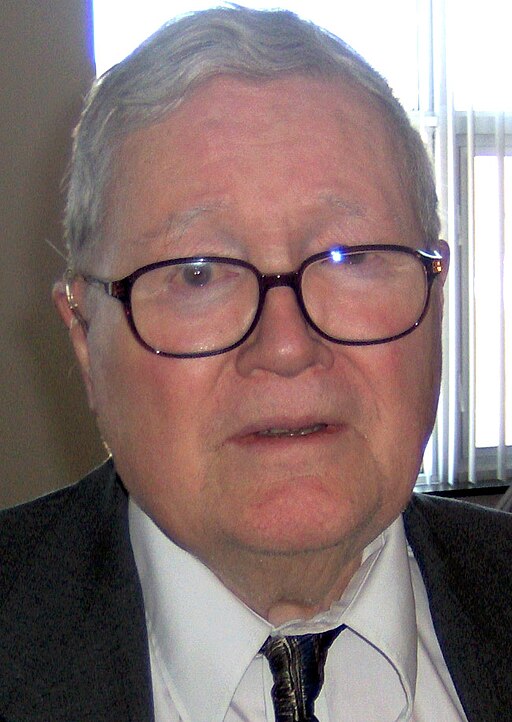
Let me begin where Pete Boettke begins, with a conversation with Gordon Tullock. This conversation, which we have just published (Levy and Peart 2017b), was prompted by his off-hand remark at our Summer Institute that Ludwig von Mises's Human Action greatly influenced his work. Sandra Peart and I were puzzled, so we asked if we had understood correctly:
Yes. In the first place, let's begin with the fact that at the time I had one course in economics, which lasted 12 weeks, it was supposed to last 13 weeks but I was drafted, and that had got me to reading economics journals. I saw at the Yale Co-Op, when I was studying Chinese at Yale, I saw a pile of books bound in red that said Human Action and I picked one up. The thing which made a big impact on me was the early part where he talked about that you can use the same kind attack on things other than economics. I'd never heard anyone say that before. I read the book actually three times and during that time I came to the conclusion that I was going to write a book about bureaucracy on the same kind of self-interested motives on the part of the participants as economics. He did not maintain that it also led to good results even though it did in economics. [Our emphasis.]
Save for the last sentence and some autobiographical detail, Tullock's published tribute to von Mises says much the same thing. (Tullock 1971, 2:375)
What intrigued me in our follow-up conversations on von Mises is suggested by the last, emphasized sentence. Tullock pressed the noncatallactic dimensions of purposive action. I'll leave his work on birds as purposive creatures to someone better qualified and instead stress purposive predation. One of these dimensions needs no introduction: rent-seeking. Of course Tullock should have received the Nobel prize for this work. Indeed, in the fullness of time, the Nobel snub of Tullock's work on rent-seeking will be seen in the same light as the Nobel snub of George Danzig's work on linear programing. Peart and I are putting together Tullock's extensive correspondence with Karl Popper from which it is completely clear that he was expecting the prize on the merits of the case. Those of us who knew him in his old age could not miss the sadness. But from the doctrine Tullock taught, why would we expect the merits of the case to be sufficient? The crude misunderstanding of public choice -- we don't confuse what is and what ought to be the case -- leaves no room for sadness and thus misses the point.
Perhaps the most overlooked of Tullock's contributions is his stress on scientific replication as a way to prevent predation inside a community of researchers. Scientific results are a collective good; what links the incentives to a researcher for contribution to the commons? Perhaps I see this clearly because I talked with him about econometric replication when I met him so long ago, a point which Peart and I have stressed recently. (Levy and Peart 2012, 2017a, 2017b) All too many have simply ignored Tullock's thesis that economics is more of a racket than a science because we don't practice replication. (Tullock 2005, 158) The usual testing procedure has an obvious incentive compatibility issue: we both propose and test a theory even though we are rewarded for success and punished for failure. Replication separates the incentives of proposers from the incentives of testers. It is in this context that Tullock did something that even von Mises did not; he extended purposive behavior to economists themselves.
I have no special insight into why the Nobel committee passed Tullock by, but perhaps the documents we discovered as we were looking into the manuscript of Organization of Inquiry (originally published in 1966) he sent to Duke University Press might help us understand why this great work has been so neglected. With the surge of interest in replication, one might have expected Organization of Inquiry to be hailed as the classic in the public choice of the philosophy of science, as Eric Schliesser has described it. That of course has not happened. Tullock had a certain disdain of the scholarly niceties, something easy to see in his half-hearted attempt to find a reference in Hobbes's Leviathan. (Levy and Peart 2012) His mis-citation of Popper's Logic of Scientific Discovery as Logic of Scientific Inquiry -- something to which Popper himself called to his attention in a letter thanking Tullock for the copy (Levy and Peart 2017, 203) -- might not be his fault. Tullock explained to the Duke editor when he passed on Popper's letter that his prepublication copy of Popper's book had that title. We first published Popper's reaction earlier this year, in which he explained he knew all about the problems of factionalized science that are central to his discussions with Thomas Kuhn.
Duke's handling of Tullock's manuscript seemed exemplary, and he was enormously pleased with the lovely book they printed for him. (I remember how delighted he was when he gave me a copy.) Nonetheless, Duke's editor strongly resisted Tullock's desire to have a preface to the book by F. A. Hayek. The editor's resistance flowed in part from a concern over a rekindling of the controversy over the 20-year-old Road of Serfdom. Hayek had indeed offered to write a preface, but because his eyesight was failing he wanted to work with an easy to read typeset manuscript instead of something produced on a typewriter. There is no hope (I believe) in finding what would have been in the preface, but perhaps we can guess. Hayek's "scientism" speaks to the unwarranted importation of the methods of the natural sciences into the social sciences. Tullock's distinction between the two is not a methodological point but rather institutional. The natural sciences replicate; the social sciences do not. Institutions carry incentives. Without replication we can expect predation by scientists. It is not difficult to believe that Hayek's thoughts on this argument would have been enormously important.
The predation of economists comes in many guises. Years ago I teased von Mises and Hayek themselves for ignoring the incentives in economists of the central-planning debate. (Levy 1990) Knowing how much abuse von Mises and Hayek received for their mild concerns over central planning, I thought it would be rude beyond belief to criticize them! Had I known the remarkable things von Mises wrote about how socialists opposed special interests and then neglected to mention the interests of socialist economic planners (von Mises 2005, 175-78), I might have hardened my heart. It should surprise no one that Tullock published my paper, taking about a day to make the decision. A public choice model of central planning is one of predation; shortages are created by economist price setters to allow for their rent extraction. Von Mises seems to have closed his analytical eyes to predation of economists, something Tullock never did.
Tullock supposes motivational homogeneity; everyone has the same purposes. (Levy and Peart 2017b) The central planner will not become a better person when power comes. An axiom of purposive behavior is of no help without something akin to the stability of purpose. This is the great improvement Tullock made, but of course I'm a self-interested witness!
References
Levy, David. 1990. "The Bias in Centrally Planned Prices." Public Choice 67: 213–36.
Levy, David M. and Sandra J. Peart. 2012. "Tullock on Motivated Inquiry: Expert-Induced Uncertainty Disguised as Risk." Public Choice 153: 163–180.
_________. 2017a. Escape from Democracy: The Role of Experts and the Public in Economic Policy. New York: Cambridge University Press.
_________, 2017b "Gordon Tullock's Ill-fated Appendix: 'Flatland Revisited'." Constitutional Political Economy 28: 18–34.
Mises, Ludwig von. 2005. Liberalism in the Classic Tradition. Translated by Ralph Raico. Indianapolis, IN: Liberty Fund.
Tullock, Gordon. 1971. "An Application of Economics in Biology." In Toward Liberty: Essays in Honour of Ludwig von Mises on the Occasion of his 90th Birthday, September 29, 1971. Ed. F. A. von Hayek, Henry Hazlitt, Leonard E. Read, Gustavo R. Velasco, and F. A. Harper. Menlo Park, CA: Institute for Humane Studies 2:375–91.
Tullock, Gordon. 2005. The Organization of Inquiry. Volume 3 of Selected Works of Gordon Tullock. Ed. Charles K. Rowley. Indianapolis, IN: Liberty Fund.
Peter Kurrild-Klitgaard
Response · Nov 07, 2017 · Own page
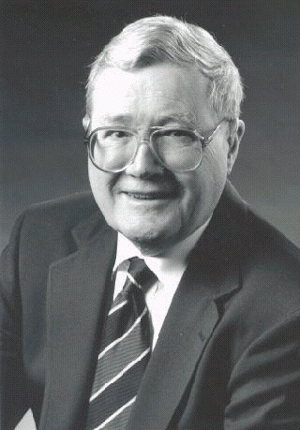
It must be nearly impossible to read much by Gordon Tullock without coming away with—among many other things—the impression that he must have had one of the most creative and fruitful minds among modern social scientists. As Boettke rightly notes: "Tullock was a polymath." How many others could cover medieval Ottoman execution methods, mathematical analysis of voting, the history of Chinese diplomacy, the sex lives of insects, and modern social policies?
But Tullock was more than knowledgeable. Just peruse the chapters of The Calculus of Consent (Buchanan and Tullock 2004 [1962]) that he is known to have authored, or The Social Dilemma (Tullock 1974), or Autocracy (Tullock 1987), or almost any of his many journal articles, especially from the 1950s to the 1980s, and you will find one example after another of brilliant little, although not-quite-fully-developed, insights in one paragraph after another. Thoughts, suggestions, and conjectures that almost never were never fully elaborated, much less tested systematically, but could have been, are just lying there to be picked up.
For some years I kept my own list of things "to be explored" that I stumbled over in Tullock's writings. In fact, the very first international journal article I ever published grew out of just such a throw-away paragraph in Autocracy (Kurrild-Klitgaard 2000). My own interest in the potential disequilibrium of voting in multidimensional spaces came from Tullock's early, brief, and intuitive treatment (Tullock 1967) rather than the heavily technical proofs others had produced over the following decade.
Tullock was, as Buchanan called him, a "natural economist" (Buchanan 1987) in the sense that "the economic way of thinking" came so naturally to him that he could not help constantly taking it to new areas of application. He was always looking for another place to apply methodological individualism, the rational-actor principle, and the focus on exchange: yet another puzzle to be solved, another piece of knowledge to be passed on. In contrast, Tullock had very little interest in yet another minor technical contribution with little relevance to real-world issues.
So, I agree with Boettke's summary of Tullock's importance and that he had deserved a Nobel Prize:
This was a prize that eluded him, and in my opinion he deserved his own prize for this various contributions to the study of human action beyond the realm of. the market, that is, nonmarket decision-making – in law, politics, science, bureaucracies, nonprofits, and nature. Tullock was a trailblazer; he was always stalking taboo subjects and pushing out our intellectual boundaries.
But if Tullock was such a brilliant, inquisitive mind, why did he not receive the praise and rewards many of us think he should have received? There are probably more reasons than one—but in my opinion none of them should have denied him the honors that eluded him.
Was it that Tullock was not as "grand" a thinker as some other economists? Looking at the relatively narrow contributions of some other Nobel laureates, I think this would be a hard point to argue as a stand-alone reason. Tullock's contributions to our understanding of voting, rent-seeking, and log-rolling, and his broad application of the rational-choice paradigm to human behavior, collective action, and our understanding of the law, easily outweigh the contributions of many Nobel laureates.
But I do think a problem was that Tullock so often—and almost always beginning in the mid-1970s or so—left his gold nuggets lying around, not quite polished. He threw 100 ideas up in the air and went on, where many others would have taken 10 of them and developed them further, endlessly applying and extending the insights and building "schools" around them and themselves.
Many others who have grappled with the question of why Tullock did not receive the honors he perhaps deserved have focused on his personality, namely, that he sometimes came across as impolite or even offensive.
Strangely, I never interpreted him that way—and I still remember the shock with which a world-famous Ivy League economist greeted my view that I found Tullock to be "nice": "I have never heard anyone refer to Gordon as being 'nice.'" Well, I think he was. Yes, he was odd, and yes, he could say things that some either would disagree with vehemently or would be taken aback by because of his often-provocative and direct tone and style. But in my many encounters with Tullock—from the first time I met him as a first-year undergraduate at a conference in 1986 to the last time I saw him, a year or so before his retirement—I always found him to be generous, hospitable, and helpful.
Yes, he could say things that some would find impolite or harsh. The first time I saw him after having sent him my doctoral dissertation, he said something like, "You could have spent your time and money more wisely. You used 400 pages to say what you could have said in four words: 'Tullock is always right!'" I thought it was a funny remark—with a kernel of truth in it.
Yes, he could also seem socially handicapped. The combination of his ever-present intellectual focus, his very low voice, and his impaired hearing made dinner or lunch conversations a bit difficult sometimes, to say the least. But compared to at least a handful of Nobel laureates in economics, Tullock did not come off as particularly odd.
Was it his politics? Again, it has been said by more than one economist—including people who actually like and practice public choice analysis—that Tullock had "reactionary" or "right-wing" views that made him out of step with the Zeitgeist.
It is true that he often would argue in favor of deeply unpopular points of view. ("There isn't anything particularly good about democracy, aside from being democratic.") He also seemed to enjoy some degree of being "politically incorrect." But I am not so sure that Tullock was really as much an ideologue as many others believed. I remember the 1994 meeting of the Mont Pèlerin Society in Cannes, when I was standing in the foyer talking with Tullock and Charles Rowley. A young French economics student, whom I knew to be a huge fan of Tullock, approached star-struck and said in a heavy accent, "Professor Tullock! I am such a great admirer! I have always wanted to ask you about libertarianism." Tullock cut him off, saying, "I am not particularly interested in liberty," and walked away, leaving the poor fellow with his jaw on the floor.
Was it rude? An impartial spectator would likely see it as such. I think Tullock—always the homo economicus—was merely trying to save time for both of them. If anything, Tullock was probably a relatively pragmatic consequentialist of some sort--not necessarily a hard-core utilitarian, but broadly interested in what arrangements would tend to produce the best outcomes. Sometimes it would lead his policy conclusions in one direction—other times in another. He was not much of an ideologue, and ultimately everything was up for discussion.
And what about the other explanations that have been thrown around? -- for example, that Tullock was not an economist by formal training. Well, neither was Herbert Simon and Elinor Ostrom. Or that he was not very technical in an age when mathematical prowess was and is so much in vogue. Again, the same can be said about Ostrom, James Buchanan, F. A. Hayek, and Douglass North.
I think that the "real" reason was the sum total of it all. Tullock might have received his Nobel Prize despite being personally odd or being placed on the political right or not being trained as an economist or not publishing highly mathematical models. But all of this together, combined with the fact that he often went on to new ideas and applications rather than building empires around himself, probably made it highly unlikely.
Fortunately for the rest of us, there are still so many insightful nuggets from Tullock lying around, ready to be picked up--perhaps more than many think. I find Boettke's points regarding Tullock's approach being more "praxeological" and less neoclassical than often portrayed particularly important. Anti-rational-choice academics often portray Tullock as the archetypical "economic imperialist"—a view he often attributed to himself. (Tullock 2006 [1976]) But in reality, his approach was much more nuanced and multifaceted than many have appreciated.
References
Buchanan, James M. 1987. "The Qualities of a Natural Economist." In C. K. Rowley, ed., Democracy and Public Choice: Essays in Honor of Gordon Tullock (pp. 9-19). Oxford: Basil Blackwell.
Buchanan, James M., and Gordon Tullock. 2004 (1962). The Calculus of Consent: Logical Foundations of Constitutional Democracy. The Selected Works of Gordon Tullock, Vol. 2, C. K. Rowley, ed. Indianapolis, IN: Liberty Fund.
Kurrild-Klitgaard, Peter. (2000). The constitutional economics of autocratic succession. Public Choice 103(1-2), 63-84.
Tullock, Gordon. 1967. Toward a Mathematics of Politics. Ann Arbor, MI: University of Michigan Press.
_________. 1974. The Social Dilemma: The Economics of War and Revolution. Blacksburg, VA: Center for Study of Public Choice.
_________. 1987. Autocracy. Dordrecht: Kluwer.
_________. 2006 (1976). The Vote Motive (2. rev. ed.), Peter Kurrild-Klitgaard, ed., IEA Hobart Paperback (No. 33). London: Institute of Economic Affairs.
Peter J. Boettke
Coordination in Nonmarket Decision-Making · Nov 08, 2017
I greatly appreciate the comments from Michael Munger, David Levy, and Peter Kurrild-Klitgaard, and I find myself in agreement with them. We must look at how alternative institutional arrangements impact performance. We must place the economist inside the model not just of economic policy but also of economic science, and we must follow up on the numerous nuggets that Tullock's intuition left for us to pursue in our scientific time and place. Throughout our conversation this month, I hope we will pursue each of these with the detail required to make progress. But right now, I just want to focus on the alternative arrangements of market and nonmarket decision-making.As Munger states, within the analysis of the market economy, prices have pride of place. I agree with that so strongly that, like Gary Becker, I would not distinguish between microeconomics and macroeconomics and refer only to economic theory. And I would push this price-theoretic perspective to emphasize relative prices and how the adjustment of prices guides the processes of exchange, production, and the adaptation to changing conditions that characterizes a vibrant market economy.We cannot have these relative prices without property rights – as Tullock's Virginia School of Political Economy colleague G. Warren Nutter put it in "Prices without Property Is the Grand Illusion." (1968) Not only do prices require property; they are the critical input for the profit-and-loss statements that provide the critical feedback in the market economy. So the market economy is based on property, prices, and profit and loss; it functions by marshaling incentives, mobilizing information, luring with profit, and disciplining with loss. This complex and intricate matrix of signals, guides, and selection processes is what Ludwig von Mises explained as the process of rational economic calculation.(See Mises 1920 [1975] and 1922 [1951].) Economic calculation works by producers' choosing the economically viable projects from the large array of technologically feasible investments and production projects. The process of monetary economic calculation in the market means that errors in decision-making will constantly be revealed: the apparatus of market signals will continually prod and cajole participants to make less erroneous decisions than before. Adjustment and adaptation are unending in the market as the production plans of some must mesh with the consumption demands of others for the advanced coordination of economic activities through time. These issues were discussed in our Liberty Matters conversation concerning Israel Kirzner's contributions.But what happens when we move outside the realm of the market economy? My suggestion is simple: public administration begins where the realm of rational economic calculation ends. As Mises writes in Human Action (Mises 1949 [1966], 311): "Where economic calculation is unfeasible, bureaucratic methods are indispensable." To put this is a concrete way, the rules of bureaucratic management must attempt to do for governmental services what property, prices, and profit and loss do within the market setting. And, make no mistake, governmental decision-makers must weigh trade-offs, and they face – however imperfectly – budget constraints. As Mises points out: "There is no doubt that the services rendered by the police department of the City of New York could be considerably improved by trebling the budgetary allocation. But the question is whether or not this improvement would be considerable enough to justify either the restriction of the services rendered by other departments -- e.g., those of the department of sanitation -- or the restriction of the private consumption of the taxpayers." (Mises 1949 [1966], 309)But how does the government accomplish this?Enter Gordon Tullock's The Politics of Bureaucracy (1965), which, to be honest, marks his entire research career on nonmarket decision-making in politics, law, and society. It was too-often assumed in mid-20th-century economics, law, and public policy that this task of public administration was merely a problem of technical expertise. Milton Friedman famously pointed out, in his Journal of Political Economy review essay (1947) on Abba Lerner's The Economics of Control (1946), that while Lerner's technical analysis was logically unassailable, the work nevertheless was not very helpful because it failed to address the administrative costs of public policy.Tullock's work must be seen in the light of the works that followed in the decades after Friedman's review, which sought to explore in depth those administrative costs. Munger correctly points out that Tullock's work on bureaucracy raises principal-agent and incentive-alignment problems. This insight into bureaucracy was novel for its time. Tullock deals with the relationship between politicians and appointed bureaucrats and even more so with the relationship between superiors and subordinates within bureaucracies. There are layers of nested games played by principals and agents, and an examination of the logic of choice within the different contexts produces a situational logic that exposes various well-known dysfunctions of bureaucratic management.Tullock fills his presentation with vivid examples drawn from his own experiences in the military and State Department. His analysis isn't limited to incentives; he also addresses the communication of information and the coordination problems that result when this communication is less effective than its counterpart in the market economy. He provides a telling example when he compares the difficulties even in times of war of managing parts and maintenance for military vehicles in contrast with the trucking industry in the United States, which due to the profit motive does not seem to have the same problems matching spare parts and maintaining a working fleet of vehicles. Thus Tullock's analysis of bureaucracy can be seen as another area of his work in which he picks up where Mises left off and develops the argument in greater analytical depth.ReferencesPeter J. Boettke, "Israel M. Kirzner on Competitive Behavior, Industrial Structure, and the Entrepreneurial Market Process" (March, 2017) </pages/lm-kirzner>.Friedman, Milton. 1947. "Lerner on the Economics of Control." Journal of Political Economy, 55 (5): 450–16.Lerner, Abba P. 1944. The Economics of Control. New York: Macmillan Co.Mises, Ludwig von. 1920 [1975]. "Economic Calculation in the Socialist Commonwealth." In F.A. Hayek, ed., Collectivist Economic Planning, Clifton, NJ: August M. Kelley._________. 1922 [1951], Socialism: An Economic and Sociological Analysis, New Haven: Yale University Press._________. 1949 [1966]. Human Action: A Treatise of Human Action, 3d ed. Chicago: Henry Regnery.Nutter, G. Warren. 1968. "Markets without property: A Grand Illusion." In N. Beadles and A. Drewry, eds. Money, the Market and the State (pp. 137–45). Athens, GA: University of Georgia Press.Tullock, Gordon. 1965. The Politics of Bureaucracy. Washington, D.C.: Public Affairs Press.David M. Levy
Gordon as Outsider · Nov 17, 2017
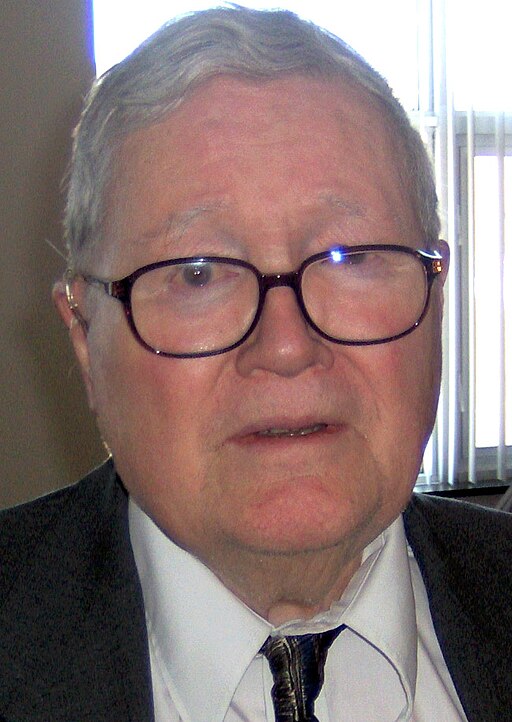
I was talking with Steve Stigler last week at the University of Chicago celebration of his father's work —"Stigler in the 21st century" — about the Nobel snub of George Dantzig for linear programming. The context is this: George Stigler's "diet problem" might be the most famous linear-programming solution in the years before Dantzig's simplex. (The "Stigler diet" is now a Wikipedia entry with a link to modifications with cooking instructions! The claim that it is "delicious" might be evidence why one is well advised not believe things on the web! https://en.wikipedia.org/wiki/Stigler_diet) Steve pointed out that Dantzig had a considerable reputation as a statistician but none whatsoever as an economist. The Nobel Prize doesn't go to outsiders.Does that explain the snub? Gordon was an outsider in all dimensions. He was outside social conventions even though he was an enormously sweet person. Our staff simply adored him. They understood he just wanted to play. The reason Sandra Peart and I were so surprised about his tribute to Human Action is that colleagues who are deeply learned in the Austrian tradition did not connect him to that tradition. I suspect the Austrian tradition will come around to Gordon's point of view that one should separate purpose from awareness of purpose. The birds Gordon wrote about have a purpose, but they aren't aware of that purpose. One of Gordon's most amusing papers, "The Charity of the Uncharitable" (1971), shows how to model a very simple separation of purpose and awareness in collective-action settings. Even though he was in correspondence with Karl Popper for 40 years, he has no reputation at all in philosophy of science. I suspect the work he did with I. J. Good is unknown outside of a narrow circle. (The Good Tullock correspondence is on our list of things to write up.)It is hard to think of two scholars with more opposed views on probability than Good and Popper. Nonetheless, Gordon got on wonderfully with both. Maybe that's the benefit of being an outsider: you pose no threat.ReferencesTullock, Gordon. 1971. "The Charity of the Uncharitable." Economy Inquiry 9: 349–452.Michael C. Munger
Thinking and Doing · Nov 17, 2017
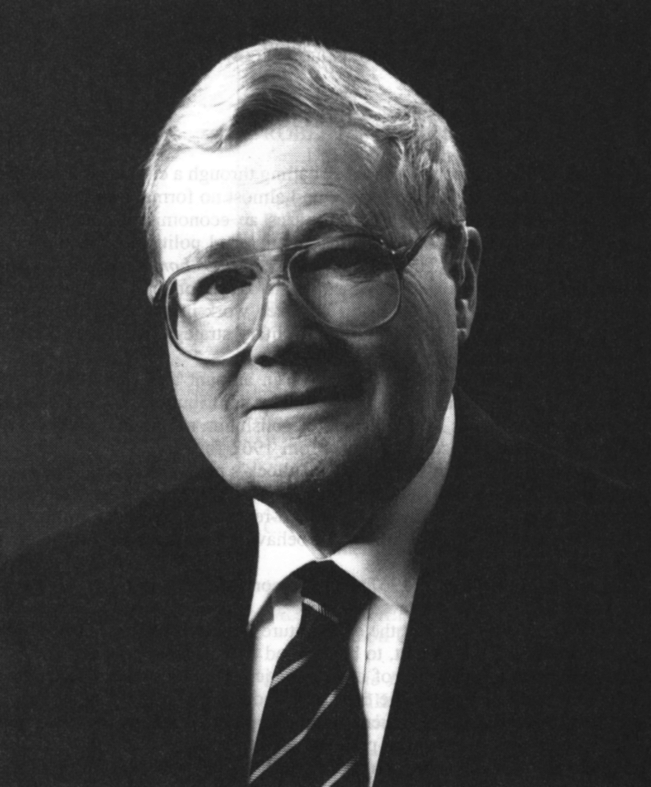
Near the beginning of his "Conversation" response, Pete Boettke says we cannot have prices without property rights. Sure, that's true enough as far as it goes. But I argued that Tullock looked outside of the human context, where prices can't exist, because property rights don't exist.Hayek (1945, 528) famously cites Alfred North Whitehead's observation that more civilization means less thinking and planning. As Whitehead put it:It is a profoundly erroneous truism, repeated by all copy-books and by eminent people when they are making speeches, that we should cultivate the habit of thinking of what we are doing. The precise opposite is the case. Civilization advances by extending the number of important operations which we can perform without thinking about them. Operations of thought are like cavalry charges in a battle — they are strictly limited in number, they require fresh horses, and must only be made at decisive moments. [An Introduction to Mathematics (1911), ch. 5.]
One of the things I have always admired about Tullock is that he took a sharp turn, extending this insight from the human setting, where price reflects opportunity costs of resources and allows reconciliation of conflicting plans into a coherent whole, to nonhuman settings -- "civilization" in nonhuman societies. The general problem is that no one individual has anything like the capacity to know what is required to judge the opportunity costs of all the entities in the society. This may be true because of information-processing and -gathering limits, as in human societies. So humans can use marketsOr it may be limits on cognitive capacities in eusocial "societies" such as beehives or ant colonies. What do they do? Profit and loss are not operative; survival and extinction are the metrics of evaluation. Nonhuman species act as if they were "trying" to survive. The "rules," using evolved behaviors and complex systems of pheromones, are not something that the citizens of an ant colony voted on or consented to. Neither are these rules something that can be amended, even by unanimous consent. There are no property rights, and there are no prices.Yet there are collective-choice mechanisms. One of the most famous of these is the hive-selection process faced by groups of common honeybees, or apis mellifera. The queen of a beehive has no greater cognitive power than any other bee, and none of the bees can really think or choose. Yet the problem of choosing among a set of likely hive sites when the colony has grown large enough to be divided is an obvious collective-choice problem.How can a hive decide when no one bee in the hive has much information and each bee has effectively no cognitive capacity? The group needs what we might (imprecisely) call an "institution." The reason I find this so interesting is that the difference between bees—who can't think or use information very well—and human beings—who vastly overestimate their capacity to choose rationally in groups—is less than we might imagine.That was Tullock's contribution, in my view, at least in his work in sociobiology (for example, Tullock 1979). Each "society" that survives must evolve some institutional means of reconciling the contradictory plans and purposes of its "citizens" and must also generate accurate information about the opportunity costs of choices. For bees, making the wrong choice of hive site could easily result in death of the entire colony; if the institution used to "choose" is inferior, the species would collapse and disappear, outcompeted by other species for space in the ecosystem.Bees solve the social-choice problem by using a hardwired behavior, in effect transforming the hive into a cybernetic thinking machine. (Landa 1999) Scouts gather information and then advertise using a "dance." The choice of the group rests on unanimity, even though the bees have no way of understanding voting or thinking about opportunity costs.Hayek pointed out that humans didn't really understand the institutions that allow them to solve such problems. Tullock recognized that in that incapacity we might not be very much better than bees, though of course bees could make no pretense of understanding. The problem in dealing with humans is that we overestimate our capacities to substitute institutions such as markets and price systems.So, while I ultimately agree with Prof. Boettke's claim that property rights are essential in the human context, the reasons why may be hard to explain. The difference between bee choice and human choice is more apparent than real, though we fancy the difference is large. Human cognitive capacities are far greater than that of bees, but this difference is largely irrelevant to the relative abilities of the two species to do centralized social and economic planning. Tullock, to his credit, noticed that humans aren't much more likely to understand what we're doing than groups of insects.ReferencesHayek, F.A. 1945. "The Use of Knowledge in Society." American Economic Review, 35(4): 519-30.Landa, J.T. 1986. "The Political Economy of Swarming in Honeybees: Voting-with-the-Wings, Decision-Making Costs, and the Unanimity Rule," Public Choice, 51(1): 25-38.Tullock. G. 1979. "Sociobiology and economics." Atlantic Economic Journal. 7 (3): 1–10.Peter J. Boettke
The Irreverent Gordon Tullock · Nov 20, 2017
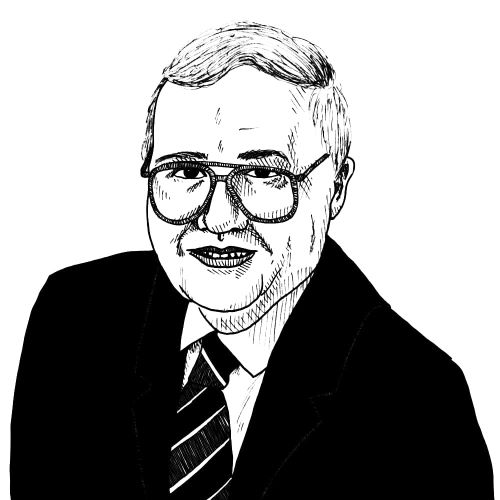
A colleague of Tullock's at the University of Virginia, William Breit, once told me the following story. Every day they would go to the faculty club for coffee or tea, but one day they were slightly off schedule; so when they arrived, their usual seats were taken. Two seats were open, however, at a table where the dean was meeting with a visiting sociology professor from Columbia whom UVa was attempting to entice to join the faculty. Tullock and Breit sit down as a conversation was going on about the current nuclear arms race. The professor was discussing the logic of unilateral disarmament. Rather than stay respectfully quiet, Tullock couldn't take it and piped up: "What do you think would happen if the U.S. unilaterally disarmed?" The professor replied, "Well, the Soviet's would under world pressure follow suit." Tullock scoffed at such a suggestion and said, "By world opinion, you mean you and your friends on the upper west-side of Manhattan." Visibly annoyed, the professor responded, "Well, what do you think would happen?" Tullock quickly replied, "The U.S. would be invaded by Mexico tomorrow." At this the dean and the professor left the faculty club in a huff. Tullock, according to Breit, showed no emotion, took a sip of his coffee and asked Breit in all seriousness, "Why do you think the administration will not promote me?"Anyone who knew Gordon Tullock could tell a ton of similar stories. But as Peter Kurrild-Klitgaard mentions in his comment, it is a mistake to view Tullock as rude. He is just efficient in conversation and willing to push conventional boundaries to track the truth as he saw it. Pursuing a logical argument to its bitter end simply didn't bother him.One of the great aspects of Gordon Tullock's writings is his complete irreverence toward conventional wisdom. He challenged anybody and everything. It is impossible to understand Tullock unless you see he was willing to question everything that was taken for granted in polite society and ask, "Really? Are you so sure that is what is going on?"A list of the key ideas he challenged would range from the most basic assumption to the most elaborate system of law, politics, and society. And in doing so, his goal was to upset the intellectual complacency of economists and other social scientists. Tullock's blunt way of presenting his argument was intended to get his point across -- like his proposition that a dagger coming out of an auto's steering wheel would be a more effective safety device than seatbelts. Think through the logic and you will get what he is trying to communicate about incentives.Let's consider another of his most jarring propositions. He would state bluntly that we human beings do not care about others in the least. (See Tullock 1981.) We constantly say we care, especially about the least advantaged. But our actual behavior, Tullock would say, doesn't reflect such caring. At best, he would postulate, we provide around 5 percent of our income to charitable causes outside our immediate interests and family. If we give more, he would argue, we are probably deeply religious. But even in that case, Tullock would add, we give not to help others, but to save ourselves from going to hell.So what does he purchase with this in-your-face challenge to sensibilities? Well, he uses that method to get economists to think hard about what is really going on in the economics of redistribution. The War on Poverty, Tullock pointed out, was not having the expected outcomes. There was a disconnect between stated goals and the impact on the poor. Starting from that empirical reality, Tullock asked his fellow economists and social scientists to enter the "why nexus" – why is what is happening happening? Tullock's hypothesis was that redistributive policies and the accompanying institutional apparatus are not about ameliorating extreme poverty, but rather about individuals using the coercive apparatus of the state to benefit themselves at the expense of others.How do we, as social scientists concerned with making sense of reality, mediate between the public-interest view of redistributive programs and private-interest view, and what have we found in past exercises?That exercise is precisely what Tullock encouraged among social scientists, and it required him to poke holes in the comfortable conventional wisdom of 20th-century progressive social reform.But Tullock didn't stop there. He was willing to ask these sorts of questions about history, law, politics, and even nature. In each area, he encouraged an intellectual horse race between the persistent and consistent application of the economic way of thinking – the logic of choice, the situational logic of institutional analysis, and spontaneous-order theorizing – and all alternative theoretical frameworks. He used casual empiricism as well as formal analysis to press his point.Perhaps we can discuss the strengths and weaknesses of Tullock's approach in this conversation, and we can ask what lessons we can draw for our own thinking about and practice of social science today.ReferencesTullock, Gordon. 1981. "The Rhetoric and Reality of Redistribution." Southern Economic Journal 47(4): 895-907.Michael C. Munger
Giving Thanks for Gordon · Nov 27, 2017
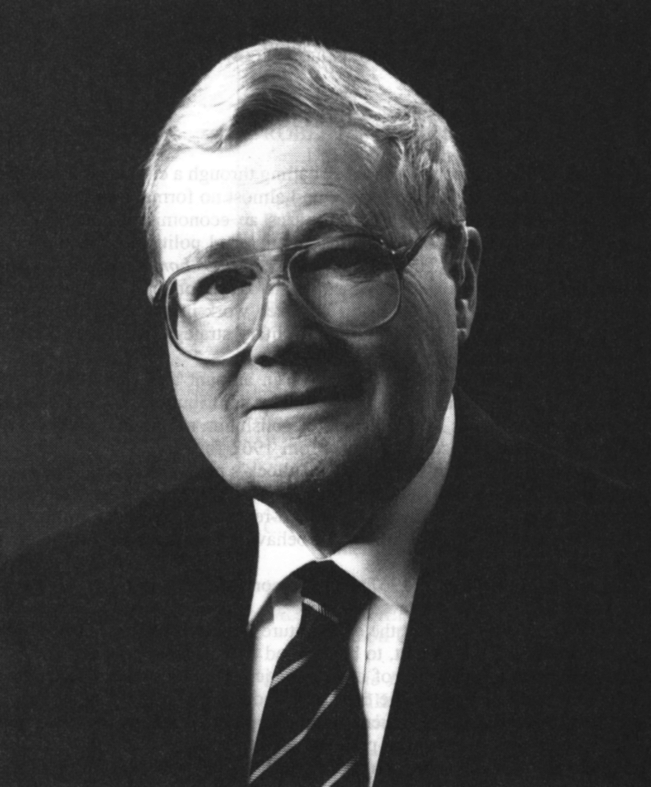
Since it's the season of thanksgiving, I thought I'd give thanks for Gordon Tullock. Knowing Gordon, he'd say, "You're welcome," because only Gordon Tullock was responsible for Gordon Tullock.I've seen people compare Gordon to Gary Becker, with the idea being that both pushed the "economic man" model outside its traditional boundaries. There is something to that, but there are important differences.Becker had three elements in his approach: maximizing, equilibrium, and stable preferences. He then used the economic model, using a comparative-statics approach based on changes in the cost of the activity, in the costs of substitute and complementary activities, and in income. He showed that apparently non-economic choices, such as fertility, education, marriage, and suicide, respond at the margin to essentially economic variables.Tullock used only one of Becker's troika: maximization. He had no particular need of equilibrium because much (though not all) his work was on optimization by nonhumans, whether we are talking about coal tits (Tullock 1971) or bureaucrats (Tullock 1965).Okay, that was a cheap shot, but it really does matter that price did not operate in the usual manner in the settings that Tullock investigated. The key variable was opportunity cost, and institutions determined how opportunity cost is counted in the calculus of the rational actor. The coal tit was a "careful shopper" in the sense that it has an optimal search pattern for nourishing grubs hiding in pine cones. Rather than using price, the birds need only be "hungry, lazy, and curious," usually continuing to search in places that have proved grub-dense, but sometimes looking elsewhere.Earlier in this conversation, Pete Boettke said this about Tullock: "he encouraged an intellectual horse race between the persistent and consistent application of the economic way of thinking – the logic of choice, the situational logic of institutional analysis, and spontaneous-order theorizing – and all alternative theoretical frameworks." By looking at optimizing and noting that coal tits account for opportunity cost, Tullock was advancing an economic way of thinking even about evolved patterns of behavior.Implicitly, of course, Tullock is also invoking Becker's third precept: stable preferences. But in the case of coal tits it is evolution, not choice, that is operating. Coal tits have their "hungry, lazy, and curious" worldview selected for them by natural selection and are not consciously considering alternative courses of action at all.And in the case of bureaucrats, what is being selected for is precisely the absence of fixed preferences or principles because the measure of bureaucratic satisfaction is following the rules, whatever they are. Bureaucrats are people who possess a meta-preference: instead of doing what they like, they develop a facility for liking whatever it is they are told to do. (Tullock 1965, 391) Not everyone could do that, and that's why not everyone is suited for bureaucracy. It would be costly for someone with fixed ideological goals or policy preferences to work in a bureaucracy. And so they don't last long. Over time, bureaucracies are composed of those workers who can tolerate simply following instructions. That's actually what the economic way of thinking would predict because such people face the lowest opportunity costs.Thus, there is a key difference between Becker and Tullock. Becker examines human choices at the margin in settings where markets have not generally been recognized. Tullock examined optimizing choices in settings where there are no markets (as in evolution) or where the workings of market incentives are largely suppressed (bureaucracy).There is no reason to see markets everywhere. But optimizing is everywhere, and we can theorize about it. And that's why I'm thankful for Gordon.ReferencesTullock, Gordon. 1965. The Politics of Bureaucracy. Washington D.C.: Public Affairs Press._________. 1971. "The Coal Tit as a Careful Shopper," The American Naturalist. 105 (941): 77-80._________. 1979. "Sociobiology and Economics." Atlantic Economic Journal. 7 (3): 1-10.Peter Kurrild-Klitgaard
Tullock: Praxeologist or Economic Imperialist? · Nov 30, 2017
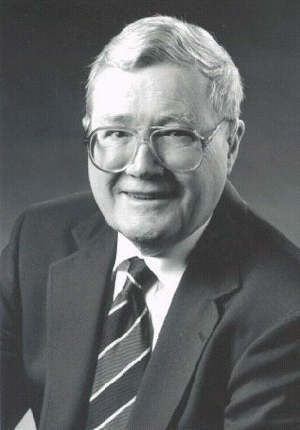
Prof. Boettke initially brought up the issue that Gordon Tullock really should be seen as closer to the Austrian school than is commonly acknowledged—a point already pursued here by Prof. Levy regarding how Tullock had been influenced by Mises's Human Action. (Mises 1949/1966)Now we seem to be facing two interpretations that easily could seem at odds. On the one hand, there are the indications suggested by Boettke and Levy that Tullock had more of an "open-ended" (broad) rationality assumption, closer to the human-action perspective of the Austrian school than is usually acknowledged.On the other hand, Tullock has usually been seen as almost the intellectual embodiment of homo economicus—the economic imperialist par excellence. He embraced the label of "economic imperialism" himself (e.g., Tullock 1972/2004), and a collection of some of his (rejected) papers was entitled On the Trail of Homo Economicus. (Tullock 1994) This was also how close friends and collaborators saw him, e.g., Buchanan in his description of Tullock as a "natural economist" (Buchanan 1987)—a perspective Buchanan distanced himself from.So which picture of Tullock is right? Boettke (and Levy) suggest the former, Buchanan the latter. How about Tullock himself? Let me say that I think that both sides are right but that Tullock possibly created confusion about his own "approach."What we perhaps should keep in mind is the distinction Buchanan made to highlight the differences between himself and scholars like Tullock (Buchanan 1979: 41-51, 57ff): between the ("high") abstract levels of the "pure logic of choice" and the (low) concrete levels of specific models with narrower assumptions, e.g., those associated with what Buchanan called "the abstract theory of economic behavior." This is to a large extent the distinction between Misesian praxeology and day-to-day economic analysis, as in, e.g., applications of the theory of the firm. Or as Buchanan suggested: it is the distinction between a game-theoretical model with only preference orderings given and one where objective payoffs are used. With the former, the structure of the preferences alone may tell us something important but quite general about human action—but it cannot tell us very much about any specific situation. In contrast, as soon as we limit what may enter the utility function and the size of specific payoffs, we can be more precise in our predictions—but with the cost being at a lesser level of generality. (Some may here see a similarity to "Austrian" discussions of the use of ideal types, e.g., Kurrild-Klitgaard 2001.)Seen in this perspective, one could say, as Buchanan suggested, that his analyses mostly operated at the "higher" levels, while Tullock mostly did so at the "lower" levels. But the two levels are not necessarily opposed—they are simply different and may be relevant for different kinds of analysis. In The Calculus of Consent, where Tullock himself used the term "praxiological" (sic), he too, like Buchanan, was interested in a more abstract type of analysis than when he was analyzing, say, U.S. social policies (Tullock 1986), military tactics (Brennan and Tullock 1982), or survival strategies of medieval monarchs (Tullock 2001). Tullock, simply put, operated along all the steps of the ladder of abstraction—but usually without spending much time on philosophy of science and methodology, preferring instead the narrower, more empirical applications.And permit me here to return to the issue of Tullock's personality: teasing, politically incorrect, and actively seeking out intellectual opposition, features that no doubt led him to make oral (re-)statements of his thought more "outrageous" than they really were. Many people have, for example, heard Tullock quip that his favourite piece of literature was Dickens's A Christmas Carol—except, Tullock said, "for the unhappy ending when Scrooge goes soft." This, of course, was a joke, but what did Tullock mean when he widely claimed, as Boettke mentions, that people are 95 percent narrowly self-interested? Of course, he did not mean that it always and everywhere was exactly 95 percent, as if it was a natural law. He meant it at the "low" level as an empirical generalization, and a falsifiable one, most importantly--and one admitting, implicitly, that people are not exclusively narrowly self-interested.Does it matter? It does to some extent. The Virginia school is usually distanced—sometimes by its adherents, most often by its opponents—from two of its "cousins": The Bloomington school of the Ostroms and the Rochester school of Riker. (Mitchell 1988) The Bloomington institutionalists are often seen as more interested in the softer institutions and informal norms. (Aligica and Boettke 2009) And the game theorists of the Rochester school have for decades allowed utility functions of actors to consist of virtually anything and sometimes as quite abstract and open-ended. (Riker and Ordeshook 1973) These are genuine differences when compared to Tullock's rhetoric and predominant practice. But when Buchanan's distinction is kept in mind, they are not polar opposites as much as different points along a continuum.ReferencesAligica, P. D. and P. J. Boettke. 2009. Challenging Institutional Analysis and Development: The Bloomington School. Abingdon: Routledge.Brennan, G. and G. Tullock. 1982. "An Economic Theory of Military Tactics." Journal of Economic Behavior and Organization 3, 225-42.Buchanan, J. M. 1979. What Should Economists Do? Indianapolis, IN: Liberty Press._________. 1987. "The Qualities of a Natural Economist." In C. K. Rowley, ed., Democracy and Public Choice: Essays in Honor of Gordon Tullock (pp. 9-19). Oxford: Basil Blackwell.Kurrild-Klitgaard, P. 2001. "On Rationality, Ideal Types and Economics: Alfred Schütz and the Austrian School." Review of Austrian Economics 14 (2/3), 119-43.Mises, L. v. 1949/1966. Human Action: A Treatise on Economics 3d rev. ed.. Chicago: Henry Regnery.Mitchell, W. C. 1988. "Virginia, Rochester and Bloomington: Twenty-Five years of Public Choice and Political Science." Public Choice 56, 101-19.Riker, W. H. and P. C. Ordeshook. 1973. An Introduction to Positive Political Theory. Englewood Cliffs, NJ: Prentice Hall.Tullock, G. 1986. The Economics of Wealth and Poverty. New York: New York University Press._________. 1994. On the Trail of Homo Economicus: Essays by Gordon Tullock. R. D. Tollison & G. Brady, eds. Fairfax: George Mason University Press._________. 2001. "Monarchies, Hereditary and Non-hereditary." In W. F. Shughart and L. Razzolini, eds. The Elgar Companion to Public Choice (pp. 140-56). Cheltenham: Edward Elgar._________. 1972/2004. "Economic Imperialism." In C. K. Rowley, ed., Virginia Political Economy (pp. 3-15), The Selected Works of Gordon Tullock, vol. 1, C. K. Rowley, ed. Indianapolis, IN: Liberty Fund.Peter J. Boettke
The Unique Gordon Tullock · Nov 30, 2017
I visited the Institute of Economic Affairs (IEA) this past Monday. A few years ago Liberty Matters hosted a discussion on Arthur Seldon and the IEA to which I contributed. On that occasion I told of how Tullock would ask students, "Why is there no U.S. IEA?"The answer to that question turns on the uniqueness of Arthur Seldon and the publication program he directed. Seldon translated the theoretical innovations of economists from the London School of Economics, such as those of Cannan, Robbins, Hayek, and Plant, and bridged the gap between theory and practice in contemporary policy disputes. Seldon also sought to engage the public with the latest developments in economic thinking in the United States, 1950s-1990s, by making the analysis accessible to the intelligent layman. Better than others in the emerging "think tank" world, Seldon knew Bastiat's dictum that the worst thing for a good cause is not to be artfully criticized but to be ineptly defended. The IEA under Seldon's tight editorial policy demanded high-quality arguments and careful, detailed empirical analysis. The stakes were too high to be sloppy in the economics for the everyman.But Seldon isn't our story today. As I sat in the IEA and looked at portraits of the Nobel Prize-winning economists it has published, I was sadly reminded that Gordon Tullock's portrait wasn't on display. But Tullock contributed mightily to the IEA, especially his works The Vote Motive and Government: Whose Obedient Servant? These works, as well as his articles in Economic Affairs and his lectures at the IEA, did much to introduce and spread the "economics of politics" throughout British intellectual culture.I'd like us to flip Tullock's question and relate it to him. Why is there no Gordon Tullock today in the economics profession? First consider the precarious position he himself held — no PhD, only a JD, and no real formal training in economics. He possessed a quick and nimble mind but lacked the social graces to charm those in positions of academic privilege. Yet through publication and originality of thought, Tullock made himself a career in economics, law, and political science. Who is this generation's equivalent of Gordon Tullock?The economics profession has become increasingly professionalized and increasingly obsessed with measuring scientific impact at the departmental and individual level. Last year at the American Economic Association meetings, a panel of Nobel laureates discussed the problem of mind-numbing conformity within the profession due to the stranglehold of the top five departments and the top four journals. There is a methodological and analytical consensus and a risk-averseness among the caretakers of the profession such that creativity is squelched.This might be overstating the problem, but the reality is that one would be hard-pressed to find a contemporary Gordon Tullock among the elite. Tullock may have existed professionally in the outskirts after his time at the University of Virginia — South Carolina, Rice, VPI, George Mason, Arizona, and back to GMU — but he wasn't on the outskirts with his published work in the Journal of Political Economy, Quarterly Journal of Economics, and American Economic Review, and with his desire to pursue unusual topics or unusual approaches. The 1970s-1990s were full of folks willing to stalk taboo subjects and challenge the conventional wisdom in economics, political science, sociology, and history. Tullock just may have been the most irreverent of them all. He sought to feed his curiosity and creativity as a scholar of human and nonhuman societies.James Buchanan used to call on his students to "dare to be different," and as someone slightly out of sync with my professional colleagues from the start, I found this message from someone so prominent to be very inspiring. But it was more so because right next to Buchanan was the living embodiment of that call — Gordon Tullock.Tullock was willing to ask the uncomfortable questions — what is so desirable about democracy? what is so efficient about the common law? etc. He simply studied human beings in all walks of life and in all historical circumstances, and he didn't care what others thought about him for asking. Perhaps there are some questions which shouldn't be asked in polite intellectual company, but Tullock didn't recognize them. In retrospect, we are better off because he risked social sanction, professional isolation, and a certain level of disciplinary ostracism.I sure hope there are quirky, daring, and creative minds in the economics profession today that I am just overlooking. But I stay pretty much on top of what is going on, and it's not clear at all that within the elite of our profession there exists such bold thinking and the desire to go in the opposite direction of everyone else to tackle important puzzles (as well as solve some unimportant but interesting ones). The stakes are too high for the professional elite, so a certain level of risk-aversion sets in. And if creativity and bold thinkers are not that prevalent in our profession, perhaps we should revisit Tullock's own The Organization of Inquiry to ask ourselves what structural incentives have led us to this situation.We need more Gordon Tullocks, not fewer, if the science of praxeology is going to progress.ReferencesJohn Blundell, "Arthur Seldon and the Institute of Economic Affairs" Liberty Matters Online Discussion Forum (November, 2013) </pages/seldon-and-the-iea>.American Economic Association 2016 meeting panel on "Publishing and Promotion in Economics:The Curse of the Top Five" <https://www.aeaweb.org/webcasts/2017/curse.php>.Peter Kurrild-Klitgaard
Tullock on Liberty · Nov 30, 2017
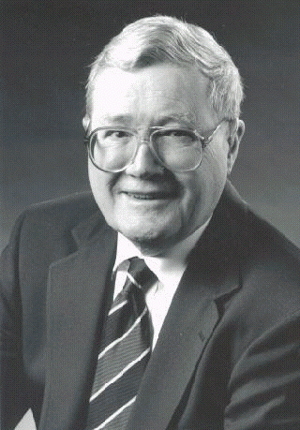
I want to bring up a point that few have touched directly upon in this conversation, namely, Tullock's ideological position. After all, this is "Liberty Matters" run by Liberty Fund. So what were Tullock's views on liberty?As I mentioned in my first comment, Tullock seems—from anecdotal experience—not to have seen himself as a libertarian. In fact, when you browse Tullock's works, there is a marked lack of references to liberty. The word appears six times in The Calculus of Consent—all six in the titles of cited works. However, the cited works are not important in this respect: they were Berlin's Two Concepts of Liberty (1958/1969) and Hayek's The Constitution of Liberty (1960)—which in itself says a great deal. Similarly with "freedom," to which there are a total of 15 references, but again mostly titles, including Leoni's Freedom and the Law (1961/1991). In other prominent works by Tullock (e.g., 1974, 1986, and 1987), there is even less emphasis on liberty/freedom.That, of course, did not mean that Tullock was uninterested in how free humans are, but rather that he, first and foremost, was a consequentialist of some form. Certainly, when you read him straight from his earliest works, there seems often—as with many economists—to be much of a utilitarian reasoning at play and a decidedly non-"moral" attitude.But Tullock rarely made normative recommendations based in crude comparisons of supposed utilities across individuals. Sometimes, but not often. Most of the time Tullock seems to have approached what perhaps more resembles a form of "rule utilitarianism." He was interested in what arrangements in general would tend to have the highest net value, broadly understood, to society.This is probably where Tullock shared a path with Buchanan and at the same time diverged. They shared a view of market exchange as being socially beneficial and a fear of what would happen if law and order broke down. (Buchanan /2001, Tullock 1972/2004) But where Buchanan was interested in the potential for cooperation, Tullock was fascinated by the lack of it.So, if we compare their respective writings, we see—somewhat simplified—a tale of two theories of what happens when human beings have divergent interests: the one somewhat idealistic and rationalist (Buchanan), showing how the same forces that work in the marketplace (contract and exchange) may lead them to adopt institutional frameworks that will work for the common good (Buchanan 1975/1999), the other empiricist, skeptical, and cynical (Tullock), seeing potential conflict (war, plunder, rent-seeking, etc.) everywhere (Tullock 1974)--the former seeing men as naturally equal, the latter seeing them as naturally ending up in different places of power and hierarchy.This is, so to speak, a modern conflict between a Tom Paine, or at least a Thomas Jefferson, and an Edmund Burke (although Tullock, of course, would have had none of Burke's romanticism).ReferencesBerlin, I. 1958/1969. "Two Concepts of Liberty." In I. Berlin, ed., Four Essays on Liberty (pp. 118-72). Oxford: Oxford University Press.Buchanan, J. M. 1975/1999. The Limits of Liberty: Between Anarchy and Leviathan, The Collected Works of James M. Buchanan, vol. 7, G. Brennan, H. Kliemt, and R. D. Tollison, eds.). Indianapolis, IN: Liberty Fund._________. 1977/2001. "A Contractarian Perspective on Anarchy." In Choice, Contract, and Constitutions (pp. 15-27), The Collected Works of James M. Buchanan, vol. 16, G. Brennan, H. Kliemt, and R. D. Tollison, eds. Indianapolis, IN: Liberty Fund.Hayek, F. A. v. 1960. The Constitution of Liberty. London: Routledge & Kegan Paul.Leoni, B. 1961/1991. Freedom and the Law 3d ed. Indianapolis, IN: Liberty Fund.Tullock, G. 1974. The Social Dilemma: The Economics of War and Revolution. Blacksburg, VA: Center for Study of Public Choice._________. 1986. The Economics of Wealth and Poverty. New York: New York University Press._________. 1987. Autocracy. Dordrecht: Kluwer._________. 1972/2004. "The Edge of the Jungle." In C. K. Rowley, ed., Virginia Political Economy (pp. 309-22), The Selected Works of Gordon Tullock, vol. 1, C. K. Rowley, ed. Indianapolis, IN: Liberty Fund.