

Adam J. MacLeod
Lead essay · Jan 03, 2020
Parliamentary battles over Boris Johnson's Brexit efforts and conflicts between Donald Trump and career officials in the branch of government he formally leads are historic events, perhaps even constitutional crises. But they are effects, not causes. They reveal structural fractures in our constitutions that have long divided rulers from the ruled.
Johnson and Trump claim mandates from ordinary people who want to wrest control of their lives away from far-off elites. Legislatures have refused to do the job, and the courts are on the side of the elites. But even Johnson and Trump defer to questionable exercises of government power. For example, they both have been compelled to surrender to suspect acts of judicial supremacy—Johnson after the U.K. high court condemned his attempt to prorogue Parliament; Trump when faced with nationwide injunctions issued by U.S. District Courts. Without doing something truly radical, such as flouting a procedurally-sound judgment, neither was able to act to the full extent of his power.
Indeed, despite the heated controversies they occasion, neither Johnson nor Trump are acting as radically as their opponents claim to fear, nor as their supporters might hope. Neither is likely to do lasting injury to what Philip Hamburger aptly calls "the government's primary mode of controlling" citizens:[2] administrative rule. Nor are they challenging the equally persistent problem of judicial supremacy, nor the constant flow of authority from local institutions to central powers.
Nevertheless, traditional conceptions of executive and legislative powers are breaking down. Trump and Johnson have been opposed by their legislative assemblies, which are supposed to be the institutions in which the people exercise self-rule. And both operate within novel constraints on executive power. Johnson is constrained by a 2011 reform that curtails the prerogative power of the Prime Minister to dissolve Parliament. And Trump's mandate is to de-claw the branch of government that he leads, contrary to the official self interest that the framers assumed would motivate the checks and balances of separated power.
Our institutions have failed. But the problem is also more fundamental. Missing is any consideration of the rule of law, in the comprehensive sense of law's supremacy over both government and the people. All law is now politics. Our constitutionalism is broken not only because we've lost the separation of powers but also because our governing elites are committed to a constitutional anthropology—a view of the kind of persons who live under constitutions—that is inherently inimical to self-governance, while people crave liberty (not always with responsibility to law).
The original causes of our current crises can thus be found in the nineteenth-century jurisprudence of positivists and pragmatists. These include Walter Bagehot's The English Constitution. Bagehot redefined fundamental, constitutional concepts for both the United Kingdom and United States. His account is now conventional wisdom. The English constitutional scholars A.V. Dicey and William Holdsworth both took Bagehot to be the leading constitutional theorist of the modern era, and even Bagehot's critics acknowledge that his is the "most oft-quoted work on the cabinet system" of government.[3] Woodrow Wilson constructed his theory of government on Bagehot's methods, his conception of a constitution as a living system, and his idea of a fusion of executive and legislative powers.[4]
The Anthropology of a Living Constitution
Bagehot is best known for his theory of "single sovereignty," his idea that the English Constitution, a living thing, evolved to fuse the legislative and executive powers in the Cabinet. Wilson admired also his advocacy for an effective (rather than limited) government. Bagehot taught that the English constitution is effectual because the "efficient" part of English government—the Cabinet in Parliament—leverages the peoples' deference to the "dignified" parts—"[royal] courts and aristocracies." To be successful, constitutions in more egalitarian societies (such as the United States and Australia) must also, by some means, learn first to "gain authority," then to "use authority."[5]
However, Bagehot's constitutionalism is not just a theory of institutions. It is far more radical. It concerns what it means to be human. At stake is the question whether a people can govern themselves or instead must be ruled by their intellectual superiors.
Bagehot's constitutional anthropology matters because Bagehot's constitutionalism is now our constitutionalism. The ascendance of the administrative state, rule-making and adjudication predicated on expert insights, legal positivism and judicial supremacy, and many other features of American constitutionalism that are now taken for granted in our law schools, policy schools, and bar associations are rooted ultimately in the concept of human nature that Bagehot articulated. That concept has no place for the rule of law.
A Constitution to Rule the Wild
"The most strange fact, though the most certain in nature, is the unequal development of the human race." Try any informed opinion on the housemaid or the footman, Bagehot proposed, and you will find that what all enlightened people know to be obvious is, to those who are less fully evolved, "unintelligible, confused, and erroneous." Plain facts refute "notions of political equality." England especially has "whole classes unable to comprehend the idea of a constitution—unable to feel the least attachment to impersonal laws."[6]
Here is the core of Bagehot's constitutionalism. The "mass of uneducated men" cannot be trusted to choose their rulers, Bagehot insisted, for they would "go wild." Good governance requires a "calm rational mind," which is preserved by the "apparent existence of an unchosen ruler." The objective therefore is to keep the "poorer and more ignorant classes" under the power of their royal "superstition"—the "illusion" that reigning and governing are the same thing—so that they remain in the habit of obeying (Jeremy Bentham's explanation for legal obligation, though Bagehot does not give him credit). Thus, Parliament and the Cabinet, the real rulers, efficiently wield the deference of the governed for ends that only the elite can discern, by means that only they are clever enough to devise in a complex and evolving world.[7]
Bagehot thus supplanted the core commitments of English constitutionalism with radical ideologies. Those ideologies now seem commonplace thanks in part to Bagehot. He abjured the ancient usages that people have settled and promulgated by their practical reasoning and actions and the natural-law principles that universalize our moral concerns. He lamented the freedom of Britain's local governments and corporations ("childish things"), which frequently failed to do the bidding of central government. And he warned against the "dangerous division" of powers in "a federal government" that leads to dreaded "dead-lock."[8]
In short, Bagehot rejected the connection between human law and human reason.
A fundamental principle of English jurisprudence before Bagehot (admittedly honored in the breach almost as much as in practice) was that humans are all created in God's image with the capacity to choose and to reason, and can be assisted by customs and laws that are just and which secure natural liberty. The presumption of liberty in English law, which became part of America's constitutional creed, rests in the confidence that people are no less able than their rulers to discern what is good and to decide what is right.
English and American jurists trained in the Hebrew, Christian, and natural law traditions, such as John Selden, Matthew Hale, and Joseph Story, taught that natural justice is available to the minds and actions of all people by the exercise of reason and by reference to revelation. Though the artifacts of human law can be understood only by sustained study, anyone can generate them. Ancient customs and inherent wrongs are law because the housemaid and the footman can be equally adept at practical reason as the most learned aristocrat. Practical reason fails not primarily because people lack theoretical understanding but because people deceive themselves. They sin. And officials and educated men are not immune from the failures of will and reason.
Other jurists, such as Adam Smith and James Madison, were more skeptical of natural authority. They located the efficacy of reason in its pursuit of personal interests, and they doubted the efficacy of central powers to promote disparate interests. People act rationally to advance their interests, and officials overstep when they act for some collective end.
Despite their differences, those thinkers shared the confidence of the influential English jurist William Blackstone that people are generally competent to pursue their own "true and substantial happiness," and that the private, customary, and duly-enacted laws of the people are just products of self-governance and are entitled to deference. Scientific expertise is not a source of competence to plan the lives of others.
Those commitments to self-governance do not appear in Bagehot, not even for the purpose of dismissing them. Instead, Bagehot chose a softer target. He denigrated the notion, which he supposed "pervadingly latent" in older political thought, "that all human beings might… be brought to the same level" of political responsibility. (Possibly his target was Benjamin Disraeli.[9]) The "plain facts" and scientific observation had discredited this "notion," and teach us instead that the lower and middle orders of society are comprised of crude and uncurious people, "scarcely more civilized than" our ancient ancestors, who lived "dismal" lives, "without culture, without leisure, without poetry, almost without thought—destitute of morality, with only a sort of magic for religion."[10]
These plain facts explain the deficiencies of republics, Bagehot insisted. In contrast to England, whose people obey the government because of their superstitious attachment to the Queen, republics must "appeal to understanding." A constitution that preserves a stratified society will be superior "so long as the human heart is strong and the human reason weak."[11]
The obvious solution to weak reason is to educate people. But determinism permeated Bagehot's mind, and he was skeptical of civil society, so he limited civic education to Parliamentary speeches for the purpose of manipulating voters. From age 16, Bagehot had studied at what a biographer called that "Godless institution," University College, London. He appears to have absorbed its reductionist pragmatism thoroughly. A classmate later recounted debating with Bagehot "whether the so called logical principle of identity (A is A) were entitled to rank as a law of thought or only as a postulate of language."[12] It seems that Bagehot and his classmates anticipated post-modernism by more than a century.
Bagehot also embraced scientistic materialism. He described physical science as "the first great body of practical truth provable to all men." (The premises of philosophy do not count, for they are "unproved.") And he explained the supposedly advanced evolution of the higher classes with the assertion that "the brain of the civilized man is larger by nearly thirty per cent than the brain of the savage."[13]
Bagehot's thin sense of practical reason now predominates at elite universities throughout the English-speaking world. Of course, his is not the only ideology. The temptation to deprive others of their self-governance is universal. Some Calvinists have claimed a special knowledge of the right (unavailable to the depraved) that justifies a sort of authoritarianism. And now some Roman Catholics advocate for an Integralism that approaches socialism.
Nevertheless, the prospects for a Calvinist or Catholic theocracy are dim at present. The most imminent threat to ordered liberty today, as in Bagehot's day, comes from a class of cultural elites, educated at universities that are open only to a privileged few and increasingly closed to ideas about natural law, natural rights, customary law, and the other conditions of self-governance. Bagehot's constitutional anthropology, imported into America by Woodrow Wilson and passed down by his ideological successors, is tailor-made for such places.
A Constitutionalism of Deference
Bagehot was convinced that inequality of refinement and understanding inevitably grows as a society evolves toward prosperity. If the lower classes gain political rights then they must be controlled. A "perfect constitution" would give to the wealthy and idle class at the top a disproportionate influence "to make its fine thought tell upon the surrounding cruder thought." Regrettably, Bagehot thought, that ship had sailed. Expansions of the franchise in 1832 and 1867 disenfranchised the enlightened classes, and the slide toward popular government could not be arrested. But Bagehot argued that the ideal result can be accomplished by a constitution of deference, by which the majority "abdicates in favor of its élite, and consents to obey whoever that élite may confide in."[14] The abdication is preserved by the "duty to obey" the Queen and the "obedient, unquestioning deference" paid to the aristocracy.[15]
The Commons wields this deference through the Cabinet, where legislative and executive powers are fused. This fusion is necessary because rapid and frequent legal change is the order of business. In primitive societies, Bagehot taught, the purpose of legislation is not to change the law but to preserve it. For ignorant people who cannot help but make bad laws, "it matters much more that the law should be fixed than that it should be good." But now skepticism about legal change is "obsolete." Advanced civilizations (such as nineteenth-century England) have a "diffuse desire" for "adjusting legislation," which will change the law to meet the "new wants of a world which changes every day."[16]
Bagehot did not interact with the strongest arguments against his theory. As a later theorist put it, Bagehot demonstrated "sublime disregard" of all the relevant writings of the previous half century.[17] Nor were his ideas original. He simply expressed the ideologies of his day. The conceit of such ideologies was to debunk what Bagehot dismissed as "literary theories" and to replace them with pragmatic attention to the business of scientific law-making.
Indeed, in the context of his intellectual milieu, Bagehot seems moderate, almost conservative. A central premise of his project is that the Crown and Lords are indispensable to English constitutionalism (as long as they remain mostly passive), and sometimes even useful. He extolled the virtue of the crown as an institution of memory and independent wisdom, and was skeptical of new "burning ideas (such as young men have)," which are "mostly false and always incomplete." He preferred organic change to rapid reform. And in explaining the weakening of the crown's prerogative powers, he appealed to the ancient doctrine of desuetude.[18]
Yet no truths endure in Bagehot's account. Wisdom consists in getting the policy right for the present moment, which too shall soon fall prey to desuetude. And Bagehot's moment was increasingly egalitarian. William Holdsworth observed that the traditional elements of Bagehot's constitutionalism quickly became obsolete in the "ensuing age of socialism," which requires for the realization of its ideals a "trained bureaucracy" to consolidate power.[19]
Most fatally, Bagehot ignored law, understood in its comprehensive sense as a reason for action that obligates everyone, sovereign and citizen, secular and religious. Law appears in his account as either a mere product of government action or "invincible prescription" on divine authority; law as such does no work.[20] For Bagehot, personalities and the interactions of great intellects make constitutions. It is not important to consider a "living constitution" from the perspective of those who view it as obligatory—"irrelevant ideas." Rather, the task is to lay bare its "actual work and power" by careful observation of its "living reality."[21]
Bagehot's thin concept of practical reason left no room for the rule of law. Following Bentham, Bagehot proposed to replace governance—an activity people do together according to law to bring about the common good—with control—an activity that some people do to other people to get their way. As a later constitutional theorist observed, the old idea of legislative and executive powers was situated within a theory of government under law, whereas Bagehot's fusionism is only a theory of government.[22]
Bagehot's accomplishment was to express the intellectual fashions of his day in style. The book is full of pithy lines: "The sovereign power must be come-at-able"[23]; a progressive department head "brings the rubbish of office to the burning-glass of sense";[24] "of all odd forms of government, the oddest really is government by a public meeting."[25] Some are genuinely funny, as where Bagehot satirically imagines a campaign in Parliament to get a child admitted to an asylum. "[Y]ou may see 'Vote for orphan A' upon a placard, and 'Vote for orphan B (also an idiot!!!)' upon a banner."[26]
By his wit and able pen, Bagehot evangelized for pragmatic positivism. Woodrow Wilson later imported Bagehot's command-and-obey concept of government into American constitutionalism.[27] Wilson shared Bagehot's fear of popular government and legislative supremacy. Like Bagehot, he also assumed the positivist and pragmatic jurisprudence expounded by Bentham (and his American counterpart, O.W. Holmes, Jr.). Bagehot thus hovers over American Progressivism.
***
Many elites today attribute their recent political losses to what they refer to as "populism," "nationalism," and "anti-transnationalism," as if the average supporter of Donald Trump or Boris Johnson were working from some ideological manifesto. But in fact, most of the sentiments that elites fear amount to nothing more insidious, and nothing more organized, than the confidence of the housemaid and the footman that they know what is good for them and can tell the difference between right and wrong. They might defer to a Queen or to a wise leader. They might even cut a deal with a brash celebrity. But they see no reason to defer to expert elites who think them incapable of practical reason. They know better.
Endnotes
[1.] Ned Swanner provided helpful research assistance. Micah Watson graciously commented on a draft. The errors are my own.
[2.] Philip Hamburger, Is Administrative Law Unlawful? 1 (2014).
[3.] M.J.C. Vile, Constitutionalism and the Separation of Powers 246 (2d ed., Liberty Fund 1998) (1967).
[4.] Woodrow Wilson, Congressional Government (1885).
[5.] Walter Bagehot, The English Constitution 5, 143, 154-56 (Paul Smith, ed. 2001) (1867) [hereinafter, TEC].
[6.] TEC, at 6, 36-37, 116.
[7.] Id., at 24-25, 104-05.
[8.] TEC, at 73, 141, 150-54, 181-82.
[9.] Holdsworth reports that Disraeli supported the Reform Act 1867 in part because he believed that expanding the franchise would raise the masses to a "natural aristocracy." 14 William Holdsworth, A History of English Law 156-57 (1964).
[10.] TEC, at 6-7.
[11.] Id., at 37.
[12.] Norman St. John-Stevas, Walter Bagehot 5-6 (1959).
[13.] Walter Bagehot, Physic and Politics in Stevas, at 445, 448, 452.
[14.] TEC, at 28-30.
[15.] Id., at 38, 71.
[16.] Id., at 26-27.
[17.] Vile, at 248.
[18.] TEC, at 49, 55-57, 59-63, 105-06, 163-67, 184.
[19.] 14 Holdsworth, at 138.
[20.] E.g. TEC, at 172, 176-77.
[21.] TEC, at 3, 193.
[22.] Vile, at 252.
[23.] TEC, at 74.
[24.] Id. at 136.
[25.] Id. at 99
[26.] Id. at 101.
David Wooton
Response · Jan 08, 2020 · Own page
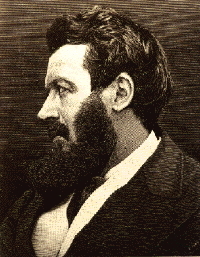
Adam MacLeod and I come from very different intellectual traditions: he is a lawyer, I am an historian; he is a citizen of the United States, I of the United Kingdom. We have a common text in Bagehot, but we respond very differently to that text. He suggests that at the moment we face a similar political situation, but in his view our institutions (both British and American) have failed, while my present, tentative view is that British institutions have performed remarkably well at a time of great difficulty, and American institutions have been found severely wanting.
I want to address in turn three issues raised by MacLeod: constitutionalism and the rule of law; Bagehot's anthropology; and the significance of Brexit.
We need to begin by clarifying the term "constitution." It is important to see that Britain has never had a constitution in two important senses: 1) we have never had a written constitution and 2) no feature of our political system is entrenched in such a way that it cannot be changed by an Act of Parliament--indeed, if the change was proposed in an election manifesto of the governing party, by a simple majority in the House of Commons. Thus it is a fundamental feature of the British constitution that it is constantly subject to change, and there are no limits on the changes possible. Bagehot understood this very well, and knew that he was writing during a period of profound constitutional change as a consequence of the expansion of the franchise. He also understood that underlying this constitutional change was the enormous economic transformation represented by the industrial revolution.
The British constitution, such as it is, is founded on a single principle: the sovereignty of Parliament. Thus the Supreme Court recently ruled that, under existing law (as the Court rather surprisingly interpreted it), the government cannot prorogue Parliament in order to avoid parliamentary scrutiny. But there is no doubt that a simple Act of Parliament could give the government this power, or could indeed abolish the Supreme Court (which was only established in 2009). By Act of Parliament the United Kingdom became part of the European Union and accepted the overriding authority of European law and European courts; but by simple Act of Parliament it can (and now will) withdraw itself from European law and European courts. (The matter is more complicated in international law, as there are treaties involved, but not in domestic law.) The only limits on the powers of Parliament are self-imposed and revocable.
Because under the British system there are no fixed limits on government power, and because power is consolidated in the hands of whoever is able to command a majority in the House of Commons, the system relies on informal constraints: traditions, public opinion, deference, expert authority, bureaucratic inertia, and so on. One of the basic reasons why the British have never felt at home in the European Union is that the European Union aspires to be a law-based system, while in Britain laws are fundamentally instruments for the execution of the will of Parliament, so that in Britain politics, not the law, is supreme.
MacLeod seems to think there was a time when people (in both Britain and the US) believed in the rule of law, and our institutions are now failing us because we no longer have this belief. As an historian I find this a most peculiar claim. The right to counsel in criminal cases was only firmly established in England in 1836; the adversary system of trial only developed over the century from 1680 to 1780. The right of appeal in criminal cases on the basis of new evidence was not established until 1907. Thus what we think of as fundamental features of the law are in fact often of comparatively modern invention. Since the Police and Criminal Evidence Act of 1984 the right to silence has been effectively eliminated. Since 2003 double jeopardy has been permitted in certain cases. What were only recently held to be issues of principle are now waived aside as inefficient and impractical. Moreover, if we step back and look at a larger picture, there continue to be fundamental differences between adversarial (or common law) and inquisitorial (or Roman law) legal systems.
Thus for a British historian "the rule of law" appears not as a fixed set of beliefs but (like the British constitution) a system in constant flux. The rule of law means quite different things for different nations, and in different periods. Lawyers have a professional commitment to turning the law into a rational, coherent system, the embodiment of eternal truths; historians have an opposing commitment to treating the rule of law as a set of local practices and arbitrary conventions.
I turn now to Bagehot. MacLeod wants to lambaste Bagehot for his views on human nature, and there's no doubt that these, particularly as expressed in Physics and Politics (1872) are reprehensible. But it is crucial to see Bagehot's book as a product of its time: it was first published in 1867, the year in which the franchise was extended to the urban male poor, and revised in 1872. It was thus written at an historical turning point. The Reform Act of 1867 was followed by two crucial pieces of legislation, the Education Act of 1870, and the Ballot Act of 1872: the first was foreseen in Bagehot's text and the second was not. The Education Act introduced universal elementary education: a response, in part, to the fact that the Reform Act had enfranchised many people who were illiterate. The Ballot Act was designed to break the power exercised by employers and landlords, particularly in the countryside, over their dependents.
Bagehot was acutely aware of the difficulty of having an extended franchise with voters who were uneducated and whose votes (particularly in rural districts) could be suborned by their social superiors. He was also, quite naturally, worried about the possibility of class warfare: apart from Chartism in England, he surely also had in mind the revolutions of 1848 on the Continent. Bear in mind, the Communist Manifesto was first published in 1848; the first volume of Das Kapital in 1867. Bagehot was writing at a time when across Europe ancient constitutions had been destroyed by revolution, while in Britain the semblance of the ancient order survived. It is not at all surprising that he wanted to stress the role of deference and tradition in making this survival and adaptation possible.
This brings us to the causes of our present discontents. Here I partially agree with MacLeod. Recent political developments in the USA, the UK, and across Europe have demonstrated that our political, educational, and media elites have lost touch with the concerns and priorities of a large section (in some contexts a majority) of the population. This has brought about an ongoing political and indeed constitutional crisis, and this, it seems clear, results from the long-running economic revolution which we loosely refer to as "globalisation"
Writing as I do, two weeks after what may prove to be the most important British election since 1945, what strikes me is not the failure of the British political system, but its success. Despite the massive opposition of the elites to Brexit, we are leaving the European Union. An extraordinary upheaval has seen vast swathes of the country, particularly in the Midlands and North, switch from voting for Labour to the Conservatives. A constitutional crisis, where the government could not command a majority in the Commons for its central policy, that of leaving the EU, and where the rules of political engagement were in flux as a result of the unpredictable and unconventional interventions of the Speaker and the Supreme Court, has been resolved by the restoration of what Bagehot called cabinet government: a united governing political party with a majority in the Commons and undisputed control over the executive. And, although Johnson's opponents seek to characterise him as far-right, all this has been achieved without the emergence of right-wing racism and crypto-fascism of the sort which is common elsewhere in Europe. (I leave to one side the emergence of an appalling left-wing racism in the form of anti-semitism; fortunately this clearly weakened rather than strengthened support for Labour). Indeed, although political divisions are bitter, there are signs of a new consensus which can be seen in the adoption by the Conservative party of policies which had been advocated by Labour -- increased expenditure on the NHS, government intervention to spread wealth outside the big cities, and so forth. The apparently risible Labour claim to have won the argument while losing the election points to the important truth that British politics is not becoming increasingly polarised, but rather seems to be settling around a new consensus.
We are, as Bagehot was, in the midst of a period of rapid and unpredictable change. He was seeking to reassure his readers that such change was manageable and need not lead to crisis, conflict, and revolution; and his reassurance turned out to be well-founded. Our political institutions are now once again being tested to breaking point. We have to cope with a conflict between "the people" and "the elites." We need to ask ourselves how our elites have so lost touch with life outside the big cities, and why our elite educational institutions (which play such an important role in shaping the elite world view) have become increasingly homogenized in the range of opinions they foster and increasingly conformist in the values they inculcate.
But if we look at the crisis as it is unfolding in the USA and the UK it is surely apparent that cabinet government has enormous advantages over the separation of powers. Since the vote to leave the EU in 2016 we have had three Prime Ministers without any need for impeachment. We have had radical shifts in policy because (despite the Fixed-Term Parliaments Act of 2011) again and again it has been possible to ask the electorate to break the deadlock. And we have seen our two great political parties fundamentally remake themselves by internal revolution, rather than falling back on appeals to their existing base. We have also seen a new version of Shakespeare's story of Prince Hal: Boris Johnson, dismissed as unfit to rule only three years ago because he was more interested in playing cricket with the aristocracy than working out the policies for a new government, is proving himself, to the surprise of many, to be a serious political figure. Johnson has grown into office, while Trump has shrunk the office he holds.
MacLeod says there are no enduring truths to be found in Bagehot. We can surely agree on Bagehot's faults. But we would do well to imitate his attempt to make the best sense we can of a current crisis. We need to recognize that in the long run we need an elite that can command the consent of the electorate. And we need to acknowledge (as I would not have been willing to a few years ago) that the British political system, because it is adaptable and flexible, because it is convention-based but not law-based, has great advantages over the American when it comes to responding to a crisis. Perhaps we have just been lucky in that we have recent experience of its strengths, and not so much of its defects, which would quickly become apparent if liberty was under threat from a domestic majority.
The hope of the framers of the American Constitution was that the United States would be relatively protected from external shocks by the Atlantic Ocean. Globalization means that the Earth has now become a single economic system, and that shocks are therefore now transmitted almost instantly from one side of the globe to the other. Mere slogans (Make America Great Again, "trade wars are easy to win") will not alter that fact. We should not forget that Bagehot was not only a student of politics; he was also the founder of The Economist journal, and the author (in his book Lombard Street, 1873) of the doctrine that in any financial system there must be a lender of last resort. This, at least, is an enduring truth. Since the euro was founded as a currency without a lender of last resort, we can happily claim Bagehot for the side of Brexit.
Bruce Frohnen
Response · Jan 10, 2020 · Own page

Central to Adam MacLeod's argument is a statement that should be axiomatic: Self-rule requires the rule of law, and law cannot rule unless it is supreme over both governors and governed. MacLeod is right to point out that legal positivism has undermined our ability to recognize the necessity of higher law, thereby helping judicial and other elites seize arbitrary power. The question is, how are those who value self-government to restore higher law understandings among the people, and especially among the lawyers who traditionally have been its guardians?
Today law is seen as mere power, and natural law, in the traditional sense of permanent, universal truths of right and wrong, is seen as mere myth. This is unfortunate for ordered liberty because constitutional law has meaning, can establish and maintain limited government, only when it is seen and practiced as a form of higher law, obligatory as a matter of unchanging principle on both governors and governed. And constitutional higher law is no mere theory that can be safely manipulated for short term advantage. It is a hard won civilizational good, developed in tandem with deep cultural norms over centuries, that will crumble if left undefended.
Since early modernity, the rule of law has been under especially strong assault by partisans of "sovereignty." Most influential on the European continent, modern sovereignty was imported to Great Britain most famously by Thomas Hobbes. It may be summed up as the assertion that unquestioned supremacy must reside somewhere in all governments. It always has appealed to those who see politics' primary purpose as controlling an unruly populace. In the United States Hobbesian sovereignty found little purchase. The concept was neutralized by a constitutional higher law that separated powers along both horizontal and vertical axes and could be changed only by a supermajority of determined people.
But constitutional republicanism requires virtue. Only a people capable of self-restraint will hold governors to constitutional forms at the cost of satisfying their wants-of-the-moment. Over the last several decades, Americans' choice of government protection over freedom and equality over opportunity has increasingly empowered national elites to break the bonds of constitutional structure. Legal positivism was thus part of a broader corruption in the body politic. But this ideology of law as power was especially important because it undermined the norm of law-abidingness, thus producing judges who "say what the law is" in light of their own preferences, and encouraging government officials as a class to reject their constitutional duties.
Donald Trump's election was made possible by millions of Americans' shared revulsion at the smug overreaching of today's ruling classes. Sufficient numbers of ordinary Americans finally recognized the imminent danger to their way of life posed by would-be despots who despise the people's core values of family, faith, and local freedoms and pursue a future beyond human nature and social order. The people at last have begun fighting back in a struggle that lies deeper than law or politics, concerning the nature of society, the person, and reality itself.
Few lawyers or academics wish to engage such issues, instead preferring, like Bagehot, to dismiss or ignore them. Our cognoscenti believe that metaphysics is another word for religion, and that religion is at best a set of private beliefs and at worst the means by which ignorant masses oppress people like themselves. Among more reasonable lawyers, aversion to natural law reasoning has been strengthened by leftist judges' references to "natural justice" and "fundamental rights" when making law. A number of contemporary theorists also provide grounds for this prejudice. Some reduce natural law to a civil religion based on a few phrases from the Declaration of Independence. Others reduce it to a set of logical deductions from presupposed human goods that seem more a set of personal preferences than universal principles.[1]
Simplified natural law gives way to judicial will as legal positivism aids those seeking to destroy our society. The latest wave of ideologues portraying law as mere power—identity politics radicals—show both the danger of calls to abstract principle and the incoherence (and lust for power) at the heart of "value free" analysis. Under the guise of "social justice" they would destroy law and replace it with a system in which administrators distribute life chances according to the place one's group holds on the current pyramid of victim status. The inevitable result can be summed up in the word "Venezuela."
Such concerns are relevant only if there is, in fact, a discernible order to our existence, accessible to human reason, that can guide us in judging how best to rule ourselves consistent with the common good. There is. But to see it interested parties first must unlearn contemporary prejudices and remember some history.
Aversion to natural law reasoning rests on the false, positivist presumption that law is a rule of action imposed by a lawgiver. Hence natural law must be a code from God, or nothing. But this is not how law works. Most law is customary; it grows from human interaction in which courts participate by working to vindicate the reasonable expectations of the parties. Natural law merely points to the assumptions (e.g. force cannot produce a binding promise) that practical reason and experience tell us underlie decent human interactions. One need not even recognize a transcendent God to observe that there is a moral order to existence. At its most basic, natural law is the commonsense recognition that virtue supports human flourishing as vice stymies it.
Of course, a true relativist will ask how we know what virtue and vice truly are, dismissing any generalized answer as mere abstraction. But all goods and truths are instantiated in history. Beauty is not just a category but something we find in a painting or landscape, as justice is found in the actions of an honest judge or business partner. Likewise, the moral truths of natural law are made concrete in traditions—sets of customary rules and practices that shape the minds of judges, legislators, and citizens, to be used according to the task at hand.
Legislators and citizens have a direct relationship with natural law. Within our tradition, legislators must make law. Citizens must participate in social life and the transmission and growth of custom in light of their understanding of right and wrong. Judges have the job of adjudicating under law. Thus, judges properly utilize natural law only in the limited sense of setting aside personal preferences in favor of the assumptions regarding human nature and the common good that shaped the text at issue and, where the common law has been allowed to survive, in the customs of the people.
The Ten Commandments provides a classic example of how natural law is "codified" in only a limited sense yet serves as the basis for the tradition of constitutional higher law. The Decalogue was a fundamental leap in being for the Israelites less because of its specific content than because of its source. Contemporary codes contained much the same material. Moreover, the Decalogue is rather general, leaving room for historical differentiation. For example, it does not forbid all killing, only murder. Murder has been defined differently—consider the duel and changing conceptions of self-defense—in accordance with culture and circumstance. Importantly, Judeo-Christian culture and law have been protective of innocents and hostile toward intentional cruelty, in accordance with our understanding of human dignity.[2]
The Decalogue is unique and important because it came from a source higher than the ruler. It was supreme law, to which rulers and people alike would answer. As such it was foundational to both the rule of law and the natural law tradition. The Israelites "used" the Decalogue to order their common life, binding themselves in daily interactions and binding their rulers because they preceded rulers' proclamations in time and importance.[3]
The line of development from Decalogue to modern constitutionalism is long but rather direct. The ancient Greeks, as Publius noted, had less to do with this development than many philosophers would like to admit. Greek regimes were liable to constant, murderous violence. The Greek polis or city community (there was no separate "state") exercised unlimited control over institutions and people, using law only as convenient.[4] It was the Israelites who instantiated the rule of law. The practice was further developed by those pious (though brutal) Romans with their rights of citizenship, and then more fully in the diversity of powers, rights, duties, and jurisdictions that was Christendom. It was the determination to put an end to this diversity, which so limited royal and other powers, that fostered the call for sovereignty.
The framers of our Constitution self-consciously looked behind modern sovereignty to build on the tradition of constitutional higher law. We should not allow recognition that they were men of the (moderate) enlightenment to obscure the fact that they understood the cultural bases of self-rule. Nor should we forget that those cultural bases were embodied in very public expressions of religious belief as well as clear moral standards effected at the local level. The natural law is accessible to all. But only a flourishing, public religion can maintain the people's ability to recognize their own true dignity, rights, and duties.
Endnotes
[1.] John Finnis, Natural Law and Natural Rights (Oxford: 2011).
[2.] I think, here, of the relative hostility in the Western tradition toward honor killings, early attempts to limit and eventually eliminate torture, and the elimination of the Roman rights of the paterfamilias.
[3.] Space limitations prevent me from discussing the specifically religious importance of the Decalogue and how its religious norms bound the people to a particular understanding of the highest good (communion with God) and the manner in which it could be achieved within the community. A full understanding of natural law must include such fundamental considerations because they shape societies and souls, but it lies in the far background of the judge's understanding of law as such; it is not adjudicable.
James Reist Stoner Jr.
Response · Jan 15, 2020 · Own page
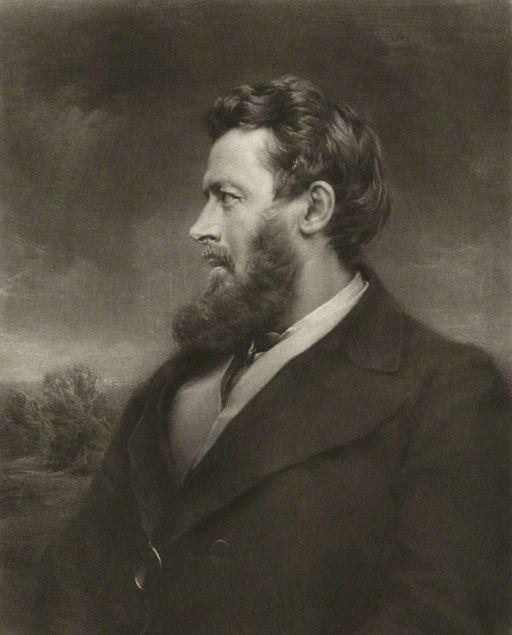
Suppose one reads Walter Bagehot's English Constitution naively, at least the first time through, not from the perspective of our contemporary constitutional troubles nor by placing him in some historical school—"the nineteenth-century jurisprudence of positivists and pragmatists,"" suggests Adam MacLeod—but beginning with how he describes himself and the task he undertakes. Bagehot identifies himself as a Liberal, a member of a then-new, later dominant, now-defunct political party, but he is not writing a partisan tract.[1] At least twice he refers to "political philosophy" as the perspective he takes, at least for a moment of analysis, detached from adherence not only to a political party but to a particular country, even though he identifies himself as an Englishman and is principally, though not exclusively, concerned with the English constitution.
I think he means, at least at the outset, to analyze the English constitution as Aristotle analyzed the constitutions of the Greek cities of his own era, treating the term "constitution" as Aristotle did his analogous term, "politeia," to describe who rules in the city, or rather, to identify what kind of people rule and the forms by which their rule is exercised.[2] Bagehot mentions the Greek city and finds an interesting analogy between its development and the rise of modern politics,[3] but he is also aware that a modern nation-state is not the same as an ancient polis, so his analysis of its form is not bound by Aristotle's terminology. Still, like Aristotle he treats the constitution as a political form, not a higher law; he is more concerned with who actually rules than with traditional practices; and he is particularly intent on praising the rule of wisdom, which, by its anchor in experience, its mastery of particulars, and its insusceptibility to being nailed down to rules, seems consonant with, if not the same as, classical phronesis.
At the outset, Bagehot contrasts his analysis with what he calls the literary theory of the English constitution—he doesn't name its source, but he seems to have in mind Montesquieu and Blackstone—which describes English government as based on two principles, the separation of powers and balanced government.[4] However accurately this account may have explained British politics in the eighteenth century, it misunderstands the actual functioning of that politics in the nineteenth, particularly after the Reform Bill of 1832, which established the sovereignty of the nation, with the House of Commons as its instrument. More precisely, it established cabinet government, with Commons now to be understood as the elected body that elects and holds accountable the government, where the real power lies—so long, that is, as it retains the confidence of the nation.[5] The old theory, or at least its principle of separation of powers, was adopted by the Americans and used to construct our presidential system, which serves throughout the book as a foil to Bagehot's cabinet government. The latter in almost every respect proves superior in his eyes, not only in bringing wiser men to power, but in encouraging them publicly to debate what policy would be best and thereby to form as well as reflect the public opinion of the nation. He is well-aware that the parliamentary and the presidential systems offer the world the great alternative models of self-government, and that the world is interested in knowing which would be more advantageous to adopt.[6]
The brilliance of Bagehot's account is in his explanation of how the complex manners of parliamentary conduct serve at once to ensure the rule of the wise and the consent of the governed. Although in the literary theory a legislative body, Parliament in practice functions as an electoral college and an ongoing inquest, ensuring that able ministers are selected and then held accountable for their actions. It might seem irrational to shuffle portfolios among them, allowing them no time to develop expertise in the units they purportedly head, but in fact it ensures both that each administrative department has an able advocate in Parliament and reciprocally that it receives constructive criticism from the government.[7] While election by the assembly might seem to make the executive too dependent—this was the Americans' reason for establishing a separate process[8]—the ability of the prime minister to dissolve the house and appeal to the people in a new election reverses the direction of dependency, at least so long as the government is confident of popular support. (Bagehot would easily have predicted the 2011 Fixed Term Parliaments Act would wreak havoc in this finely balanced system.[9]) As for the monarchy and the House of Lords, Bagehot calls them ceremonial rather than efficient, critical to the smooth functioning of the English system at the time, though he speculates as to whether analogous institutions could be created anew in countries without a feudal heritage. He lays out the advantages and disadvantages of having a constitutional monarch, weighing the charm of ancient tradition and its easy legitimacy against the danger, exemplified by George III, of a mad king; he endorses the creation of life peers to keep the second house active, useful, and accepted in a democratic age, but not to be imitated in the colonies, where an upper house draws political talent away from the representative body where it is most needed to ensure compromise and civil peace.
MacLeod quotes Bagehot's distrust of, not to say contempt for, the "poorer and more ignorant classes" whose attachment to the constitution comes not from their understanding of its rationality and balance but from the illusion of royal authority to which they cling. While this part of his theory indeed seems a bit precious, not to say precarious, dependent on the habits of deference in the people, I don't read Bagehot here as proto-progressive paternalist, for several reasons. First, he makes clear that Parliament represents the middle classes, adept at business and fully capable both of discerning their own interests and of choosing someone to express them. In America and in the antipodal colonies, where the task of building settlements in the wilderness imposed equality at the outset and thus implanted it in the culture, the middle class dominates society and politics unproblematically; the problem is the legacy of feudalism in Europe, though it has the advantage, at least for the time being, of making available for political service a highly educated aristocracy naturally adept at rule.[10] Second, especially in the preface to the second edition, written after the further expansion of the franchise in the 1867 to include the working classes—and, he notes, the simultaneous disappearance of Lord Palmerston's generation of pre-1832 statesmen from the scene—Bagehot expresses his doubts about incorporating the working class voter without preparing him for the responsibilities of active citizenship. Here the parties earn his blame in the short-term, and his fear of subjecting the government of England to the prejudices of the working class is palpable, though not, I think, un-Aristotelian.[11] For third, while Bagehot is clearly a man of the Enlightenment and is confident of the advances of a dynamic, modern society, he is not above expressing a healthy skepticism of the capacity of modern science to replace prudence in the governance of human affairs, or at least to suggest something is lost in modern discourse. After quoting Darwin at length, he writes: "I am not saying that the new thought is better than the old; it is no business of mine to say anything about that; I only wish to bring home to the mind, as nothing but instances can bring it home, how matter-of-fact, how petty, as it would at first sight look, even our most ambitious science has become."[12] Whether his own political science confirms or by self-consciousness escapes this indictment is the question.
If pettiness is unworthy of a great mind or a great people, what elevates? MacLeod's attention to what Bagehot doesn't say—how in contrast to the English tradition before him, he says almost nothing of religion, or of natural law; how he treats American government as different only in its machinery, not in its understanding of natural rights—is suggestive, and less for the correction of Bagehot's attitude toward the poor, whom I think he believes will eventually be incorporated into modern society even in England, than for the discernment of what an adequate education in prudence entails. I admit I am skeptical when I read "Our institutions have failed." That's what leading political scientists were writing about the American presidency—and the British were writing of their own system—in the 1970s, and then along came Ronald Reagan and Margaret Thatcher, who showed that the institutions can indeed be made to work when aiming to achieve what they were designed for, not the solution of every human problem, but the support and defense of a free society. Liberals like Bagehot—or for that matter, James Madison or Alexis de Tocqueville—still have much to teach us about how our political institutions can work soundly to effect the adjustment of clashing interests in the name of justice and the general good, even when they have little to say about how freedom is grounded in the human good or risk descending into hubristic progressivism should they try. Or perhaps it is institutions such as churches and universities that have really failed—the ones responsible for guiding lives and elevating minds—and our political crisis is the consequence, not the cause. If that is Adam MacLeod's point, I agree.
Endnotes
[1.] Walter Bagehot, The English Constitution, 2d ed. (London: Oxford University Press, 1928 [1872]), no. 5, p. 134.
[2.] Aristotle, Politics, book III, ch. 4 ff.
[3.] English Constitution, no. 9, p. 242 ff.
[4.] Ibid., no. 1, p. 2.
[5.] Ibid., no. 1, p. 11; no. 5, p. 115; no. 8, p. 225 ff.
[6.] Ibid., no. 1, p. 14 ff; no. 7, p. 224.
[7.] Ibid., no. 6, p. 156 ff.
[8.] See Alexander Hamilton, John Jay, James Madison, The Federalist, no. 68.
[9.] See Abram N. Shulsky, "Constitutional Change Made Easy, UK Edition," Law & Liberty, December 19, 2019.
[10.] English Constitution, no. 8, p. 232 ff.
[11.] Ibid., no. 5, p. 147; no. 8, pp. 234-240; Introduction to the second edition, p. 265 ff. Cf. M.J.C. Vile, Constitutionalism and the Separation of Powers (Oxford: Clarendon Press, 1967), p. 224.
Adam J. MacLeod
Sovereignty and the Rule of Law · Jan 17, 2020
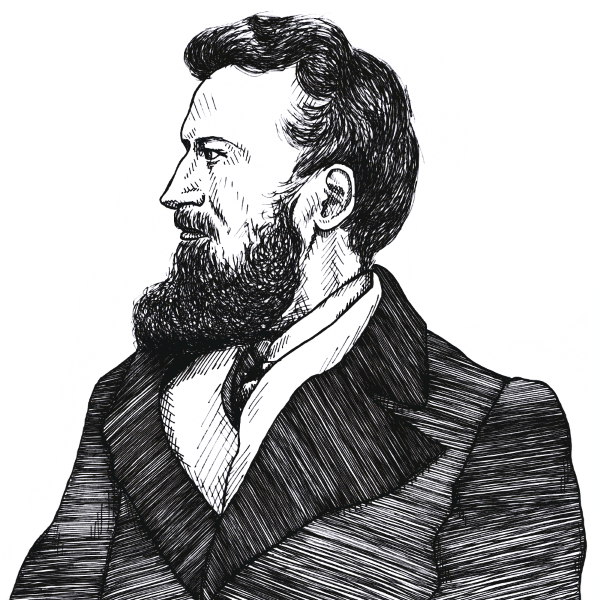
What an honor it is to have one's essay critiqued by such able and distinguished scholars as David Wootton, Bruce Frohnen, and James R. Stoner, Jr. Insofar as my essay uncovered interesting and important features of the English Constitution and Bagehot's interpretation of it, these three scholars have extended the inquiry in fascinating directions. Insofar as I failed to do justice to the Constitution and to Bagehot, they have gone directly to the source(s) with knowledge and clarity. I learned much from reading all three essays.Wootton and Frohnen pick up the central theme of my original essay, that Bagehot's constitution has no place for the rule of law in the comprehensive sense of a law that obligates both the rulers and the ruled. In this essay I will reply to them both. Stoner points toward a very rich and (it seems to me) different inquiry: What could we learn from Bagehot by considering him as a nineteenth-century Aristotle? I'll pursue that inquiry separately.I think David Wootton and I might agree on more than at first appears. I agree that, in some ways, Britain fares better than the United States at the moment. And I agree that the difference can be attributed to a difference of statesmanship. Johnson has increased; Trump has… not always. Yet both men have largely achieved what they promised to achieve, and they have done so mostly in spite of the institutions in which they work.Wootton argues that the British "political system" has succeeded, not failed. I agree. That success is, in my view, attributable to Johnson's statesmanship and new institutions, especially the popular referendum, rather than Parliament.Wootton suggests that due process protections such as the right to remain silent "were only recently held to be issues of principle," and are now "waived aside as inefficient and impractical." Indeed. And I think this is a downstream implication of the pragmatic jurisprudence that Bentham and Bagehot championed.Now to take up our disagreement. Wootton defends Bagehot's idea of English constitutionalism as unified sovereignty, and he challenges my claim that the constitution was once understood to consist of law. He understands the British constitution to consist of a single principle: the sovereignty of Parliament. Parliament's will is supreme; Parliament can change the law and the constitution at will. Far from signifying the failure of Parliament, Brexit represents the triumph of the principle of Parliamentary sovereignty.This is problematic in two ways. First, it appears that Parliament has recently abdicated significant aspects of its sovereignty. Parliament did not enact Brexit on its own initiative; it did not exercise its own will. The people ordered Brexit to be accomplished, expressing their will by referendum. Even then, Parliament declined to accomplish what (a majority of) the people said they wanted. Were the people acting as Parliament's delegates, or the other way around?It took a singular statesman—Boris Johnson, whom Wootton compares to "Prince Hal"—to break the deadlock between Parliament and the people. Why Parliament should get the credit for Johnson's achievement is not obvious. Johnson achieved the will of the people by appealing over Parliament to the people. Wootton might say that Johnson's ability to do so proves the superiority of Parliamentary government, because Parliament is more responsive to the will of the people than republican forms of government. But that would be to say that Parliament is more democratic. Which is to say that the people are sovereign.Wootton interprets the UK high court's decision as a vindication of Parliamentary sovereignty against the government's unlawful attempt to prorogue Parliament. But if we are to accept Bagehot's idea that the sovereign powers of Parliament and Crown are fused in the Cabinet, what could it possibly mean for a court that is not within Parliament to vindicate the supremacy of one part of Parliament against an unlawful action by another part of Parliament, especially when those parts are the same part? Consider just one facet of the conundrum. Johnson is Prime Minister and a Member of Parliament. He is one natural person. The only way to make his actions intelligible is to conceive of his official (executive) personage as PM standing before the court opposed to the institution of which his official (legislative) personage as MP is part. And that is to show the incoherence in Bagehot's notion of fused sovereign powers.Furthermore, the court purported to render judgment according to law. The court's judgment is either according to law or it is not. On Wootton's view, why should any member of Parliament defer to the court's declaration of the meaning of law? Wootten might reply that Parliament has delegated the resolution of such questions to the court. Parliament remains sovereign insofar as it could delegate the power to some other person or institution tomorrow. But if the law is simply Parliament's will, why does Parliament need an external institution to tell it what the law is?Second, to acknowledge that the British Constitution is an unwritten, political constitution does not establish that there are no limits on Parliament's power to change the law. Whether or not any institution external to Parliament can oppose Parliament's acts, it makes sense to say, as English (and American!) jurists said for centuries, that Parliament is obligated by law. Members of Parliament are, at least in theory, as capable of following the just dictates of conscience as anyone else.Wootton insists that what appear to be fundamental parts of the British constitution are in fact modern inventions. But the supremacy of Parliament is a modern invention. Due process of law and redress of wrongs are declared in Magna Carta in 1215 as rights belonging to (at least some) subjects of the Crown. The particular specifications of constitutional guarantees changed from Magna Carta to the Bill of Rights, and have changed since. Such changes do not entail that Parliament could lawfully deprive people of their lives, liberties, and estates without any process, nor that any process is sufficient to satisfy the requirements of reason.Unlike Wootton, Bruce Frohnen approaches English constitutionalism from the internal point of view of those who preceded Bagehot, jurists who began with the understanding that law is not merely the will of the sovereign. The question he poses for us is how to restore that understanding.Frohnen (rightly) worries about theories of natural law that ignore the legal specifications provided by customs and tradition. Those theories expect too much normative work from abstract principles, such as those expressed in the opening of the Declaration of Independence. In fact, most of the principles of natural law, and even the maxims of common law, require specification as concrete judgments. And we do well to defer to the specifications and judgments that have worked in the past. Legal concepts such as trespass and promissory obligation, customary norms and institutions such as juries and the right to remain silent, and the other artifacts of our Anglo-American legal tradition reflect hard-won practical wisdom that we should not lightly discard.Nevertheless, we cannot do without a theoretical account of the good and right. Jurists from Justinian to Joseph Story have looked to both customary norms and the determinate judgments of the law of reason, in part because some customs are contrary to reason. Some acts are inherently wrong, never to be done intentionally. We need the law of reason to identify them by looking outside our own culture and traditions to identify universal human goods and the dispositions of mind and will that are inimical to them.Finally, Frohnen wants to locate the new classical natural law theory of John Finnis among those abstract theories that should worry us. He cites Finnis as the sole example of theories that "reduce [natural law] to a set of logical deductions from presupposed human goods." But one finds in Finnis forceful arguments in defense of customary law and the role of pre-positive institutions to specify all of the matters of indifference—Finnis follows Aquinas in calling them matters of determinatio—that natural law shapes but does not fully determine.Adam J. MacLeod
Bagehot as Aristotle · Jan 22, 2020

James Stoner is moderate by nature. (I am particularly grateful for his moderation in critiquing my essay.) He draws on an ancient proponent of moderation—Aristotle—to offer a more moderate reading of Bagehot than my own. Rather than trying to place Bagehot in context, he suggests, why not read Bagehot naively, on his own terms? Bagehot does not think of himself as a pragmatic positivist but rather as a student of the facts on the ground.Bagehot described Parliament as a deliberative body, though not (or not primarily), it seems, as the place where the people reason together about whether to declare or change the law. Rather, as Stoner aptly puts it, Parliament serves as "an electoral college and an ongoing inquest, ensuring that able ministers are selected and then held accountable." The actions of the Cabinet—of the actual rulers—are the stuff of the English constitution.Stoner persuasively relates that Bagehot's constitution is a political form, not a higher law. He is concerned with who rules, and desires that they act wisely. But then, why are the people obligated to obey? Bagehot (like Bentham) does not seem concerned with obligation. Whether or not they are obligated, the people are obliged. They have habits of deference and obedience to the fancy parts of the constitution, and that is enough for the effective parts to leverage. Or perhaps the people can be trained to defer to the superior wisdom of their actual rulers, whose constitution they cannot understand but whose operation results in their laws.Either way, the people do not have the law in them. It descends from above. Stoner's reading of Bagehot in light of Aristotle is therefore instructive. Stoner observes that, like Bagehot's English Constitution, Aristotle's polity is ruled by wisdom. And, Aristotle would hasten to add, not everyone is wise. For Aristotle, excellence rules the polity, rather than reason perfected, so Aristotle's political theory is paternalist.Stoner does not read Bagehot as a paternalist. He points out that, in Bagehot's account, the "naturally adept," educated aristocracy is accountable to the capable middle classes, who are represented in Parliament. He cites the concern that Bagehot expressed in the preface to the second edition that the working classes be educated before they gain too much political power. And he quotes Bagehot's doubt that the then-new, scientistic way of thinking can capably supplant the older virtue of prudence.So, the question, Stoner suggests, is whether Bagehot's political science escapes his own indictment of reductionist scientism. It seems to me that much turns on the question of how Bagehot understands wisdom and prudence. And Stoner's own interpretive methods suggest a way to approach that question: by comparison to Aristotle.Bagehot might have an advantage over Aristotle in his appreciation for modern education. What can education do to instill or develop prudence? Bagehot might be read in different ways. On one hand, his evolutionary account of how some families came to rule over other families suggests a determinism that would place the lowly beyond the reach of all but the most technical enlightenment. On the other hand, his repeated identification of the aristocracy's qualifications with their education, his disparagement of the party system's efficacy to educate the people, and his hope for the education of the working classes, all suggest that prudence might be cultivated.But is that what education is for? Aristotle distinguished excellence in discerning from excellence in deliberating. And Aristotle distinguished the order of acting from the order of making (a distinction that Aquinas later expanded into his foundational insight about the four-fold operations of reason). To be truly formative, education must be practical and must shape one's habits and dispositions of action. A merely theoretical or merely technical education does not equip one for self-governance.Bagehot does not distinguish so clearly. So, it is hard to say whether the end of education for Bagehot is primarily technical and scientific or more comprehensively moral and intellectual. Bagehot's pragmatic method suggests the former; Stoner also finds evidence of the latter.Aristotle has (at least) two additional insights that Bagehot lacks. First, Aristotle has an account of justice. Aristotle perceived that justice consists of two parts, the equitable and the legal. Politically and personally, responsibility to law is a virtue, and it is perfected by responsibility to the requirements of natural justice.Second, though it might not amount to an account of free choice that would satisfy contemporary analytical philosophers, Aristotle has an incipient account of culpability with respect to law.[1] He distinguishes voluntary lawless acts, which are blameworthy, from involuntary transgressions. In Aristotle's account, it is possible for persons to have justice in them, or not—to be lawful or lawless. And the distinction seems to turn on acts of intention and will. Whether Aristotle would allow that the housemaid and the footman are capable of legal justice I do not know. But I think he would insist that we observe them and judge them by their actions.Stoner ends with a possible disagreement. He gives failing marks to institutions such as churches and universities. But he is not prepared to send home a report card on our political institutions. He warns that political scientists prematurely reported the failure of American and British political institutions in the 1970s before Reagan and Thatcher emerged to call those institutions to task.I agree that the institutions of civil society, such as churches, schools, and universities, have failed to elevate minds and prepare people to exercise political responsibility. But I am not prepared to let political institutions off the hook. They often lack accountability to law and to the people. And increasingly, they seem to require extraordinary leadership—a Reagan, Thatcher, or (is it too early to say?) Johnson—to function properly. At least in the American context, our institutions were supposed to serve whether or not enlightened statesmen are at the helm.The success of our institutions consists in their respective excellences, their realization of the ends for which they are constituted. A well-functioning legislative institution deliberates about the law and the circumstances of society, declares what the law is, and changes particular propositions of law when necessary to achieve the common good. On that measure, the emergence of judicial supremacy in the U.K. and the metastization of judicial supremacy in the U.S. are symptoms of failed legislatures. (They also signify the failure of executives.) That legislatures slough the hard questions off to popular referenda and to administrative agencies also shows that legislatures fail to do what legislatures are for.Whether the failure is, on the whole, good or bad is a different question. Maybe we are better off living under the rule of judges, administrative agencies, and simple-majority votes of our fellow citizens. Perhaps Parliament is put to better use in assisting government than in declaring the law. Maybe Congress should delegate law-making to administrative agencies.If so then someone ought to tell the people. On this score, Bagehot deserves credit for candor.EndnotesBruce Frohnen
The Limits of Right Reason · Jan 24, 2020
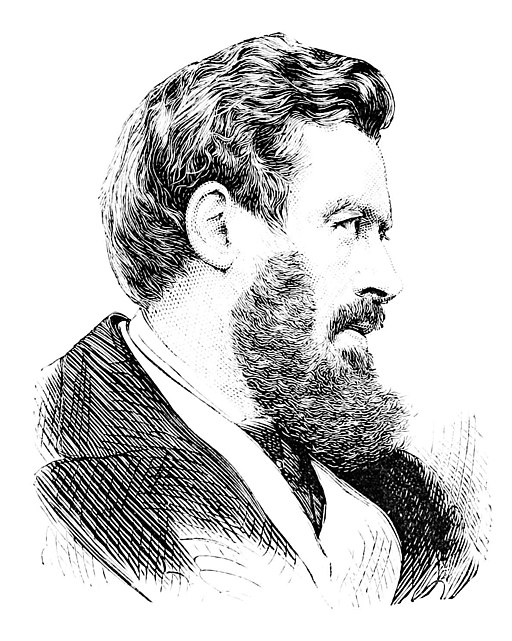
I thank Adam Macleod for his thoughtful essay and response. Our disagreement is narrow but important because it points to how we may resuscitate the natural law mind in the United States (Britain, I'm afraid, is another matter). The assault on natural law entails rejection of both metaphysics and human dignity. But, because the natural law is not merely written on men's hearts, but interwoven with their institutions, re-establishing our connection with it is at least as much a matter of constitutional culture as of metaphysics and anthropology.Societies rarely have direct experience of the order of the universe. Moreover, self-evident truths, while crucial and accessible to those with the necessary self-discipline and awareness, tend to be rather general. Their specification requires interaction with historical particulars. Thus, our understanding of natural law is mediated through the institutions, beliefs, and practices making up our culture. Within a constitutional republic this includes a constitutional culture—a set of norms and institutional arrangements embodying our particular vision of the common good, how people should treat one another, and how they should be treated by their government. As Macleod argues, the rule of law is an essential element of this understanding, and the rule of law entails the supremacy of law over the will of the governors. Within the United States (and, until recently in historical terms, the United Kingdom) the supreme law of the Constitution relies on a constitutional morality reinforcing the separation of powers and, in particular, limitation of the judiciary to adjudicating under, rather than making, the law.I criticize simplifiers of natural law principally because their theorizing substitutes a philosophical mode of decision-making for the proper judicial task of adjudicating under law. Lawyers and judges are not charged with establishing justice, but with applying the law. That law may, of course, be subject to higher laws such as controlling statutes and constitutions. But lawyers and judges have no legitimate power to seek justice in the abstract—to follow "natural law" itself, unmediated by human law—because such an exercise constitutes making law. This is why judges in the Anglo-American system are to be bound down by precedents, statutes, and customary understandings encapsulated in maxims and canons of interpretation. Legal and political theorists who seek to promulgate formulae (or cribs, to use Oakeshott's term,) of natural law to guide judges outside these legal confines undermine the rule of law; they distract lawyers, whose skills have to do with grammar and history, with philosophical pretensions that often mask mere ideological expediency. None of this makes legal decision making into mere positivism. It merely means that the natural law is relevant to them as woven into pre-existing rules of action. This is no small thing, including as it does an understanding of the intrinsic purposes of laws. Macleod's purpose in reviewing Bagehot's work is to address the crisis of our age, namely the undermining of the rule of law through judicial overreach. Activist judges have muddied distinctions among governing structures, freeing those most able to manipulate constitutional mechanisms to seize unchecked power. In this context Macleod notes my concern "about theories of natural law that ignore the legal specifications provided by customs and tradition." He agrees but adds that theory is needed to determine whether an act or custom is inimical to universal human goods, and to specify matters that are not indifferent under natural law. Such investigations (whether well or ill done is another matter) are of intrinsic merit in the pursuit of knowledge and good governance, but they are not merited within the practice of law. In court at least, natural law—universal human goods—is not merely specified in concrete judgments but oftentimes is dependent upon historical circumstances. I do not mean by this that justice is merely subjective; it is not. But justice concerns what is fitting. In court that means vindicating the reasonable expectations of the parties, given what they can be expected to know of law and custom.Only rarely should lawyers look to doctrines of natural law in doing their job. Indeed, higher law requires that they eschew such conduct, leaving it to legislators, who themselves should be guided more by history than principle. This is not to say, as for David Wootton, that the rule of law properly may be seen as merely some "set of local practices and arbitrary conventions." Rather, it is to say that constitutionalism, in both Britain and America, is best understood and practiced as an entailed inheritance that serves justice and the common good when and to the extent that its coherence is maintained.Within our constitutional tradition, legislators and the people acting in the development of custom are the makers of law. They may choose to look beyond history and circumstance, seeking to understand how a proposed rule of action would affect the order of souls and of the commonwealth. But even this discussion will be constrained within a cultural and historical horizon. That horizon is deeply religious—as Russell Kirk, Christopher Dawson, and numerous others have pointed out, culture comes from the cult—but it remains constrained by constitutional forms and understandings. If the Constitution fails to recognize a fundamental truth of natural law essential to right governance for a given people, the answer is to amend the Constitution in the manner provided for therein.Bagehot and his followers in administration and courts have taken on the law making role for themselves by undermining constitutional forms and morality. In Britain they have done so openly and rather thoroughly, having almost wiped from public memory a constitutional morality essential to entrenching their constitution. The question is closer in the United States. Our constitutional culture, while severely damaged and under increasing attack, yet lives. The question is whether it can be brought back to effective health and vitality.David Wooton
There is Only Parliament · Jan 29, 2020

This discussion, nominally about Bagehot, raises so many fundamental issues, and involves such complicated intertwinings of agreement and disagreement, that it is a little difficult to know how best to clarify the issues; and indeed I may well succeed only in muddying the waters. However it is clear that MacLeod and Frohnen want to appeal to some form of higher law, and they fault both Bagehot and modern politicians and legal systems for failing to acknowledge such a law. Stoner and, I think, Bagehot are primarily concerned to understand (in a way that Aristotle would have approved) how the British constitution actually worked, and whether it could in practice win the continuing support and approval of members of a political community which was rapidly expanding.Let us turn from Bagehot to American constitutionalism, for I want to suggest that what we need now is an American Bagehot. Let me ask a simple question of MacLeod and Frohnen: Where is higher law in American constitutionalist thought? If we turn to the Federalist Papers what is surely remarkable is higher law's complete absence. The term "natural law", so important to MacLeod and Frohnen (it occurs 34 times in their texts, footnotes aside, once in Stoner, not at all in mine), does not occur a single time in the Federalist Papers (and "natural rights" occurs only once). It is fundamental to acknowledge that the classic defence of the constitution of the United States of America does not rest on invocations of a higher law.It would seem evident to me (though perhaps not to my distinguished colleagues) that the authors of the constitution and its earliest defenders were not followers of Aristotle or Aquinas. Their intellectual heroes were Locke and Hume. Locke, as is well known, provides two contrasting approaches to law: the Two Treatises are in the natural law tradition; but the Essay insists that laws only exist where there are punishments and rewards, and that the good is to be identified with the pleasurable and the useful. At the heart of the argument of the Essay is the claim (if I may be permitted to restate it in postmodern terms) that the conscience is a social construct. The founders certainly invoked both Lockes; but there need be no doubt that it is the Locke of the Essay, the Locke of the pursuit of happiness, the Locke who leads to Humean utilitarianism, who is important for the Federalist Papers.Another term that is important for MacLeod and Frohnen is "virtue." Since MacIntyre's After Virtue this has been a highly contested term. MacIntyre saw the Enlightenment as an assault on virtue ethics (correctly in my view), while more recent commentators have sought to read the British Enlightenment thinkers as propounding some form of virtue ethics (a view which one can only hold, I would argue, if one evacuates the term "virtue" of almost all meaning). If we turn again to the Federalist Papers we find a subtle and complex discussion of virtue, but the main concern is with acknowledging both that members of the government (of the legislature, the executive, and the judiciary) are capable of being virtuous, and that they are constantly liable to be corrupted. There is no discussion of the need for virtue in the citizenry in general, so that it is difficult to imagine them writing (as Frohnen does) "constitutional republicanism requires virtue. Only a people capable of self-restraint will hold governors to constitutional forms at the cost of satisfying their wants-of-the-moment." This is not their language. They never talk about "self-restraint." MacLeod and Frohnen want (unless I misunderstand them) to claim the American constitution for the intellectual tradition(s) to which they belong; but it comes out of a quite different, after virtue, Enlightenment world.A second issue is what we are to make of the British constitution. MacLeod is quite right: parliamentary sovereignty is a new doctrine, or rather (we might say) it now means something quite different from what it used to mean. The supremacy of King, Lords, and Commons, and hence of statute law (a supremacy that goes back at least to Henry VIII and the Reformation), has now been replaced by the supremacy of a democratically-elected Commons alone. Bagehot saw this happening before his eyes. And MacLeod is also quite right to insist that referenda are a constitutional innovation which bring with them new conflicts and contradictions in the British political system. But, to be Bagehotian about the British constitution, it is a simple matter of fact that nothing can be done without the Commons and nothing can be done against the Commons. This was all too apparent in the case of the Brexit referendum, where the decision of the people could not be implemented until they had chosen a Commons prepared to implement it.At certain points I think MacLeod and Frohnen misunderstand what I was trying to say in my original contribution. I said that for historians the rule of law may be seen as merely some "set of local practices and arbitrary conventions." And I would add that the British constitution has to be understood as merely a set of local practices and arbitrary conventions. Of course there are other "proper" ways of thinking about the rule of law and about constitutions, and even about the British constitution; but those other proper ways lie outside the professional preoccupations of British historians and, indeed, of British courts. British courts recognize no higher law than Magna Carta and the Bill of Rights.MacLeod asks an important question when he asks: "if the law is simply Parliament's will, why does Parliament need an external institution to tell it what the law is?" The answer, of course, is that it doesn't. The law is what Parliament (observing the proper formalities) declares it to be. According to the Bill of Rights the proceedings of Parliament cannot be questioned in a court of law, and so the law is simply whatever Parliament says it is. Indeed Parliament alone determines how the law is debated, decided, and promulgated. The Supreme Court, in its judgement of 24 September 2019, ruled that prorogation itself is not a proceeding of Parliament, and that therefore the issue of whether prorogation was lawful was justiciable. This was a novel (in my view profoundly mistaken) view; but it did not dispute the supremacy of Parliament. If Parliament disagrees with the Supreme Court it can change the law or indeed simply deprive the Court of the power to rule on such matters. It could also, indeed, find the Court in contempt of Parliament, a judicial finding which cannot be appealed. Traditionally, of course, Parliament is not simply the legislature, it is also the highest court in the land. There is no separation of legislature, executive, and judiciary known to the British constitution, except in so far as one is established by the Constitutional Reform Act of 2005, a very recent and revisable innovation. (We might note that what impressed Montequieu was not the independence of judges but of juries.)The Supreme Court was established in 2009 by removing from one branch of Parliament (or one part of one branch — the Lords of Appeal in Ordinary) its traditional role as the highest court. This was a constitutional innovation and a problematic one, as it created new possibilities for tensions between Parliament and the Courts. The newly elected government has resolved to address this issue and the developing practice of judicial legislation. The Conservative Party 2019 election manifesto stated: "We will ensure that judicial review is available to protect the rights of the individuals against an overbearing state, while ensuring that it is not abused to conduct politics by another means or to create needless delays. In our first year we will set up a Constitution, Democracy and Rights Commission that will examine these issues in depth, and come up with proposals to restore trust in our institutions and in how our democracy operates." And on 13 February a new Attorney General was appointed to see through this policy of ensuring that judicial review is not abused to conduct politics by another means. In any prolonged conflict between the courts and Parliament in the United Kingdom there can be only one eventual winner, no matter how much inconvenience and embarrassment the legislature may suffer in the short term. As with Brexit, the issue may be complicated by international treaty obligations, but none of these will withstand Parliamentary legislation.Now of course one can, if one likes, look back behind the present British constitution, behind even the constitution of Bagehot's time, and claim to find a period in which quite different principles were promulgated, a period in which a higher law was acknowledged and respected. And certainly, if by a higher law one means papal authority, then one can find ample evidence of its being acknowledged. If one means an unwritten, traditional "common law", then the simple answer is that Coke and other advocates of the common law never represented an undisputed claim to authority. James VI and I was every bit as keen on the rights of sovereigns as was Hobbes. Hume, when he set out to write his History of England, which he wrote backwards, thought that as he went on he would find evidence of an ancient constitution. What he found instead was Tudor despotism.I have gone on long enough. I am too much of a Lockean and a Humean to find appeals to a higher law convincing. All such appeals, to be given content, have to be restated in terms of pleasure and utility, or become in the end a sort of existential choice. I admire courage greatly, for example, but I know of no law which can require it. Bagehot, in focusing narrowly on the practical workings of the constitution at a time of rapid change, was doing an important job. Since we began this debate a President of the United States has been impeached and Britain has left the European Union. No one knows what the immediate future holds, and no one can know because we make the future by our own choices. Bagehot thought the British constitution would endure, and, roughly speaking, he was right. Will the American constitution survive its present crisis? It turns out that it depends, much more than we realised, on deference and on respect for tradition. Take those away, and only parchment barriers remain.James Reist Stoner Jr.
Further response on Bagehot · Jan 31, 2020
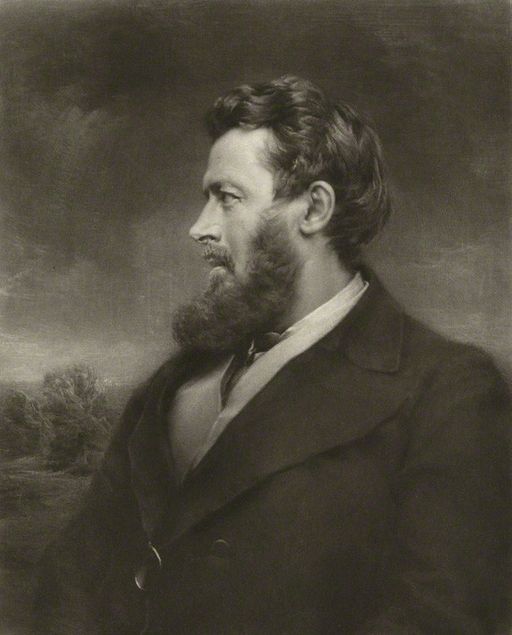
Since Adam MacLeod is my friend, and friendship is a companion to virtue, it is only just to accept his reference to my moderation as a compliment, not a complaint, and I thank him for it. Though itself once considered a cardinal virtue, moderation has fallen on hard times in recent years, especially in relation to politics. In our polarized predicament, both sides treat the moderate as, if not anathema, at least suspect, neither a true progressive nor a true conservative. Actually, the critique of Aristotelian moderation is nothing new: Hobbes dismisses Aristotle's moral philosophy as an account of the mediocrity of passions, and even Montesquieu reports with some bemusement Solon's law requiring Athenian citizens to take sides when the polis is divided into factions, treating indecision if not moderation as a crime.[1](I am glad, by the way, that MacLeod did not praise my punctuality, as, by a series of accidents, this rejoinder comes late, after the dramatic upheaval wrought by the pandemic in the political life of both countries whose constitutions are here under review.)MacLeod agrees that Bagehot's analysis can be read in the spirit of Aristotelian empiricism, but he notes the absence in Bagehot, though not in Aristotle, of higher law, of law that is in the people, not imposed upon them. Although often cited as the source of the adage that constitutionalism entails the government of laws, not men, Aristotle is anything but dogmatic on the question of whether it is better for the law or a wise man to rule. Halfway through book three of the Politics he raises and dismisses the possibility of the rule of law as a seventh form of regime, besides the basic six comprising rule by one, few, or many, either for the common good or their own advantage. Then, in the discussion of kingship toward the end of the book, or more precisely, in the discussion of absolute kingship (kingship over all), he asks the question explicitly.On behalf of the law, people argue that law is intellect rather than appetite, so that to insist on man is to introduce the beast. On behalf of man, they note that even the best laws need to be applied by human beings to specific circumstances, for law is not, as we would say, self-executing. Aristotle is much clearer in reporting these arguments made on each side than in stating his own view. In the end, he seems to say that if a man of truly extraordinary virtue could be found, it would be better that he rule than that he be constrained by law, but he also relays this view: "laws based on [unwritten] customs are more authoritative, and deal with more authoritative matters, than those based on written rules; so if it is safer for a human being to rule than laws based on written rules, this is not the case for laws based on customs."[2]On both sides of the Atlantic among the English-speaking peoples, unwritten customary law is known as common law. It is still the historical basis of private law in both jurisdictions and more influential on their public law than is usually noticed. Even in England, whose leaders a few years ago at the eight-hundredth anniversary of Magna Carta proclaimed that only three of its thirty-odd articles still had legal force and where juries—once known as the characteristic institution of the common law—have disappeared in civil cases and vote by majority rather than achieve unanimity in criminal ones, unwritten customary law is not unknown: What else is the status of the sovereignty of Parliament, on which David Wootton as much as Walter Bagehot rests his whole account? This fundamental norm, and the many conventions of the unwritten constitution that instantiate it, are surely "in the people," or perhaps one should say that the successful functioning of the system is evidence that that is still so.In the United States, the heritage of common law is better rooted, mostly because protection of the rights of property, due process, and trial by jury were written into our constitutions. (No one I know is better able than Adam MacLeod to explain how common law permeates American law, by the way.) Although some of today's originalists see the writing of constitutions as a rejection of the common-law tradition, declaring fundamental law in writing was itself a part of that tradition, as mention of Magna Carta and the (English) Bill of Rights makes plain. The Federal Constitution drafted in 1787 invented new institutions for continental governance, but those institutions rested upon the pre-existing state governments, themselves developed from colonial forms, and in the clause assuming the debts of the Articles, Congress maintained federal continuity as well. That the papers written by "Publius" to defend this new design did not dwell on moral and legal continuity is no accident, nor is it evidence, pace Wootton, that virtue was something they treated only in passing rather than built upon. Indeed, from Hamilton's appeal to the moderation and judgment of his countrymen in the first and last papers, to Madison's references to the "manly spirit" of Americans in No. 14 and to "the free and gallant citizens of America" in No. 46, to his reference in No. 55 to the qualities of human nature deserving "esteem and confidence" that are presupposed by republican government, to Hamilton's indications of the character expected of executives and judges, concern for virtue runs throughout.To be sure, "Publius" does not comment on whether such virtues have a natural law basis, which is not the same as saying that they do not, and since other founders made a point of writing about the importance of natural law and of Christian morality, one can hardly attribute to the Constitution itself the skepticism of David Hume. What is most innovative about the American constitutional experiment, at least at the federal level, was the decision to establish a government without an official religion, to make full and equal citizenship possible to those of different faiths and to declare religious liberty itself a constitutional—to many, a natural—right. Agreement on a frame of government without orthodoxy on first principles need not mean the law is ungrounded, but it does mean the government cannot insist that every mind explain the principles underlying government in the same way. It also moves the system outside the Aristotelian analytic, since Aristotle supposes that a city agrees about its ends, though it might deliberate about the means to achieve them. Thus, while I would agree with MacLeod that our political institutions cannot be absolved from responsibility for their own decay—I agree especially about the expansion of the judges' power and the abdication of the legislature's—the solution can be only partially political, at least in America. Such action can perhaps stanch the corruption of the culture, but it cannot order its repair. Contrary to the old saying, the Constitution was not meant to be a machine that would go of itself. It depends upon virtue—the law in the soul—not always of statesmen, not always of the people, but of one or the other, or both. It expects us to think for ourselves and to act upon what we judge best.Endnotes[1.] Hobbes, Leviathan, ch. 15; Montesqueiu, Spirit of the Laws, bk. 29, ch. 3.[2.] Aristotle, Politics, bk. 3, ch. 16.